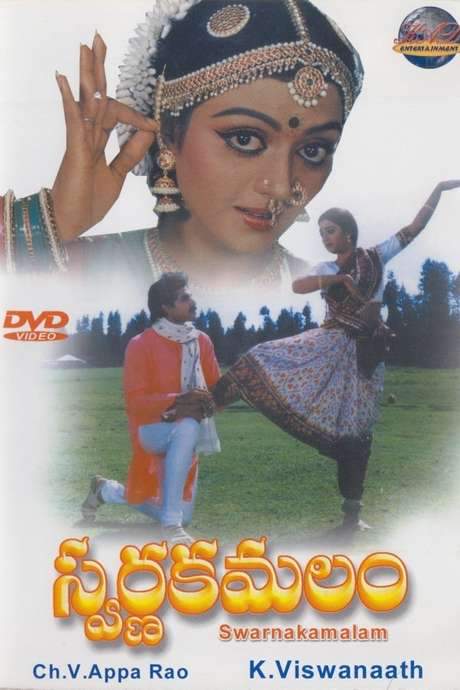



Year: 1980
Runtime: 143 mins
Language: Telugu
Director: K. Viswanath
Sankara Shastri, a devout and renowned classical vocalist, attracts the admiration of Tulasi, the daughter of a prostitute. Tulasi longs to devote herself to serving the singer, while her mother pressures her to continue the family trade, creating a poignant clash between art, devotion, and societal expectation.
Warning: spoilers below!
Haven’t seen Sankarabharanam yet? This summary contains major spoilers. Bookmark the page, watch the movie, and come back for the full breakdown. If you're ready, scroll on and relive the story!
Explore the full timeline and setting of Sankarabharanam (1980). Follow every major event in chronological order and see how the environment shapes the story, characters, and dramatic tension.
Last Updated: October 04, 2025 at 12:40
Meet the key characters of Sankarabharanam (1980), with detailed profiles, motivations, and roles in the plot. Understand their emotional journeys and what they reveal about the film’s deeper themes.
Last Updated: October 04, 2025 at 12:40
Explore the central themes of Sankarabharanam (1980), from psychological, social, and emotional dimensions to philosophical messages. Understand what the film is really saying beneath the surface.
Last Updated: October 04, 2025 at 12:40
Discover curated groups of movies connected by mood, themes, and story style. Browse collections built around emotion, atmosphere, and narrative focus to easily find films that match what you feel like watching right now.
Stories where unwavering dedication faces a tragic, yet redemptive, societal collapse.Explore a collection of movies like Sankarabharanam, where deep artistic or spiritual dedication clashes with societal forces. These similar drama films feature tragic, redemptive arcs about legacy and sacrifice, offering a heavy, melancholic viewing experience for those who appreciate stories of profound devotion.
Narratives in this thread typically follow a revered figure—an artist, teacher, or guardian of tradition—whose pure devotion is challenged by a corrupt or indifferent society. The central conflict often involves a sacrifice or a fall from grace, culminating in a bittersweet or tragic ending that nonetheless secures the future of their legacy through a disciple or successor.
These films are grouped by their core focus on the sanctity of devotion facing external corruption. They share a melancholic, reverent tone, slow, deliberate pacing that allows for deep immersion, and a narrative structure that values legacy and sacrifice over personal happiness, resulting in a uniquely heavy and poignant experience.

Films where pure artistry is threatened by a vulgar and exploitative world.If you liked the clash of pure classical music with a corrupt world in Sankarabharanam, discover more films like it. These movies explore similar themes of artistic integrity under siege, societal decay, and the tragic cost of purity, all delivered with a slow, melancholic pace and heavy emotional impact.
The narrative pattern involves an artist or keeper of a sacred tradition whose world is invaded by forces of commercialization, vulgarity, or outright exploitation. The story unfolds as a gradual erosion of their sanctified space, leading to a personal and often public downfall. The central theme is the unbearable tension between preserving something beautiful and succumbing to a destructive external reality.
These movies share a specific vibe: a melancholic, almost elegiac tone focused on the loss of beauty and tradition. They are united by a slow, deliberate pacing that emphasizes the weight of the conflict, a high emotional intensity derived from the violation of something sacred, and a consistent focus on the theme of art versus commerce or purity versus corruption.
Don't stop at just watching — explore Sankarabharanam in full detail. From the complete plot summary and scene-by-scene timeline to character breakdowns, thematic analysis, and a deep dive into the ending — every page helps you truly understand what Sankarabharanam is all about. Plus, discover what's next after the movie.
Read a complete plot summary of Sankarabharanam, including all key story points, character arcs, and turning points. This in-depth recap is ideal for understanding the narrative structure or reviewing what happened in the movie.
Track the full timeline of Sankarabharanam with every major event arranged chronologically. Perfect for decoding non-linear storytelling, flashbacks, or parallel narratives with a clear scene-by-scene breakdown.
Get a quick, spoiler-free overview of Sankarabharanam that covers the main plot points and key details without revealing any major twists or spoilers. Perfect for those who want to know what to expect before diving in.
Visit What's After the Movie to explore more about Sankarabharanam: box office results, cast and crew info, production details, post-credit scenes, and external links — all in one place for movie fans and researchers.
Discover movies like Sankarabharanam that share similar genres, themes, and storytelling elements. Whether you’re drawn to the atmosphere, character arcs, or plot structure, these curated recommendations will help you explore more films you’ll love.
Sankarabharanam (1980) Plot Summary & Movie Recap
Sankarabharanam (1980) Scene-by-Scene Movie Timeline
Sankarabharanam (1980) Spoiler-Free Summary & Key Flow
Movies Like Sankarabharanam – Similar Titles You’ll Enjoy
Mugavari (2000) Full Summary & Key Details
Premabhishekam (1981) Story Summary & Characters
Sagara Sangamam (1983) Plot Summary & Ending Explained
Saagar (1985) Ending Explained & Film Insights
Prem Rog (1982) Full Summary & Key Details
Swarnakamalam (1988) Film Overview & Timeline
Gangaa Jamunaa Saraswathi (1988) Ending Explained & Film Insights
Vaishali (1988) Film Overview & Timeline
Srikanto (1000) Plot Summary & Ending Explained
Sangam (1964) Complete Plot Breakdown
Sopanam (1993) Full Summary & Key Details
Sangram (1993) Full Summary & Key Details
Sargam (1992) Spoiler-Packed Plot Recap
Swara Mandal (1997) Complete Plot Breakdown
Kulasami (2023) Full Summary & Key Details