



Plot Explained Spoilers guaranteed!
Plot Explained

Browse by genre

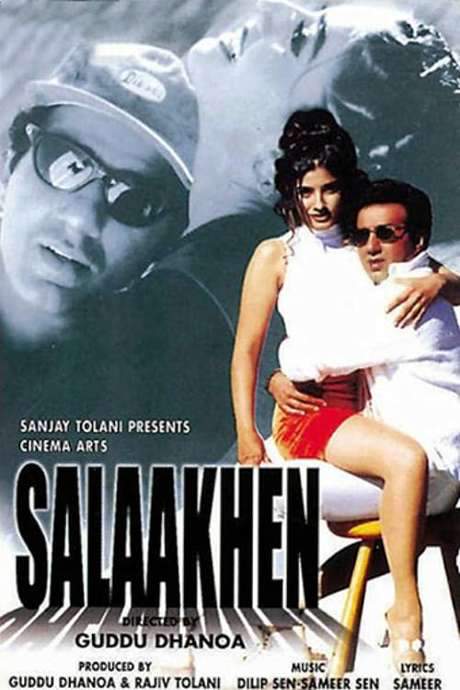
Salaakhen (1998) movie poster

Timeline

Salaakhen (1998) Timeline Explained – Every Event in Order

Release, runtime and language
1998 · 166 mins · Hindi
Directed by
Guddu Dhanoa
Starring
Manisha Koirala, Anupam Kher, Sunny Deol, Raveena Tandon, Farida Jalal, Mohan Joshi

After an upright school teacher bravely testifies against the son of a powerful businessman in a rape case, he is subjected to relentless psychological torment that drives him to suicide. Fueled by grief, his teenage son decides to become judge, jury and executioner, seeking vengeance for his father's death.

On this page (6)
  1. 1 Where to watch
  2. 2 Events in order (13)
  3. 3 Timeline questions answered
  4. 4 Movie threads
  5. 5 Movies like Salaakhen
  6. 6 Every angle

Where to watch

Where to Watch Salaakhen (1998)

Where can you watch Salaakhen? Stream, rent or buy it in the US, including on Fawesome, Tubi TV and Amazon Video: current JustWatch availability with up-to-date prices.

Streaming availability powered by JustWatch

13 events in order · contains spoilers

Salaakhen Timeline: Events in Chronological Order

Every key event of Salaakhen (1998) in order, scene by scene, with when and where it takes place. Use it to untangle flashbacks, time jumps and parallel storylines, to refresh your memory before the sequel or to find the exact scene you are thinking of.

  1. Police hunt Vishal Agnihotri begins

    The film opens with police sweeping the city in search of Vishal Agnihotri, suspected killer of four prominent personalities. Investigators chase leads, while the public debates his guilt and motive. The sense of danger and mystery sets the tone for the case that follows.

    When
    Present
    Where
    City
  2. Vishal negotiates with a top lawyer for Rs.100 million

    Vishal offers a deal to a renowned lawyer to secure his innocence in court for a hefty sum. The plan hinges on manipulating witnesses to present a false version of events. The tension builds as the legality of the arrangement hangs in the balance.

    When
    Present
    Where
    City
  3. The courtroom nears a verdict; Vishal murders his lawyer

    As the judge stands ready to deliver the decision, Vishal kills his lawyer and publicly accepts the guilt for the four deaths. The dramatic betrayal exposes the collapse of the supposed innocence ploy. Media and observers reel from the sensational twist.

    When
    Present
    Where
    Courtroom
  4. Media spread and inquiry committee formed

    News of the courtroom violence and the ambiguous confession sweeps the city, fueling sensational headlines. An inquiry committee is established to uncover the other side of Vishal's case. Public opinion becomes polarized between cries for justice and suspicions of political manipulation.

    When
    Present
    Where
    City
  5. Vishal presents his account to the inquiry panel; flashback begins

    Vishal appears before the committee to recount his version of events, triggering the film's main flashback. The panel's questions push him to reveal a different sequence of what happened. The narrative then unfolds to expose deeper corruption and personal loyalties.

    When
    Present
    Where
    Committee chamber
  6. Sachidanand Agnihotri, the Kandivali schoolteacher, is introduced

    The flashback centers on Sachidanand Agnihotri, an honest schoolteacher in Kandivali who fights back against a corrupt system. He becomes embroiled in a high-stakes case involving a powerful family tied to the victim. His moral courage sets the film's moral compass against the backdrop of systemic abuse.

    When
    Past
    Where
    Kandivali
  7. Sachidanand testifies against Nagesh; Vishal's love grows for Neha

    Sachidanand accuses Nagesh, son of the influential Jaspal Rana, of sexual assault and murder, triggering powerful adversaries to mobilize against him. Vishal's feelings for Neha blossom as the case unfolds, adding a personal stake to the upheaval. The tension between truth, loyalty, and desire complicates the narrative.

    When
    Past
    Where
    Kandivali
  8. Nagesh is arrested; Kamble intimidates Sachidanand

    Nagesh is taken into custody as the investigation advances. A corrupt Assistant Commissioner of Police, Kamble, begins a relentless campaign to intimidate Sachidanand and pressure him during the testimony. The psychological assault reveals the personal cost of standing up to power.

    When
    Past
    Where
    Kandivali
  9. Day of testimony; Sachidanand's breakdown

    On the day of the testimony, Nagesh's lawyer Ashok Pradhan confuses Sachidanand, driving him to a breaking point. Overwhelmed by the manipulation and intimidation, Sachidanand kills himself. The tragedy marks a pivotal turn in the case and the lives involved.

    When
    Past
    Where
    Courtroom
  10. Vishal escapes prison, abducts Nagesh, kills Ashok Pradhan

    While jailed for assaulting police officers, Vishal stages a breakout, abducts Nagesh, and advances his personal vendetta. He murders Ashok Pradhan to eliminate a crucial link in the case against him. The line between right and wrong becomes increasingly blurred as revenge drives the actions.

    When
    Past
    Where
    Prison
  11. Kamble's intervention fails; Vishal kills Kamble and Jaspal Rana

    Kamble arrives to rescue Nagesh, but Vishal ambushes them and eliminates both Kamble and Jaspal Rana. The assault marks a climactic turning point in the flashback and consolidates Vishal's narrative of retribution. The powerful families' grip on justice is exposed as thin veneer.

    When
    Past
    Where
    City
  12. Present-day verdict: Vishal sentenced to 4 years to life

    Back in the present, the court hands Vishal a sentence of four years to life imprisonment after he recounts his version of events. The judge's decision acknowledges the complexity of the case and the consequences of vigilantism. Vishal uses the moment to issue a warning about political figures like Jaspal Rana manipulating justice.

    When
    Present
    Where
    Courtroom
  13. Closing reflection on justice and reform

    The narrative concludes with Vishal reflecting on accountability and the limits of the legal system. The events raise questions about power, corruption, and whether truth can survive within compromised institutions. The film invites viewers to consider what reforms are needed to prevent mob-justice from taking hold.

    When
    Present
    Where
    Courtroom

Last updated: October 09, 2025 at 10:41

Was this helpful?

Timeline questions answered

Salaakhen Timeline Explained: Your Questions Answered

When does it happen, and why in that order? The questions people ask about the chronology of Salaakhen (1998): time jumps, flashbacks, cause and effect between scenes and the correct order of events, each answered with spoilers.

Q1

Why did Vishal kill his own lawyer in court?

Vishal killed lawyer Ashok Pradhan in open court as a dramatic reversal of his earlier plan. He had hired the lawyer to secure acquittal by manipulating witnesses, but when the judge was about to deliver the verdict, Vishal shot the lawyer and publicly confessed to killing four people. This was not a desperate act, it was deliberate. By exposing his guilt in such a shocking manner, Vishal ensured his story would be heard through the inquiry committee, allowing him to tell the full truth about his father's death and the corruption that drove him to become a killer.

  • vishal
  • ashok pradhan
  • lawyer
  • killing
  • court confession
Q2

Why did Sachidanand commit suicide on the day of his testimony?

On the day Sachidanand was set to testify against Nagesh for the sexual assault and murder of a young woman, lawyer Ashok Pradhan used psychological tactics to confuse and torment him. Combined with relentless intimidation from corrupt ACP Kamble, Sachidanand was pushed past his breaking point. Overwhelmed by the pressure and unable to bear the harassment any longer, he took his own life before he could deliver his testimony.

  • sachidanand
  • suicide
  • testimony
  • ashok pradhan
  • kamble
  • psychological torment
Q3

Why did Vishal decide to become a killer and seek revenge?

Vishal's transformation into a vigilante was triggered by his father's death. After Sachidanand committed suicide due to the harassment from ACP Kamble and lawyer Ashok Pradhan, Vishal, already imprisoned for assaulting police, decided to take matters into his own hands. He staged a prison breakout, abducted Nagesh, and systematically eliminated everyone responsible for destroying his father: Ashok Pradhan, ACP Kamble, and finally Jaspal Rana himself. His quest was fueled by the failure of justice and the corruption that allowed powerful people to escape accountability.

  • vishal
  • revenge
  • vigilante
  • father death
  • sachidanand
  • killing
Q4

What happened to Nagesh after Vishal abducted him?

Nagesh, the son of Jaspal Rana who was accused of sexual assault and murder, was initially arrested during the investigation. Later, while Vishal was imprisoned for assaulting police officers, Vishal staged a dramatic breakout, tracked down Nagesh, and abducted him. When ACP Kamble arrived to rescue Nagesh, Vishal killed both of them. Nagesh never faced trial for his original crime, Vishal executed him as part of his personal vendetta.

  • nagesh
  • rana
  • abduction
  • killing
  • kamble
  • escape
Q5

Why was ACP Kamble harassing the schoolteacher?

ACP Kamble was a corrupt police officer working for the powerful Rana family. When Sachidanand agreed to testify against Nagesh (Jaspal Rana's son) in the rape and murder case, Kamble was deployed to pressure and intimidate him into withdrawing the testimony. Kamble's harassment campaign was designed to break Sachidanand's resolve and prevent the truth from coming out, serving the interests of the influential Rana family.

  • kamble
  • sachidanand
  • police
  • harassment
  • corruption
  • rana family
Q6

Why did Vishal confess to the murders at the end of the trial?

Vishal's courtroom confession was calculated, not spontaneous. After killing his lawyer Ashok Pradhan in front of the judge, he used the resulting inquiry committee to tell his entire story, the flashback about his father's suffering and his own path to vengeance. By confessing openly, he guaranteed that his side of events would become part of the official record. He wanted the court and the public to understand his motivations, even as he accepted the consequences of his actions.

  • vishal
  • confession
  • trial
  • inquiry
  • confessed guilt
Q7

What was the crime Nagesh was accused of committing?

Nagesh, the son of influential businessman Jaspal Rana, was accused of sexually assaulting and murdering a young woman from Worli. Schoolteacher Sachidanand Agnihotri agreed to testify against Nagesh, knowing it would make him a target of the powerful Rana family's retaliation. This case was the catalyst for all the tragedy that followed.

  • nagesh
  • rape
  • murder
  • accusation
  • worli
  • testimony
Q8

How did Vishal escape from prison to carry out his revenge?

Vishal was already imprisoned for assaulting several police officers who were harassing his father. While incarcerated, he staged a dramatic breakout, allowing him to leave the prison and pursue his personal vendetta. This escape enabled him to abduct Nagesh and proceed with his plan to eliminate those he held responsible for his father's death.

  • vishal
  • prison escape
  • jailbreak
  • vendetta
  • abduction
Q9

Why did Vishal initially hire the lawyer he later killed?

Vishal hired lawyer Ashok Pradhan to secure his acquittal for the four murders he committed. The plan involved paying Rs 100 million and having the lawyer manipulate witnesses to present a false version of events. Vishal intended to use the legal system to escape consequences, but ultimately changed his strategy. He killed the lawyer instead when he realized he could use the courtroom spectacle to expose his full story through the inquiry committee.

Foreshadowing: The film opens with Vishal negotiating with the lawyer, showing their deal before revealing why Vishal later betrayed him.

  • vishal
  • ashok pradhan
  • lawyer
  • deal
  • manipulation
  • witnesses
Q10

Why did Vishal kill Jaspal Rana at the end of his revenge path?

Jaspal Rana was the patriarch of the powerful family whose son Nagesh committed the rape and murder that started everything. Rana used his political influence to protect his son, deploying ACP Kamble to harass Sachidanand and ensure the case would collapse. Vishal viewed Rana as the ultimate source of the corruption that destroyed his father. Killing Rana was the final act of his vengeance, eliminating the man he held most responsible for the injustice his family suffered.

  • jaspal rana
  • killing
  • revenge
  • corruption
  • political influence
  • father
Q11

Why did Vishal receive a relatively lenient sentence of four years to life?

The court sentenced Vishal to four years to life after hearing his full account through the inquiry committee. The judge considered the extraordinary circumstances: Vishal's father had been driven to suicide by corruption, the legal system had failed to deliver justice, and he had acted after exhausting all other options. While his crimes were serious, the court appeared to acknowledge the moral complexity of his situation rather than imposing the harshest penalty.

  • vishal
  • sentence
  • prison
  • four years
  • verdict
  • court
Q12

What did Vishal mean when he warned about appointing men like Jaspal Rana to ministerial posts?

In his final statement to the judge, Vishal warned that when corrupt politicians like Jaspal Rana hold governmental power, ordinary people are driven to take the law into their own hands. His message was that the system creates vigilantes by failing to punish the powerful. He wanted to highlight how political corruption directly causes citizens to resort to violence when justice remains inaccessible.

  • vishal
  • politician warning
  • rana
  • minister
  • justice system
  • corruption

Movie threads

More Movies Like Salaakhen, by Mood & Story

Curated lists built around what makes Salaakhen tick: the same mood, the same kind of story or the same emotional payoff. Each list explains why these movies belong together.

Vigilante Justice Movies like Salaakhen

When the system fails, individuals take justice into their own hands. Explore movies like Salaakhen where characters are pushed to the edge by a broken system. If you liked the theme of righteous vengeance and moral ambiguity in Salaakhen, you'll find similar gripping stories of vigilante justice here.

  • vengeful
  • righteous
  • gripping
  • cathartic
  • frustrated
  • morally ambiguous
  • Tone: tense, dark, morally complex
  • Pacing: variable, building to climax
Why these movies?

The story pattern: The narrative typically follows a catalyst of extreme injustice—often the death of a loved one—that pushes an ordinary individual into a calculated or explosive path of revenge. The journey is defined by escalating violence, internal moral conflict, and a final confrontation that questions the very nature of justice.

Why they belong together: These films are grouped by their central theme of extra-legal retribution, a shared tone of righteous fury, and a focus on the psychological toll of becoming an avenger. They often feature a bittersweet or bleak resolution, underscoring the high personal cost of vengeance.


Grief and Revenge Thrillers Similar to Salaakhen

A devastating loss ignites a single-minded, brutal quest for vengeance. Find movies similar to Salaakhen that center on a protagonist's journey from deep grief to violent revenge. If the emotional weight of a tragic loss fueling a vigilante mission in Salaakhen resonated with you, these films offer a comparable intense experience.

  • desperate
  • gripping
  • oppressive
  • cathartic
  • frustrated
  • vengeful
  • Tone: heavy, desperate, cathartic
  • Pacing: steady, character-driven
Why these movies?

The story pattern: The story structure is often straightforward: a traumatic event shatters a character's life, and the subsequent plot is a direct, cause-and-effect chain of their vengeful actions. The emotional journey is paramount, moving from shock and sorrow to focused rage, culminating in a cathartic but costly resolution.

Why they belong together: These films are united by their heavy emotional weight, driven specifically by grief as a motivator for violence. They share a palpable sense of oppressive despair and righteous fury, creating a gripping and often emotionally draining viewing experience focused on a very personal crusade.

If you liked this

Movies Like Salaakhen

Similar movies to Salaakhen: the same genre, themes or kind of story. Each one comes with its own plot summary, timeline and ending explained.

Browse all movie summaries

Every angle

Salaakhen (1998) Explained: Plot, Timeline & Characters

Everything about Salaakhen in one place: what happens in the plot summary, the timeline in chronological order, the characters and meaning and a spoiler-free summary. What's After the Movie adds the cast, box office and post-credit scenes.

Coming soon on iOS and Android

The Plot Explained Movie Summary App

Plot summaries, endings explained and timelines on your phone. Catch up on any movie in minutes, save your favorites and never miss a twist again.

Be the first to know when we launch. Your email stays private, always.

Learn more about the app