Plot Explained Spoilers guaranteed!
Plot Explained

Browse by genre

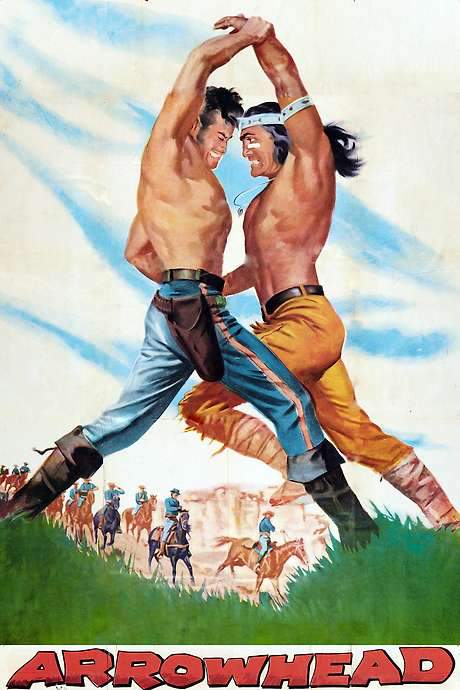
Run of the Arrow (1957) movie poster

Timeline

Run of the Arrow (1957) Timeline Explained – Every Event in Order

Release, runtime and language
1957 · 86 mins · English
Directed by
Samuel Fuller
Starring
Rod Steiger, Brian Keith, Charles Bronson, Ralph Meeker, Chuck Hayward, Jay C. Flippen

When the Confederacy falls, veteran O’Meara heads west, lives among the Sioux, marries a tribal woman, and renounces his American identity. Yet as the Sioux prepare to fight the U.S. Army, he is forced to decide whether to stay loyal to his adopted tribe or confront his past. The looming clash forces him to face his divided loyalties.

On this page (6)
  1. 1 Where to watch
  2. 2 Events in order (12)
  3. 3 Timeline questions answered
  4. 4 Movie threads
  5. 5 Movies like Run of the Arrow
  6. 6 Every angle

Where to watch

Where to Watch Run of the Arrow (1957)

Where can you watch Run of the Arrow? Stream, rent or buy it in the US, including on YouTube Free, Amazon Video and Apple TV Store: current JustWatch availability with up-to-date prices.

Streaming availability powered by JustWatch

12 events in order · contains spoilers

Run of the Arrow Timeline: Events in Chronological Order

Every key event of Run of the Arrow (1957) in order, scene by scene, with when and where it takes place. Use it to untangle flashbacks, time jumps and parallel storylines, to refresh your memory before the sequel or to find the exact scene you are thinking of.

  1. End of the Civil War

    On the last day of the Civil War, Confederate soldier O'Meara shoots Union lieutenant Driscoll but spares his life after learning that General Lee is surrendering to General Grant. O'Meara nearly kills Grant but is stopped by a doctor, who removes the bullet from Driscoll's body and gives it to O'Meara. This marks the end of the conflict and the beginning of O'Meara's journey into a personal war.

    When
    Last day of the Civil War
    Where
    Appomattox
  2. Home in Virginia

    O'Meara returns to his Virginia home, where his mother urges him to lay down his hatred and settle down after the war's losses. He refuses to accept U.S. authority, declaring himself a man without a country, and decides to head west to join the Sioux in their conflict against the American army.

    When
    Post-Civil War
    Where
    Virginia
  3. Meeting Walking Coyote

    While traveling through unfamiliar territory, O'Meara meets Walking Coyote, an aging Sioux scout fluent in English who teaches him the Sioux language and customs. Their journey together begins amid the challenge of trying to find safety and purpose.

    When
    During O'Meara's westward journey
    Where
    Unknown territory
  4. Capture by Sioux Warriors

    O'Meara and Walking Coyote are captured by Sioux warriors led by Crazy Wolf. When about to be executed, Walking Coyote invokes the 'run of the arrow' ritual, which could save their lives if they endure a perilous run with arrows flying in their path.

    When
    During capture
    Where
    Sioux territory
  5. Courageous Run of the Arrow

    During the ritual run, Walking Coyote dies, sacrificing himself to save O'Meara. The Sioux women, including Yellow Moccasin, help O'Meara survive and introduce him to the tribe's chief, Blue Buffalo, who recognizes his resilience and grants him safe haven.

    When
    During the run
    Where
    Sioux tribe's territory
  6. O'Meara Joins the Sioux

    O'Meara falls in love with Yellow Moccasin and asks for permission to marry her, claiming that his heart's allegiance is with the Sioux. He also becomes an active member of the tribe, adopting their beliefs and sharing their spiritual connection to the Great Spirit.

    When
    After surviving the run
    Where
    Sioux tribe
  7. Adoption of Silent Tongue

    O'Meara and Yellow Moccasin adopt a mute orphan boy named Silent Tongue as their own son, symbolizing their integration into Sioux life and their commitment to raising him within their new family and culture.

    When
    Following their acceptance into the tribe
    Where
    Sioux tribe
  8. Negotiations at Fort Lincoln

    Sioux leader Red Cloud negotiates with Army General Allen for the construction of Fort Lincoln. O'Meara acts as a guide and translator for the soldiers, fostering communication between the tribes and the military forces.

    When
    During negotiations
    Where
    Site of Fort Lincoln
  9. Conflict with Crazy Wolf

    At the fort's site, Crazy Wolf attacks, kills Captain Clark, and seeks to ignite war. O'Meara disarms Crazy Wolf and tries to save him by offering him the 'run of the arrow,' but Lieutenant Driscoll violates the ritual and shoots Crazy Wolf, escalating tensions.

    When
    During attack
    Where
    Fort Lincoln site
  10. Attack and Destruction of the Fort

    A large Sioux attack destroys the fort, resulting in many military casualties. Driscoll is captured and faces execution for violating the 'run of the arrow,' but O'Meara shows mercy and shoots him with the bullet he kept from the Civil War, preventing a gruesome punishment.

    When
    During attack
    Where
    Fort Lincoln
  11. O'Meara's Realization

    Yellow Moccasin criticizes O'Meara for his mercy towards Driscoll, implying that his actions show he is not truly Sioux. O'Meara recognizes that he remains a man without a country, caught between two worlds and without a definitive home.

    When
    After the fort's attack
    Where
    Sioux territory
  12. Guidance to Fort Laramie

    Realizing his lack of belonging, O'Meara leads the surviving soldiers and his family—Yellow Moccasin and Silent Tongue—towards Fort Laramie. This marks his final effort to find a new sense of home and identity.

    When
    Post-attack
    Where
    Western frontier towards Fort Laramie

Last updated: August 19, 2025 at 05:14

Was this helpful?

Timeline questions answered

Run of the Arrow Timeline Explained: Your Questions Answered

When does it happen, and why in that order? The questions people ask about the chronology of Run of the Arrow (1957): time jumps, flashbacks, cause and effect between scenes and the correct order of events, each answered with spoilers.

Q1

Why does O'Meara save Driscoll after shooting him?

After shooting Union Lieutenant Driscoll during a skirmish, O'Meara learns that General Lee is surrendering to General Grant at Appomattox. Realizing the war is over, he decides to spare Driscoll rather than kill a defenseless man. The doctor treating Driscoll removes the bullet and gives it to O'Meara as a symbol, later this same bullet becomes significant when O'Meara uses it to mercy-kill Driscoll at the end of the film.

Foreshadowing: The bullet that saves Driscoll's life is later used to end it, creating a circular fate.

  • driscoll
  • bullet
  • appomattox
  • surrender
  • mercy
Q2

What is the run of the arrow ritual?

The run of the arrow is a dangerous Sioux tradition used as an alternative to execution. When O'Meara and Walking Coyote are captured by Crazy Wolf's warriors, Walking Coyote invokes this rite. The condemned must run through a path where Sioux warriors shoot arrows at them. If they survive the ordeal, their life is spared. Walking Coyote dies during the ritual, sacrificing himself so O'Meara can escape.

Foreshadowing: O'Meara later offers the same ritual to Crazy Wolf, attempting to save him from execution.

  • run of the arrow
  • siex ritual
  • sacrifice
  • crazy wolf
  • execution
Q3

Why does O'Meara reject America and join the Sioux?

O'Meara becomes disillusioned with the United States after witnessing the Civil War's destruction and suffering. When he returns home, his mother pleads with him to rebuild, but he refuses, declaring himself a man without a country. He sees the Sioux as resistance fighters against the American military he now opposes, believing he can find purpose joining their cause.

Foreshadowing: His rejection of American identity sets up his later transformation among the Sioux.

  • confederate
  • sioux
  • identity
  • rejection
  • civil war
Q4

Why does O'Meara kill Driscoll at the end?

After the fort is destroyed, Driscoll is captured by the Sioux and faces being skinned alive for his treachery, specifically for violating the run of the arrow by shooting Crazy Wolf during the sacred ritual. O'Meara chooses to spare Driscoll a gruesome death by shooting him with the original bullet he removed from Driscoll's shoulder at Appomattox, completing the circular fate of that bullet.

Foreshadowing: The bullet removed at Appomattox symbolically returns to Driscoll.

  • driscoll
  • mercy killing
  • bullet
  • skinning
  • fort lincoln
Q5

What does Yellow Moccasin mean by 'they' instead of 'we'?

After O'Meara kills Driscoll, Yellow Moccasin criticizes him, saying he is not truly Sioux because he refers to the warriors as "they" rather than "we." This moment reveals that despite O'Meara's adoption of Sioux customs, marriage, and his claims of belonging, he still thinks of himself as separate from the tribe. His use of language exposes his lingering internal division, he remains caught between two worlds without fully belonging to either.

Foreshadowing: This moment confirms O'Meara's realization that he is a man without a true homeland.

  • yellow moccasin
  • they
  • we
  • loyalty
  • identity
Q6

Why does Walking Coyote sacrifice himself during the run?

Walking Coyote deliberately slows his run during the arrow ritual to protect O'Meara, taking arrows meant for his companion. As an aging man returning to his tribe to die, Walking Coyote sees this as a meaningful death, a warrior's end that saves a younger man's life. His sacrifice establishes the deep bond between mentor and student that shapes O'Meara's journey.

Foreshadowing: O'Meara later honors this sacrifice by offering the same chance at survival to Crazy Wolf.

  • walking coyote
  • sacrifice
  • death
  • arrows
  • mentor
Q7

Why does Driscoll violate the run of the arrow?

During the ritual where Crazy Wolf runs the arrow path, Lieutenant Driscoll deliberately shoots Crazy Wolf rather than allowing the sacred custom to play out. Driven by deep-seated animosity toward the Sioux, Driscoll cannot respect the traditional rite that might save an enemy. This violation enrages the Sioux and escalates the conflict toward open warfare.

Foreshadowing: Driscoll's treachery leads to his capture and eventual execution by the tribe.

  • driscoll
  • crazy wolf
  • violation
  • ritual
  • shooting
Q8

Why does O'Meara offer Crazy Wolf the run of the arrow?

After Crazy Wolf attacks the fort and kills Captain Clark, O'Meara disarms him rather than letting him be executed. Remembering how the ritual saved his own life, O'Meara offers Crazy Wolf the same chance, running the arrow path to earn freedom. It's a gesture of mercy and respect for Sioux customs, though the offer is ultimately tainted by Driscoll's interference.

Foreshadowing: This echoes Walking Coyote's earlier sacrifice and shows O'Meara has internalized Sioux values.

  • crazy wolf
  • mercy
  • ritual
  • offer
  • fort
Q9

Why does moving Fort Lincoln trigger the final battle?

The U.S. Army moves the fort's location without respecting the agreement made with Sioux leader Red Cloud, breaching the negotiated terms. This act of bad faith destroys trust between the military and the tribe, fueling tensions that explode into violence. The broken promise represents the broader betrayal of treaties that defines the film's conflict between American expansion and Native sovereignty.

Foreshadowing: This diplomatic failure leads directly to the violent attack on the fort.

  • fort lincoln
  • red cloud
  • agreement
  • broken
  • military
Q10

Why does O'Meara nearly shoot General Grant?

At Appomattox, amid the chaos of the surrender negotiations, O'Meara raises his gun toward General Grant. Driven by hatred from the Civil War and personal loss, he considers assassinating the Union commander. The doctor attending to Driscoll stops him before he can fire, preventing a historically significant assassination that would have dramatically altered the post-war period.

Foreshadowing: This moment establishes O'Meara's extreme disillusionment with America.

  • grant
  • appomattox
  • assassination
  • nearly shooting
  • civil war
Q11

Why do O'Meara and Yellow Moccasin adopt Silent Tongue?

Silent Tongue is a mute orphan boy whom O'Meara and Yellow Moccasin take in as their son. The adoption symbolizes their full integration into Sioux life and represents hope for the future, a new family built on love and cultural connection. It also demonstrates O'Meara's commitment to his new identity and his desire to put down roots among the tribe.

Foreshadowing: The family unit travels together toward Fort Laramie at the film's end.

  • silent tongue
  • adopt
  • orphan
  • family
  • sioux

Movie threads

More Movies Like Run of the Arrow, by Mood & Story

Curated lists built around what makes Run of the Arrow tick: the same mood, the same kind of story or the same emotional payoff. Each list explains why these movies belong together.

Movies about assimilation and identity like Run of the Arrow

Characters torn between two worlds, finding a new home at a heavy price. If you liked the complex cultural journey in Run of the Arrow, explore more movies about characters adopting a new way of life. These films depict the bittersweet experience of finding family and purpose in a foreign culture, often leading to divided loyalties and a search for identity.

  • thoughtful
  • melancholic
  • conflicted
  • hopeful
  • introspective
  • tense
  • Tone: bittersweet, melancholic, thoughtful
  • Pacing: steady, character-driven
Why these movies?

The story pattern: The narrative pattern involves a protagonist disillusioned with their own society who seeks refuge in another culture. They undergo a transformative journey of adoption and acceptance, which is tested when their old and new worlds come into conflict, forcing a morally complex choice that rarely offers a clean resolution.

Why they belong together: Movies are grouped here for their shared focus on the emotional and psychological toll of assimilation. They share a bittersweet tone, a steady, character-driven pace, and explore themes of identity, belonging, and the irreconcilable tension between two different ways of life.
Westerns about post-war disillusionment like Run of the Arrow

Veterans grappling with loss and seeking new meaning far from the battlefield. Discover movies similar to Run of the Arrow that explore the lives of veterans after a war. These films, often Westerns or period dramas, depict soldiers seeking a new start, dealing with moral injury, and finding purpose in harsh, unforgiving landscapes away from civilization.

  • introspective
  • grim
  • hopeful
  • tense
  • thoughtful
  • melancholic
  • Tone: bittersweet, grim, hopeful
  • Pacing: steady, contemplative
Why these movies?

The story pattern: The narrative begins with the end of a war, leaving the protagonist emotionally adrift. They reject their former life and head into uncharted territory, where they must confront their trauma through new challenges, often forming unexpected bonds and facing ethical dilemmas that test their newfound peace.

Why they belong together: This thread groups movies that capture the specific mood of a soldier's post-war existential crisis. They share a medium emotional weight, a steady pacing that allows for reflection, and a central theme of a man rebuilding his life from the ashes of disillusionment, often with an ambiguous or bittersweet outcome.

If you liked this

Movies Like Run of the Arrow

Similar movies to Run of the Arrow: the same genre, themes or kind of story. Each one comes with its own plot summary, timeline and ending explained.

Browse all movie summaries

Every angle

Run of the Arrow (1957) Explained: Plot, Timeline & Characters

Everything about Run of the Arrow in one place: what happens in the plot summary, the timeline in chronological order, the characters and meaning and a spoiler-free summary. What's After the Movie adds the cast, box office and post-credit scenes.

Coming soon on iOS and Android

The Plot Explained Movie Summary App

Plot summaries, endings explained and timelines on your phone. Catch up on any movie in minutes, save your favorites and never miss a twist again.

Be the first to know when we launch. Your email stays private, always.

Learn more about the app