






Plot Explained Spoilers guaranteed!
Plot Explained

Browse by genre

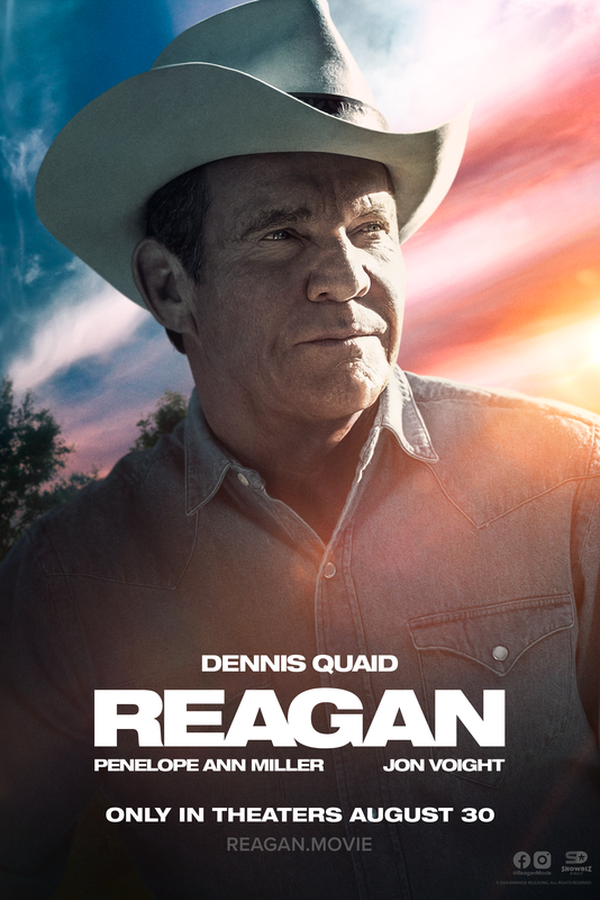
Reagan (2024) movie poster

Timeline

Reagan (2024) Timeline Explained – Every Event in Order

Release, runtime and language
2024 · 2 h 15 m · English
Echo score 38
Directed by
Sean McNamara
Starring
Kevin Dillon, Mark Moses, Jon Voight, Lesley-Anne Down, Dennis Quaid, Nick Searcy
Budget
$25M

This gripping biopic explores the improbable journey of Ronald Reagan, charting his ascent from humble beginnings in small-town America to his role as a prominent international leader. The story unfolds through the perspective of Viktor Petrovich, a seasoned KGB veteran whose life becomes intertwined with Reagan’s as they both maneuver through the complex world of Cold War-era Hollywood and Washington.

On this page (7)
  1. 1 Where to watch
  2. 2 Events in order (15)
  3. 3 Timeline questions answered
  4. 4 Movie threads
  5. 5 Movies like Reagan
  6. 6 Categories
  7. 7 Every angle

Where to watch

Where to Watch Reagan (2024)

Where can you watch Reagan? Stream, rent or buy it in the US, including on Amazon Video, Apple TV Store and Fandango At Home: current JustWatch availability with up-to-date prices.

Streaming availability powered by JustWatch

15 events in order · contains spoilers

Reagan Timeline: Events in Chronological Order

Every key event of Reagan (2024) in order, scene by scene, with when and where it takes place. Use it to untangle flashbacks, time jumps and parallel storylines, to refresh your memory before the sequel or to find the exact scene you are thinking of.

  1. 1981 Assassination Attempt

    In 1981, President Ronald Reagan addressed the AFL-CIO's Building and Construction Trades at the Washington Hilton. As he left the venue, gunshots rang out, severely injuring him despite initial reports claiming he was unharmed.

    When
    1981
    Where
    Washington Hilton
  2. Reagan's Early Life

    The film reflects on Reagan's modest beginnings in northern Illinois, where he was raised by a father who struggled with alcoholism and a devoutly religious mother. Through these trials, Reagan experienced a significant spiritual awakening that shaped his values for life.

    Where
    Northern Illinois
  3. Rise to Fame in Hollywood

    Reagan ventured into Hollywood, where he became an actor with Warner Bros. His career faced fluctuations, especially after World War II; however, he persevered and was elected president of the Screen Actors Guild in 1947, becoming a prominent figure in the film industry.

    Where
    Hollywood
  4. Marriage to Nancy Davis

    In 1949, Reagan met his future wife, actress Nancy Davis, while successfully clearing her name from a blacklist. Their relationship blossomed, and they were married in 1952, marking the beginning of a powerful partnership.

    When
    1952
  5. Political Awakening

    Reagan's political aspirations took flight in 1964 when he passionately campaigned for Barry Goldwater. His famous 'A Time for Choosing' speech set the stage for his future political endeavors, including a run for governor of California in 1966.

    When
    1964
  6. Student Protests at Berkeley

    As governor of California in 1969, Reagan faced substantial unrest due to student protests at the University of California, Berkeley. In a decisive move, he called upon the National Guard to restore order amid the escalating tensions.

    When
    1969
    Where
    University of California, Berkeley
  7. Prophecy of Presidency

    In 1970, Reagan and his wife took part in a prayer meeting with singer Pat Boone and a pastor, where they were told that Reagan would become president if he maintained his faith. This prophetic moment fueled his political ambitions.

    When
    1970
  8. Win Against Jimmy Carter

    Reagan campaigned for the Republican nomination against incumbent President Gerald Ford, eventually losing to Democrat Jimmy Carter. Displaying resilience, he launched his presidential campaign in 1980, ultimately achieving victory and forming an unexpected friendship with Democratic Speaker Tip O'Neill.

    When
    1980
  9. Post-Assassination Recovery

    After the assassination attempt in 1981, President Reagan recuperated in the hospital, where he was welcomed by political ally Tip O'Neill. This recovery marked a significant moment in his administration, as Reagan’s resolve was tested.

    When
    1981
    Where
    Hospital
  10. Anti-Communist Stance

    In 1982, Reagan's Secretary of State, George Shultz, helped navigate the sensitive diplomatic relations with the Soviet Union. Reagan's strong anti-Communist beliefs were rooted in childhood experiences and were crucial to his foreign policy approach.

    When
    1982
  11. Evil Empire Speech

    In 1983, Reagan dubbed the Soviet Union an 'evil empire,' intensifying the political climate during the Cold War. This declaration came at a time of rising tensions, particularly following the tragic shooting down of a Korean Air passenger jet.

    When
    1983
  12. Re-election Victory

    Reagan triumphed in the 1984 presidential election against Democratic challenger Walter Mondale, solidifying his position in office. His successful campaign emphasized continued economic recovery and a firm stance on foreign policy.

    When
    1984
  13. Tear Down This Wall

    In 1987, Reagan stood near the Brandenburg Gate and famously commanded Gorbachev to 'tear down this wall!' This speech became a defining moment of his presidency and a symbol of the United States' commitment to ending the Cold War.

    When
    1987
    Where
    Brandenburg Gate, Berlin
  14. End of the Cold War

    In 1989, the Berlin Wall fell, signaling a pivotal moment in history and the eventual disintegration of the Soviet Union. This event marked the culmination of Reagan's presidency and his efforts to promote freedom across Eastern Europe.

    When
    1989
    Where
    Berlin
  15. Legacy and Alzheimer's Diagnosis

    Following his presidency, Reagan faced personal struggles with Alzheimer's disease, casting a shadow over his later years. In a touching farewell gesture, he took a final horseback ride with his Secret Service agent before passing away in 2004.

    When
    2004

Last updated: November 16, 2024 at 19:18

Was this helpful?

Timeline questions answered

Reagan Timeline Explained: Your Questions Answered

When does it happen, and why in that order? The questions people ask about the chronology of Reagan (2024): time jumps, flashbacks, cause and effect between scenes and the correct order of events, each answered with spoilers.

Q1

Why did Reagan hate communism so much?

Reagan's intense anti-Communist stance originated from his childhood in northern Illinois, where he encountered a Russian refugee at his church. This early experience with someone fleeing Communist oppression shaped his deep conviction that Communism was a threat to freedom and faith. This belief persisted throughout his Hollywood career, where he clashed with suspected Communist influences during the blacklist era, and ultimately defined his foreign policy as president.

Foreshadowing: Petrovich notes that this childhood encounter led him to call Reagan "The Crusader," foreshadowing his relentless Cold War stance.

  • reagan
  • communism
  • cold war
  • anti-communist
  • childhood
  • beliefs
Q2

How did Reagan meet Nancy Davis?

Reagan met actress Nancy Davis in 1949 at a party in Hollywood. At the time, her name had been mistakenly placed on the Hollywood blacklist due to confusion with another person of the same name. Reagan successfully intervened to clear her name, which not only saved her career but also sparked their romance. They married in 1952.

Foreshadowing: This act of clearing her name demonstrated Reagan's protective nature and political connections, qualities that would define his approach to leadership.

  • nancy davis
  • reagan
  • marriage
  • meeting
  • blacklist
  • hollywood
Q3

What was the prophecy about Reagan becoming president?

In 1970, Reagan and Nancy attended a prayer meeting with singer Pat Boone and pastor George K. Otis. During this gathering, Otis prophesied that Reagan would become president if he maintained his faith. This prophetic moment is depicted as a turning point that strengthened Reagan's political ambitions and conviction that he was destined for higher office.

Foreshadowing: The prophecy directly motivated Reagan's subsequent presidential campaigns, providing him with spiritual confidence to pursue the highest office.

  • prophecy
  • presidency
  • 1970
  • faith
  • pat boone
  • george otis
Q4

Why did Reagan call the Soviet Union an evil empire?

Reagan dubbed the Soviet Union an "evil empire" in his 1983 speech because he viewed Communism as a godless system that oppressed millions and threatened global freedom. His anti-Communist convictions, rooted in his Christian faith and childhood experiences with Russian refugees, led him to take a hardline stance against the Soviet regime. This rhetoric intensified Cold War tensions but also signaled his refusal to negotiate with what he saw as a fundamentally immoral political system.

Foreshadowing: This speech built on decades of Reagan's anti-Communist beliefs, dating back to his Hollywood days when he fought perceived Communist infiltration in the film industry.

  • evil empire
  • soviet union
  • speech
  • cold war
  • 1983
  • communism
Q5

Why did Reagan demand Gorbachev tear down the Berlin Wall?

Reagan demanded Mikhail Gorbachev "tear down this wall!" in 1987 at the Brandenburg Gate because the Berlin Wall had become the ultimate symbol of Cold War oppression, dividing East and West Berlin since 1961. Though his advisors initially questioned the provocative phrasing, Reagan believed it was essential to directly challenge the Soviet leader and express his conviction that Communist regimes could not permanently trap their citizens. The speech became one of the most iconic moments of his presidency and symbolized America's commitment to ending the division of Europe.

Foreshadowing: The moment was years in the making, representing the culmination of Reagan's firm anti-Communist policies and his direct approach to diplomacy.

  • berlin wall
  • brandenburg gate
  • gorbachev
  • tear down this wall
  • speech
  • 1987
Q6

What was the Iran-Contra affair?

The Iran-Contra affair was a 1986 scandal in which the Reagan administration secretly traded arms to Iran in exchange for the release of American hostages held in Lebanon. The proceeds from these arms sales were then funneled to Nicaraguan Contras, despite Congress having banned such funding. The controversy threatened Reagan with impeachment, though he initially denied any involvement before later addressing the nation and accepting responsibility for the operation, albeit claiming he did not intend to violate the law.

Foreshadowing: The scandal created significant tension between Reagan and Secretary of State George Shultz, who had opposed the covert operation.

  • iran-contra
  • arms
  • hostages
  • scandal
  • 1986
  • impeachment
  • Nicaragua
Q7

What happened to Reagan after he left office?

After leaving office in 1989, Reagan faced increasing personal struggles with memory loss, which was later diagnosed as Alzheimer's disease. This diagnosis cast a shadow over his retirement, making it increasingly difficult for him to recall key moments from his presidency. He passed away in 2004 at age 93. In his final years, he was cared for by his wife Nancy, who survived him by a decade and played a major role in establishing the Reagan Presidential Library and Museum in Simi Valley, California.

Foreshadowing: The film hints at his declining memory during his final horseback ride with Secret Service agent John Barletta, a poignant farewell to the active life he once led.

  • alzheimer's
  • memory
  • retirement
  • death
  • 2004
  • nancy reagan
  • legacy
Q8

Why does the film use a KGB agent's perspective to tell Reagan's story?

The film uses Viktor Petrovich, a former KGB agent, as the narrator because it provides a unique Cold War-era lens on Reagan's presidency. Petrovich was assigned to monitor Reagan throughout his time in office, giving him intimate knowledge of both Reagan's political decisions and personal character. This framing device allows the audience to see how Reagan was perceived by his adversaries, highlighting the impact of his anti-Communist policies from the Soviet viewpoint. The KGB perspective also adds narrative tension and an element of espionage that enriches the biographical storytelling.

Foreshadowing: The film opens with Petrovich being questioned by Andrei Novikov in present-day Moscow, establishing the retrospective nature of the narrative.

  • kgb
  • viktor petrovich
  • narrator
  • perspective
  • cold war
  • spys
Q9

What happened during the assassination attempt on Reagan?

In 1981, shortly after President Reagan addressed the AFL-CIO at the Washington Hilton, John Hinckley Jr. fired six shots at the presidential limousine. One bullet struck Reagan in the chest, piercing his lung and coming within inches of his heart. Despite initial reports that he was unharmed, the injury was serious. After emergency surgery and hospitalization, Reagan made a remarkable recovery, which actually strengthened his popularity and resolve. This event is shown in both the opening and near the end of the film, framing Reagan's entire presidency.

Foreshadowing: The assassination attempt is depicted as a pivotal moment that tested Reagan's resilience and actually galvanized public support for his administration.

  • assassination
  • john hinckley
  • washington hilton
  • 1981
  • shooting
  • president
Q10

How did Reagan's Hollywood career lead to politics?

Reagan's transition from Hollywood to politics began with his election as president of the Screen Actors Guild in 1947. During the turbulent Hollywood blacklist period, he served as an FBI informant, investigating union organizer Herbert Sorrell, whom he suspected of Communist ties. His political awakening culminated in 1964 when he delivered his famous "A Time for Choosing" speech supporting Barry Goldwater's presidential campaign. This speech launched his political career, leading to his successful run for California governor in 1966 and eventually his presidential campaigns.

Foreshadowing: His experience fighting perceived Communist influences in Hollywood directly foreshadowed his anti-Communist policies as president.

  • screen actors guild
  • hollywood
  • politics
  • presidency
  • career transition
  • 1947
  • 1964

Movie threads

More Movies Like Reagan, by Mood & Story

Curated lists built around what makes Reagan tick: the same mood, the same kind of story or the same emotional payoff. Each list explains why these movies belong together.

Bittersweet Political Biographies like Reagan

Historical portraits where public triumph is shadowed by personal cost. If you appreciated the reflective tone and bittersweet ending of Reagan, explore more movies like it. This collection features similar biographical dramas about political leaders, where historical significance is intertwined with poignant personal struggles.

  • historical
  • somber
  • reflective
  • inspiring
  • thoughtful
  • nostalgic
  • Tone: neutral, bittersweet
  • Pacing: steady, chronological
Why these movies?

The story pattern: These stories typically follow a chronological rise to power, punctuated by key historical events, but reserve their emotional climax for a final act that reveals a significant personal price paid for public service, such as health issues or fractured relationships.

Why they belong together: They share a neutral, documentary-like tone, a steady pacing suited to covering decades, and a core theme of legacy that is both celebrated and tinged with melancholy, creating a coherent, thoughtful viewing experience.

Cold War Era Character Studies like Reagan

Personal dramas framed by the global tension and ideological clash of the Cold War. Viewers who liked the Cold War framing and historical context of Reagan will find similar movies here. These stories delve into the personal side of global politics, featuring characters whose lives are shaped by the tension between superpowers.

  • historical
  • tense
  • thoughtful
  • determined
  • somber
  • political
  • Tone: tense, reflective
  • Pacing: steady, deliberate
Why these movies?

The story pattern: Narratives often unfold from a specific perspective—a politician, a spy, a civilian—weaving their personal journey with seminal Cold War events. The conflict serves as a catalyst for character development and moral testing rather than just a plot device.

Why they belong together: They are grouped by their unique setting and mood, combining the inherent tension of the era with a character-driven, often reflective approach. This creates a specific vibe of historical weight intertwined with intimate human drama.

If you liked this

Movies Like Reagan

Similar movies to Reagan: the same genre, themes or kind of story. Each one comes with its own plot summary, timeline and ending explained.

Browse all movie summaries

Categories

Movie Lists Featuring Reagan

Reagan appears in these hand-built movie categories. Each one groups movies by a specific mood, theme or story type, with their plot summaries and endings explained.

View all movie categories

Every angle

Reagan (2024) Explained: Plot, Timeline & Characters

Everything about Reagan in one place: what happens in the plot summary, the timeline in chronological order, the characters and meaning and a spoiler-free summary. What's After the Movie adds the cast, box office and post-credit scenes.

Coming soon on iOS and Android

The Plot Explained Movie Summary App

Plot summaries, endings explained and timelines on your phone. Catch up on any movie in minutes, save your favorites and never miss a twist again.

Be the first to know when we launch. Your email stays private, always.

Learn more about the app