

Plot Explained Spoilers guaranteed!
Plot Explained

Browse by genre

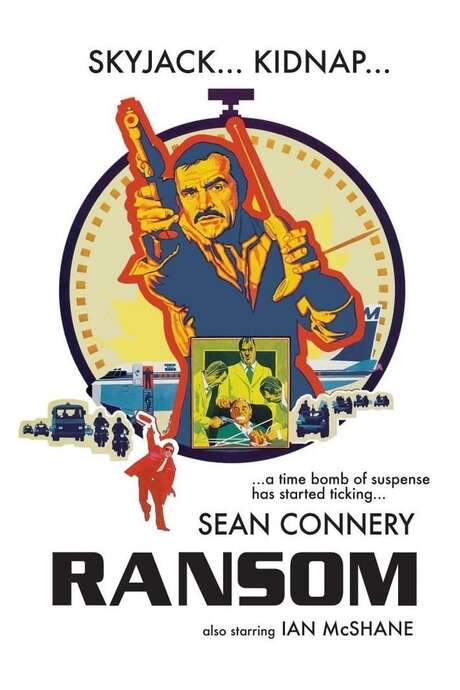
Ransom (1974) movie poster

Timeline

Ransom (1974) Timeline Explained – Every Event in Order

Release, runtime and language
1974 · 95 mins · English
Directed by
Casper Wrede
Starring
Sean Connery, Ian McShane, Isabel Dean, Christopher Ellison, Jeffry Wickham, Malcolm Rennie

After bomb attacks in London, terrorists kidnap Britain’s ambassador to Scandinavia and hold him in his own home. At the same time, a separate group hijacks an airliner at the capital airport, demanding their terms be met before releasing the passengers. Colonel Nils Tahlvik, security chief, leads an assault, but unseen forces thwart his efforts.

On this page (6)
  1. 1 Where to watch
  2. 2 Events in order (12)
  3. 3 Timeline questions answered
  4. 4 Movie threads
  5. 5 Movies like Ransom
  6. 6 Every angle

Where to watch

Where to Watch Ransom (1974)

Where can you watch Ransom? Stream, rent or buy it in the US, including on fuboTV: current JustWatch availability with up-to-date prices.

Streaming availability powered by JustWatch

12 events in order · contains spoilers

Ransom Timeline: Events in Chronological Order

Every key event of Ransom (1974) in order, scene by scene, with when and where it takes place. Use it to untangle flashbacks, time jumps and parallel storylines, to refresh your memory before the sequel or to find the exact scene you are thinking of.

  1. Hostage crisis begins at the ambassador's residence

    Terrorists seize the British ambassador in his residence in Scandinavia's capital. Col. Nils Tahlvik advocates a firm, uncompromising response, but he is overruled by both Scandinavia and Britain, who demand that all demands be met. The stage is set for a tense standoff between militants and authorities.

    Where
    British ambassador's residence, Scandinavia's capital
  2. Hijacking of the passenger plane

    A passenger airliner arriving at the capital's airport is hijacked by Ray Petrie's group. The hijackers press for contact with Martin Shepherd, the leader of the hostage-taking group. The security situation escalates as authorities scramble to respond.

    Where
    Capital city airport
  3. Plane parked on a taxiway

    The hijacked plane ends up parked on an isolated taxiway, isolating it from standard runway operations. Petrie uses this to leverage the situation and coordinate with Shepherd. The plan now revolves around the aircraft as the central stage for negotiations.

    Where
    Isolated taxiway, capital city airport
  4. Petrie connects with Shepherd

    Petrie, the hijacker, makes contact with Martin Shepherd, the head of the ambassador-hostage group. He persuades Shepherd to rethink the plan and to join him in a new arrangement. They begin to discuss using the hijacked plane to leave the scene.

    Where
    Hijacked aircraft
  5. Petrie convinces Shepherd to hijack the plane as the escape vehicle

    Shepherd agrees that the hostages and their captors should leave on the hijacked aircraft instead of a military transport. The plan shifts toward using the plane for their escape, complicating the rescue attempt. Tensions rise as the escape option becomes central.

    Where
    Hijacked aircraft
  6. Tahlvik's attempts to thwart the plan

    Tahlvik and his British-Scandinavian security force attempt several countermeasures to stop the plan from unfolding. Despite their best efforts, the changing plan and the hijacked plane sidestep each of the interventions. The situation grows more precarious as time passes.

    Where
    Scandinavian security operations center
  7. Revelation: the 'terrorists' are British operatives

    Tahlvik discovers that the on-board 'terrorists' are actually British secret operatives. He learns that British officials have misled Scandinavian authorities and undermined his attempts to capture Shepherd and Petrie. This revelation recontextualizes the conflict and the stakes of the operation.

    Where
    Operations center, Scandinavia
  8. Tahlvik boards the aircraft

    In a bold move, Tahlvik boards the airplane alone just before it is set to depart. His action triggers a direct confrontation between the Scandinavian authorities and the British operatives aboard. The balance of control shifts dramatically in the confined space.

    Where
    Onboard the airplane
  9. Shootout erupts between groups

    A fierce shootout erupts on the aircraft as the two groups collide. The tense battle unfolds in the confined cabin, threatening everyone aboard as the plan reaches its climax. The confrontation draws in bystanders and complicates any possible negotiation.

    Where
    Onboard the airplane
  10. Shepherd is killed

    Martin Shepherd dies in the crossfire during the climactic onboard confrontation. The loss marks the failure of the hostages' leadership attempt and foreshadows the plan's ultimate fate. The remaining players scramble to salvage their positions.

    Where
    Onboard the airplane
  11. Petrie is killed

    Ray Petrie also dies in the shootout, ending his insurgent operation and leaving the fate of the hostages unresolved. The death of Petrie closes a violent chapter and leaves the mission's objectives in jeopardy. The aircraft becomes a scene of multiple, conflicting interests.

    Where
    Onboard the airplane
  12. British deception revealed

    The earlier misdirection from British officials is exposed, showing how they manipulated the Scandinavian authorities to advance their covert goals. This revelation reframes the crisis and its handling, casting doubt on the integrity of external involvement. The incident prompts a reassessment of intergovernmental trust.

    Where
    Scandinavia's capital security hub

Last updated: February 18, 2026 at 23:47

Was this helpful?

Timeline questions answered

Ransom Timeline Explained: Your Questions Answered

When does it happen, and why in that order? The questions people ask about the chronology of Ransom (1974): time jumps, flashbacks, cause and effect between scenes and the correct order of events, each answered with spoilers.

Q1

Why was Colonel Tahlvik's hard-line approach overruled by the governments?

Tahlvik was overruled because both the Scandinavian and British governments believed meeting the terrorists' demands was the fastest way to secure the ambassador's safe release. The governments prioritized the diplomat's life over a tactical victory, forcing Tahlvik to adopt a passive stance while the crisis unfolded.

  • tahlvik
  • governments
  • overruled
  • hostage
  • diplomacy
Q2

How did Ray Petrie from the hijacked plane connect with Martin Shepherd at the ambassador's residence?

Ray Petrie, leading the plane hijackers, was known to Shepherd and used this connection to contact him directly. He convinced Shepherd that their best escape route was the hijacked aircraft rather than the military transport they had originally planned.

Foreshadowing: The timeline establishes Petrie's prior relationship with Shepherd before the crisis begins.

  • petrie
  • shepherd
  • connection
  • escape
  • aircraft
Q3

Why did the terrorists decide to use the hijacked plane for escape instead of a military craft?

Petrie persuaded Shepherd that the hijacked plane offered a better escape option because it was already in their control and could take off immediately. A military craft would have required more complex coordination and would have been easier for authorities to intercept.

  • escape
  • plane
  • hijack
  • military
  • shepherd
Q4

What were the British operatives on the plane actually trying to do?

The so-called terrorists on the airplane were actually British secret operatives whose real mission was to capture Shepherd and Petrie, not to harm passengers. They were running a covert operation that deliberately misled Scandinavian authorities about their true identity and intentions.

Foreshadowing: Early hints show the hijackers pressing for contact with Shepherd specifically, suggesting a targeted objective.

  • british operatives
  • secret agents
  • capture
  • shepherd
  • deception
Q5

Why did Colonel Tahlvik board the airplane alone instead of sending his team?

Tahlvik acted alone to prevent a full-scale confrontation that could have endangered remaining hostages and passengers. His solo boarding was a desperate gamble to directly confront the operatives before the plane could take off, leveraging his position as security chief to act decisively.

  • tahlvik
  • board
  • plane
  • alone
  • confrontation
Q6

How were British officials misleading Scandinavian authorities during the crisis?

British officials deliberately concealed that the hijackers were actually British secret agents working under covert orders. This deception allowed them to pursue their own agenda while undermining Tahlvik's attempts to resolve the situation through Scandinavian channels.

Foreshadowing: Tahlvik's repeated failures stem from operating with incomplete information about the true situation.

  • british officials
  • scandinavian
  • misled
  • deception
  • operation
Q7

What happened to Ambassador Palmer during the hostage crisis?

Ambassador Palmer remained held hostage at his residence throughout the crisis. While the summary doesn't detail his exact fate, the primary focus was on resolving the standoff to secure his release, with the governments prioritizing diplomatic solutions over military intervention.

  • ambassador
  • palmer
  • hostage
  • residence
Q8

How did both Martin Shepherd and Ray Petrie die?

Both Shepherd and Petrie were killed during the shootout that erupted when Tahlvik boarded the airplane. The confrontation between Scandinavian authorities and the British operatives aboard turned violent, resulting in both faction leaders dying in the crossfire just before the plane could depart.

Foreshadowing: Tahlvik's boarding was the catalyst that triggered the final violent confrontation.

  • shepherd
  • petrie
  • death
  • shootout
  • airplane
Q9

Why was Britain running a covert operation during the terrorist crisis?

Britain deployed secret operatives to capture Shepherd and Petrie, likely because they were wanted for previous terrorist activities. The covert nature of the operation suggests Britain preferred to handle the capture through deniable means rather than relying on Scandinavian authorities, possibly to maintain diplomatic flexibility.

  • britain
  • covert operation
  • capture
  • agents

Movie threads

More Movies Like Ransom, by Mood & Story

Curated lists built around what makes Ransom tick: the same mood, the same kind of story or the same emotional payoff. Each list explains why these movies belong together.

Tense Counter-Terrorism Crisis Thrillers like Ransom

High-stakes thrillers where operatives race to thwart terrorist plots against impossible odds. If you liked the high-stakes tension of Ransom, explore more movies about thwarting terrorist plots and hostage crises. These films share a fast pace, procedural action, and the constant anxiety of a mission hanging in the balance.

  • tense
  • suspenseful
  • anxious
  • methodical
  • high-stakes
  • urgent
  • Tone: tense, suspenseful
  • Pacing: fast, methodical
Why these movies?

The story pattern: Narratives in this thread typically begin with a sudden, catastrophic terrorist attack that sets a high-stakes mission in motion. The plot follows the methodical, often desperate, efforts of a counter-terrorism unit to outmaneuver the antagonists, leading to a climactic and violent confrontation.

Why they belong together: These movies are grouped by their shared focus on a singular, large-scale threat, a fast-paced and methodical plot driven by action and strategy, and a consistently tense and anxious mood that keeps viewers on edge.
Political Intrigue and Betrayal Thrillers like Ransom

Spy stories where loyalties are tested and allies may be enemies in a web of deception. Fans of the deceptive twists in Ransom will enjoy these movies where political agendas and hidden betrayals complicate the mission. They feature moderate narrative complexity, a tense tone, and a mixed sense of victory.

  • tense
  • misleading
  • surprising
  • paranoid
  • conspiracy
  • undercover
  • Tone: tense, misleading, surprising
  • Pacing: fast
Why these movies?

The story pattern: The narrative pattern involves a protagonist uncovering a conspiracy that goes beyond the initial conflict, revealing that trusted figures are part of the problem. The journey is one of disillusionment, where solving the external crisis is tied to exposing internal corruption, often leading to a morally ambiguous or bittersweet resolution.

Why they belong together: These films are connected by their thematic focus on deception within institutions, a plot structure built around a central twist revealing betrayal, and a mood that blends suspense with a pervasive sense of mistrust.

If you liked this

Movies Like Ransom

Similar movies to Ransom: the same genre, themes or kind of story. Each one comes with its own plot summary, timeline and ending explained.

Browse all movie summaries

Every angle

Ransom (1974) Explained: Plot, Timeline & Characters

Everything about Ransom in one place: what happens in the plot summary, the timeline in chronological order, the characters and meaning and a spoiler-free summary. What's After the Movie adds the cast, box office and post-credit scenes.

Coming soon on iOS and Android

The Plot Explained Movie Summary App

Plot summaries, endings explained and timelines on your phone. Catch up on any movie in minutes, save your favorites and never miss a twist again.

Be the first to know when we launch. Your email stays private, always.

Learn more about the app