










Plot Explained Spoilers guaranteed!
Plot Explained

Browse by genre

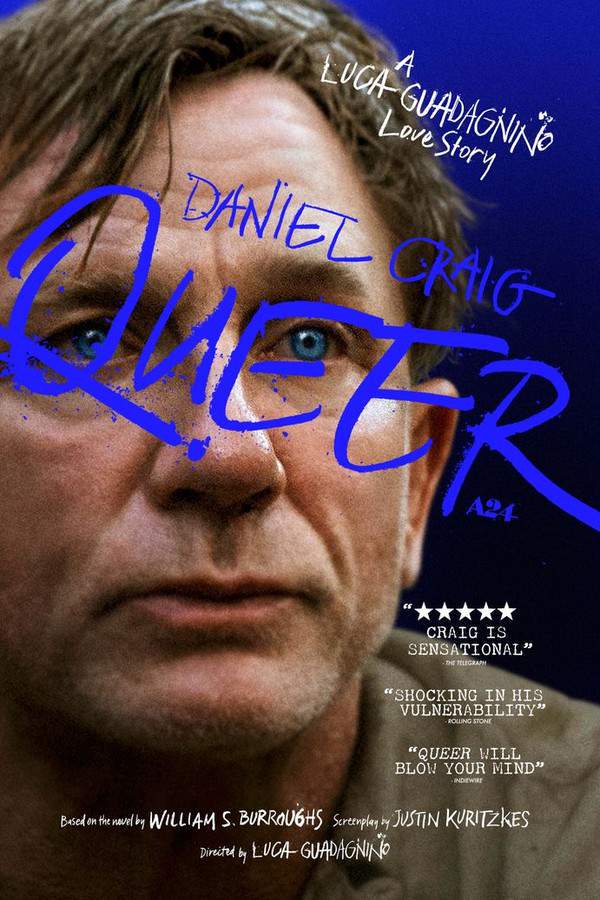
Queer (2024) movie poster

Characters & Themes

Queer (2024) Characters, Setting & Themes Explained

Release, runtime and language
2024 · 2 h 15 m · English
Echo score 61
JustWatch #18,711 10
Directed by
Luca Guadagnino
Starring
Jason Schwartzman, Gilberto Barraza, Daniel Craig, Drew Starkey, Drew Droege, Henrique Zaga
Budget
$53.4M

In 1950s Mexico City, William Lee, an American expatriate in his late forties, lives a solitary existence within a small American community. His quiet life is disrupted by the arrival of Eugene Allerton, a young student, who encourages William to seek a meaningful connection with someone.

On this page (9)
  1. 1 Where to watch
  2. 2 Characters explained (3)
  3. 3 Where & when it takes place
  4. 4 Themes & meaning (3)
  5. 5 Character & meaning questions
  6. 6 The book behind the movie
  7. 7 Movie threads
  8. 8 Movies like Queer
  9. 9 Every angle

Where to watch

Where to Watch Queer (2024)

Where can you watch Queer? Stream, rent or buy it in the US, including on Amazon Video, Apple TV Store and Fandango At Home: current JustWatch availability with up-to-date prices.

Streaming availability powered by JustWatch

3 main characters · contains spoilers

Queer Characters Explained: Who Is Who

The main characters of Queer (2024), heroes and villains: what drives them, how they change over the course of the story and what each of them reveals about the film's bigger ideas.

  • William Lee (Daniel Craig)

    William Lee is an American expatriate grappling with his identity and addiction. His charismatic yet troubled persona draws others in, yet his struggles leave him isolated. As he seeks connection, he oscillates between vulnerability and aggression, making him a complex and memorable character.

    • 🇺🇸 Expatriate
    • 💔 Troubled Soul
    • 🏳️‍🌈 Queer
  • Joe Guidry (Jason Schwartzman)

    Joe Guidry serves as a close friend and supportive figure for Lee, offering companionship in a in a chaotic world. He epitomizes a sense of loyalty amidst the disruptions of addiction and identity crises surrounding Lee. Joe's presence is both comforting and essential, grounding the narrative.

    • 👬 Friend
    • 🏳️‍🌈 Supportive
    • 💪 Loyal
  • Eugene Allerton (Drew Starkey)

    Eugene Allerton is portrayed as a younger man navigating his own understanding of sexuality. Initially reluctant, his interactions with Lee illustrate the conflicting emotions of desire and societal expectations. His character embodies the journey from confusion to acceptance, resonating with themes of queer identity.

    • 🚶‍♂️ Young Man
    • 🏳️‍🌈 Conflicted Identity
    • 💔 Desire

Last updated: December 24, 2024 at 10:02

Was this helpful?

Setting

Where and When Does Queer Take Place?

The setting of Queer (2024): the year and time period, the places and locations, and how they shape the characters, the mood and the tension of the story.

Time period

1950s

Set in the 1950s, this period is marked by significant cultural changes and the questioning of social norms, particularly regarding sexuality. The backdrop of post-war America influences the characters' lives, as many expatriates sought refuge and freedom in places like Mexico. This era also saw the emergence of the LGBTQ+ rights movement, shaping the experiences of queer individuals.

Location

Mexico City, Quito, South America

The film unfolds primarily in Mexico City during the 1950s, a vibrant urban setting known for its rich culture and history. The characters later journey into the jungles of South America, specifically Quito, where the lush landscapes provide a stark contrast to city life. These locations reflect the protagonists' search for connection and solace amidst their personal struggles.

  • 🌆 City
  • 🌴 Jungle
  • 🌎 Foreign Lands

Last updated: December 24, 2024 at 10:02

Was this helpful?

3 major themes

Queer Meaning: Themes & Message Explained

What is Queer (2024) really about? The emotional, social and philosophical themes the film keeps returning to, its symbolism and the message beneath the surface.

  • Isolation

    The theme of isolation pervades the narrative, illustrated through Lee's struggles with addiction and the complexity of his relationships. Despite being surrounded by friends, he experiences profound loneliness as he seeks genuine connections. This theme highlights the yearning for love and acceptance in a world where such desires are often shamed.

  • Exploration

    The journey to South America symbolizes a deeper exploration of self and identity. Lee and Allerton's travels reflect their search for meaning and understanding amid personal turmoil. As they navigate physical landscapes and their complex feelings, the film delves into themes of discovery—both externally and within their inner lives.

  • Addiction

    Addiction plays a critical role in the story, influencing Lee's relationships and decisions. It serves as both a barrier to connection and a catalyst for his explorations. The portrayal of Lee's dependency on heroin adds a layer of complexity, emphasizing the struggle many face in combating societal pressures while trying to embrace their true selves.

Last updated: December 24, 2024 at 10:02

Was this helpful?

Character & theme questions

Queer Characters & Meaning: Your Questions Answered

The questions people ask about Queer (2024): who the characters really are, their relationships, what the symbols mean, where it takes place and what the movie is really about. Each answer contains spoilers.

Q1

Where does the story take place?

The film is primarily set in 1950s Mexico City, where William Lee lives as an American expatriate among a small community of transplants. Later, the story shifts to the jungles of South America, specifically Quito, as Lee and Allerton journey together into more remote, lush landscapes that contrast sharply with the urban environment.

  • mexico city
  • quito
  • south america
  • setting
  • 1950s
Q2

What time period is the movie set in?

The story unfolds in the 1950s, a period marked by significant cultural shifts and growing questioning of social norms around sexuality. This post-war era saw many American expatriates seeking refuge and freedom in places like Mexico, away from restrictive societal expectations.

  • 1950s
  • era
  • time period
  • post-war
  • historical context
Q3

What are the main themes explored in the film?

The film explores three interconnected themes: isolation, which pervades the narrative through Lee's struggles with addiction and his profound loneliness despite being surrounded by others; exploration, as the journey to South America symbolizes a deeper search for self and identity; and addiction, which serves as both a barrier to connection and a catalyst for Lee's emotional explorations.

  • isolation
  • exploration
  • addiction
  • themes
  • identity
Q4

Who is William Lee?

William Lee is an American expatriate in his late forties living in 1950s Mexico City. He is a charismatic but troubled figure grappling with his identity and addiction to heroin. Despite drawing others in with his personality, his struggles with substance use and emotional instability leave him isolated, creating a complex character driven by a deep yearning for genuine connection.

  • william lee
  • character
  • expatriate
  • addiction
Q5

Who is Eugene Allerton?

Eugene Allerton is a young student who arrives in Mexico City and becomes the object of William Lee's affection. Initially reluctant and navigating his own understanding of his sexuality, Eugene represents the conflicting emotions of desire and societal expectations. His character arc embodies a journey from confusion toward acceptance, resonating with broader themes of queer identity.

  • eugene allerton
  • character
  • student
  • queer identity
Q6

Who is Joe Guidry?

Joe Guidry is William Lee's close friend and a supportive presence throughout the film. He offers companionship and loyalty amid the chaos of Lee's addiction and identity struggles. Joe serves as a grounding force in the narrative, providing stability while witnessing Lee's turbulent emotional journey.

  • joe guidry
  • character
  • friend
  • support
Q7

What does the journey to South America represent?

The journey into the jungles of South America symbolizes a deeper exploration of self and identity for both Lee and Allerton. As they navigate these lush, remote landscapes far from the structured environment of Mexico City, the film uses the physical journey to reflect their internal search for meaning, understanding, and connection amid personal turmoil.

  • south america
  • journey
  • symbolism
  • self-discovery
  • quito
Q8

How is addiction portrayed in the movie?

Addiction plays a critical role in shaping William Lee's relationships and decisions throughout the film. His dependency on heroin acts as both an obstacle to forming genuine connections and a driving force behind his emotional and physical explorations. The portrayal emphasizes the complex struggle many face in battling societal pressures while trying to embrace their true selves.

  • addiction
  • heroin
  • substance use
  • dependency
Q9

What does the theme of isolation represent in the story?

The theme of isolation represents William Lee's profound loneliness despite being physically surrounded by others within the American expatriate community in Mexico City. His struggles with addiction and the complexity of his relationships create emotional distance from those around him, highlighting a universal yearning for love and acceptance in a world where such desires are often shamed.

  • isolation
  • loneliness
  • connection
  • alienation
Q10

How does the movie address queer identity in the 1950s?

The film examines queer identity through the lens of 1950s societal constraints, showing how characters navigat their sexuality in a time when being openly queer was heavily stigmatized. The setting of Mexico City, known for its relatively more tolerant expatriate community, provides a backdrop for exploring the tension between desire and social expectations, while the era's connection to the early LGBTQ+ rights movement adds historical context.

  • queer identity
  • sexuality
  • 1950s
  • lgbtq
  • social norms

Movie threads

More Movies Like Queer, by Mood & Story

Curated lists built around what makes Queer tick: the same mood, the same kind of story or the same emotional payoff. Each list explains why these movies belong together.

Melancholic character dramas like Queer

Slow, introspective journeys of solitary figures grappling with identity and longing. If you liked the atmospheric, character-driven melancholy of Queer, explore more movies that focus on solitary figures and their introspective journeys. These films share a slow pacing, heavy emotional weight, and a deep dive into themes of identity, longing, and unrequited love.

  • melancholic
  • introspective
  • lonely
  • haunting
  • dreamlike
  • solitary
  • Tone: melancholic, introspective, haunting
  • Pacing: slow, deliberate, immersive
Why these movies?

The story pattern: These narratives follow a central, often isolated character as they navigate a period of intense personal reflection or crisis. The plot is secondary to the exploration of their internal state, which is frequently communicated through dreamlike sequences, a deliberate pace, and a pervasive sense of yearning that may or may not be resolved.

Why they belong together: They are grouped by their shared commitment to mood and character depth over complex plotting. The unifying elements are a melancholic tone, slow pacing that allows for introspection, and a central theme of grappling with a profound sense of loneliness or a fractured identity.

Movies about hallucinogenic journeys and obsessive love like Queer

Intense explorations of addiction and obsessive love, blurred by psychological distress. For viewers who appreciated the intense, drug-fueled hallucinations and the theme of destructive, unrequited love in Queer. This thread collects films about psychedelic self-discovery, addiction, and psychologically intense romantic obsessions that challenge perception.

  • hallucinogenic
  • distressing
  • obsessive
  • addiction
  • psychological
  • unrequited love
  • Tone: intense, distressing, melancholic
  • Pacing: variable, often slow with intense bursts
Why these movies?

The story pattern: The narrative pattern involves a protagonist falling into a spiral of obsession, often romantic or existential, exacerbated by substance use. Their perception becomes unreliable, leading to hallucinogenic sequences that mirror their inner turmoil. The journey is typically one of self-destruction, culminating in a bleak or sad realization of their isolation.

Why they belong together: These films are connected by their exploration of altered states of consciousness and the psychological unraveling of a character. They share a high intensity, disturbing themes, and a focus on how desire and addiction can distort reality and lead to emotional collapse.

If you liked this

Movies Like Queer

Similar movies to Queer: the same genre, themes or kind of story. Each one comes with its own plot summary, timeline and ending explained.

Browse all movie summaries

Every angle

Queer (2024) Explained: Plot, Ending, Timeline & Characters

Everything about Queer in one place: what happens in the plot summary, the timeline in chronological order, the characters and meaning, the ending explained and a spoiler-free summary. What's After the Movie adds the cast, box office and post-credit scenes.

Coming soon on iOS and Android

The Plot Explained Movie Summary App

Plot summaries, endings explained and timelines on your phone. Catch up on any movie in minutes, save your favorites and never miss a twist again.

Be the first to know when we launch. Your email stays private, always.

Learn more about the app