Plot Explained Spoilers guaranteed!
Plot Explained

Browse by genre

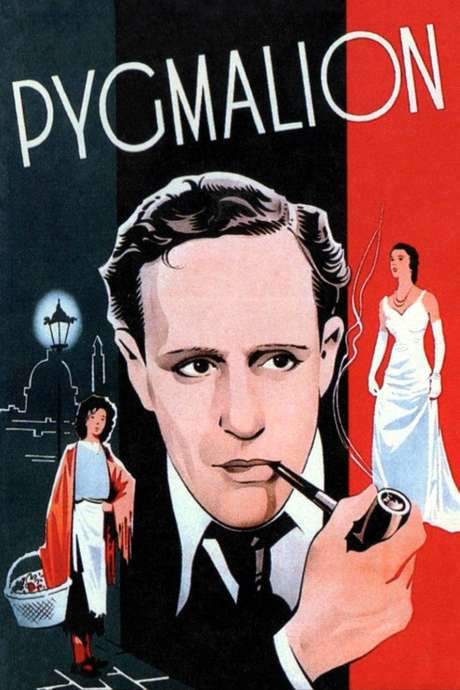
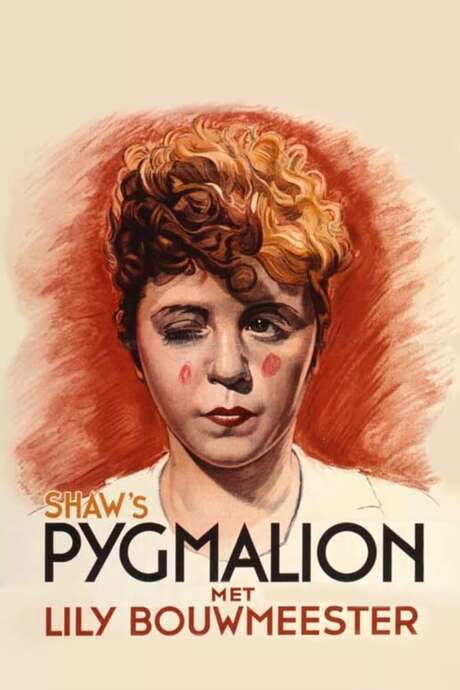
Pygmalion (1937) movie poster

Timeline

Pygmalion (1937) Timeline Explained – Every Event in Order

Release, runtime and language
1937 · 95 mins · Dutch
Loading streaming availability…
Directed by
Ludwig Berger
Starring
Elly Van Stekelenburg, Lily Bouwmeester, Sara Heyblom, Nel Oosthout, Matthieu van Eysden, Johan De Meester

When linguistics professor Henry Higgins claims he can turn Cockney flower girl Eliza Doolittle into a refined lady in six months, Colonel Pickering wagers to test him. Higgins secures a financial agreement with Eliza’s dust‑man father, Alfred, and she moves into his home for rigorous speech and manners training. As Eliza’s metamorphosis progresses, Higgins himself is forced to confront his own attitudes.

On this page (7)
  1. 1 Where to watch
  2. 2 Events in order (12)
  3. 3 Timeline questions answered
  4. 4 The book behind the movie
  5. 5 Movie threads
  6. 6 Movies like Pygmalion
  7. 7 Every angle
Loading streaming availability…

12 events in order · contains spoilers

Pygmalion Timeline: Events in Chronological Order

Every key event of Pygmalion (1937) in order, scene by scene, with when and where it takes place. Use it to untangle flashbacks, time jumps and parallel storylines, to refresh your memory before the sequel or to find the exact scene you are thinking of.

  1. Evening Covent Garden encounter and Higgins's boast

    During an evening in Covent Garden, Professor Higgins is mistaken for a policeman by passers-by, provoking protests from Eliza Doolittle. Higgins and Pickering discuss language and social class as the crowd disperses. Higgins boasts that with his method, Eliza could pass as a duchess if she learns to speak properly.

    When
    Evening
    Where
    Covent Garden, London
  2. Eliza asks for elocution lessons

    The next morning, Eliza arrives at Higgins' house to request elocution lessons. Colonel Pickering is impressed by her resolve and makes a bet to cover all expenses if Higgins can prove his boast. Higgins accepts, setting up the experiment to transform Eliza's speech and prospects.

    When
    Morning
    Where
    Higgins' house
  3. Bath and the roguish father arrives

    Eliza is prepared for lessons with a bath overseen by Mrs. Pearce while Higgins and Pickering prepare for the test. Alfred Doolittle, Eliza's father, arrives to demand compensation for losing his daughter. Higgins offers £10, but Doolittle accepts only £5, explaining he wants just enough for a drunken weekend.

    When
    Morning
    Where
    Higgins' house
  4. Eliza debuts at Mrs. Higgins’ house

    After weeks of internship, Eliza attends an at-home gathering hosted by Mrs. Higgins. She speaks with a refined accent but fills her conversation with slang and profanity, shocking the guests. Freddy Eynsford-Hill is captivated by her, while Mrs. Higgins laments that her son and Pickering treat Eliza as a plaything rather than a person.

    When
    Weeks later
    Where
    Mrs. Higgins’ house
  5. Prepping for the embassy and facing Karpathy

    Weeks of coaching culminate in an embassy reception where Higgins fears exposure by Count Aristid Karpathy, a former pupil who can discern origins from speech. Eliza manages to deceive Karpathy, convincing him that she is a Hungarian princess rather than a native speaker. The tension of potential discovery drives the final polish of her elocution.

    When
    Evening
    Where
    London embassy
  6. Return from the reception and quarrel

    Higgins and Pickering celebrate their perceived success, selfishly neglecting Eliza's contribution and feelings. She quarrels with Higgins, throws his slippers at him, and decides to seek refuge at Mrs. Higgins's home. The rift between teacher and student widens at this moment.

    When
    Night
    Where
    Higgins' house
  7. Morning revelations and Doolittle’s bequest

    The following morning, Higgins learns that Eliza is staying with Mrs. Higgins. Alfred Doolittle arrives to protest how Higgins has disrupted his life, only to reveal the bequest from an American millionaire that would force him into respectability. Doolittle now plans to marry his unwed partner and seeks support from Eliza, Pickering, and Mrs. Higgins.

    When
    Morning
    Where
    Higgins' house
  8. Eliza asserts independence and choices

    Higgins presses Eliza to return to his script, but she resists, declaring that she would rather marry Freddy, a charming but penniless suitor. She also warns that she could use her elocution skills to teach others and gain economic independence, rather than relying on Higgins or her former circumstances.

    When
    Morning
    Where
    Higgins' house
  9. The wedding and the journey to it

    With the wedding of Doolittle's partner approaching, the group leaves to attend the ceremony, highlighting the social changes and upheavals that have accompanied Eliza’s transformation. The wedding becomes a backdrop to the evolving relationships among the characters. Eliza's stance remains independent even as the others prepare for the event.

    When
    Day
    Where
    London
  10. Higgins discovers Eliza’s true voice

    Higgins returns home after a long walk and plays a recording of Eliza's first visit, only to be startled by her present, real self at the study door. She quotes her earlier self, mocks him, and asks where his slippers are. The moment leaves their future relationship ambiguous and unsettled.

    When
    Morning after the wedding
    Where
    Higgins' study
  11. Freddy pursues Eliza

    Freddy Eynsford-Hill continues to pursue Eliza, seeking another chance to see her after the social upheavals and the embassy events. Eliza weighs romance against her own burgeoning sense of independence and agency. The dynamic between them adds a future-tense tension to the resolution.

    When
    After embassy
    Where
    London streets and venues
  12. A final note of ambiguity

    The film closes without a definitive resolution: Higgins and Eliza stand on unequal footing, yet they have moved closer in understanding. The ending suggests potential collaboration or further clashes, leaving their fate deliberately open to interpretation. The audience is left with a sense of possibility rather than closure.

    When
    Evening
    Where
    Higgins' study / surrounding rooms

Last updated: December 04, 2025 at 15:32

Was this helpful?

Timeline questions answered

Pygmalion Timeline Explained: Your Questions Answered

When does it happen, and why in that order? The questions people ask about the chronology of Pygmalion (1937): time jumps, flashbacks, cause and effect between scenes and the correct order of events, each answered with spoilers.

Q1

Why does Eliza throw Higgins's slippers at him?

Eliza throws the slippers at Higgins because she feels completely unappreciated after the embassy reception. Higgins and Pickering spend the entire carriage ride home celebrating their own success in fooling Karpathy, completely ignoring Eliza's contribution and emotional state. She is wounded by their indifference and sees Higgins as treating her as a mere experiment rather than a person. The slippers moment symbolizes her breaking point and her refusal to be treated as a plaything any longer.

Foreshadowing: Earlier, Mrs. Higgins warns her son and Pickering that they treat Eliza more like a doll than a person deserving respect, foreshadowing Eliza's eventual revolt.

  • Eliza Doolittle
  • slippers
  • Higgins
  • emotional hurt
  • embassy reception
Q2

Why does Karpathy mistake Eliza for a Hungarian princess?

Karpathy mistakes Eliza for a Hungarian princess because her English has become so impeccably refined that it sounds inauthentically native. As a speech expert who teaches American heiresses and can detect social origins from accents, Karpathy concludes that someone speaking such flawless English must be a non-native speaker of noble birth. His expertise becomes the very mechanism of his deception, her training is too good, making her seem foreign rather than naturally English.

Foreshadowing: Higgins explicitly warns Pickering before the reception that Karpathy might expose Eliza, creating tension about whether her training will hold up.

  • Karpathy
  • Hungarian princess
  • embassy
  • speech training
  • deception
Q3

Why does Alfred Doolittle have to become respectable?

Alfred Doolittle must become respectable because Higgins once jokingly told an American millionaire that Doolittle was England's most original moralist. The millionaire took this seriously and left Doolittle a bequest that requires him to maintain a respectable lifestyle, he cannot simply ignore it or refuse the money. This unexpected consequence turns the roguish dustman into a man bound by social obligations he never wanted, forcing him to marry his unwed partner and attend a fashionable London church wedding.

Foreshadowing: Higgins's casual joke about Doolittle being a moralist plants the seed for this unexpected transformation.

  • Alfred Doolittle
  • bequest
  • respectable
  • moralist
  • millionaire
Q4

Why does Eliza say she would rather marry Freddy?

Eliza says she would rather marry Freddy Eynsford-Hill because he genuinely admires and is captivated by her, unlike Higgins who treats her as an experiment. Freddy represents authentic romantic interest rather than intellectual objectification. Additionally, Eliza is asserting her independence, she wants to choose her own path rather than remain dependent on Higgins. She even threatens to use her elocution skills to teach others and gain financial independence if Higgins doesn't accept her terms.

Foreshadowing: Freddy was already captivated by Eliza at Mrs. Higgins's party, showing his genuine interest early on.

  • Freddy Eynsford-Hill
  • marriage
  • independence
  • elocution lessons
Q5

Why does Mrs. Higgins criticize her son and Pickering?

Mrs. Higgins criticizes her son and Pickering after Eliza's debut at her party because she sees how they treat Eliza as a scientific experiment or social plaything rather than as a human being with feelings. Despite Eliza speaking with a refined accent, her slang-filled chatter and profanity at the gathering scandalize the guests. More importantly, Mrs. Higgins recognizes the ethical problem in using someone merely to prove a linguistic theory without regard for her dignity or emotional well-being.

Foreshadowing: This criticism anticipates the later rift when Eliza finally confronts Higgins about being unappreciated.

  • Mrs. Higgins
  • criticism
  • respect
  • experiment
  • dignity
Q6

What happens at the end between Eliza and Higgins?

The ending remains deliberately ambiguous. After the wedding and a night apart, Higgins returns home and plays a recording of Eliza's first visit, only to hear her real voice at the door mocking her former self. When he asks for his slippers, the same slippers she threw at him, she throws them again and asks where they are. Their future together is left unresolved, with the suggestion of potential collaboration or further conflict, leaving the audience with a sense of possibility rather than closure.

Foreshadowing: Earlier scenes establish the recurring motif of the slippers and Higgins's tendency to overlook Eliza's feelings, which the ending callbacks to.

  • ambiguous ending
  • slippers
  • reconciliation
  • Higgins and Eliza
Q7

Why does Higgins give Alfred Doolittle only £5 instead of £10?

Higgins initially offers Alfred Doolittle £10 for losing his daughter, but Doolittle insists on taking only £5. He explains that as one of the undeserving poor, he only wants enough money for a drunken weekend, he has no interest in being overly compensated or feeling obligated. Doolittle's roguish charm and practical philosophy amuse Higgins, who accepts this odd arrangement and even respects the man's honesty about his modest desires.

Foreshadowing: This early scene establishes Doolittle's character as a rogue who values freedom over respectability, making his later forced respectability even more ironic.

  • Alfred Doolittle
  • five pounds
  • dustman
  • character
Q8

Why does Eliza主动来找Higgins学语音?

Eliza主动来找Higgins学习语音,因为她在Covent Garden事件后看到了改变自己命运的机会。Higgins当众声称如果她能学会准确自信地说话,她就能为自己创造更光明的未来,甚至可以假装成公爵夫人。这番话给了出身低微的卖花女一个摆脱贫困、提升社会地位的希望,她意识到掌握标准英语可能是自己唯一上升的途径。

Foreshadowing: The Covent Garden incident where Higgins is mistaken for a policeman provides the initial spark for Eliza's ambition.

  • Eliza Doolittle
  • elocution lessons
  • social class
  • ambition
  • Covent Garden

Movie threads

More Movies Like Pygmalion, by Mood & Story

Curated lists built around what makes Pygmalion tick: the same mood, the same kind of story or the same emotional payoff. Each list explains why these movies belong together.

Witty social satire movies like Pygmalion

Charming comedies that cleverly critique society while inspiring personal transformation. If you enjoyed the sharp wit and class commentary of Pygmalion, explore these comedies where clever dialogue and charming characters navigate and critique social conventions, exploring themes of identity and transformation.

  • witty
  • satirical
  • charming
  • class-conscious
  • uplifting
  • verbal
  • Tone: light, witty, satirical
  • Pacing: steady, conversational
Why these movies?

The story pattern: The narratives often revolve around a central bet, experiment, or social situation that brings characters from different worlds into collision. This clash provides the engine for both comedy and critique, as protagonists challenge the status quo and undergo significant personal growth. The journey is more about intellectual and social awakening than deep emotional trauma.

Why they belong together: Movies are grouped here for their shared comedic tone, their focus on using wit to explore social themes, and their balance of entertainment with thoughtful commentary. They share a light emotional weight and a steady, dialogue-driven pace centered on character interaction.

Mentor-protege transformation stories like Pygmalion

Stories of unlikely mentorship where a pupil's growth challenges their teacher's worldview. Discover movies similar to Pygmalion that explore the complex, transformative relationship between a mentor and their student, where a bet or project leads to unexpected personal growth for both characters and an open-ended conclusion.

  • transformative
  • charming
  • uplifting
  • complex relationships
  • empowering
  • character-driven
  • Tone: charming, transformative, ambiguous
  • Pacing: steady, character-focused
Why these movies?

The story pattern: The plot typically begins with a challenge or wager that sets the transformation in motion. We follow the rigorous training process, the protege's eventual success in a public test, and the ensuing personal crisis where the power dynamic is upended. The ending is often less about a conventional happy resolution and more about the changed relationship and newfound independence of the student.

Why they belong together: These films share a core narrative structure centered on a transformative relationship. They mix elements of comedy and drama, focusing on character arcs over plot twists, and often conclude with an emotionally resonant but ambiguous ending that prioritizes character growth over tidy resolutions.

If you liked this

Movies Like Pygmalion

Similar movies to Pygmalion: the same genre, themes or kind of story. Each one comes with its own plot summary, timeline and ending explained.

Browse all movie summaries

Every angle

Pygmalion (1937) Explained: Plot, Timeline & Characters

Everything about Pygmalion in one place: what happens in the plot summary, the timeline in chronological order, the characters and meaning and a spoiler-free summary. What's After the Movie adds the cast, box office and post-credit scenes.

Coming soon on iOS and Android

The Plot Explained Movie Summary App

Plot summaries, endings explained and timelines on your phone. Catch up on any movie in minutes, save your favorites and never miss a twist again.

Be the first to know when we launch. Your email stays private, always.

Learn more about the app