Plot Explained Spoilers guaranteed!
Plot Explained

Browse by genre

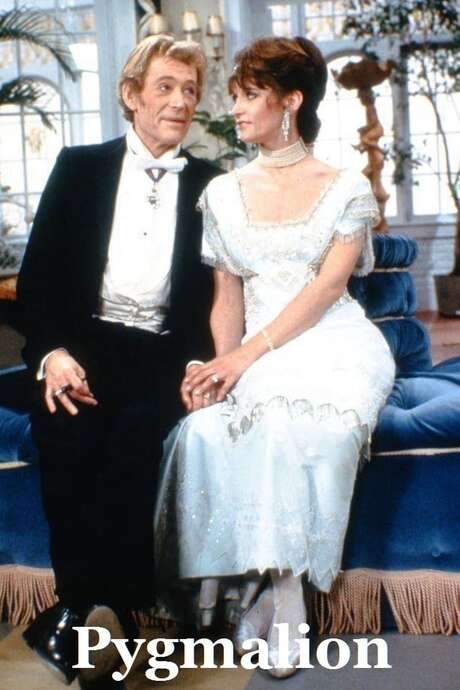
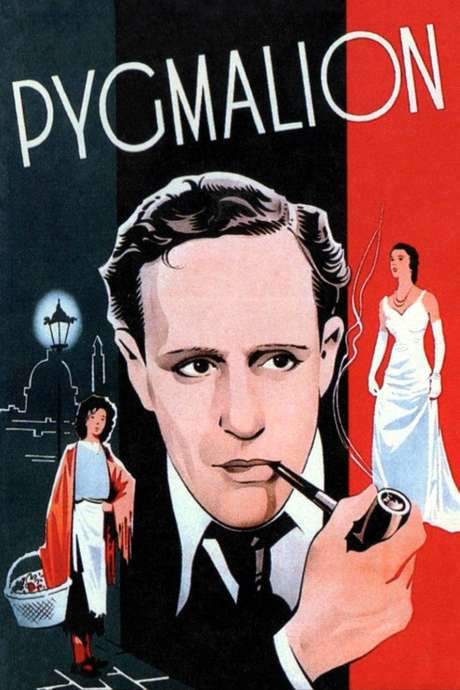
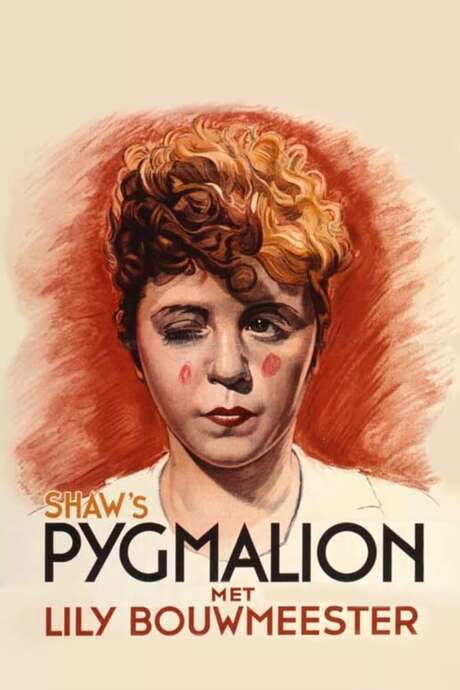
Pygmalion (1937) movie poster

Characters & Themes

Pygmalion (1937) Characters, Setting & Themes Explained

Release, runtime and language
1937 · 95 mins · Dutch
Loading streaming availability…
Directed by
Ludwig Berger
Starring
Elly Van Stekelenburg, Lily Bouwmeester, Sara Heyblom, Nel Oosthout, Matthieu van Eysden, Johan De Meester

When linguistics professor Henry Higgins claims he can turn Cockney flower girl Eliza Doolittle into a refined lady in six months, Colonel Pickering wagers to test him. Higgins secures a financial agreement with Eliza’s dust‑man father, Alfred, and she moves into his home for rigorous speech and manners training. As Eliza’s metamorphosis progresses, Higgins himself is forced to confront his own attitudes.

On this page (9)
  1. 1 Where to watch
  2. 2 Characters explained (9)
  3. 3 Where & when it takes place
  4. 4 Themes & meaning (3)
  5. 5 Character & meaning questions
  6. 6 The book behind the movie
  7. 7 Movie threads
  8. 8 Movies like Pygmalion
  9. 9 Every angle
Loading streaming availability…

9 main characters · contains spoilers

Pygmalion Characters Explained: Who Is Who

The main characters of Pygmalion (1937), heroes and villains: what drives them, how they change over the course of the story and what each of them reveals about the film's bigger ideas.

  • Eliza Doolittle (Lily Bouwmeester)

    Eliza is a bold, quick-witted flower seller who becomes a focused, determined learner under Higgins's tutelage. She navigates the tension between her street speech and the aristocratic veneer she’s pressured to adopt. Her drive for autonomy and belonging propels the central conflict of transformation.

    • 🗣️ Protagonist
    • 💬 Transformation
    • 💪 Agency
  • Professor Henry Higgins (Johan De Meester)

    Higgins is a brilliant but prideful linguist who believes language shapes social worth. He treats Eliza as a linguistic project and measures success by outward polish rather than inner change. His confidence borders on detachment, yet his expertise drives the core conflict.

    • 🧠 Mentor
    • 🗣️ Language expert
    • 🧭 Ambition
  • Colonel Pickering (Eduard Verkade)

    Pickering acts as a humane foil to Higgins, supporting Eliza with respect and belief in her potential. He values humanity over status and helps temper Higgins's more abrasive methods. His kindness provides a counterweight to the professor's single-minded pursuit.

    • 🤝 Support
    • 🗺️ Ethos
    • 🧭 Diplomacy
  • Mrs. Higgins (Emma Morel)

    Mrs. Higgins serves as a perceptive observer of her son's methods and Eliza's feelings. She champions Eliza's dignity and recognizes the emotional cost of the experiment. Her presence questions whether refinement should come at the expense of humanity.

    • 🧭 Observer
    • 🪪 Etiquette
    • 💬 Insight
  • Doeluttel (Mr. Doeluttel) (Matthieu van Eysden)

    Mr. Doeluttel is Eliza's father, a roguish dustman figure whose life is upended by social shifts. He embodies the pressures and paradoxes of upward mobility in a world of appearances. His interactions highlight family dynamics and economic concerns.

    • 👨‍👧 Family
    • 🧱 Social change
    • 🗣️ Accent-strategy
  • Mevrouw van Heteren-Hill (Sara Heyblom)

    A socialite whose reception becomes a test for Eliza's new persona. She represents high-society expectations and the judgment Eliza risks facing. The scene reveals how appearances influence reputation.

    • 🎩 High society
    • 🪞 Judgment
    • 🗣️ Etiquette
  • Mevrouw van Heteren-Hill's dochter (Tous Sigma)

    A guest in upper-class circles who embodies the social gaze Eliza confronts. Her reactions underscore the performance of refinement and the pressures of propriety. She helps illustrate the era's social rituals.

    • 👗 Fashion
    • 🧐 Observation
    • 🧭 Social ritual
  • Mevrouw van Heteren-Hill's zoon (Wim Kan)

    A young member of high society who mirrors the era's views on class and reputation. He participates in or observes social events that test Eliza's transformation. His presence anchors the male gaze of the social circle.

    • 👦 Youth
    • 🗣️ Social pressure
    • 🪄 Influence
  • Juffrouw Snijders (Nel Oosthout)

    A household figure who helps populate Higgins's social world. Her presence adds to the sense of routine and order in domestic spaces where Eliza learns and is judged.

    • 🧹 Support
    • 🏠 Domestic life
    • 🗣️ Attitude

Last updated: December 04, 2025 at 15:21

Was this helpful?

Setting

Where and When Does Pygmalion Take Place?

The setting of Pygmalion (1937): the year and time period, the places and locations, and how they shape the characters, the mood and the tension of the story.

Time period

Early 20th century (Edwardian era)

The story unfolds in a period of rigid class structure and formal manners. Language, etiquette, and social reputation are crucial markers of status. Settings such as ballrooms, drawing rooms, and city streets reflect the era’s emphasis on appearance and propriety.

Location

London, Covent Garden

London provides the bustling backdrop for a study of social class and language. The action unfolds in Covent Garden streets, Higgins's urban residence, and upscale social events like embassy receptions. The city’s public spaces contrast with intimate drawing-room settings where social rules and appearances are constantly negotiated.

  • 🏙️ London
  • 🎭 Classic
  • 🗺️ Urban setting

Last updated: December 04, 2025 at 15:21

Was this helpful?

3 major themes

Pygmalion Meaning: Themes & Message Explained

What is Pygmalion (1937) really about? The emotional, social and philosophical themes the film keeps returning to, its symbolism and the message beneath the surface.

  • Language & Class

    Mastering elocution is presented as a potential passport to higher social circles, challenging the notion that birth determines worth. Higgins believes speech can elevate Eliza, while she seeks autonomy beyond her birth status. The tale probes authenticity versus performance in the pursuit of social advancement.

  • Independence & Identity

    Eliza pursues economic and personal independence, contesting a dynamic where she is treated as a project. Her evolving identity clashes with expectations and the power dynamics of Higgins's experiment. The narrative tracks her move toward agency and self-definition.

  • Power & Morality

    Teacher–pupil dynamics reveal ethical and social power imbalances shaped by wealth and status. Doolittle’s forced respectability and the surrounding social gaze highlight moral questions about manipulation and impact. The ending leaves Eliza’s and Higgins’s futures open to interpretation.

Last updated: December 04, 2025 at 15:21

Was this helpful?

Character & theme questions

Pygmalion Characters & Meaning: Your Questions Answered

The questions people ask about Pygmalion (1937): who the characters really are, their relationships, what the symbols mean, where it takes place and what the movie is really about. Each answer contains spoilers.

Q1

Where does the story take place?

The film is set primarily in London, with key scenes taking place in Covent Garden streets where Eliza sells flowers, Professor Higgins's urban residence, and upscale social venues like embassy receptions. These locations contrast the gritty, working-class areas with the refined drawing rooms and ballrooms of high society.

  • london
  • covent garden
  • setting
  • locations
  • england
Q2

What time period is the film set in?

Pygmalion is set in the Edwardian era of the early 20th century, a period marked by rigid class structures and formal social manners. The era's emphasis on appearance, etiquette, and social reputation shapes the central conflict as Eliza attempts to navigate society's expectations.

  • edwardian era
  • early 20th century
  • time period
  • 1910s
  • georgian era
Q3

What is the Language and Class theme in Pygmalion?

The film explores how mastering elocution serves as a potential passport to higher social circles, challenging the belief that birth determines worth. Higgins believes speech can elevate Eliza, while she seeks autonomy beyond her birth status. The story probes authenticity versus performance in social advancement.

  • language
  • class
  • social mobility
  • elocution
  • speech
  • cockney
Q4

What does Pygmalion say about independence and identity?

Eliza pursues economic and personal independence, challenging the dynamic where she is treated as a project rather than a person. Her evolving identity clashes with societal expectations and the power dynamics of Higgins's experiment. The narrative tracks her journey toward agency and self-definition.

  • independence
  • identity
  • autonomy
  • self-worth
  • eliza transformation
Q5

How does Pygmalion explore power and morality?

The teacher-pupil dynamic between Higgins and Eliza reveals ethical and social power imbalances shaped by wealth and status. The story highlights moral questions about manipulation and impact, particularly through Eliza's father Doeluttel's forced respectability. The ending leaves the characters' futures open, suggesting unresolved tensions between power and humanity.

  • power
  • morality
  • ethics
  • manipulation
  • social status
  • henry higgins
Q6

Who is Eliza Doolittle?

Eliza Doolittle is a bold, quick-witted Cockney flower seller who becomes Professor Higgins's linguistic project. Determined and resourceful, she navigates the tension between her street speech and the aristocratic veneer she's pressured to adopt. Her drive for autonomy and belonging propels the central conflict of transformation.

  • eliza doolittle
  • flower girl
  • protagonist
  • cockney
  • transformation
Q7

Who is Professor Henry Higgins?

Professor Henry Higgins is a brilliant but prideful linguist who believes language shapes social worth. He treats Eliza as a linguistic experiment, measuring success by outward polish rather than inner growth. His confidence borders on detachment, yet his expertise drives the story's core conflict.

  • henry higgins
  • professor
  • linguist
  • phonetician
  • protagonist
Q8

What is Colonel Pickering's role in the story?

Colonel Pickering serves as a humane foil to Professor Higgins, supporting Eliza with respect and belief in her potential. He values humanity over status and helps temper Higgins's more abrasive methods. His kindness provides counterweight to the professor's single-minded pursuit of his experiment.

  • colonel pickering
  • supporting character
  • mentor
  • humanity
Q9

What social class issues does Pygmalion address?

Pygmalion examines the rigid class structure of Edwardian England, where language, etiquette, and social reputation serve as crucial markers of status. The story questions whether genuine social advancement is possible through external refinement alone, or whether true worth lies beyond superficial markers of class.

  • social class
  • class structure
  • edwardian society
  • aristocracy
  • working class
Q10

What kind of ending does Pygmalion have?

Pygmalion features an ambiguous ending that leaves the relationship between Higgins and Eliza unresolved. Rather than a purely happy ending, the film concludes with a note of uncertainty about their future. This open ending tempers the feel-good tone with intellectual and social commentary, leaving room for interpretation.

  • ending
  • finale
  • ambiguous ending
  • resolution
  • henry higgins eliza

Movie threads

More Movies Like Pygmalion, by Mood & Story

Curated lists built around what makes Pygmalion tick: the same mood, the same kind of story or the same emotional payoff. Each list explains why these movies belong together.

Witty social satire movies like Pygmalion

Charming comedies that cleverly critique society while inspiring personal transformation. If you enjoyed the sharp wit and class commentary of Pygmalion, explore these comedies where clever dialogue and charming characters navigate and critique social conventions, exploring themes of identity and transformation.

  • witty
  • satirical
  • charming
  • class-conscious
  • uplifting
  • verbal
  • Tone: light, witty, satirical
  • Pacing: steady, conversational
Why these movies?

The story pattern: The narratives often revolve around a central bet, experiment, or social situation that brings characters from different worlds into collision. This clash provides the engine for both comedy and critique, as protagonists challenge the status quo and undergo significant personal growth. The journey is more about intellectual and social awakening than deep emotional trauma.

Why they belong together: Movies are grouped here for their shared comedic tone, their focus on using wit to explore social themes, and their balance of entertainment with thoughtful commentary. They share a light emotional weight and a steady, dialogue-driven pace centered on character interaction.


Mentor-protege transformation stories like Pygmalion

Stories of unlikely mentorship where a pupil's growth challenges their teacher's worldview. Discover movies similar to Pygmalion that explore the complex, transformative relationship between a mentor and their student, where a bet or project leads to unexpected personal growth for both characters and an open-ended conclusion.

  • transformative
  • charming
  • uplifting
  • complex relationships
  • empowering
  • character-driven
  • Tone: charming, transformative, ambiguous
  • Pacing: steady, character-focused
Why these movies?

The story pattern: The plot typically begins with a challenge or wager that sets the transformation in motion. We follow the rigorous training process, the protege's eventual success in a public test, and the ensuing personal crisis where the power dynamic is upended. The ending is often less about a conventional happy resolution and more about the changed relationship and newfound independence of the student.

Why they belong together: These films share a core narrative structure centered on a transformative relationship. They mix elements of comedy and drama, focusing on character arcs over plot twists, and often conclude with an emotionally resonant but ambiguous ending that prioritizes character growth over tidy resolutions.

If you liked this

Movies Like Pygmalion

Similar movies to Pygmalion: the same genre, themes or kind of story. Each one comes with its own plot summary, timeline and ending explained.

Browse all movie summaries

Every angle

Pygmalion (1937) Explained: Plot, Timeline & Characters

Everything about Pygmalion in one place: what happens in the plot summary, the timeline in chronological order, the characters and meaning and a spoiler-free summary. What's After the Movie adds the cast, box office and post-credit scenes.

Coming soon on iOS and Android

The Plot Explained Movie Summary App

Plot summaries, endings explained and timelines on your phone. Catch up on any movie in minutes, save your favorites and never miss a twist again.

Be the first to know when we launch. Your email stays private, always.

Learn more about the app