Year: 1983
Runtime: More mins
Language: Hindi
Director: Ramesh Behl
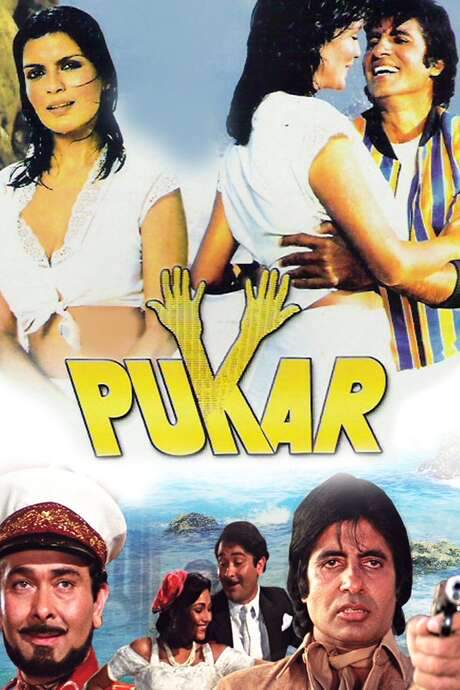
After India's 1947 independence, Goa remains under Portuguese rule. Revolutionary activists Purandare, Narvekar and Dinanath fight for liberation. When police locate Dinanath, he flees with his son Ramdas to the hideout, but Purandare is killed in a shoot‑out, witnessed by the boy. Traumatized, Ramdas renames himself Ronnie, befriends Julie and turns to a life of crime.
Warning: spoilers below!
Haven’t seen Pukar yet? This summary contains major spoilers. Bookmark the page, watch the movie, and come back for the full breakdown. If you're ready, scroll on and relive the story!
Read the complete plot breakdown of Pukar (1983), including all key story events, major twists, and the ending explained in detail. Discover what really happened—and what it all means.
In a volatile Goa under Portuguese rule, a small band of revolutionaries fights to throw off the colonial yoke. Purandare (Shreeram Lagoo), Narvekar (P. Jairaj), and Dinanath (Sudhir Dalvi) operate as a tightly knit unit, risking everything to keep the flame of independence alive. During a tense confrontation with the Portuguese police, Purandare and Dinanath are gravely injured. In a moment of grim resolve, Dinanath begs Purandare to end his life rather than let him be captured, and Purandare reluctantly complies. Their act is witnessed by Dinanath’s young son, Ramdas / Ronnie, who misinterprets the scene and believes Purandare has murdered his father.
Trauma carves a wide path through Ramdas’s heart, and he flees to the home of Mr. Dayanand, who offers shelter and safety. But the peace is short-lived. A police raid on Dayanand’s house, seeking the elusive Ramdas, leaves Dayanand and his wife seemingly dead. In the chaotic aftermath, Purandare arrives in search of the boy, only to find a frightened child who runs away at the sight of him. There’s a puzzling moment here that hints at an editing inconsistency: Dayanand appears to be killed, yet later his bruises are minor.
To escape a painful past, Ramdas adopts a new name: Ronnie. The film then jumps two decades forward, painting a portrait of a lean, street-smart career criminal who has carved out a life on the edge of society. He moves with a particular confidence, aided by a glamorous presence in his life, Julie, and he works for Hasmok (Sujit Kumar), a fellow outlaw who has earned his loyalty. Ronnie earns the favor of Inspector Monteiro (Prem Chopra) by helping Hasmok dodge capture, riding the line between crime and a fragile sense of honor.
Yet Ronnie’s past can’t stay buried forever. A chance encounter with Purandare’s aging band rekindles old loyalties and old wounds. The aging revolutionary and his comrades are desperate for ammunition to fuel their continuing battle against the Portuguese. Ronnie, who has long since abandoned any patriotic cause, betrays them to the authorities—twice. The second betrayal seals Purandare’s fate, leaving the elder man dead and the revolutionary movement reeling from the loss.
Into this maelstrom steps Shekhar, a young rebel who quickly becomes a thorn in Ronnie’s side. [Shekhar] proves audacious and resourceful: he steals Ronnie’s gold, orchestrates the escape of a captured rebel (Viju Khote), and even assassinations the Portuguese police chief. His bold acts garner widespread admiration and a swell of popular support, feeding Ronnie’s growing resentment and jealousy. The clash between the two men intensifies as Shekhar’s legend grows, while Ronnie’s sense of purpose frays.
A devastating revelation then alters Ronnie’s course. He discovers that the very people who sheltered him as a child—the parents of Shekhar—were the same ones he had grown to hate, the ones he believed he could never forgive. The shock of this truth unsettles him to his core, forcing a reckoning with Purandare’s choices from years past. The personal and political lines blur, and Ronnie is driven to seek a chance at redemption by trying to save Shekhar from the gallows.
Motivated by a desire to mend the broken ties of the past, Ronnie undertakes a daring vow: to rescue Shekhar from death and to confront the consequences of his earlier betrayals. The narrative builds toward a climactic alliance between Ronnie and Shekhar, who unite to lead a fierce assault against the remaining Portuguese forces. In a brutal, decisive confrontation, the two former enemies join forces to topple the colonial hold and to honor the sacrifices that paved the way for Goa’s freedom.
The final act of blood and bravery culminates in a hard-won victory that signals the end of the era of Portuguese rule for the region. The film closes on a note of tempered redemption, showing how different paths to freedom—one rooted in radical action, the other in reluctant obligation—can converge to dismantle oppression. It’s a story that moves through memory, guilt, and the costly price of loyalty, ultimately affirming that courage can emerge from even the most tangled pasts.
Last Updated: November 22, 2025 at 16:00
Discover curated groups of movies connected by mood, themes, and story style. Browse collections built around emotion, atmosphere, and narrative focus to easily find films that match what you feel like watching right now.
Personal tragedies fuel a long, arduous fight for liberation from colonial rule.If you liked the heavy emotional weight and patriotic themes of Pukar, explore more movies like it. This section features similar stories of personal trauma set against the backdrop of political liberation struggles, where characters find redemption through immense sacrifice.
These stories typically begin with a foundational trauma related to political conflict, which sends the protagonist down a destructive path. The narrative follows their difficult awakening to a greater cause, culminating in acts of sacrifice that redeem their past but often come at a great personal cost, leading to a bittersweet conclusion.
Movies are grouped here for their shared focus on the emotional toll of revolution, blending heavy personal drama with high-stakes political action. They create a powerful, melancholic mood through themes of loss, guilt, and the high price of freedom.
A descent into criminality is shadowed by the unresolved ghosts of political injustice.For viewers who enjoyed the dark, crime-oriented narrative of Pukar set against a political backdrop. Discover similar movies that blend gritty criminal journeys with themes of colonial resistance and personal redemption, creating a suspenseful and melancholic experience.
The plot follows a protagonist who turns to crime, often as a direct result of political trauma or injustice. Their criminal career is not purely for personal gain but exists in the shadow of a larger conflict. The story builds tension as their personal vendettas and the political struggle inevitably collide, forcing a final, violent confrontation.
These films share a specific vibe: a dark, steady-paced thriller that uses a crime narrative to explore weighty political themes. The combination of grim criminality with the high stakes of a liberation struggle creates a unique blend of suspense, angst, and moral complexity.
Don't stop at just watching — explore Pukar in full detail. From the complete plot summary and scene-by-scene timeline to character breakdowns, thematic analysis, and a deep dive into the ending — every page helps you truly understand what Pukar is all about. Plus, discover what's next after the movie.
Track the full timeline of Pukar with every major event arranged chronologically. Perfect for decoding non-linear storytelling, flashbacks, or parallel narratives with a clear scene-by-scene breakdown.
Discover the characters, locations, and core themes that shape Pukar. Get insights into symbolic elements, setting significance, and deeper narrative meaning — ideal for thematic analysis and movie breakdowns.
Get a quick, spoiler-free overview of Pukar that covers the main plot points and key details without revealing any major twists or spoilers. Perfect for those who want to know what to expect before diving in.
Visit What's After the Movie to explore more about Pukar: box office results, cast and crew info, production details, post-credit scenes, and external links — all in one place for movie fans and researchers.
Discover movies like Pukar that share similar genres, themes, and storytelling elements. Whether you’re drawn to the atmosphere, character arcs, or plot structure, these curated recommendations will help you explore more films you’ll love.
Pukar (1983) Scene-by-Scene Movie Timeline
Pukar (1983) Movie Characters, Themes & Settings
Pukar (1983) Spoiler-Free Summary & Key Flow
Movies Like Pukar – Similar Titles You’ll Enjoy
Indian (2001) Detailed Story Recap
Pitaah (2002) Complete Plot Breakdown
Pudhupettai (2006) Full Movie Breakdown
Kurbaan (1991) Ending Explained & Film Insights
Patthar Ke Phool (1991) Detailed Story Recap
Pauran (2005) Story Summary & Characters
Paap Ki Duniya (1988) Story Summary & Characters
Piravi (1989) Full Movie Breakdown
Parinda (1989) Movie Recap & Themes
Pogaru (2021) Spoiler-Packed Plot Recap
Puzhu (2022) Film Overview & Timeline
Pudhiya Mugam (1993) Movie Recap & Themes
Prem Pujari (1970) Spoiler-Packed Plot Recap
Parvarish (1977) Full Movie Breakdown
Purab Aur Pachhim (1970) Complete Plot Breakdown