Plot Explained Spoilers guaranteed!
Plot Explained

Browse by genre

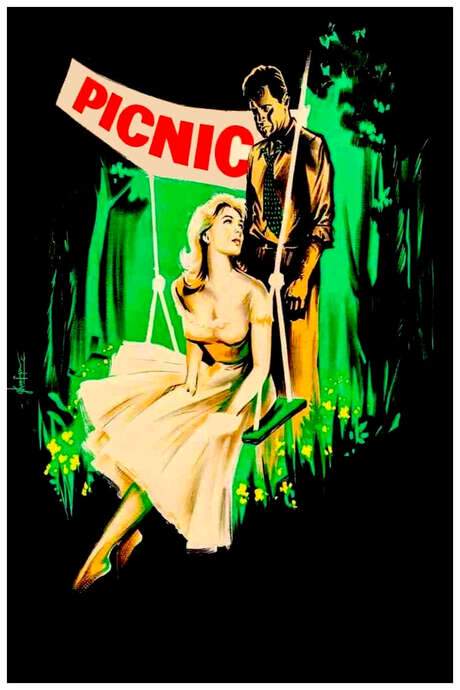
Picnic (1955) movie poster

Plot Summary

Picnic (1955) Plot Summary Explained

Release, runtime and language
1955 · 114 mins · English
Loading streaming availability…
Directed by
Joshua Logan
Starring
Verna Felton, William Holden, Kim Novak, Betty Field, Raymond Bailey, Nick Adams

Set on Labor Day in a quiet Kansas farm town, the story follows Hal, a burly, determined drifter who leaps from a dusty freight‑train car to reconnect with Alan—his former college mate and the privileged son of the town’s wealthiest family. Tensions rise as old friendships clash with local power.

On this page (6)
  1. 1 Where to watch
  2. 2 What happens: full plot
  3. 3 Plot questions answered
  4. 4 Movie threads
  5. 5 Movies like Picnic
  6. 6 Every angle
Loading streaming availability…

Full plot summary · contains spoilers

What Happens in Picnic: Full Plot Summary

The whole story of Picnic (1955) explained, from the opening scene to the final frame: every key event, every twist and what it all adds up to. Read it as a quick recap before the sequel, to check a scene you missed, or to finally understand what really happened.

On the morning of Labor Day 1955, a freight train brings vagrant Hal Carter to the fictional town of Salinason, Kansas to visit his old fraternity friend Alan Benson from college. Hal meanders through the town until he reaches the backyard of the kindly, elderly Helen Potts, who offers him breakfast after he offers to do some yard work for her. Mrs. Potts explains that Alan visits with Madge Owens, the town’s celebrated beauty, and the young woman who shares the neighboring lawn with her sister Millie and their mother. Hal also briefly encounters Rosemary, the spinster schoolteacher who rents a room nearby, and Bomber, the flirtatious newspaper boy who seems to have an eye for Madge and the other pretty girls in town. Madge and Millie are introduced to Hal, and the family dynamics quickly become clear: Madge is the town’s radiant queen while Millie is sharp-witted and book-smart, both raised by a practical, single mother, Flo Owens, who has always hoped that Madge would marry Alan, a man from wealth with a thriving grain business behind him. When Madge meets Hal, there is an immediate spark, and their eyes lock as they exchange a charged, almost unspoken recognition of a shared restlessness.

From the moment Hal meets Madge, the chemistry is undeniable, but the town’s social currents complicate their budding connection. Alan welcomes Hal with a mix of his old camaraderie and a protective pride over his family’s fortune and status, showing Hal the scale of the Benson family’s grain-elevator empire and promising him a steady job as a “wheat scooper”—a position Hal would rather see himself growing into than simply accepting. Hal’s presence stirs up old ambitions and new possibilities in everyone around him, and the character dynamics begin to tilt toward a test of loyalty, romance, and personal dignity under the bright July-like heat of the celebration season. The Labor Day picnic becomes a social crucible where Hal, Madge, Millie, Flo, Alan, Mrs. Potts, Rosemary, and Howard Bevans—the local shop owner who is Rosemary’s steady, if imperfect, companion—span a spectrum of desires and disappointments. The day’s games, the river, and the pavilion gatherings reveal layers of character: Hall’s charm and longing, Madge’s charm and caution, Millie’s sharp wit, Flo’s stern practicality, Rosemary’s insecurity and longing, and Howard’s own precarious hopes.

As the crowd disperses into evening, Madge is crowned the town’s Queen of Neewollah (Halloween backwards) and the coronation countdown becomes a symbol of her public life and the private decisions she will have to face. The riverfront dance brings Hal and Madge together in a gracious, tentative duet as Rosemary, now intoxicated by the liquor brought by Howard, becomes jealous and tries to pull Hal away. Rosemary’s bitterness erupts into a public assertion of her own yearnings and frustrations, and she accuses Hal of posturing and vanity, saying he’s too young to know what real life requires. The party mood fractures into tension as Millie—undeniably fond of Madge but feeling overshadowed—begins to show the strain of adolescence and alcohol, and Flo’s protective stubbornness surfaces as she confronts the consequences of her daughters growing up too fast.

Hal’s bond with Madge deepens in a private moment by Alan’s car, where he opens up about a difficult past—he was sent to reform school as a boy for stealing a motorcycle. The confession softens Madge’s guarded curiosity, and the two of them share a kiss, acknowledging the possibility of a future together beyond Salinason’s narrow confines. They agree to meet again after Madge finishes work the next day. Meanwhile, Howard accompanies a tearful Rosemary home, and she pleads with him to marry her, creating a tension that will force him to make a choice about the length and seriousness of their relationship.

The next morning brings a new sequence of misunderstandings and decisions. Howard visits the Owens household with the intention of sharing his own plan, but Rosemary, certain she is about to become a wife, misreads the moment and imagines that Howard’s arrival signals their imminent nuptials. In a cascade of mistaken expectations, Rosemary’s wedding seems imminent as she heads toward a future she hasn’t fully considered. Hal, in his own way, remains a catalyst—he is drawn toward Madge, and Madge toward him, even as a sense of duty, social pressure, and family expectations hover over their choices.

Once the misunderstandings unfold, Hal finds himself in a tense, final confrontation that sends him fleeing to safety with Howard’s help, seeking refuge from the town’s authorities who would rather see him leave. The Owens family, with their typical mix of tenderness and worry, watches the events unfold with a mixture of fear and longing for their daughters’ happiness. Hal slips away and heads toward the road, while Madge and Millie, facing the consequences of the night, wake to uncertain tomorrows, their futures tethered to the choices they will make in the hours ahead.

In the wake of these events, Rosemary’s wedding to Howard is foreshadowed by the adults who support and worry for the young lovers. Hal’s presence creates a ripple effect that unsettles the town’s carefully balanced lives, even as some characters secretly root for him and Madge to find a shared path. By the end, Hal and Madge have not resolved their differences, but the spark between them remains undeniable. They reach for a chance to be together beyond Salinason’s borders, and Madge chooses to pursue that chance. Hal and Madge share a final, hopeful moment, aware that the road ahead will be challenging but certain in its possibility.

Towards dawn, Hal races after a passing freight train, crying out, “You love me! You love me!” and then jumps aboard, the city and its expectations receding behind him. Flo, full of worry and motherly love, watches him go, while Mrs. Potts offers her quiet, measured counsel about letting young hearts grow and learn on their own. Back upstairs, Millie urges Madge to “do something bright” for once and choose Hal, a suggestion that underscores the film’s core tension: the pull between security and passion. Madge collects a small suitcase, and despite her mother’s tears and pleas for her daughter to stay in a familiar, safe orbit, she boards a bus bound for Tulsa to meet Hal, choosing a path that promises risk and possibility over the predictable routine of staying in Salinason.

> "You love me! You love me!"
Last updated: October 09, 2025 at 12:39

Was this helpful?

Plot questions answered

Picnic Plot Explained: Your Questions Answered

The questions people ask most about Picnic (1955): what happens in the confusing scenes, why the characters do what they do, the twists, hidden details and what the ending means. Each answer contains spoilers.

Q1

Why does Hal come to Salinason?

Hal arrives in Salinason on Labor Day to visit Alan Benson, his former college fraternity friend. He literally jumps off a freight train, showing his spontaneous, rootless nature. Alan had promised him a job at the Benson grain-elevator operation, offering Hal the prospect of stable work and a place in town.

Foreshadowing: The film establishes early on that Hal is a drifter with no fixed home, making his visit to an old college friend seem like a natural choice for someone seeking opportunity.

  • hal carter
  • alan benson
  • arrival
  • freight train
  • job opportunity
Q2

Why does Madge choose Hal over Alan?

Madge is drawn to Hal because he represents excitement and possibility beyond Salinason's predictable confines. While Alan offers security and wealth, Hal offers passion and a chance at a different life. The two share an immediate, electric connection that contrasts sharply with Madge's comfortable but stagnant relationship with Alan.

Foreshadowing: From their first meeting at Mrs. Potts' breakfast, Madge and Hal exchange charged glances that hint at their mutual attraction beneath the town's social surface.

  • madge owens
  • hal carter
  • alan benson
  • love triangle
  • choice
  • tulsa
Q3

Why is Rosemary angry at Hal?

Rosemary's anger stems from jealousy and her own insecurities about her relationship with Howard. After drinking heavily at the picnic, she publicly accuses Hal of being vain and too young to understand real life, but her outburst reveals her fear of being overlooked and her frustration with her own uncertain future with Howard.

Foreshadowing: Rosemary is introduced as a spinster schoolteacher who rents a room nearby, and her insecurity about being unmarried is evident from the start.

  • rosemary bevans
  • howard bevans
  • jealousy
  • alcohol
  • outburst
Q4

What is Neewollah?

Neewollah is the town's annual beauty pageant, with the name being 'Halloween' spelled backwards. Madge is crowned Queen of Neewollah during the Labor Day celebration, which represents her status as the town's prized beauty and the center of social attention.

Foreshadowing: The buildup to the coronation throughout the day establishes Neewollah as the highlight of the town's social calendar.

  • neewollah
  • beauty queen
  • pageant
  • crown
  • celebration
Q5

Does Madge leave with Hal at the end?

Yes, Madge chooses to pursue a future with Hal despite her mother's protests. After Hal rides away on a freight train shouting that she loves him, Madge packs a small suitcase and boards a bus bound for Tulsa to meet him. This represents her choosing passion and uncertainty over safety and predictability.

Foreshadowing: Earlier in the film, Hal and Madge plan to meet in Tulsa where he would work and they could marry, establishing their mutual commitment to leave Salinason together.

  • madge
  • tulsa
  • bus
  • ending
  • departure
  • choice
Q6

Why does Hal have a criminal past?

Hal confesses to Madge that he was sent to reform school as a boy for stealing a motorcycle. This backstory explains why he's an outsider struggling to find his place, he carries the stigma of his youthful mistake and has been wandering ever since.

Foreshadowing: Hal's initial introduction as a vagrant arriving by freight train hints at someone who has been on the margins of society.

  • hal carter
  • reform school
  • motorcycle
  • crime
  • past
Q7

Why does Flo object to Hal?

Flo Owens wants Madge to marry Alan because he comes from wealth and can provide financial security. She sees Hal as a drifter with no stable future, a man who offers only uncertainty and risk. Her objections reflect the class differences and material concerns that divide the town.

Foreshadowing: From the beginning, Flo pushes Madge toward Alan, emphasizing that he represents a prosperous future unlike the unpredictable Hal.

  • flo owens
  • madge
  • hal
  • objection
  • class
  • difference
  • security
Q8

What happens to Rosemary and Howard?

Rosemary and Howard end up getting married. When Howard visits the Owens house the next morning intending to tell Rosemary he wants to wait, she misreads the moment and announces their impending wedding. The adults support and worry about the young lovers throughout, ultimately leading to Rosemary's marriage to Howard.

Foreshadowing: Howard is introduced as Rosemary's steady, if imperfect, companion, and their relationship tension runs throughout the film.

  • rosemary bevans
  • howard bevans
  • wedding
  • marriage
  • relationship
Q9

Why does Hal run away from the police?

Hal flees because the town authorities want him to leave, and he faces arrest after the chaotic events of the picnic night. Rosemary's accusations and the general suspicion around the outsider make his position untenable. Howard Bevans helps him find shelter to avoid capture.

Foreshadowing: The confrontation at the pavilion, where tensions escalate and Rosemary blames Hal for various problems, sets the stage for the police pursuit.

  • hal carter
  • police
  • arrest
  • flee
  • howard bevans
Q10

Why does Millie encourage Madge to choose Hal?

Millie, despite being jealous of Madge's beauty throughout the film, ultimately wants her sister to pursue happiness over safety. She urges Madge to 'do something bright' and choose Hal, suggesting she recognizes that her sister's connection with Hal represents something more meaningful than material security.

Foreshadowing: Millie's jealousy is balanced by her own longing for significance beyond the town's expectations, which makes her supportive of Madge's bold choice.

  • millie owens
  • madge
  • hal
  • encouragement
  • happiness
  • choice

Movie threads

More Movies Like Picnic, by Mood & Story

Curated lists built around what makes Picnic tick: the same mood, the same kind of story or the same emotional payoff. Each list explains why these movies belong together.

Small-Town Dramas of Forbidden Romance like Picnic

Where simmering passion threatens the rigid social order of a confined community. Explore movies like Picnic, where stories unfold in quiet towns and explore the tension between personal passion and social constraints. If you enjoyed the charged atmosphere and class conflicts of Picnic, you'll find similar emotionally resonant dramas here.

  • yearning
  • tense
  • charged
  • nostalgic
  • melancholic
  • restless
  • Tone: bittersweet, tense, yearning
  • Pacing: steady, deliberate
Why these movies?

The story pattern: These stories typically unfold over a short, intense period in a close-knit setting. A catalyst—often a charismatic newcomer—disrupts the community's equilibrium, igniting forbidden romances and exposing generational and class divides. The central conflict pits individual longing against the collective pressure to conform.

Why they belong together: They are grouped by their shared focus on the explosive intersection of personal desire and social confines. The mood is consistently a mix of yearning and tension, with a steady pacing that allows the emotional and social pressures to build relentlessly.

Bittersweet Love Triangle Movies with High Stakes like Picnic

Emotional journeys where a risky, passionate love challenges a safe, predictable future. Find movies similar to Picnic that feature compelling love triangles where the romantic choice carries deep consequences. These films share a bittersweet tone and emotional weight, perfect if you liked the difficult choices and hopeful yet uncertain ending of Picnic.

  • bittersweet
  • tender
  • melancholic
  • tense
  • yearning
  • hopeful
  • Tone: bittersweet, melancholic, hopeful
  • Pacing: steady, character-driven
Why these movies?

The story pattern: The narrative follows a protagonist torn between two lovers who represent opposing futures. The conflict is internal and external, weighing the comfort and approval of a known world against the thrilling uncertainty of a passionate but risky connection. The resolution is often bittersweet, embracing hope for the chosen path while acknowledging the profound losses of the road not taken.

Why they belong together: They share a specific emotional pattern: the agonizing weight of a romantic decision that defines a character's future. The tone is consistently bittersweet, blending the excitement of new love with the sadness of sacrifice, all driven by character-focused drama with medium emotional weight.

If you liked this

Movies Like Picnic

Similar movies to Picnic: the same genre, themes or kind of story. Each one comes with its own plot summary, timeline and ending explained.

Browse all movie summaries

Every angle

Picnic (1955) Explained: Plot, Timeline & Characters

Everything about Picnic in one place: what happens in the plot summary, the timeline in chronological order, the characters and meaning and a spoiler-free summary. What's After the Movie adds the cast, box office and post-credit scenes.

Coming soon on iOS and Android

The Plot Explained Movie Summary App

Plot summaries, endings explained and timelines on your phone. Catch up on any movie in minutes, save your favorites and never miss a twist again.

Be the first to know when we launch. Your email stays private, always.

Learn more about the app