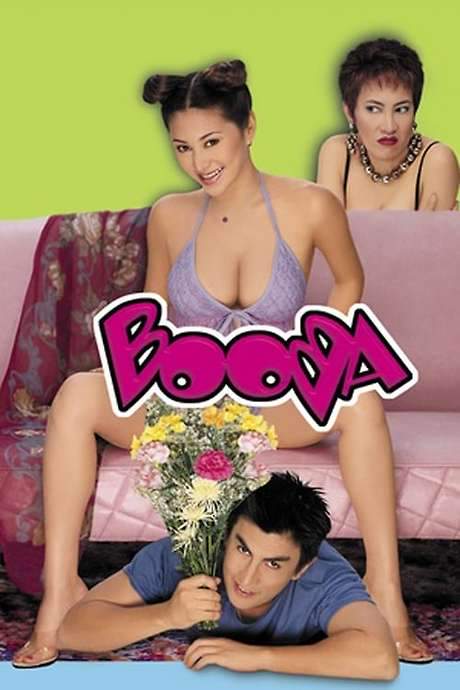
Noo Hin, Worajan Sangngern, is a young woman in a small Isan village in Ubon Ratchathani, where days drift by with little work or hope. The opening scene finds her chasing a nimble lizard across the countryside, a chase that accidentally stirs up a stampede of water buffalo and rattles a local village fair. The effect is both comic and telling: in this tight-knit community, she’s known for being a troublemaker, and the village’s poverty mirrors the limited choices available to her and other locals.
With few prospects for a steady job or a productive rice harvest, the village eventually decides that the best option for Noo Hin is to go to Bangkok and work in a factory. Her send-off is a small, bright celebration—the village band adds to the cheers as she boards the train, stepping toward a future that feels both glamorous and daunting. On the rattling carriage, Noo Hin lets herself imagine a dream life: glamorous factories, stylish bags, fashionable T-shirts, and chic shoes. The fantasy becomes a full-blown musical number in her head, a brief escape from the harsh reality awaiting her.
At the employment agency, reality returns with a sting: the only available job is in a grim, rat-trap factory. Yet fate offers a different path when a tall, attractive young woman enters the agency looking for a new maid. This woman is Milk, [Kochakorn Suppakarnkitjakul], and Noo Hin soon discovers Milk’s presence flips her prospects in an instant. Milk’s playful banter about the name Milk—both the Thai word for milk and a wink at the woman’s appearance—lightens the moment but also foreshadows a sharper, more competitive social world looming in Bangkok.
Adaptation to city life proves rough from the start. Noo Hin has never ridden in a car with a seatbelt, and the room she shares is treated with insect spray that she uses to the point of fainting from the fumes. She also encounters a culture of appearance that is foreign and perplexing: Milk and her older sister Som-O, who is constantly exercising and chasing weight loss, are absorbed with appearances and fashion. The urban crowd—people racing over sale bins at Siam Center and women whitening their underarms—seems endless and bewildering to her. Still, Noo Hin channels her practical energy into keeping the new home orderly, even improvising with dust-mops on her feet and a broom she uses like a prop in a playful, music-filled montage.
Romance soon flickers into view when Noo Hin meets Tong, [Adisorn Insee], who appears next door and tends a garden. A simple friendship blossoms into something warmer as Noo Hin makes him her special som tam, only to discover that he is the owners’ son rather than a village gardener from Isan. The household adaptions continue, and Noo Hin sets her sights on helping Milk and Som-O make it big. She secretly enters both sisters in a “super model” contest, a plan that irritates Milk and Som-O at first but is soon encouraged by their socially climbing mother.
The modeling push catches the eye of a French designer’s assistant, and the sisters draw attention—except that the jealousy and fear of Sonia, a rival supermodel, threaten to derail them. Sonia, played by [Nahatai Lekbumrung], becomes a central foil as a confrontation in Milk’s dressing room reveals deeper insecurities and power plays. The incident escalates when the man involved is revealed to be the son of a high-society figure, and the situation is dismissed with Noo Hin forced to apologize, a humbling setback that underscores the social hierarchies at work.
Despite the setback, Milk and Som-O attract ongoing attention from the French designer, and a planned appointment becomes more perilous as they are kidnapped and held in a love hotel. Noo Hin, meanwhile, is whisked away to a sweatshop where Isan women are forced to sew stuffed animals under the watch of men in black, a grim tableau set to pounding techno in the background. The stakes are suddenly life-or-death, and the thread of hope appears when Noo Hin uses her wits to charm one of the guards—an Isan native—and begins to orchestrate a rescue for the enslaved workers.
Tong, who has tracked down Milk’s and Som-O’s whereabouts, arrives just in time. The group makes it to the modeling engagement, where they confront Sonia and reveal her involvement in the kidnapping. The shocking twist comes to light when Sonia’s falsies are exposed, proving her manipulation and vanity were at the heart of the plot. With the danger behind them, Milk and Som-O are chosen as lead models for a new clothing line designed by the French designer, a collection inspired by Noo Hin’s own indigenous wardrobe. The plan is for Milk and Som-O to travel to France for further assignments, and Noo Hin is invited to accompany them, ensuring that her bold, unpredictable presence will keep stirring things up wherever they go.
In the end, the story threads together a portrait of resilience and reinvention: a rural Isan girl’s adventure into the city, the trials of ambition and class, and a cabaret of bright moments and sharp turns that propel her toward a future where safety, style, and freedom are continually renegotiated in metropolitan life.