











Plot Explained Spoilers guaranteed!
Plot Explained

Browse by genre

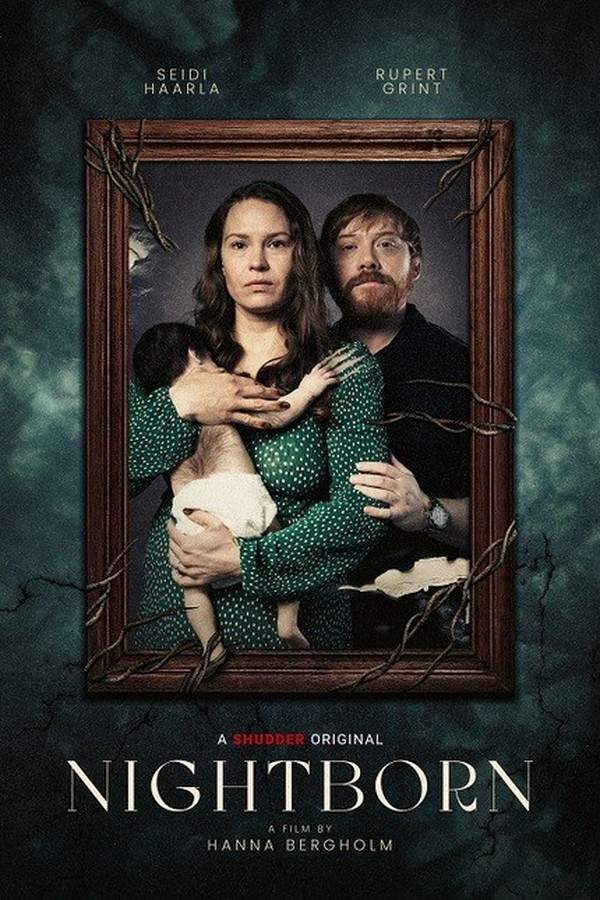
Nightborn (2026) movie poster

Timeline

Nightborn (2026) Timeline Explained – Every Event in Order

Release, runtime and language
2026 · 1 h 32 m · Finnish
Echo score 56
JustWatch #6,348 128
Directed by
Hanna Bergholm
Starring
Rupert Grint, Seidi Haarla, Amira Khalifa, Mari Rantasila, Pamela Tola, John Thomson
Budget
$5.5M

Dreaming of a perfect family, Saga and her British husband Jon move to an isolated house in the Finnish forest where Saga grew up. When their baby is born, Saga feels something is terribly wrong despite others’ reassurances. Their marriage starts to crack as Jon struggles to protect his family while the forest’s eerie influence intensifies.

On this page (5)
  1. 1 Where to watch
  2. 2 Events in order (15)
  3. 3 Timeline questions answered
  4. 4 Movie threads
  5. 5 Every angle

Where to watch

Where to Watch Nightborn (2026)

Where can you watch Nightborn? Stream, rent or buy it in the US, including on AMC+, Philo and Shudder: current JustWatch availability with up-to-date prices.

Streaming availability powered by JustWatch

15 events in order · contains spoilers

Nightborn Timeline: Events in Chronological Order

Every key event of Nightborn (2026) in order, scene by scene, with when and where it takes place. Use it to untangle flashbacks, time jumps and parallel storylines, to refresh your memory before the sequel or to find the exact scene you are thinking of.

  1. Discovery of the derelict house

    Saga and Jon explore a derelict house in the Finnish forest and immediately notice a tree growing through the floorboards in the bedroom Saga shared with her sister Taru. They discuss the history of the place and the possibility that it could be renovated rather than abandoned. Jon suggests turning the ruin into a family home, while Saga feels a mix of hope and unease about the plan.

    When
    Day 1
    Where
    Derelict house, Finnish forest
  2. Forest moment and renovation vow

    In the surrounding forest, Saga embraces a tree whose trunk resembles a pregnant belly and the moment is charged with danger and intimacy. They make love there, and the encounter strengthens their resolve to create a family home. They decide to renovate the house into a place to raise children together.

    When
    Evening
    Where
    Forest near the house
  3. Birth of Kuura

    Saga endures a difficult childbirth with the birth canal tearing badly. The baby is unsettlingly silent at first, crying only when the curtains are opened. The room is tense as Kuura arrives.

    When
    Birth night
    Where
    Maternity ward
  4. Kuura's fragile start

    Breastfeeding leaves Saga's breast bloodied and swollen as she struggles to feed the newborn. Kuura is born with thick black hair covering his skin, adding to the sense that something is not normal. The atmosphere at the maternity ward grows increasingly uneasy.

    When
    Days after birth
    Where
    Maternity ward
  5. Nursery and anxious mother

    Back at the renovated house, Saga's childhood bedroom is converted into a nursery for Kuura. When her mother and Taru visit, Saga voices concerns that something is wrong with the baby, but her family dismisses her fears.

    When
    Weeks after birth
    Where
    Renovated house nursery
  6. Naming ceremony and unsettling sun

    During a garden naming ceremony, guests are unsettled by Kuura's appearance and his visceral cries. A gust of wind from the forest sweeps a cover over his stroller, shielding him from the sunlight. Saga also notes the sunlight has left deep burns on Kuura's skin.

    When
    Naming ceremony day
    Where
    Garden
  7. Kuura fixates on the tree

    Kuura becomes transfixed by the tree that has begun growing again through the nursery floorboards. Saga struggles to calm him as he stares at the living phenomenon. The eerie focus marks a turning point in their home life.

    When
    Night after naming ceremony
    Where
    Nursery
  8. Morning discovery

    The following morning Jon discovers the floorboards torn up and Saga asleep among the tree roots, cradling Kuura. The house feels increasingly unstable as the forest seems to press in. This finds their family life teetering on edge.

    When
    Following morning
    Where
    Nursery/house
  9. Blood exchange begins

    Saga accidentally cuts herself on broken glass and Kuura is seen sucking her blood. The moment marks a disturbing shift in their bond and hints at a danger growing within Kuura. The atmosphere becomes darker as the family routines collapse.

    When
    Same day night
    Where
    Nursery / bathroom
  10. Clinic dismisses concerns, feeding secret

    At a baby clinic, a clinician dismisses Saga's worries and attributes Kuura's development to being advanced for his age, referring her for counselling to help bond with him. Saga leaves with that diagnosis but begins secretly feeding Kuura blood instead of milk at home, signaling a dangerous turn.

    When
    Soon after
    Where
    Baby clinic, then home
  11. Forest warnings and holy water

    Taru recounts her grandmother's warning that the surrounding forest is dangerous and that cold iron can burst the grip of the malign influence. When Jon's father, a vicar, blesses Kuura with holy water, it has no physical effect, but the moment underscores the child's odd vulnerability. Later, Kuura's contact with cold iron causes a painful burn on his hand.

    When
    A few days later
    Where
    Garden/house
  12. Growing estrangement

    Jon expresses concern that Saga is failing to socialise Kuura and bonds poorly with him. He confronts Saga about parenting and storms out, leaving her alone with Kuura to cope with the mounting tension.

    When
    Evening
    Where
    House
  13. Saga's city trip and a rash

    Saga travels to the city to visit friends, and the separation from Kuura triggers a severe rash that disappears only when she rushes home to be with him. The distance between mother and son heightens the sense of danger surrounding Kuura.

    When
    Overnight trip
    Where
    City
  14. Kuura's violence escalates

    Kuura becomes increasingly violent, biting Anna's finger during a visit from Taru and Anna. Jon tries to feed him, but Kuura shoves the spoon away and hurls a jar at him; Saga then feeds Kuura raw meat, and Jon accuses Saga of turning him into a monster. A brutal confrontation unfolds in the house.

    When
    Evening
    Where
    Garden / House
  15. Final confrontation and the ending

    During the confrontation, tree branches erupt through the nursery floor and windows, fatally impaling Jon. Saga and Kuura feed on Jon's blood and heart, sealing a nightmarish union. In the aftermath, Kuura runs into the garden where a humanoid figure separates itself from one of the trees and approaches him as Saga watches from the porch, with Kuura smiling back.

    When
    Aftermath
    Where
    Garden / Nursery

Last updated: August 28, 2026 at 07:33

Was this helpful?

Timeline questions answered

Nightborn Timeline Explained: Your Questions Answered

When does it happen, and why in that order? The questions people ask about the chronology of Nightborn (2026): time jumps, flashbacks, cause and effect between scenes and the correct order of events, each answered with spoilers.

Q1

Why is Kuura silent when he is born?

Kuura emerges disturbingly silent during the birth and only begins to cry once the curtains on the maternity ward are pulled back, signaling that daylight triggers a painful reaction in him. The prolonged silence hints that Kuura is not a normal infant but something tied to the forest and the darkness that surrounds it. His body immediately rejects light, foreshadowing the burns he later suffers from sunlight.

Foreshadowing: Earlier, Saga presses her body against a tree shaped like a pregnant belly in the Finnish forest, a primal image that predicts Kuura's unnatural, forest-born nature.

  • kuura silent birth
  • nightborn baby cry
  • curtains birth nightborn
Q2

Why does Saga start feeding Kuura blood instead of milk?

Saga begins secretly feeding Kuura blood after he latches onto a cut on her hand and drinks from it, an act she experiences as a disturbing but binding moment between mother and child. The clinic has dismissed her concerns and pushed her toward bonding exercises, so feeding him blood becomes her private way of responding to what he actually seems to need. This decision marks the point where Saga stops trying to force Kuura into a human mold and accepts the hunger he reveals.

Foreshadowing: The bloodied, swollen state of Saga's breasts during breastfeeding already established that Kuura's feeding instinct is violent and unnatural.

  • saga blood feeding kuura
  • nightborn blood milk
  • kuura blood nursing
Q3

Why does cold iron burn Kuura's hand?

Kuura is severely burned when he grabs an unused piece of cold iron, which is presented in Nightborn as a traditional counter to the forest's supernatural presence. Taru recounts the grandmother's warning that cold iron can burst the grip of whatever haunts the woods around the house. The burn confirms that Kuura is bound to the same otherworldly force the iron is meant to repel.

Foreshadowing: The grandmother's scrap-metal collection and her warnings about cold iron were established earlier as household folklore before Kuura ever touched the iron.

  • cold iron nightborn
  • kuura iron burn
  • grandmother iron warning
Q4

Why does sunlight burn Kuura's skin?

Sunlight leaves dark burns on Kuura's skin, showing that he is harmed by daylight and belongs to the shadowy world of the Finnish forest rather than the human world. His reaction to the sun mirrors the very first moments of his life, when he only cried once the curtains were opened. It also explains why gusts of wind from the trees seem to shield him with a cover during the naming ceremony, as if the forest actively protects him from the light.

Foreshadowing: The gust of forest wind covering his stroller during the naming ceremony shows the forest intervening to protect Kuura from the sun before the burns are fully revealed.

  • kuura sunlight burn
  • nightborn baby sun
  • daylight hurts kuura
Q5

Why does holy water have no effect on Kuura when Jon's father blesses him?

When Jon's father, a vicar, blesses Kuura with holy water, the child shows no physical reaction, suggesting that whatever inhabits him does not fall under the authority of Christian ritual. The cold iron still burns him, while the holy water does nothing, implying the threat is rooted in older Finnish forest folklore rather than religious evil. This contrast deepens the sense that Kuura is bound to a pagan, elemental force the family's Christian customs cannot reach.

Foreshadowing: Taru's earlier stories about the grandmother's beliefs frame the household's faith as a different, older tradition from the Anglican blessing Jon's father performs.

  • holy water nightborn
  • kuura blessing fails
  • john thomson vicar
Q6

Why does the tree keep growing through the house?

The tree first pushes through the bedroom floorboards that Saga and Taru shared as children, and it returns even more aggressively after the house is renovated into a family home. Its persistent growth mirrors Kuura's presence, as if the forest is reclaiming the building now that something of its own lives inside. The tree's roots eventually become the ground Saga sleeps on while cradling Kuura, and later the weapon that kills Jon, making the house itself an extension of the entity.

Foreshadowing: The tree's very first appearance through the floorboards signals that the house cannot truly be separated from the forest that surrounds it.

  • tree through floorboards
  • nightborn forest house
  • tree nursery roots
Q7

Why does Jon get killed by tree branches during the fight?

During the violent struggle over Kuura, branches erupt through the nursery floor and windows and fatally impale Jon through the chest, turning the forest into an active participant in the conflict. The attack happens at the exact moment Jon tries to drag Kuura outside, which is presented as a violation of the bond between mother, child, and forest. The house itself defends Kuura, suggesting that the longer Jon fights against what Kuura is, the more certain his death becomes.

Foreshadowing: The morning after the naming ceremony, Jon already found Saga asleep among the tree's roots in the nursery, hinting that the tree had claimed the family space.

  • jon killed tree branches
  • nightborn jon death
  • branches impale jon
Q8

Why does Saga develop a painful rash when she is away from Kuura?

During an overnight trip to the city, Saga develops a severe rash that only fades once she rushes back to the house and reunites with Kuura. The rash suggests that her bond with Kuura has become symbiotic, with her body physically responding to the distance from him. It marks another stage in her transformation, showing that she is no longer merely his mother but is becoming tied to him the way the forest is tied to the house.

Foreshadowing: Saga had already begun bleeding while breastfeeding and secretly feeding Kuura her blood, priming her body for a parasitic link.

  • saga rash away kuura
  • nightborn city trip
  • separation rash nightborn
Q9

Who is the humanoid figure that steps out of the tree at the end?

In Nightborn's final scene, a humanoid figure separates itself from one of the trees and walks toward Kuura with outstretched arms as Saga watches from the porch. The figure is best understood as a physical manifestation of the forest entity that has been growing through the house and feeding off the family for months. Its emergence suggests that Kuura is not an aberration but a bridge between the human world and whatever lives in the woods, and that the forest has finally come to collect what it planted.

Foreshadowing: The tree Saga embraced early in the film, shaped like a pregnant belly, already personified the forest as a nurturing, maternal presence.

  • humanoid figure nightborn ending
  • tree entity nightborn
  • forest creature final scene
Q10

Why does Saga smile in the final scene?

Saga's wry, uncertain smile as the humanoid figure approaches Kuura signals that she has fully accepted her role as the mother of a forest-born child rather than a grieving widow. Her smile mirrors Kuura's giggle, suggesting the two of them now share an understanding that excludes Jon and the human world. Rather than horror, the ending frames their bond as a bleak but chosen intimacy with the supernatural, leaving Nightborn on an ambiguous note rather than outright despair.

Foreshadowing: Saga had already begun sleeping among the tree roots and feeding Kuura her blood, showing her gradual comfort with the unnatural.

  • saga smile ending nightborn
  • nightborn final scene meaning
  • kuura giggle ending
Q11

Why does Saga call the baby 'it' and refuse to name him at first?

Saga instinctively refers to the baby as 'it' because she senses from the moment of birth that something is fundamentally wrong with him, from his silence to the hairlike growth on his skin. Naming a child implies belonging and welcome, and Saga is not yet willing to anchor a human identity to what she has brought into the world. By only later choosing the name Kuura herself, she takes control of a naming process that had already been taken from her by the forest.

Foreshadowing: Saga's refusal to name the baby echoes her earlier hesitation about renovating the house, suggesting she always sensed the place resisted being claimed.

  • saga call baby it
  • kuura naming nightborn
  • why saga refuses name baby
Q12

Why does Kuura reject regular baby food?

When Jon tries to feed Kuura ordinary baby food, the child violently shoves the spoon away and hurls a jar at him, making clear that human nourishment cannot sustain him. Saga then begins feeding him raw meat, which he accepts, confirming that his body runs on something closer to the forest's diet than a human infant's. The rejection of baby food is the turning point that pushes Jon to accuse Saga of turning Kuura into a monster and ignites the final confrontation.

Foreshadowing: Kuura had already been shown feeding on Saga's blood and rejecting the clinic's reassurances that he was simply advanced for his age.

  • kuura rejects baby food
  • raw meat nightborn
  • kuura spoon jar
Q13

Why did Saga and Jon decide to move into Saga's grandmother's derelict house?

Jon envisions restoring the ruined house into a warm family home where he and Saga can raise children, a dream that appeals to his idea of continuity and belonging. For Saga, returning to the forest where she grew up carries both nostalgia and a quieter pull that she does not fully acknowledge. The decision to renovate the house is what allows the tree already breaking through the floorboards to become part of their daily life, and ultimately part of Kuura's.

Foreshadowing: Saga's immediate, wordless reaction to the tree growing through the bedroom foreshadows that her return to the house is less a choice than a reawakening.

  • saga jon move derelict house
  • nightborn grandmother house
  • renovate forest house
Q14

Why does the argument between Saga and Jon over Kuura become so violent?

The fight is not really about parenting style but about what Kuura actually is, with Jon still trying to force him back into a normal human framework and Saga increasingly accepting him as something else. Jon accuses Saga of not socializing Kuura or following the clinician's referral, while Saga sees those demands as a denial of what her own body and her son are telling her. By the time Jon tries to physically remove Kuura from the house, he is no longer fighting his wife but the forest itself, which responds by killing him.

Foreshadowing: The cold iron burn on Kuura's hand and the failed holy water blessing had already shown Jon that his son's nature resisted every human response he tried.

  • saga jon argument kuura
  • nightborn marital conflict
  • jon saga fight baby

Movie threads

More Movies Like Nightborn, by Mood & Story

Curated lists built around what makes Nightborn tick: the same mood, the same kind of story or the same emotional payoff. Each list explains why these movies belong together.

Folk horror movies like Nightborn

Rural isolation meets ancient evil where the land itself hungers. Looking for movies like Nightborn? This thread collects folk horror stories with rural isolation, pagan mythology, and nature as an ancient, malevolent force. If you loved the Finnish forest dread, cold iron lore, and creeping supernatural wrongness of Nightborn, you will find similar atmospheric, mythology driven horror films that turn the wilderness into a place of ritualistic nightmare.

  • folk horror
  • rural isolation
  • pagan mythology
  • ancient evil
  • creeping dread
  • ritualistic
  • Tone: dark, eerie, oppressive
  • Pacing: slow burn, atmospheric
Why these movies?

The story pattern: Folk horror narratives usually begin with a character or couple retreating to a remote, rural, or ancestral place hoping for peace, healing, or renewal. What begins as a dream of simple living slowly curdles as local customs, old symbols, and buried legends start to feel oppressive and personal. The story escalates through small wrongnesses, a community that knows more than it says, and a final confrontation with an ancient, often nature based entity. The endings tend to be ambiguous, bleak, or quietly horrifying, suggesting the old powers have absorbed or claimed the protagonist rather than being defeated.

Why they belong together: These films share a slow burning, dread soaked atmosphere built through isolated rural settings, lingering nature imagery, and references to local folklore, pagan rituals, or forgotten mythology. They favor suggestion and symbolism over jump scares, build tension gradually, and treat the landscape itself as an active antagonist. The violence, when it comes, feels ancient and ritualistic rather than random, and the resolutions usually leave the supernatural force unbroken.
Maternal horror movies like Nightborn

The most intimate bond twisted into pure, visceral terror. Searching for more movies like Nightborn? This thread features maternal horror stories where pregnancy, birth, and parenthood collide with supernatural dread, and the most nurturing act becomes a source of terror. If the idea of a mother sensing something is wrong with her child, a marriage fracturing under impossible pressures, and a child entangled with evil fascinated you in Nightborn, you will find similar psychologically devastating horror films here.

  • maternal horror
  • evil child
  • supernatural pregnancy
  • marriage breakdown
  • body horror
  • psychological dread
  • Tone: dark, psychologically intense
  • Pacing: slow burn, character driven
Why these movies?

The story pattern: Maternal horror narratives typically follow a mother, or a couple, into the fragile early stage of family life. What should be a time of hope and bonding is shadowed by an unshakable wrongness, often dismissed by partners, doctors, or communities. As the protagonist tries to protect her child, her own mind, body, or reality begins to fracture, and the marriage or support system around her collapses. The climax forces a terrible choice or a forced bonding with the unnatural, and the ending is rarely clean: it tends toward bleakness, ambiguity, or a disturbing acceptance of the new reality.

Why they belong together: These films share a focus on motherhood under siege, whether the threat is a literally supernatural child, a demonic or ancient influence on the family, or a psychological unraveling that distorts maternal instinct. They pair slow, character driven pacing with visceral horror, often implicating the father or partner as complicit through denial. The emotional weight is heavy, the violence frequently involves children or the body, and the resolutions refuse easy comfort, leaving the maternal bond changed, broken, or horrifyingly inverted.

Every angle

Nightborn (2026) Explained: Plot, Ending, Timeline & Characters

Everything about Nightborn in one place: what happens in the plot summary, the timeline in chronological order, the characters and meaning, the ending explained and a spoiler-free summary. What's After the Movie adds the cast, box office and post-credit scenes.

Coming soon on iOS and Android

The Plot Explained Movie Summary App

Plot summaries, endings explained and timelines on your phone. Catch up on any movie in minutes, save your favorites and never miss a twist again.

Be the first to know when we launch. Your email stays private, always.

Learn more about the app