Plot Explained Spoilers guaranteed!
Plot Explained

Browse by genre

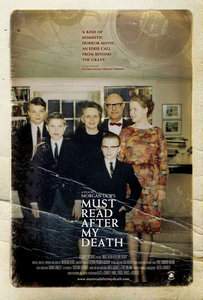
Must Read After My Death (2009) movie poster

Plot Summary

Must Read After My Death (2009) Plot Summary Explained

Release, runtime and language
2009 · 73 min · English
Directed by
Morgan Dews

In 1960s Hartford, a couple’s attempts to achieve marital harmony spiral into a chaotic series of therapy sessions, medication, and institutionalization. Their four children grapple with the family’s increasingly complex situation as intimate struggles are revealed through recovered audio recordings and home movies. The narrative offers a glimpse into a tumultuous period characterized by experimental treatments and a search for unconventional solutions to personal challenges.

On this page (5)
  1. 1 What happens: full plot
  2. 2 Plot questions answered
  3. 3 Movie threads
  4. 4 Movies like Must Read After My Death
  5. 5 Every angle

Full plot summary · contains spoilers

What Happens in Must Read After My Death: Full Plot Summary

The whole story of Must Read After My Death (2009) explained, from the opening scene to the final frame: every key event, every twist and what it all adds up to. Read it as a quick recap before the sequel, to check a scene you missed, or to finally understand what really happened.

Filmmaker Morgan Dews delves deeply into his grandmother Allis's life, revealing the profound bond they shared. It wasn't until after her passing in 2001 that he uncovered a remarkable collection she had curated during the tumultuous 1960s. This archive is a treasure trove of intimate and candid audio recordings, which detail the disturbing realities of her family's life, alongside silent home movies, photographs, and journals that span decades. Through these recovered materials, Dews crafts a powerful family portrait, offering an intimate glimpse into their struggles against the backdrop of an America on the brink of significant change.

> "Must Read After My Death" takes us through the lives of Allis, her husband Charley, and their four children in Hartford, Connecticut. Since Charley's job requires him to be in Australia for four months each year, the couple opts for Dictaphone recorders to maintain their connection during his long absences. Allis, a modern woman ahead of her time, finds herself battling against the constraints of traditional roles as a wife and mother. The recordings emerge as a form of therapy for her, and with the family's involvement, they become integrated into daily life.

As the family seeks help from psychologists and psychiatrists, the recordings grow increasingly darker and more desperate, reflecting their escalating turmoil. Meanwhile, Dews juxtaposes the family's various home movies against the serene yet deceptive images of typical American life, creating a stark visual contrast to the raw emotionality captured in the recordings. This blend of personal archive material paints a compelling and poignant story of resilience amid deep emotional struggles.

Last updated: November 07, 2024 at 23:13

Was this helpful?

Plot questions answered

Must Read After My Death Plot Explained: Your Questions Answered

The questions people ask most about Must Read After My Death (2009): what happens in the confusing scenes, why the characters do what they do, the twists, hidden details and what the ending means. Each answer contains spoilers.

Q1

Why did Allis start using Dictaphone recordings?

Allis began using Dictaphone recorders to maintain communication with her husband Charley during his four-month absences each year when his job required him to be in Australia. As a modern woman ahead of her time, she also used the recordings as a form of therapeutic outlet to express her frustrations and challenges with traditional expectations of being a wife and mother.

Foreshadowing: The recordings were initially a practical solution for long-distance communication but evolved into something much deeper as family tensions escalated.

  • allis
  • dictaphone
  • recordings
  • charley
  • therapy
  • australia
Q2

Why did the family seek help from psychologists and psychiatrists?

The family sought professional help from psychologists and psychiatrists as their emotional turmoil escalated and became unmanageable. The recordings grew increasingly darker and more desperate, reflecting the deteriorating mental health of family members and the depth of their struggles with marital strife and personal challenges.

Foreshadowing: The decision to seek professional help marked a turning point that revealed the true extent of the family's emotional crisis.

  • therapy
  • psychologist
  • psychiatrist
  • mental health
  • family crisis
Q3

What caused the audio recordings to become progressively darker?

The recordings became darker and more desperate as the family's situation deteriorated. What began as a way for Allis to cope with Charley's absences evolved into raw documentation of the family's escalating turmoil, including revelations about marital problems, institutionalization, and the impact of experimental psychological treatments on both Allis and her children.

Foreshadowing: The shift from practical correspondence to desperate emotional release mirrored the family's decline into crisis.

  • recordings
  • audio
  • dark
  • escalation
  • emotional struggle
Q4

Why is there such a stark contrast between the home movies and the audio recordings?

The documentary deliberately juxtaposes serene, deceptive images of typical American life from home movies against the raw, disturbing emotional content of the audio recordings. This contrast highlights the facade of normalcy the family presented to the outside world while their private reality was filled with struggle, mental health crises, and profound dysfunction.

Foreshadowing: The home movies initially seem like happy family moments but take on darker meaning when viewed alongside the recordings.

  • home movies
  • recordings
  • contrast
  • facade
  • american life
Q5

What mental health struggles did Allis face?

Allis battled against the constraints of traditional roles as a wife and mother while experiencing deep emotional distress. The audio recordings reveal disturbing realities of family life, and the family's engagement with experimental psychological treatments suggests significant mental health challenges that ultimately led to institutionalization.

Foreshadowing: Allis's early frustrations with her domestic role were the first signs of deeper psychological struggles that would intensify.

  • allis
  • mental health
  • institutionalization
  • depression
  • struggle
Q6

How did Charley's repeated absences affect the family?

Charley's four-month annual absences to Australia created significant strain on the family dynamic. Allis was left to manage four children while coping with her frustrations, leading her to rely heavily on Dictaphone recordings as both connection and therapy, eventually revealing deeper marital problems and the family's emotional instability.

Foreshadowing: The Dictaphone recordings emerged directly from Charley's absences, becoming the family's primary emotional outlet.

  • charley
  • absence
  • australia
  • family strain
  • children
Q7

Why did Morgan Dews make this documentary about his grandmother?

Morgan Dews made the documentary after discovering the archive of recordings, home movies, photographs, and journals his grandmother Allis had curated after her death in 2001. The profound bond they shared motivated him to piece together this family portrait and preserve her legacy, revealing the complex truths behind their family's appearance of normalcy.

Foreshadowing: The discovery of the archive after Allis's death provided Morgan with both the material and the motivation to tell this story.

  • morgan dews
  • grandmother
  • documentary
  • archive
  • legacy
Q8

How were the four children affected by the family crisis?

The four children in Hartford, Connecticut grappled with their family's increasingly complex situation as intimate struggles were revealed through the recordings. They witnessed their mother's emotional deterioration, experienced the impact of experimental treatments, and lived through the tension between the family's public appearance and private turmoil.

Foreshadowing: The children's vulnerability to the family crisis was established early as they were exposed to both the recordings and the escalating professional interventions.

  • children
  • family crisis
  • impact
  • four children
  • hartford
Q9

Why did Allis preserve and curate these recordings?

Allis curated the collection of audio recordings, home movies, photographs, and journals as a form of personal documentation and possibly as a way to leave her story for future generations. The archive served as both therapeutic release during her lifetime and a legacy that would reveal the truth of her family's experiences after her passing.

Foreshadowing: Allis's decision to preserve these materials suggests she wanted her story told, even if the truth was difficult.

  • allis
  • archive
  • journals
  • preserve
  • legacy
  • recordings

Movie threads

More Movies Like Must Read After My Death, by Mood & Story

Curated lists built around what makes Must Read After My Death tick: the same mood, the same kind of story or the same emotional payoff. Each list explains why these movies belong together.

Documentaries using personal archives like Must Read After My Death

Intimate stories pieced together from private recordings and home footage. If you were fascinated by the raw, intimate storytelling in Must Read After My Death, you might enjoy these other movies that also use home movies, audio recordings, and private archives to uncover a deeper, often unsettling truth about families and relationships.

  • archival
  • voyeuristic
  • intimate
  • unsettling
  • melancholic
  • reflective
  • Tone: intimate, raw, melancholic
  • Pacing: variable, reflective
Why these movies?

The story pattern: The narrative pattern involves uncovering a hidden story by assembling fragments of personal media. The journey is one of discovery for both the filmmaker and the viewer, often leading to revelations that challenge the official or surface-level family narrative.

Why they belong together: These films are grouped by their unique narrative technique and resulting mood. They share a deeply intimate, often voyeuristic feel, a raw emotional weight, and a focus on the chasm between public appearance and private struggle.

Movies about claustrophobic family breakdown like Must Read After My Death

Stories where the family home becomes a pressure cooker of secrets and mental anguish. For viewers who appreciated the intense, raw portrayal of a family's psychological collapse in Must Read After My Death, this section highlights other films with a similar heavy, claustrophobic feel and themes of marital strife, therapy, and mental health struggles within a domestic setting.

  • claustrophobic
  • desperate
  • unsettling
  • psychological
  • heavy
  • raw
  • Tone: dark, desperate, unsettling
  • Pacing: variable, with tense peaks
Why these movies?

The story pattern: Narratives typically follow a family system under extreme stress, often involving therapy, medication, and secrets. The structure is often non-linear, revealing the breakdown piece by piece, and the emotional journey is one of escalating tension and inevitable fragmentation.

Why they belong together: They are connected by a shared, overwhelming mood of claustrophobia and desperation, a high emotional intensity, and a central focus on the dynamics of a family grappling with psychological crisis behind closed doors.

If you liked this

Movies Like Must Read After My Death

Similar movies to Must Read After My Death: the same genre, themes or kind of story. Each one comes with its own plot summary, timeline and ending explained.

Browse all movie summaries

Every angle

Must Read After My Death (2009) Explained: Plot, Timeline & Characters

Everything about Must Read After My Death in one place: what happens in the plot summary, the timeline in chronological order, the characters and meaning and a spoiler-free summary. What's After the Movie adds the cast, box office and post-credit scenes.

Coming soon on iOS and Android

The Plot Explained Movie Summary App

Plot summaries, endings explained and timelines on your phone. Catch up on any movie in minutes, save your favorites and never miss a twist again.

Be the first to know when we launch. Your email stays private, always.

Learn more about the app