Plot Explained Spoilers guaranteed!
Plot Explained

Browse by genre

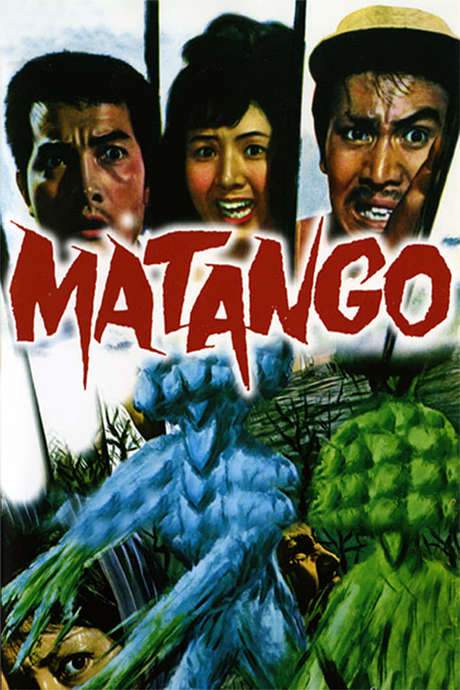
Matango (1963) movie poster

Plot Summary

Matango (1963) Plot Summary Explained

Release, runtime and language
1963 · 89 mins · Japanese
Loading streaming availability…
Directed by
Ishirô Honda
Starring
Hiroshi Tachikawa, Kenji Sahara, Hideyo Amamoto, Yoshio Tsuchiya, Haruo Nakajima, Akira Kubo

Stranded on a remote equatorial island, five vacationers and two crew members must survive with scarce food while attempting to repair the yacht Kessei. The island is overrun with a strange fungus, and ration shortages spark tension. As they grapple with dwindling supplies, they uncover an ominous hostile presence lurking within the fungal growth.

On this page (6)
  1. 1 Where to watch
  2. 2 What happens: full plot
  3. 3 Plot questions answered
  4. 4 Movie threads
  5. 5 Movies like Matango
  6. 6 Every angle
Loading streaming availability…

Full plot summary · contains spoilers

What Happens in Matango: Full Plot Summary

The whole story of Matango (1963) explained, from the opening scene to the final frame: every key event, every twist and what it all adds up to. Read it as a quick recap before the sequel, to check a scene you missed, or to finally understand what really happened.

Quarantined in a Tokyo mental hospital, a psychology professor named Kenji Murai, Akira Kubo, is visited by a group of doctors asking him about the events that led him there. Murai proceeds to explain how, despite only two of his party being dead, he was the only one to be rescued. He then relates the story of his day-trippers on a yacht: Murai, Masafumi Kasai, Yoshio Tsuchiya, the owner; Naoyuki Sakuta, Hiroshi Koizumi, the skipper; Senzô Koyama, Kenji Sahara, his shipmate; Etsurō Yoshida, Hiroshi Tachikawa, the celebrity writer; Mami Sekiguchi, Kumi Mizuno, a professional singer; and Akiko Sôma, Miki Yashiro, a student. A sudden storm causes the yacht to nearly capsize, and though the boat remains upright, it suffers serious damage and drifts toward a seemingly deserted island.

As they explore, they stumble upon pools of fresh rainwater and a forest filled with unusually large mushrooms, a sight that unsettles them but also offers a possible source of sustenance. They soon discover a wrecked ship on the shore, its sails rotten and its interior blighted by a mysterious mold. Murai studies the ship’s log and warns that the mushrooms might be poisonous, noting that the previous crew had hallucinations after eating them. The mold, they learn, is killable with cleaning products, which gives them a slim chance to salvage the situation. Their curiosity deepens as they connect the island’s troubles to nearby nuclear tests and a fallout that may have driven a bizarre mutation in local life, including the mushrooms themselves. Food runs low and tensions rise as desperation grows, with Kasai stubbornly refusing to help or share, choosing instead to linger in the captain’s quarters.

One night, Kasai raids the food stores and is attacked by a grotesque figure who quickly disappears into the forest. A drunken Yoshida decides to sample the mushrooms for their hallucinogenic properties and, after clashing with Koyama over Mami, declares violent intentions toward the women. The others subdue him and lock him in the captain’s quarters, an act that indirectly forces Kasai out of his isolation. Kasai then tries to convince Naoyuki to abscond with the food and the repaired yacht, but Naoyuki vehemently rebukes the idea. In a turn of events days later, Naoyuki hogties Kasai and flees with the gathered supplies, including Koyama’s secret stash, leaving Kasai to face an increasingly dire situation aboard the ship.

Desperation pushes Mami to free Yoshida, and together they attempt to seize control of the yacht, killing Senzô in the process. Murai and Kasai manage to wrest the gun away from Yoshida and force the two aggressors off the ship. Time passes, and Kasai is lured by Mami deeper into the forest where the perpetual rain has sparked wild fungal growth. He devours the mushrooms, hallucinates scenes of Tokyo nightlife, and sinks to his knees among the evolving humanoid mushroom creatures.

Murai discovers the yacht adrift and swims toward it, finding a note left by Naoyuki listing the group as dead and explaining that, having run out of food and energy, he has chosen to jump into the sea. Murai marks the note with a large X and continues his grim search. The mushroom creatures attack Akiko and Murai; she is kidnapped, and Murai tracks her down to learn that she, too, has fallen under the mushrooms’ influence, along with Mami, Yoshida, and Kasai. Murai makes a valiant attempt to rescue Akiko but is overwhelmed and forced to flee back to the yacht, escaping the island with his life intact.

Several days later, Murai is rescued and returns to a hospital bed, where he contemplates whether he should have stayed with Akiko on the island. The final reveal shows his face bearing fungal growths, leaving him to wonder aloud if it mattered where he was: humans, like the mushroom creatures, might not be so different after all. The story ends on a note of quiet ambiguity, inviting reflection on humanity, nature, and the thin line between civilization and organic transformation.

Last updated: October 09, 2025 at 10:42

Was this helpful?

Plot questions answered

Matango Plot Explained: Your Questions Answered

The questions people ask most about Matango (1963): what happens in the confusing scenes, why the characters do what they do, the twists, hidden details and what the ending means. Each answer contains spoilers.

Q1

Why was Professor Murai in a mental hospital?

The film opens with Murai being questioned in a Tokyo mental hospital about the island events. While only two people from his party died, he was the only one rescued alive. The doctors are investigating what drove him to this psychological state, as his story involves extreme trauma, survival guilt, and the unsettling realization that he may have been infected himself.

Foreshadowing: The hospital framing immediately signals that something deeply troubling happened to Murai beyond mere survival.

  • professor murai
  • mental hospital
  • psychological breakdown
  • survival guilt
Q2

What caused the mushrooms to mutate on the island?

Murai connects the island's abnormal fungal growth to nearby nuclear tests and fallout. The radiation triggered bizarre mutations in local life, including the mushrooms. This explains both their unusual size and their hallucinogenic, transformative properties.

Foreshadowing: Earlier, the group discovers a wrecked ship and discusses the mold that can be killed with cleaning products, hinting at unnatural biological changes.

  • nuclear tests
  • mutation
  • radiation
  • mushrooms
  • fallout
  • island
Q3

What happened to Akiko at the end?

Akiko was kidnapped by the mushroom creatures after being lured into the forest. Like Mami, Yoshida, and Kasai, she had consumed the mushrooms and fell under their influence. When Murai attempts to rescue her, he is overwhelmed and forced to flee the island alone, leaving her behind among the transformed creatures.

Foreshadowing: Earlier scenes show the mushrooms' hallucinogenic effects and growing influence over those who eat them.

  • akiko
  • kidnapped
  • mushroom creatures
  • transformation
  • rescue attempt
Q4

Why did Kasai isolate himself in the captain's quarters?

As food supplies dwindled, Kasai selfishly hoarded provisions and refused to help the group survive. He secluded himself in the captain's quarters to guard his stash, abandoning collective survival efforts. His isolation creates tension and ultimately leaves him vulnerable when others turn against him.

Foreshadowing: The film establishes early that Kasai refuses to share food while others struggle.

  • kasai
  • captain quarters
  • food hoarding
  • isolation
  • selfishness
Q5

How did the mushroom transformation work on humans?

Those who ate the mushrooms experienced hallucinations first, then gradually transformed into humanoid mushroom creatures. The process was accelerated by perpetual rainfall on the island. The transformation appeared to affect the mind as well as the body, causing victims to become hostile and loyal to the fungal colony.

Foreshadowing: The wrecked ship's log warns that the previous crew hallucinated after eating the mushrooms, foreshadowing their more extreme effects.

  • transformation
  • mushroom creatures
  • hallucination
  • mutation
  • human evolution
Q6

What was the note Murai found on the yacht?

Murai discovered the yacht adrift with a note from Naoyuki listing the group as dead. Naoyuki explained he had fled with the remaining food supplies, but eventually ran out and chose to jump into the sea rather than starve. Murai marked the note with a large X, symbolizing his rejection of this grim accounting.

Foreshadowing: Earlier, Naoyuki had already betrayed the group by hogtying Kasai and stealing supplies.

  • naoyuki note
  • yacht
  • death
  • desperation
  • abandonment
Q7

Why did Yoshida become violent?

Drunk and influenced by the mushrooms' hallucinogenic properties, Yoshida attempted to use the situation to assert control over the women. He declared violent intentions toward Mami and Akiko, pulling a gun. The others subdued him and locked him in the captain's quarters, though this inadvertently freed Kasai from his isolation.

Foreshadowing: Yoshida's earlier decision to sample the mushrooms for their hallucinogenic effects directly precedes his violent breakdown.

  • yoshida
  • violence
  • mushrooms
  • attempted assault
  • psychological breakdown
Q8

What happened to Mami and Yoshida after they ate the mushrooms?

Both Mami and Yoshida consumed the mushrooms and became transformed into humanoid mushroom creatures. Mami lured Kasai into the forest to eat more mushrooms, facilitating his transformation. Together with Yoshida and Akiko, they formed part of the hostile fungal colony that attacked the remaining survivors.

Foreshadowing: Mami's increasing odd behavior and her freeing of Yoshida signal her growing mushroom influence.

  • mami
  • yoshida
  • transformation
  • mushroom creatures
  • hostility
Q9

Why did Murai escape alone instead of staying with Akiko?

Murai was overwhelmed by the mushroom creatures during his rescue attempt for Akiko. He was forced to flee back to the yacht and escape the island to survive. His choice was not voluntary companionship but survival necessity, leaving Akiko already transformed among the creatures.

Foreshadowing: Murai tracks Akiko to the forest but is surrounded and forced to retreat, abandoning his rescue mission.

  • murai
  • escape
  • akiko
  • rescue failed
  • survival
Q10

How many people died on the island?

According to Naoyuki's note, multiple people died, though the exact count is ambiguous. Senzō was killed by Mami and Yoshida during their coup attempt. Kasai, Mami, Yoshida, and Akiko all transformed into mushroom creatures. Naoyuki ultimately committed suicide. Only Murai survived and was rescued, though he appears infected himself.

Foreshadowing: The film establishes a steady progression from conflict to violence to transformation throughout.

  • deaths
  • fatalities
  • casualties
  • survivors
  • murai only
Q11

What does the ending reveal about Murai's condition?

In the final hospital scene, Murai is shown with fungal growths on his face, indicating he has also been infected despite escaping the island. This raises the question of whether the transformation was inevitable regardless of location, suggesting humans may be no different from the mushroom creatures, they are also subject to biological transformation and decay.

Foreshadowing: The film foreshadows this when Murai discovers Akiko already under the mushrooms' influence, implying the infection spreads gradually.

  • murai
  • facial growths
  • infection
  • transformation
  • ending ambiguity
Q12

Why was Kasai attacked by the grotesque figure on the beach?

Kasai was attacked one night while raiding the food stores by a grotesque humanoid figure who quickly disappeared into the forest. This figure was likely an early victim of mushroom transformation, driven to attack intruders defending its territory. The attack heightened paranoia among the survivors.

Foreshadowing: This is the first hint that something more sinister than starvation threatens them on the island.

  • kasai
  • attack
  • grotesque figure
  • beach
  • night attack

Movie threads

More Movies Like Matango, by Mood & Story

Curated lists built around what makes Matango tick: the same mood, the same kind of story or the same emotional payoff. Each list explains why these movies belong together.

Slow Burn Body Horror Movies like Matango

Stories where tension and dread build towards grotesque physical transformation. If you liked the grim transformation in Matango, explore more movies like it. This thread features similar horror stories where a steady pace builds unbearable tension, leading to physical and psychological decay. Find films that share this specific pattern of slow, dread-filled bodily mutation.

  • body horror
  • dread
  • unsettling
  • grim
  • desperate
  • atmospheric
  • Tone: dark, grim, unsettling
  • Pacing: steady, methodical
Why these movies?

The story pattern: Narratives in this thread typically follow characters facing an undeniable, slow-acting force that alters their bodies. The story structure is often a steady, linear decline, focusing on the characters' growing desperation, paranoia, and the grim acceptance of their fate as their humanity is stripped away.

Why they belong together: Movies are grouped here based on their shared emphasis on a deliberate pacing that amplifies dread, a dark tone centered on physical decay, and a heavy emotional weight stemming from the loss of self. They deliver a specific kind of horror that is as psychological as it is physical.

Isolation Horror Stories with Group Breakdown like Matango

Trapped groups fracturing under pressure, where the real monster is human nature. For viewers who enjoyed the group dynamics and survival pressure in Matango. This collection gathers movies like Matango that focus on isolated groups succumbing to psychological collapse. Discover similar thrillers and horror films where the setting becomes a pressure cooker for human desperation.

  • claustrophobic
  • desperate
  • paranoid
  • unsettling
  • survival
  • tense
  • Tone: dark, tense, bleak
  • Pacing: steady
Why these movies?

The story pattern: The narrative pattern involves a group being cut off from society, often in a remote location. Initial cooperation gives way to conflict as resources dwindle and a external threat looms. The plot focuses on the disintegration of relationships, the rise of paranoia, and the moral compromises characters make to survive.

Why they belong together: This thread groups films that share a claustrophobic atmosphere, a focus on the psychological breakdown of a group under duress, and themes exploring the fragility of civilization. The similarity lies in the potent mix of isolation, survival tension, and the examination of base human instincts.

If you liked this

Movies Like Matango

Similar movies to Matango: the same genre, themes or kind of story. Each one comes with its own plot summary, timeline and ending explained.

Browse all movie summaries

Every angle

Matango (1963) Explained: Plot, Timeline & Characters

Everything about Matango in one place: what happens in the plot summary, the timeline in chronological order, the characters and meaning and a spoiler-free summary. What's After the Movie adds the cast, box office and post-credit scenes.

Coming soon on iOS and Android

The Plot Explained Movie Summary App

Plot summaries, endings explained and timelines on your phone. Catch up on any movie in minutes, save your favorites and never miss a twist again.

Be the first to know when we launch. Your email stays private, always.

Learn more about the app