Plot Explained Spoilers guaranteed!
Plot Explained

Browse by genre

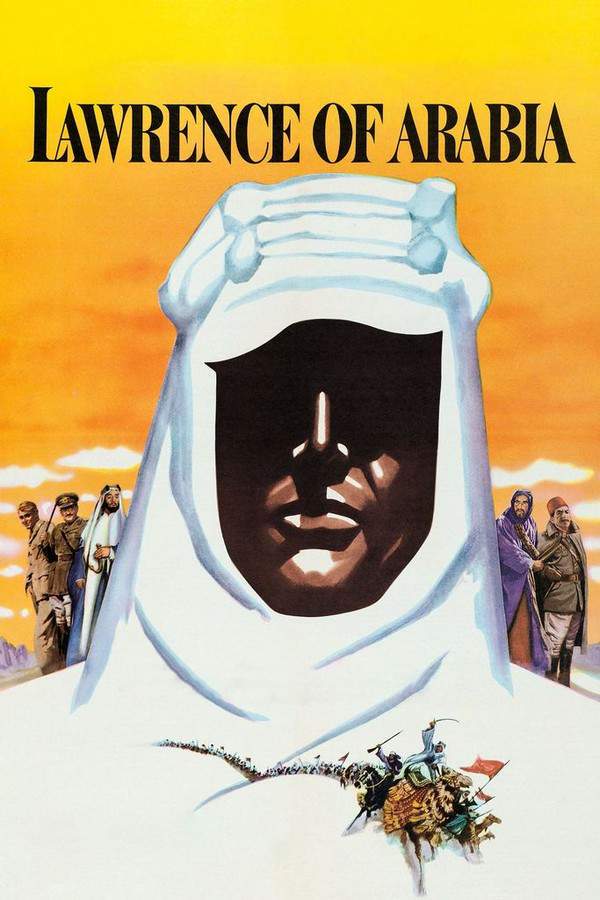
Lawrence of Arabia (re-release) (2002) movie poster

Plot Summary

Lawrence of Arabia (re-release) (2002) Plot Summary Explained

Release, runtime and language
2002 · 216 min · English
Loading streaming availability…
Directed by
David Lean
Starring
Peter O'Toole

During World War I, British Lieutenant T.E. Lawrence is dispatched to the Arabian desert to unite warring Arab tribes against the Ottoman Empire. He develops a complex relationship with Sherif Ali, a local leader, as they navigate political intrigue and dangerous military campaigns. Lawrence leads a daring camel trek across vast distances to attack Turkish forces and liberate key strongholds, facing both physical hardship and internal conflict along the way.

On this page (6)
  1. 1 Where to watch
  2. 2 What happens: full plot
  3. 3 Plot questions answered
  4. 4 Movie threads
  5. 5 Movies like Lawrence of Arabia (re-release)
  6. 6 Every angle
Loading streaming availability…

Full plot summary · contains spoilers

What Happens in Lawrence of Arabia (re-release): Full Plot Summary

The whole story of Lawrence of Arabia (re-release) (2002) explained, from the opening scene to the final frame: every key event, every twist and what it all adds up to. Read it as a quick recap before the sequel, to check a scene you missed, or to finally understand what really happened.

The film unfolds in two distinct parts, separated by an intermission.

Part I

In 1935, the life of T. E. Lawrence, played by Peter O'Toole, is tragically cut short in a motorcycle accident. At his memorial service at St. Paul's Cathedral, reporters seek to unravel the complexities of this remarkable man, but they find themselves at a loss. During World War I, Lawrence stands out as an unconventional British Army lieutenant stationed in Cairo, known primarily for his insolence and his deep understanding of the Bedouin culture. Despite the objections from General Murray (played by Donald Wolfit), Mr. Dryden (portrayed by Claude Rains) from the Arab Bureau sends Lawrence to evaluate the potential of Prince Faisal (played by Alec Guinness) in his rebellion against the Turks.

While making his journey, Lawrence witnesses the harsh realities of Bedouin life when his guide is killed by Sherif Ali (represented by Omar Sharif) over a dispute regarding a well. Upon arrival, Lawrence meets Colonel Brighton (played by Anthony Quayle), who enforces a cautious approach. However, Lawrence shows defiance by engaging Faisal directly, sparking the prince's curiosity with his bold knowledge. Brighton, suggesting a retreat after a major setback, is challenged by Lawrence, who proposes an audacious surprise attack on Aqaba. If successful, this would establish a crucial supply port for the British. Despite the town being heavily fortified at sea, it is vulnerable on the landward side, and with Lawrence's persuasion, Faisal agrees to contribute fifty men, led by a doubtful Sherif Ali. Two orphans, Daud (John Dimech) and Farraj (Michel Ray), join him as aides.

The group embarks on a daunting expedition across the Nefud Desert, known for being virtually insurmountable. As they journey relentlessly day and night in search of water, they unwittingly leave behind Gasim (I. S. Johar), who succumbs to exhaustion. Determined, Lawrence risks his own safety by backtracking to save Gasim, winning over Sherif Ali in the process. Eventually, he enlists Auda Abu Tayi (Anthony Quinn), a powerful tribal leader, to join their cause against the Turks. Conflict arises when one of Ali’s followers kills a member of Auda’s tribe, threatening their fragile alliance. To maintain unity, Lawrence takes the extreme step of executing the murderer himself, only to find that it is Gasim. This sacrifice solidifies their alliance, enabling them to triumph over the Turkish forces.

After relaying the news of victory to Mr. Dryden and the new commander, General Allenby (Jack Hawkins), Lawrence faces another tragedy during their crossing of the Sinai Desert when Daud tragically dies in quicksand. Promoted to major, he receives resources to aid the Arabs but struggles internally with his act of execution—confessing enjoyment to Allenby, who dismisses Lawrence’s concerns about British intentions in Arabia.

Part II

Lawrence embarks on a relentless guerrilla campaign, targeting Turkish supply lines by derailing trains and disrupting operations. His actions catch the attention of American war correspondent Jackson Bentley (Arthur Kennedy), who helps elevate Lawrence's fame. However, in a disastrous raid, Farraj suffers grave injuries, and feeling compelled to save him from torture, Lawrence makes the heart-wrenching decision to end Farraj’s life.

When scouting the city of Daraa with Ali, Lawrence is captured by the Turkish Bey (José Ferrer), who subjects him to humiliating and brutal interrogation. Following this traumatic experience, Lawrence finds himself in Jerusalem, where Allenby pressures him to spearhead an advance on Damascus. By now, Lawrence is a changed man, tormented by his past actions, yet he ultimately agrees to lead the effort.

He assembles an army comprised mainly of ruthless fighters, driven more by greed than by a sense of duty to the Arab cause. Amid their assaults, they confront a column of Turkish soldiers guilty of atrocities against the people of Tafas. Amid the chaos, one of Lawrence’s men demands, > "No prisoners!" When Lawrence hesitates, the man charges alone into danger and is killed. This spurs Lawrence to echo the command, leading to a bloody massacre in which he actively participates.

Upon taking Damascus ahead of Allenby's forces, the newly-introduced Arab council struggles to govern effectively, succumbing to infighting and operational failures, ultimately relinquishing control to the British. Lawrence, now promoted to colonel, finds his role diminished and is promptly ordered home, feeling the weight of his disillusionment as he departs in a staff car, rendered obsolete by both Faisal and the British authorities.
Last updated: November 07, 2024 at 22:51

Was this helpful?

Plot questions answered

Lawrence of Arabia (re-release) Plot Explained: Your Questions Answered

The questions people ask most about Lawrence of Arabia (re-release) (2002): what happens in the confusing scenes, why the characters do what they do, the twists, hidden details and what the ending means. Each answer contains spoilers.

Q1

Why does Lawrence risk his life to save Gasim in the desert?

Lawrence decides to turn back and rescue Gasim, who was left behind during the grueling desert crossing, because he refuses to abandon a man to die. This act of courage and compassion earns him the respect and loyalty of Sherif Ali, who had previously doubted Lawrence's commitment to the Arab cause. The decision demonstrates Lawrence's willingness to risk his own life for his men, which helps cement his leadership among the Bedouin tribes.

  • gasim rescue
  • lawrence leadership
  • desert crossing
  • nefud desert
Q2

Why does Lawrence execute Gasim after saving him?

Lawrence executes Gasim to preserve the fragile alliance between Sherif Ali's tribe and Auda Abu Tayi's tribe. When one of Ali's men kills a member of Auda's tribe, Lawrence must take decisive action to prevent the alliance from collapsing. He personally carries out the execution, only to discover afterward that the murderer is Gasim, the same man he saved earlier. This tragic necessity solidifies their united front against the Turkish forces and enables their eventual victory.

Foreshadowing: Lawrence's earlier rescue of Gasim foreshadows this tragic irony, where the man he saved becomes the sacrifice required for unity.

  • gasim execution
  • audience alliance
  • tribal unity
  • ottoman war
Q3

Why does Lawrence kill Farraj after he is injured?

Lawrence mercy kills Farraj after his companion suffers grave injuries during a disastrous raid. Rather than allowing Farraj to be captured and tortured by the Turks, Lawrence makes the painful decision to end his life himself. This act reflects Lawrence's growing moral deterioration and the harsh choices he must make as the campaign escalates, showing how the war has stripped away his former principles.

  • farraj death
  • mercy killing
  • guerrilla warfare
  • turkish capture
Q4

Why does Lawrence believe Aqaba can be captured from the land?

Lawrence identifies that while Aqaba is heavily fortified against naval attack, the landward side is completely vulnerable. He persuades Prince Faisal to contribute fifty men for a surprise attack from the desert, exploiting this strategic weakness. This audacious plan succeeds where a conventional naval assault would have failed, establishing a crucial supply port for British operations and marking Lawrence's first major military success.

  • aqaba attack
  • strategic plan
  • desert campaign
  • british supply port
Q5

Why does Lawrence join the massacre at Tafas?

During the assault on Turkish forces at Tafas, one of Lawrence's men cries out for no prisoners to be taken. When Lawrence hesitates, the man charges forward alone and is killed. This loss appears to trigger Lawrence to echo the command, leading to a bloody massacre in which he actively participates. The moment represents his complete moral collapse, as the man he loved like a brother, Daud, had already died, leaving him disconnected from his former sense of purpose.

Foreshadowing: The earlier death of Daud in the quicksand marks the beginning of Lawrence's psychological unraveling, which culminates in this violent outburst.

  • tafas massacre
  • turkish soldiers
  • moral collapse
  • arab revolt
Q6

Why is Lawrence captured while scouting Daraa?

Lawrence is captured while scouting the city of Daraa in disguise, accompanied by Sherif Ali. He is identified and arrested by the Turkish Bey, who subjects him to humiliating and brutal interrogation. This traumatic experience deeply affects Lawrence psychologically and marks a turning point in his character, leaving him changed as he returns to lead the advance on Damascus.

  • daraa capture
  • turkish interrogation
  • lawrence torture
  • sco
Q7

Why does the Arab council in Damascus fail to govern?

After Lawrence and his forces capture Damascus ahead of General Allenby's armies, the newly formed Arab council immediately begins to fracture. The council members, driven by personal greed and tribal rivalries rather than shared purpose, succumb to infighting and operational failures. Their inability to work together or establish effective governance forces them to relinquish control to the British, demonstrating how the Arab cause was undermined from within by the same divisions Lawrence had tried to overcome.

  • damascus council
  • arab governance
  • british control
  • political failure
Q8

Why is Lawrence ordered to return to Britain?

After promoting Lawrence to colonel, both Prince Faisal and the British authorities effectively sideline him. With the Arab council failing and the British assuming control, Lawrence's role becomes obsolete. He is ordered home, stripped of purpose and influence. This dismissal represents his ultimate disillusionment, the man who united Arab tribes and captured Damascus finds himself rendered irrelevant by the very powers he fought to assist.

  • lawrence return
  • british authority
  • faisal
  • colonel lawrence
Q9

What happens to Lawrence after the Tafas massacre?

Following the massacre at Tafas, Lawrence becomes increasingly tormented by his actions. His participation in the wholesale slaughter contrasts sharply with his earlier reluctance to execute Gasim, symbolizing his complete moral degradation. This event, combined with his traumatic capture and interrogation in Daraa, transforms him from an idealistic leader into a disillusioned participant in violence he once disdain.

  • lawrence violence
  • moral deterioration
  • psychological breakdown
  • war crimes
Q10

How does Lawrence become famous through Jackson Bentley?

American war correspondent Jackson Bentley becomes fascinated with Lawrence's unconventional guerrilla tactics and rising successes. Through Bentley\'s newspaper coverage, Lawrence's fame grows dramatically, transforming him from a British officer into a legendary figure both in the Arab world and back home in England. This media attention elevates Lawrence's status but also creates a persona that increasingly separates him from his own identity and motivations.

  • jackson bentley
  • media fame
  • war correspondent
  • publicity
Q11

Why does Lawrence take responsibility for executing the murderer?

Lawrence personally executes the murderer from Sherif Ali's tribe who killed a member of Auda Abu Tayi's tribe, understanding that the act must be done by an outsider to maintain the fragile alliance between the two tribal groups. By taking this drastic action himself, Lawrence demonstrates his commitment to the Arab cause beyond mere military leadership, proving he is willing to make personal sacrifices for unity among the tribes fighting the Ottomans.

  • tribal alliance
  • murder execution
  • arab unity
  • audience abu tayi
Q12

Why does Lawrence tell Allenby he enjoyed executing the murderer?

Lawrence confesses to General Allenby that he enjoyed executing the murderer, which reveals his growing internal conflict and psychological transformation. Allenby dismisses Lawrence's concerns about British intentions in Arabia, suggesting Lawrence's enjoyment stems from power and control rather than moral satisfaction. This confession marks the beginning of Lawrence's moral crisis, as he grapples with the nature of violence and his own capacity for it.

  • allenby confession
  • enjoyment of violence
  • psychology
  • british politics

Movie threads

More Movies Like Lawrence of Arabia (re-release), by Mood & Story

Curated lists built around what makes Lawrence of Arabia (re-release) tick: the same mood, the same kind of story or the same emotional payoff. Each list explains why these movies belong together.

Epic Journeys of Personal Disillusionment like in Lawrence of Arabia (re-release)

Grand adventures that end in personal tragedy and moral exhaustion. For viewers who liked Lawrence of Arabia and are searching for similar epic movies with bittersweet endings. This section features films where grand historical adventures and sweeping landscapes frame a story of a protagonist's psychological unraveling and tragic personal cost, resulting in movies like this that blend grandeur with melancholy.

  • epic
  • tragic
  • disillusioned
  • grandiose
  • somber
  • introspective
  • Tone: melancholic, tragic, grandiose
  • Pacing: variable, with slow builds and intense peaks
Why these movies?

The story pattern: The narrative typically follows a skilled but idealistic protagonist who achieves a monumental goal against a sprawling backdrop, often in a war or colonial setting. However, the success is pyrrhic; the protagonist becomes a victim of their own legend, betrayed by allies or systems, and is left emotionally shattered, questioning the meaning of their sacrifices.

Why they belong together: These films are grouped together because they share a specific emotional arc: the journey from idealism to cynicism on an epic scale. They combine high-intensity action and complex political intrigue with a heavy, melancholic tone, resulting in a bittersweet or bleak ending where the protagonist's internal defeat is more significant than their external victory.

Movies About the Psychological Toll of War like Lawrence of Arabia (re-release)

Stories where the battlefield's greatest damage is to the soul. If you liked Lawrence of Arabia's exploration of T.E. Lawrence's mental collapse, this section collects similar war movies and biographical dramas. Find films that focus on the heavy psychological cost of conflict, featuring characters who lose their sense of self amidst violence, political intrigue, and moral compromise.

  • somber
  • tragic
  • introspective
  • harsh
  • disturbing
  • isolated
  • Tone: melancholic, bleak, introspective
  • Pacing: variable
Why these movies?

The story pattern: The narrative centers on a character who enters a war with a clear sense of purpose or identity. Through exposure to extreme violence, moral compromises like mercy killings or torture, and the fracturing of alliances, the character's psyche fractures. Their journey is one of internal conflict, leading to a transformation into someone they no longer recognize.

Why they belong together: These movies are united by their intense focus on the mental and emotional devastation of warfare. They share a heavy emotional weight, complex character studies, and often a melancholic or bleak tone. The pacing can vary, but the intensity remains high, driven by disturbing themes and a deep exploration of trauma and identity loss.

If you liked this

Movies Like Lawrence of Arabia (re-release)

Similar movies to Lawrence of Arabia (re-release): the same genre, themes or kind of story. Each one comes with its own plot summary, timeline and ending explained.

Browse all movie summaries

Every angle

Lawrence of Arabia (re-release) (2002) Explained: Plot, Timeline & Characters

Everything about Lawrence of Arabia (re-release) in one place: what happens in the plot summary, the timeline in chronological order, the characters and meaning and a spoiler-free summary. What's After the Movie adds the cast, box office and post-credit scenes.

Coming soon on iOS and Android

The Plot Explained Movie Summary App

Plot summaries, endings explained and timelines on your phone. Catch up on any movie in minutes, save your favorites and never miss a twist again.

Be the first to know when we launch. Your email stays private, always.

Learn more about the app