Plot Explained Spoilers guaranteed!
Plot Explained

Browse by genre

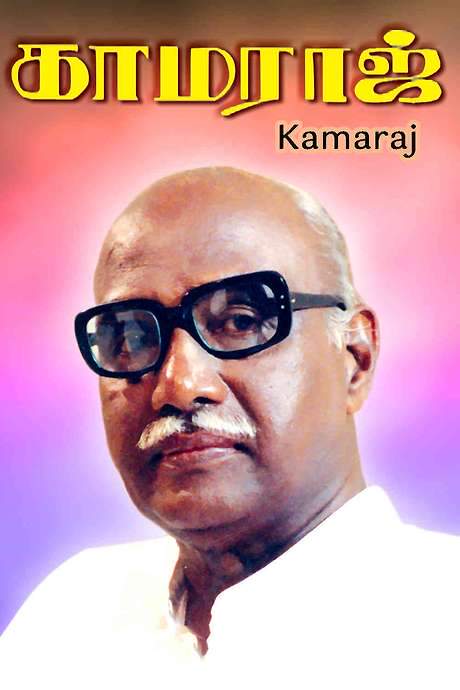
Kamaraj (2004) movie poster

Timeline

Kamaraj (2004) Timeline Explained – Every Event in Order

Release, runtime and language
2004 · 121 mins · Tamil
Directed by
A.J. Balakrishnan
Starring
Samuthirakani, V. S. Raghavan, Sampath Raj, Vijayakumar, Rajesh, Charu Haasan

A film about the political kingmaker, offering a biographical portrait of K. Kamaraj, who served as Chief Minister of the former Madras State and as secretary of the All‑India Congress Committee, becoming a respected national figure. It chronicles his early life through his political rise and concludes with his funeral procession.

On this page (4)
  1. 1 Events in order (12)
  2. 2 Timeline questions answered
  3. 3 Movie threads
  4. 4 Every angle

12 events in order · contains spoilers

Kamaraj Timeline: Events in Chronological Order

Every key event of Kamaraj (2004) in order, scene by scene, with when and where it takes place. Use it to untangle flashbacks, time jumps and parallel storylines, to refresh your memory before the sequel or to find the exact scene you are thinking of.

  1. Early life and formative influences

    The film opens in the pre-independence era, highlighting Kamaraj's childhood and the shaping influence of Satyamurthy. These early years establish his political conscience and resilience. The narrative hints at the challenges he would later confront, including a period in prison during the freedom struggle.

    When
    Pre-Independence period
  2. Rising political figure and prison experiences

    Kamaraj grows into a capable political figure, navigating the turbulent corridors of the freedom movement. The story also recounts his time in prison, which tests his resolve and deepens his commitment to public service. These experiences plant the seeds of his later leadership within the Congress.

    When
    During the freedom movement
  3. Ascending to Chief Minister

    In the second phase, Kamaraj takes over as the Congress Chief Minister of the state and assumes responsibility for governance. He begins implementing reforms and earning respect for his practical, people-centric approach. This marks the start of his reputation for both reform and largesse.

    When
    CM tenure
    Where
    State capital
  4. Educational reforms

    Kamaraj pushes sweeping educational reforms aimed at expanding access and improving quality across the state. His policies reflect a pragmatic, long-term view of development and social uplift. The reforms become a hallmark of his administration's legacy.

    When
    CM tenure
    Where
    State capital
  5. Largesse: eye operation for a child

    One notable act is bending rules to secure an urgent eye-operation for a child, illustrating his willingness to use authority for immediate welfare. This humane gesture underscores how governance can directly touch individual lives. The moment reinforces public trust in his leadership.

    When
    CM tenure
    Where
    State
  6. Humor and humility

    The film highlights his sense of humor in small personal moments, such as the anecdote about a mother's request for a fan and a blanket. These episodes reveal a grounded personality that stays connected with ordinary people's concerns. They contrast with power corridors and soften the image of a political leader.

    When
    CM tenure
    Where
    State
  7. Ethical stance: refusing to misuse power

    A telling scene shows him asking for the newly installed tap to be removed from his village house, prioritizing principle over privilege. The act reinforces his reputation for integrity and a refuse-to-lean-on-office attitude. It exemplifies ethical leadership in practice.

    When
    CM tenure
    Where
    Village
  8. Kamaraj Plan and resignation

    The third phase centers on the Kamaraj Plan, where he resigns from the Chief Minister's post to focus on party work. The move signals a shift from state leadership to national-level strategy. It redefines his role within the Congress and signals his commitment to national politics.

    When
    Kamaraj Plan period
    Where
    National politics
  9. Influence on national politics

    After stepping back from the state, he emerges as a kingmaker, guiding national political decisions and shaping Congress leadership. His influence demonstrates how regional leaders can define national trajectories. The period marks a transition from administration to strategic political influence.

    When
    Post-CM
    Where
    National stage
  10. Disillusionment with ethical decline in politics

    As non-ethics creep into political life, he becomes disillusioned with the direction of politics. He longs for principled leadership and a return to ethical governance. The narrative frames this disillusionment as a core motivation for his vision of reform.

    When
    Later career
    Where
    National
  11. Closing funeral sequence

    The film culminates with a closing scene taken from actual funeral records, showing swarms of humanity mourning their beloved leader. The footage underscores the breadth of public affection and the enduring impact of his life. It provides a poignant ending to the biographical arc.

    When
    Funeral
    Where
    Nationwide
  12. Legacy and remembrance

    Beyond the funeral, the narrative suggests how Kamaraj's reforms and ethical leadership continue to inspire future generations. People remember him for a model of service and integrity that transcends his era. The film leaves a sense of durable national memory.

    When
    Posthumous legacy

Last updated: February 20, 2026 at 18:44

Was this helpful?

Timeline questions answered

Kamaraj Timeline Explained: Your Questions Answered

When does it happen, and why in that order? The questions people ask about the chronology of Kamaraj (2004): time jumps, flashbacks, cause and effect between scenes and the correct order of events, each answered with spoilers.

Q1

Why did K. Kamaraj resign as Chief Minister?

Kamaraj resigned from his Chief Minister position to focus on party work at the national level. This decision, known as the Kamaraj Plan, was a strategic move to strengthen the Congress party rather than continue in state governance. He believed that working from within the party structure would give him broader influence over national politics and help shape the direction of the country beyond his home state.

  • kamaraj plan
  • resignation
  • chief minister
  • congress party
Q2

What was the Kamaraj Plan?

The Kamaraj Plan was a political strategy in which Kamaraj resigned as Chief Minister of Madras State to devote himself entirely to Congress party work at the national level. The plan aimed to revitalize the party by having senior leaders focus on organizational strengthening rather than holding governmental positions, believing this would create better coordination between party and government.

  • kamaraj plan
  • congress
  • national politics
  • party organization
Q3

Why was K. Kamaraj called a kingmaker in Indian politics?

After resigning as Chief Minister, Kamaraj emerged as a powerful kingmaker because of his ability to influence national political decisions and Congress leadership selections. His strategic counsel and moral authority gave him significant leverage in shaping who would lead the country, even though he no longer held an official government position.

  • kingmaker
  • congress
  • national leadership
  • political influence
Q4

Who was K. Kamaraj's political mentor?

Satyamurthy was Kamaraj's key political mentor during his formative years. Under Satyamurthy's influence, Kamaraj developed his political consciousness and sense of public duty. This mentorship shaped his early political worldview and guided him through the turbulent period of the freedom movement.

  • satyamurthy
  • mentor
  • political influence
  • early career
Q5

Why did Kamaraj refuse to keep a newly installed tap in his village house?

Kamaraj insisted on removing a newly installed tap from his village house because he refused to exploit his position for personal benefit. This act exemplified his strong ethical stance and commitment to not using political power for private gain, demonstrating the integrity that defined his leadership style.

  • tap
  • integrity
  • principle
  • village
  • personal gain
Q6

What were K. Kamaraj's major educational reforms?

As Chief Minister, Kamaraj implemented sweeping educational reforms aimed at expanding access and improving quality across Madras State. His policies reflected a pragmatic, long-term view of development and social uplift, focusing on making education more accessible to ordinary people while improving standards.

  • education reform
  • school
  • policy
  • development
Q7

What caused Kamaraj's disillusionment with politics?

Kamaraj became disillusioned as non-ethical practices crept into political life during his later career. He witnessed a shift away from the principled leadership that had characterized the independence movement, which troubled him deeply. This disillusionment motivated his continued advocacy for ethical governance and reform.

  • disillusionment
  • ethics
  • politics
  • principles
Q8

Why did K. Kamaraj go to prison during the freedom movement?

Kamaraj was imprisoned during the freedom struggle as a result of his participation in the independence movement. His prison experience tested his resolve and deepened his commitment to public service. This period of hardship shaped his discipline and resilience, qualities that would define his later leadership.

Foreshadowing: The film hints early at the challenges Kamaraj would face, including imprisonment.

  • prison
  • freedom movement
  • independence
  • imprisonment
Q9

How did Kamaraj help the child who needed an eye operation?

Kamaraj bent official rules to arrange an urgent eye operation for a child in need, demonstrating his willingness to use his authority for immediate welfare rather than adhering strictly to bureaucratic procedures. This act exemplified his people-centric approach to governance.

  • eye operation
  • child
  • help
  • welfare
  • bureaucracy
Q10

Why was K. Kamaraj so respected by the public?

Kamaraj was respected for his integrity, humility, and genuine connection to ordinary people. His refusal to misuse power for personal gain, combined with his people-centric reforms and direct willingness to help citizens in need, earned him deep affection. The massive funeral attendance, showing thousands mourning, demonstrated the breadth of public respect he commanded.

  • respect
  • people
  • legacy
  • integrity
  • public affection

Movie threads

More Movies Like Kamaraj, by Mood & Story

Curated lists built around what makes Kamaraj tick: the same mood, the same kind of story or the same emotional payoff. Each list explains why these movies belong together.

Biographical dramas of humble leaders like Kamaraj

Biographical portraits tracing the steady, dignified ascent of selfless public servants. Explore movies similar to Kamaraj that chronicle the inspiring lives of political and social leaders known for their humility and moral integrity. If you were moved by the story of a dedicated public servant, you'll find more films here about steady, principled journeys to power.

  • inspiring
  • respectful
  • somber
  • reflective
  • uplifting
  • dignified
  • Tone: hopeful, respectful, inspiring
  • Pacing: steady, methodical
Why these movies?

The story pattern: These narratives typically follow a chronological structure, tracing a subject's life from modest beginnings through their political or social accomplishments. The conflict is often internal or ideological, focusing on the personal sacrifices made for the greater good rather than overt villainy or high-stakes action.

Why they belong together: Movies in this thread are grouped by their shared focus on moral integrity, a steady and respectful pacing, and an ultimately hopeful tone that celebrates service. They balance the somber realities of sacrifice with the uplifting legacy of a life well-lived.


Movies with bittersweet legacies and national mourning like Kamaraj

Stories where profound public achievement is shadowed by personal cost and finality. Discover more films like Kamaraj that portray the lives of influential figures, ending with a nation's grief and a legacy tinged with sadness. If you appreciated the mix of inspiring achievement and poignant farewell, this collection of biographical dramas captures that specific emotional resonance.

  • bittersweet
  • somber
  • respectful
  • inspiring
  • nostalgic
  • grief
  • Tone: hopeful, sad, respectful
  • Pacing: steady, reflective
Why these movies?

The story pattern: The narrative arc follows a figure's rise to greatness, highlighting their positive contributions. However, the story consistently acknowledges the price paid for that success—loneliness, sacrifice, or personal tragedy. The conclusion is emotionally weighted, often focusing on death or the end of an era, leaving audiences with a respectful melancholy alongside admiration.

Why they belong together: These films share a specific emotional blend: they are fundamentally hopeful and inspiring yet are anchored by a palpable sadness, particularly in their conclusions. The tone balances reverence for achievement with a reflective, sometimes nostalgic, acknowledgment of what was lost along the way.

Every angle

Kamaraj (2004) Explained: Plot, Timeline & Characters

Everything about Kamaraj in one place: what happens in the plot summary, the timeline in chronological order, the characters and meaning and a spoiler-free summary. What's After the Movie adds the cast, box office and post-credit scenes.

Coming soon on iOS and Android

The Plot Explained Movie Summary App

Plot summaries, endings explained and timelines on your phone. Catch up on any movie in minutes, save your favorites and never miss a twist again.

Be the first to know when we launch. Your email stays private, always.

Learn more about the app