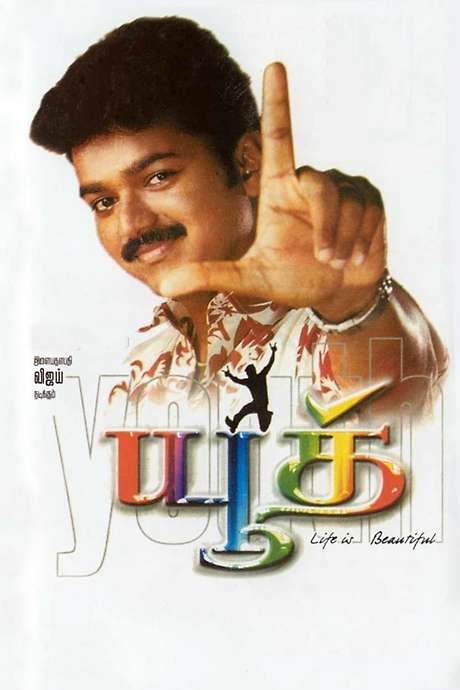
In Trichy, Nanu Prabhu, a carefree teenager, steps into college life with wide-eyed energy and a stubborn streak of romance. From the moment he locks eyes with his senior, Sandhya Panchacharam, a spark ignites that he pursues with relentless optimism. What begins as a bold crush quickly broadens into a deeper, more stubborn devotion, and Prabhu enlists his closest ally in crime-and-laughter, his best friend Petha Perumal, a voracious eater whose appetite for life mirrors Prabhu’s hunger for love. The trio becomes a lively nucleus around which the college days swirl: lectures, late-night rides, and the slow burn of first love that doesn’t quite fit into the standard rules of age or propriety.
At first, Sandhya treats Prabhu as a friend, a companion on the long commutes between home and campus. Yet as the two share the routine of college life—the chatter in the bus, the small moments of care on the way to class—the friendship begins to tilt, softening into something warmer and more complicated. The emotional temperature rises not just from their growing closeness but from the friction that arises when a jealous obstacle enters from Sandhya’s side. Aravind Singh, a batchmate who harbors a one-sided affection for Sandhya, views the budding bond with suspicion and resentment, and his disapproval creates a mounting pressure that threatens to pull them apart. The film deftly threads this tension through scenes of competitive pride, awkward confessions, and the shared history of two families who watch with mixed feelings as their children stumble toward adulthood.
To complicate matters, Prabhu leans into a risky strategy—he aligns with Aravind, not out of malice but in a tense, misguided attempt to "help" him win Sandhya. The move backfires in ways none of them expect, as Aravind and his friends quickly see past the ruse and recognize Prabhu’s genuine, stubborn love. The result is a web of frictions that tests every bond: Prabhu’s devotion is questioned, Sandhya’s loyalty is tested, and the social rules of college romance become blurred by intense emotions and high stakes. Yet even as people take sides and tempers flare, the central flame endures: Prabhu’s belief that Sandhya is the one he wants to spend his life with remains unshaken, even when distance and doubt creep in.
The story takes a turning point when Sandhya receives news from home—a call about a prospective groom waiting in Chennai. This development shakes Prabhu to his core. He contemplates a bold moment of truth: to propose as she holds the train ticket, letting fate pick the right path. But hesitation wins out, and Sandhya returns from Chennai with mixed feelings, having not connected with the groom. The air shifts to relief for Prabhu, yet the moment doesn’t settle into easy certainty. Instead, it becomes a catalyst for a more intimate confession: during a heated exchange with a senior, Prabhu openly declares his love, and for a moment, it seems Sandhya might finally acknowledge her own feelings.
Despite this, the road remains thorny. Sandhya returns to Karaikudi, and a sense of unease lingers as she contemplates her future. Prabhu, driven by a mix of longing and stubborn hope, follows, apologizes, and persuades her to come back to Trichy. When they reunite, the depth of Prabhu’s love becomes undeniable, even as Sandhya tests the strength of his feelings, seeking proof that his devotion isn’t just infatuation. The test, however, only hardens Prabhu’s resolve and deepens the bond between them, underscoring a theme that runs through the tale: true love isn’t a fleeting spark, but a choice made in quiet moments and stubborn perseverance.
Meanwhile, Prabhu’s parents take a drastic step to shield their son’s future from the volatility of youth: they pull him out of college and send him to work with his father. The shift from campus life to family trade slows the pace but sharpens the emotional stakes. Sandhya, meanwhile, finishes her exams and hints at a life beyond college, telling him she will soon return home. She urges him to move on and consider continuing his studies the next year if his heart still calls him to pursue love. Prabhu remains largely silent, however, his heart plotting a grand, cinematic gesture that would seal their fate once and for all.
In a moment that seems pulled from a dramatic play, Prabhu stages an apparent accident, enlisting the help of a friendly bus driver to carry out a suicide-note-based ruse designed to provoke a life-or-death moment that could force Sandhya to acknowledge her own feelings. The plan hinges on timing and luck, and in an unfortunate twist of fate, Sandhya learns of the staged danger only as a real danger unfolds. On the day the scene is set, a substitute driver is in place, and when Sandhya hurries to intervene, a failed connection and a missed signal lead to a devastating tragedy—Prabhu is struck down by a speeding van instead of the intended rescue, and the crowd around them watches in stunned silence as the dream they shared shatters instantly.
The aftermath is heavy and quiet. Prabhu’s parents arrive to witness the fragility of a future lost, and Sandhya, overwhelmed with grief, holds him in her arms as the world around them erupts into wailing and disbelief. The years that follow carry the weight of that moment: Sandhya, now wiser and more solitary, returns to the same alma mater five years later not as a student but as a lecturer, carrying the memory of Prabhu with her and remaining unmarried, a living testament to a love that could not be fully realized in time but never fully fades.
This tale blends warmth with sorrow, celebrating the stubborn courage of young love while acknowledging how fragile life can be when dreams collide with reality. It is a story about risks taken in the name of love, the consequences of those risks, and the enduring ache of memories that refuse to fade, even as the world moves forward.