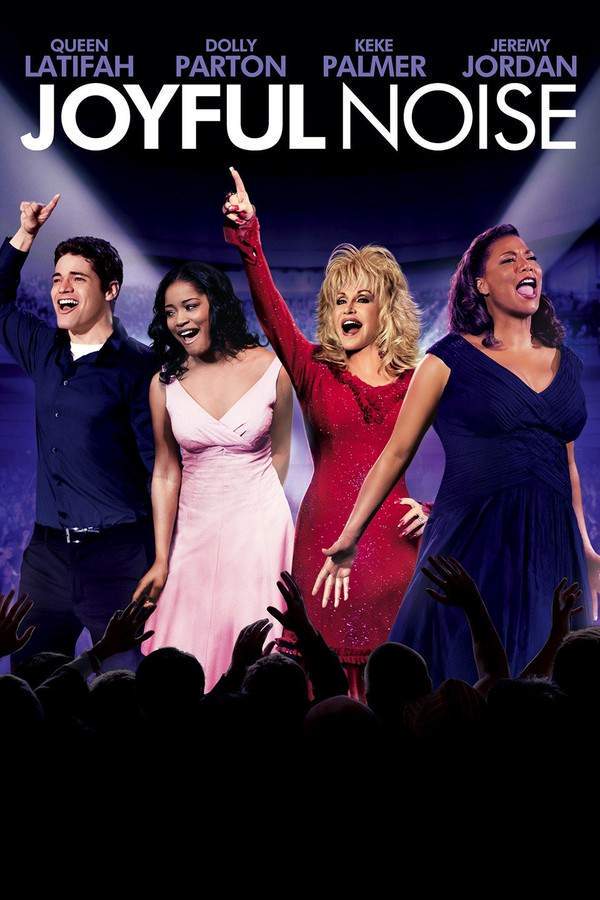
Vi Rose Hill, Queen Latifah, a practical mother raising two teenagers in Pacashau, Georgia, steps in after the small town’s choir director Bernard Sparrow passes away. She takes the reins of the church choir and steers it toward a traditional Gospel sound that their Pastor Dale (Courtney B. Vance) approves of, hoping to keep the community united through faith and music. But the director’s widow, G. G. Sparrow Dolly Parton, the church’s main benefactor, believes she should have been given the position herself, setting up a tension that runs through the town and the choir.
As the group heads toward the regional finals of the national amateur Joyful Noise competition, they face a familiar foe: a rival choir that beats them out and leaves the town’s hopes dangling. The soaring chords and heartfelt harmonies that have defined the choir’s identity begin to feel fragile as budget problems threaten to close the doors of the choir entirely, at a moment when the town could really use the uplifting power of their music.
Vi Rose carries a family full of characters navigating their own storms. Her son Walter has Asperger syndrome, and her daughter Olivia, Keke Palmer, is talented, independent, and fiercely protective of her mother’s rules. G. G. has recently taken in her rebellious, drifter grandson, Randy. A romance blossoms between Olivia and Randy, a development that Vi Rose resists, while Olivia also contends with a rival suitor, Manny. At Randy’s urging, some in the choir begin to entertain more contemporary arrangements, proposing fresh rhythms and choreography that could broaden the choir’s appeal—an idea that stirs debate about staying true to tradition versus reaching a wider audience.
The choir seems to have a real chance at the national finals when they discover the rival Detroit choir is cheating by hiring professionals, undercutting the spirit of the competition. Yet the Pastor remains steadfast, insisting the church will not sponsor changes that would compromise their reverent, traditional style. Meanwhile, Vi Rose’s husband Marcus has been away serving in the army after finding work locally hard to come by, a distance that strains the family and adds another layer of tension to Olivia’s world. Marcus’s absence becomes a sore spot, and when he eventually shares the truth about his situation, it becomes clear that the family’s separation has taken a toll. In a painful revelation, it’s revealed that Vi Rose wrote letters from Marcus to give the impression he was writing home, masking the harsher reality of their split.
Within the choir, Earla—a dynamic member who choreographs their routines—reignites her own spark with Mr. Hsu, followed later by Justin, as the group works through a long dry spell and finds new energy. Caleb and his family also face hardship, losing their business as the town’s fortunes wane. A heated confrontation erupts at a crowded diner between Vi Rose and G. G., and Vi Rose is fired from her job, intensifying Olivia’s frustration and prompting G. G. to threaten to pull support from the church unless the choir can compete in the finals with the new, stronger arrangements.
Randy forms a bond with Walter, helping him learn piano, which adds another layer to the group’s evolving sound. Manny, initially a rival voice for Olivia, becomes a collaborator as his guitar skills lend texture to the choir’s performances. The choir’s first competition at Holy Vision Church of Detroit raises suspicion—Detroit’s performance and methods appear to clash with the rules—which fuels the debate about whether true talent can shine within the lines of tradition. The team’s resilience is tested, but Randy also guides Caleb and Manny to contribute in meaningful ways.
The journey culminates in a high-stakes trip to Los Angeles for the finals. The tension between Vi Rose and Olivia peaks, culminating in a physical blow as Vi Rose slaps her daughter during a moment of raw emotion. Despite the strain, the choir unites under pressure, unveiling a lineup that blends the old with the new. They deliver a spirited and meticulously coordinated performance—marked by bold arrangements and carefully choreographed moves—that captivates the judges and audiences alike, ultimately earning them first place. The town returns home in triumph, buoyed by a performance that speaks to faith, family, and the power of a community choir.
A year later, Earla and Justin marry, and Marcus makes his way back to his family, suggesting a renewed sense of home and reconciliation after the turbulent season. The story closes on a note of renewal, with the choir’s music continuing to echo through Pacashau and the surrounding communities, a reminder of how art and faith can sustain a town through its hardest days.