Plot Explained Spoilers guaranteed!
Plot Explained

Browse by genre

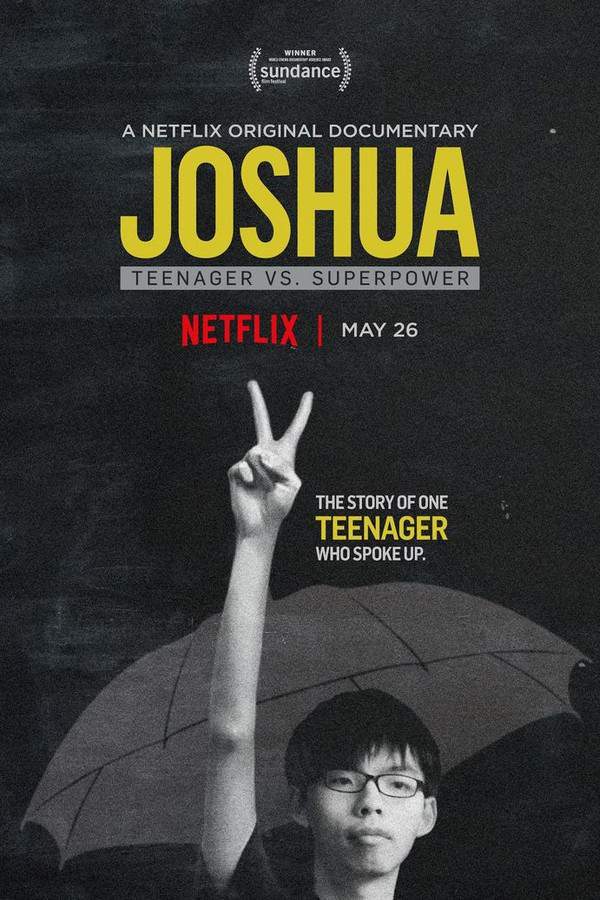
Joshua: Teenager vs. Superpower (2017) movie poster

Plot Summary

Joshua: Teenager vs. Superpower (2017) Plot Summary Explained

Release, runtime and language
2017 · 79 min · English
Echo score 75
Loading streaming availability…
Directed by
Joe Piscatella
Starring
Joshua 'Chi-Fung' Wong

Facing government betrayal, a determined Chinese teenager unexpectedly becomes the leader of a youth-led uprising in Hong Kong. Mobilizing tens of thousands, they courageously challenge authority and fight for their rights, demanding freedom and setting off a chain reaction with the potential to change history.

On this page (6)
  1. 1 Where to watch
  2. 2 What happens: full plot
  3. 3 Plot questions answered
  4. 4 Movie threads
  5. 5 Movies like Joshua: Teenager vs. Superpower
  6. 6 Every angle
Loading streaming availability…

Full plot summary · contains spoilers

What Happens in Joshua: Teenager vs. Superpower: Full Plot Summary

The whole story of Joshua: Teenager vs. Superpower (2017) explained, from the opening scene to the final frame: every key event, every twist and what it all adds up to. Read it as a quick recap before the sequel, to check a scene you missed, or to finally understand what really happened.

This documentary examines the rise of Joshua Wong, a prominent young political leader in Hong Kong who became a central figure in youth-led protests against the Chinese government. The narrative traces his early activism as a teenager with Scholarism, a student group that successfully fought against Beijing's attempt to implement a pro-Chinese "national education" curriculum in local schools.

The film focuses heavily on the 2014 Umbrella Movement, depicting how Joshua Wong and thousands of fellow citizens mobilized to protect the city's democratic freedoms and demand universal suffrage. As China retracted promises of political autonomy, Joshua became a symbol of resistance, leading massive peaceful protests to secure free elections. Through his journey, the film explores the intense political tensions between Hong Kong and mainland China, portraying Joshua as a resilient leader embodying a generation's struggle for democracy against overwhelming odds.

Last updated: October 20, 2026 at 01:17

Was this helpful?

Plot questions answered

Joshua: Teenager vs. Superpower Plot Explained: Your Questions Answered

The questions people ask most about Joshua: Teenager vs. Superpower (2017): what happens in the confusing scenes, why the characters do what they do, the twists, hidden details and what the ending means. Each answer contains spoilers.

Q1

Why did Joshua Wong become a political activist as a teenager?

Joshua Wong became politically active as a teenager after witnessing Beijing's growing attempts to undermine Hong Kong's promised autonomy. Growing up in a generation that expected democratic freedoms, he joined Scholarism, a student activist group, and quickly rose through its ranks. His early success organizing against the national education curriculum established him as a credible youth leader before the larger Umbrella Movement even began.

  • joshua wong
  • scholarism
  • youth activism
  • hong kong protests
  • teenage activist
Q2

What was Scholarism and what did it accomplish?

Scholarism was a student activist group in Hong Kong co-founded by Joshua Wong during his teenage years. The group is best known for successfully opposing Beijing's attempt to impose a pro-Chinese national education curriculum in Hong Kong schools. Their victory marked one of the first major political wins led by Hong Kong's youth and laid the organizational foundation for the much larger Umbrella Movement that followed.

Foreshadowing: The success of Scholarism against the national education curriculum foreshadowed the youth's ability to mount a far bigger movement just a year later during the 2014 protests.

  • scholarism
  • student activist group
  • hong kong students
  • national education
  • joshua wong
Q3

Why did Hong Kong students oppose the national education curriculum?

Students and parents saw Beijing's national education curriculum as political indoctrination disguised as a school subject, designed to promote loyalty to the Chinese Communist Party. Many in Hong Kong viewed the plan as a direct attack on the city's autonomy, free thought, and distinct identity. Scholarism's successful opposition to the curriculum became a rallying point that proved young people could meaningfully challenge Beijing's influence.

  • national education
  • hong kong schools
  • beijing curriculum
  • indoctrination
  • scholarism protest
Q4

What promise did China make to Hong Kong and why did it matter?

Under the principle of 'one country, two systems,' China promised Hong Kong a high degree of political autonomy and democratic freedoms when the city was handed over from British rule in 1997. This promise shaped the expectations of an entire generation who grew up believing they would eventually have universal suffrage. When Beijing began walking back that commitment, it created a deep sense of betrayal that became the emotional fuel for the youth protests documented in the film.

  • one country two systems
  • hong kong autonomy
  • chinese promise
  • universal suffrage
  • political betrayal
Q5

How did the Umbrella Movement start?

The Umbrella Movement began in September 2014 after Beijing announced that candidates for Hong Kong's leadership elections would be screened by a pro-Beijing committee, effectively ruling out genuine democratic choice. Joshua Wong and other student leaders, building on Scholarism's earlier organizing experience, called for a major civil disobedience campaign. When police fired tear gas at protesters, demonstrators used umbrellas to shield themselves, and the movement's name and iconic imagery were born almost overnight.

Foreshadowing: Scholarism's earlier victory against the national education curriculum had already proven that organized student activism could pressure the Hong Kong government, foreshadowing that an even larger mobilization was possible.

  • umbrella movement 2014
  • hong kong protests
  • joshua wong
  • civil disobedience
  • tear gas
Q6

Why did umbrellas become the symbol of the 2014 protests?

Umbrellas became the defining symbol of the movement after police fired tear gas and pepper spray at peaceful protesters in the early days of the occupation. Demonstrators used umbrellas both as a practical defense against chemical irritants and as a visual statement of nonviolent resistance. The image of thousands of umbrellas shielding protesters spread globally and gave the movement its name, which the documentary highlights as a turning point in how the protests were perceived.

  • umbrella symbol
  • hong kong protest symbol
  • tear gas
  • nonviolent resistance
  • umbrella movement name
Q7

What is universal suffrage and why were Hong Kong citizens demanding it?

Universal suffrage in the Hong Kong context means the right of all eligible citizens to vote directly for their city's top leader without Beijing filtering the candidates. Beijing's 2014 ruling that only pre-approved candidates could run was seen as a hollow imitation of democracy. Joshua Wong and the protesters demanded genuine free elections because they believed anything less would permanently lock in mainland control over Hong Kong's political future.

  • universal suffrage
  • hong kong elections
  • free elections
  • beijing screening
  • democracy
Q8

What was the outcome of the Umbrella Movement?

The Umbrella Movement ultimately failed to achieve universal suffrage, and the protests were cleared after 79 days of occupation. Beijing did not concede on electoral reform, and in the years that followed, Hong Kong's political freedoms were further restricted. However, the movement succeeded in putting Hong Kong's democratic struggle on the global stage and turning Joshua Wong into an international symbol of youth resistance.

  • umbrella movement outcome
  • hong kong protests result
  • 79 days
  • political reform failure
  • aftermath
Q9

Why did Joshua Wong become a symbol of resistance?

Joshua Wong became a symbol of resistance because he was a teenager who fearlessly confronted one of the most powerful governments in the world on behalf of his generation. His articulate public advocacy, willingness to be arrested, and track record of actual victories through Scholarism made him a credible figurehead. The documentary emphasizes how his youth amplified his message, showing that even a determined teenager could challenge an overwhelming superpower.

Foreshadowing: His earlier leadership against the national education curriculum foreshadowed the larger symbolic role he would play during the Umbrella Movement.

  • joshua wong symbol
  • youth resistance
  • hong kong activist
  • teenage leader
  • democracy movement
Q10

How did the Chinese and Hong Kong governments respond to the protests?

The Hong Kong government, under Beijing's direction, refused to make any concessions on electoral reform and eventually cleared the protest sites after weeks of occupation. Police used tear gas, pepper spray, and arrests against demonstrators, while Beijing maintained that the elections it proposed were already democratic. The crackdown illustrated the power imbalance the documentary highlights, even as it showed that the movement's symbolic impact outlived the protests themselves.

  • hong kong government response
  • beijing crackdown
  • police tear gas
  • protest clearance
  • political repression
Q11

Why did the youth-led nature of the movement matter?

The fact that the movement was led by teenagers gave it moral weight and global attention that older political figures could not generate as easily. Young protesters embodied a generation that had grown up entirely under the promise of Hong Kong's autonomy and felt uniquely betrayed by its erosion. The documentary argues that this generational identity transformed what could have been a routine political dispute into a globally recognized fight for democratic values.

  • youth movement
  • generational activism
  • hong kong generation
  • democratic values
  • teenage leadership
Q12

What is the significance of the title 'Teenager vs. Superpower'?

The title frames the documentary as a David-versus-Goliath story, positioning a single Hong Kong teenager against the full weight of the Chinese state. It captures the central tension the film explores: how a youth with no official power, no army, and no resources was able to mobilize tens of thousands and force a global conversation about democracy. The title also signals the film's coming-of-age element, showing how the experience shaped Joshua from a student into a political figure.

  • teenager vs superpower
  • documentary title
  • david vs goliath
  • joshua wong
  • hong kong documentary

Movie threads

More Movies Like Joshua: Teenager vs. Superpower, by Mood & Story

Curated lists built around what makes Joshua: Teenager vs. Superpower tick: the same mood, the same kind of story or the same emotional payoff. Each list explains why these movies belong together.

Coming-of-age political activism like in Joshua: Teenager vs. Superpower

Coming-of-age stories where teenagers challenge overwhelming power and demand change. If you were moved by Joshua: Teenager vs. Superpower, explore these powerful films where young people rise up against political oppression and unfair power structures. Discover similar documentaries and dramas of youth-led resistance, idealistic uprisings, and the bittersweet weight of fighting for change while coming of age under pressure. These stories capture the courage, defiance, and emotional intensity of activism led by the youngest voices in the room.

  • youthful defiance
  • idealism
  • political urgency
  • coming of age
  • courage
  • oppressive
  • Tone: tense, defiant, bittersweet
  • Pacing: steady, character-driven
Why these movies?

The story pattern: Stories in this thread typically follow a young protagonist, often a teenager or college-aged individual, who becomes the unexpected face of a much larger movement. They begin naive or uncertain, but through a catalytic event like government betrayal or systemic injustice, they step into leadership. The arc tracks their growth as a public figure while exposing the personal cost: threats, surveillance, ideological conflict with authority, and the impossible burden of representing thousands. Endings tend to be bittersweet, with partial victories, lingering repression, and a protagonist who becomes a lasting symbol of hope.

Why they belong together: These films share the DNA of youthful idealism colliding with adult, institutional power. Pacing is steady, allowing for both intimate coming-of-age moments and broader political context. Intensity runs high, with tense atmospheres and heavy emotional stakes. The mood is a distinctive blend of defiance, anxiety, and urgency, often tinged with hope. Whether documentary or fiction, they balance the personal and political, showing how a single courageous voice can mobilize a generation.

Documentaries about resistance and authoritarian oppression like Joshua: Teenager vs. Superpower

Documentaries capturing ordinary people defying authoritarian power and demanding freedom. If Joshua: Teenager vs. Superpower left you wanting more true stories of civil disobedience and democratic struggle, this collection delivers. Find films capturing tense political uprisings, government betrayal, state oppression, and the brave citizens who stand against authoritarian power. These high-intensity stories share the same urgent pacing, heavy emotional weight, and bittersweet outcomes of movements that change history while paying a real price. Perfect for viewers seeking truth-telling resistance cinema.

  • tense
  • oppressive
  • urgent
  • political
  • resistance
  • civil disobedience
  • Tone: tense, oppressive, urgent
  • Pacing: steady, observational
Why these movies?

The story pattern: Films in this thread chronicle real or fictional resistance movements, tracking their rise, peak, and aftermath. They highlight moments of mass mobilization, betrayal by power structures, and the human cost of standing up. The narrative often centers on a key individual or small group whose story personalizes the broader movement. Pacing stays steady and observational, allowing tension to build as threats from authorities escalate. Endings tend to be bittersweet, with movements that fall short, leaders who are silenced or imprisoned, and a symbolic weight of resistance that endures.

Why they belong together: These films share a documentary-style focus on real political struggle, a tense oppressive atmosphere, and the heavy emotional weight of confronting powerful states. They balance the spectacle of mass mobilization with intimate portraits of dissenters. Themes of government betrayal, civil disobedience, democratic demand, and authoritarianism recur throughout. The result is a viewing experience that feels urgent, anxious, and ultimately empowering, even when outcomes remain uncertain or unresolved.

If you liked this

Movies Like Joshua: Teenager vs. Superpower

Similar movies to Joshua: Teenager vs. Superpower: the same genre, themes or kind of story. Each one comes with its own plot summary, timeline and ending explained.

Browse all movie summaries

Every angle

Joshua: Teenager vs. Superpower (2017) Explained: Plot, Timeline & Characters

Everything about Joshua: Teenager vs. Superpower in one place: what happens in the plot summary, the timeline in chronological order, the characters and meaning and a spoiler-free summary. What's After the Movie adds the cast, box office and post-credit scenes.

Coming soon on iOS and Android

The Plot Explained Movie Summary App

Plot summaries, endings explained and timelines on your phone. Catch up on any movie in minutes, save your favorites and never miss a twist again.

Be the first to know when we launch. Your email stays private, always.

Learn more about the app