Plot Explained Spoilers guaranteed!
Plot Explained

Browse by genre

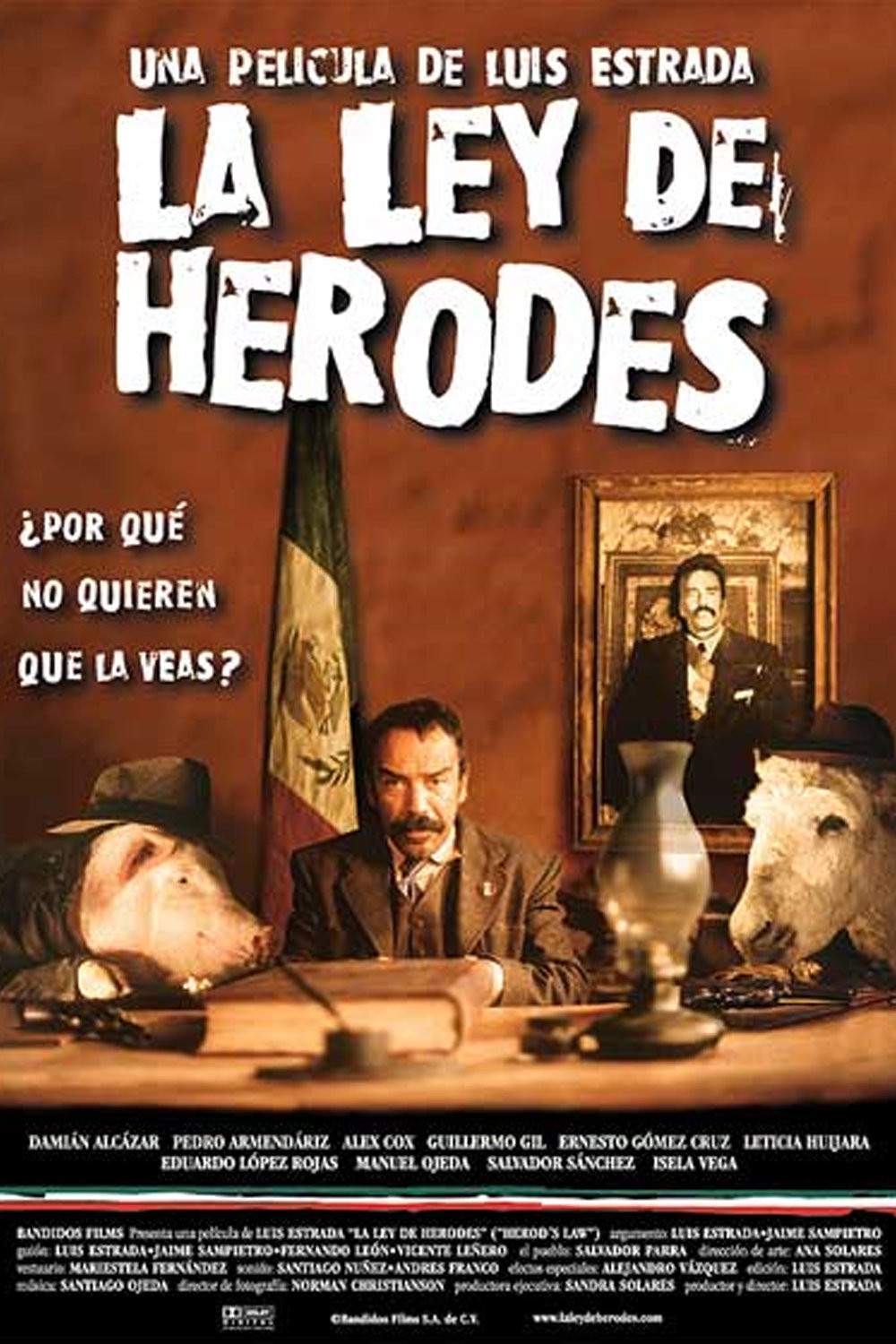
Herod’s Law (1999) movie poster

Timeline

Herod’s Law (1999) Timeline Explained – Every Event in Order

Release, runtime and language
1999 · 123 mins · Spanish
Loading streaming availability…
Directed by
Luis Estrada
Starring
Alex Cox, Isela Vega, Jesús Ochoa, Damián Alcázar, Maya Zapata, José Manuel Poncelis

In a remote Mexican town during the 1940s, the last three mayors have been murdered in quick succession. A simple janitor is installed as the new mayor, hoping to bring modernization and peace. However, the entrenched system soon corrupts him; he begins to abuse his authority, surrounding himself with opportunists, hypocrites and criminals.

On this page (6)
  1. 1 Where to watch
  2. 2 Events in order (14)
  3. 3 Timeline questions answered
  4. 4 Movie threads
  5. 5 Movies like Herod’s Law
  6. 6 Every angle
Loading streaming availability…

14 events in order · contains spoilers

Herod’s Law Timeline: Events in Chronological Order

Every key event of Herod’s Law (1999) in order, scene by scene, with when and where it takes place. Use it to untangle flashbacks, time jumps and parallel storylines, to refresh your memory before the sequel or to find the exact scene you are thinking of.

  1. Opening escape and mob execution

    A man nervously packs bags of money inside an office and flees into the night. A recently killed man lies nearby, and a peasant mob corners the fugitive and decapitates him with a machete.

    When
    Night
    Where
    Office and streets, San Pedro de los Saguaros
  2. Interim appointment set by the state

    State Governor Sánchez orders Secretary López to find an interim mayor. López assigns the task to his subordinate Ramírez, who proposes Juan Vargas as the candidate.

    When
    Immediately after the mayor's death
    Where
    State capital
  3. Vargas arrives in San Pedro with Gloria

    Vargas accepts the interim post and travels to San Pedro with his wife Gloria. They are initially elated by the prospect but quickly become disappointed upon arriving at the impoverished town.

    When
    Shortly after appointment
    Where
    San Pedro de los Saguaros
  4. Vargas meets town notables and learning begins

    Vargas, aided by his secretary Pek, begins to learn about the town, its history of corruption, and the key locals: Doña Lupe, the parish priest Pérez, and Doctor Morales.

    When
    First days in town
    Where
    San Pedro de los Saguaros
  5. Roadside aid and a controversial ally

    Vargas travels to the state capital to request more funding, but his car breaks down on the way. An American named Robert Smith helps him under a fake name and address, promising payment; López refuses the funding but gives him a constitution and a revolver.

    When
    Early journey
    Where
    On the road to the state capital
  6. Constitutional power and a violent clash

    Back in town, Vargas studies the Constitution and discovers legal ways to levy fines and taxes against corruption. He attempts to close Doña Lupe's brothel, but she confronts him with a cleaver, and Vargas shoots her in the leg before fleeing.

    When
    Early era
    Where
    Doña Lupe's brothel; Vargas's office
  7. Bribe accepted; first step into corruption

    Doña Lupe offers Vargas a large sum to look the other way. After some hesitation, Vargas pockets the money, marking the start of his moral decline.

    When
    Soon after the shooting
    Where
    Vargas's office
  8. Smith’s arrival and a fatal ambush

    Vargas introduces Robert Smith as the town's electrical engineer and lodges him at his home. Doña Lupe hires a bouncer who beats Vargas when he attempts to collect payment; later that night, Vargas ambushes the bouncer and Lupe, killing them and dumping their bodies in a ravine, leaving his PRI pin at the scene.

    When
    Night of the killings
    Where
    Ravine near San Pedro
  9. Pin gone and political framing

    Morning after the killings, Vargas finds his administrative pin missing and orders Pek to investigate. He decides to frame Filemón, the town drunk, and Doctor Morales as the culprits; Morales is exiled.

    When
    Next day
    Where
    Town hall and jail
  10. Drunkard silenced on the road

    While transporting Filemón to jail, the drunkard who had found the pin reveals he had the pin; Vargas kills him in cold blood and leaves the body by the roadside.

    When
    That night
    Where
    Road between town and jail
  11. Personal collapse and Lopez's arrival

    Vargas returns to his house to find Gloria cheating on him with Smith; he chains her and beats her. Pek denounces him as the worst municipal president, while López arrives, having fled, and demands the money Vargas has earned.

    When
    Shortly after the murder
    Where
    Vargas's house, San Pedro
  12. Wife’s escape and loss of power

    Vargas discovers Gloria has escaped to the United States with Smith, taking all the money. His grip on power collapses as his sanity fractures.

    When
    Soon after
    Where
    Home, San Pedro
  13. Climax: mob violence and intervention

    López returns to town; Vargas kills López and Tiburón, facing a mob led by Father Pérez and Pek. He is nearly lynched, but government officials intervene and take him into custody.

    When
    Following the escape
    Where
    Town square, San Pedro
  14. Ending: a revolving door of power

    Vargas has become a Federal Deputy, presenting himself as the man who brought justice to López. Ramírez becomes administrator at the landfill Vargas once worked, and a new mayor arrives mirroring Vargas’s initial arrival in San Pedro.

    When
    Ending
    Where
    San Pedro de los Saguaros

Last updated: October 09, 2025 at 10:49

Was this helpful?

Timeline questions answered

Herod’s Law Timeline Explained: Your Questions Answered

When does it happen, and why in that order? The questions people ask about the chronology of Herod’s Law (1999): time jumps, flashbacks, cause and effect between scenes and the correct order of events, each answered with spoilers.

Q1

Why was Juan Vargas chosen as mayor of San Pedro?

Vargas was chosen as a临时市长 because higher-ranking PRI officials needed a figure they could control. Secretary López delegated the task to Ramírez, who suggested Vargas specifically because he was a simple landfill worker with no political experience or connections, making him an ideal puppet candidate who wouldn't threaten the party's interests or ask difficult questions.

Foreshadowing: The opening scene shows the previous mayor being murdered for corruption, establishing the dangerous precedent that Vargas will soon embody.

  • Juan Vargas
  • mayor appointment
  • PRI
  • puppet mayor
  • San Pedro
Q2

Why does Vargas kill Doña Lupe and the bouncer?

After Doña Lupe hires a bouncer who beats Vargas when he demands payment, he plans revenge. That night, he ambushes both at a ravine, kills them, and dumps their bodies. The murder represents a turning point where Vargas transitions from reluctant participant in corruption to active perpetrator of violence to protect his power.

Foreshadowing: Earlier scenes show Vargas shooting Lupe in the leg during their confrontation, demonstrating his quick escalation to violence.

  • Doña Lupe
  • bouncer murder
  • Vargas killings
  • corruption turning point
Q3

Why does Vargas frame Doctor Morales?

When Vargas discovers his PRI pin is missing at the crime scene, he needs scapegoats. He frames Doctor Morales, an opposition PAN member, by manipulating evidence to make him appear guilty. This allows Vargas to exile a political rival while simultaneously redirecting suspicion away from himself and toward someone with existing opposition ties.

Foreshadowing: Doctor Morales is established early as the only notable aligned with the opposition PAN, making him a natural target for political framing.

  • Doctor Morales
  • framing
  • PAN opposition
  • political conspiracy
Q4

Why does Vargas kill Filemón the drunk?

While transporting Filemón to jail, the drunkard reveals he found Vargas's missing PRI pin at the ravine, evidence that could connect Vargas to the murders. To prevent this information from reaching authorities and exposing his crimes, Vargas kills Filemón and leaves his body on the roadside, permanently silencing the only witness to his guilt.

Foreshadowing: Vargas's earlier decision to frame others for the murders creates the need to eliminate anyone who might uncover the truth.

  • Filemón
  • drunkard murder
  • PRI pin
  • silencing witness
Q5

What happens to López at the end of the movie?

López returns to San Pedro demanding the money Vargas has accumulated. Vargas kills López and his henchman Tiburón in the climactic confrontation. The town nearly lynches Vargas, but government officials intervene and take him into custody. However, Vargas later becomes a Federal Deputy, using his story to present himself as the man who eliminated the corrupt López.

Foreshadowing: López is established as the corrupt mastermind pulling strings from the state capital, making his elimination both personal and political.

  • López
  • Tiburón
  • Federal Deputy
  • climax
  • mob justice
Q6

Why does Vargas become a Federal Deputy at the end?

After being rescued from mob justice, Vargas exploits his story politically. He reframes himself as the hero who brought down the corrupt López, which earns him a position as a Federal Deputy. The ending shows that rather than facing consequences for his crimes, Vargas is rewarded with higher political office, demonstrating the film's thesis that the corrupt political system protects and promotes its own.

Foreshadowing: The cycle of corruption is established early when López explains the need to maintain PRI power through controllable mayors.

  • Federal Deputy
  • political corruption
  • cycle of power
  • PRI
  • ending
Q7

What happens to Gloria and Smith?

Gloria, Vargas's wife, begins an affair with Robert Smith, the American con man Vargas brought to town. When Vargas discovers them together, he chains Gloria at home. Later, Gloria escapes to the United States with Smith, taking all of Vargas's accumulated money. Their departure marks the final collapse of Vargas's personal life and mental stability.

Foreshadowing: Vargas brings Smith into his home and increasingly neglects Gloria, creating the conditions for her betrayal.

  • Gloria
  • Robert Smith
  • affair
  • escape to USA
  • marriage breakdown
Q8

Why does Vargas shoot Doña Lupe in the leg?

When Vargas attempts to shut down Doña Lupe's brothel, she confronts him with a cleaver. Rather than defusing the confrontation, Vargas shoots her in the leg and flees. This incident marks his first use of lethal force and begins his pattern of using violence to solve problems, establishing the trajectory toward his later murders.

Foreshadowing: This early violent act demonstrates Vargas's inability to handle confrontation through legitimate means.

  • Doña Lupe
  • shooting
  • brothel
  • first violence
Q9

Why does Vargas chain Gloria at home?

After discovering his wife Gloria has been unfaithful with Smith, Vargas responds with brutal control. He chains her at home to prevent her from leaving. This domestic violence represents how his corruption has consumed his personal life, turning him from a well-meaning husband into an abuser controlling his wife through force.

Foreshadowing: The chain imagery mirrors the way Vargas has come to control the entire town through intimidation and violence.

  • Gloria
  • chaining
  • domestic abuse
  • control
  • personal collapse
Q10

What is the significance of the PRI pin?

The PRI pin represents Vargas's official connection to the ruling party and his position as mayor. When he leaves it at the crime scene after killing Doña Lupe and the bouncer, it becomes evidence that could expose him. His subsequent frantic efforts to recover it, including framing others and committing murder, show how deeply entangled he has become in the corrupt system the pin represents.

Foreshadowing: The pin first appears when Vargas receives his official appointment, symbolizing his entry into the corrupt political machinery.

  • PRI pin
  • party symbol
  • evidence
  • corruption
  • political identity

Movie threads

More Movies Like Herod’s Law, by Mood & Story

Curated lists built around what makes Herod’s Law tick: the same mood, the same kind of story or the same emotional payoff. Each list explains why these movies belong together.

Movies about political corruption like Herod’s Law

Stories where well-intentioned protagonists are destroyed by the system they join. If you liked the moral descent in Herod’s Law, explore more movies like it. These films feature characters navigating corrupt systems, often becoming part of the problem themselves. They share a dark, cynical tone and a heavy emotional weight, perfect for viewers interested in gritty political dramas.

  • cynical
  • corrosive
  • desperate
  • gritty
  • sinister
  • satirical
  • Tone: dark, cynical
  • Pacing: steady, grim progression
Why these movies?

The story pattern: The narrative typically follows an idealistic outsider entering a corrupt system. Through a series of moral compromises, often justified as necessary for survival or progress, the protagonist steadily abandons their principles. The arc is a tragic transformation, where the hero becomes the villain, revealing the systemic nature of the corruption.

Why they belong together: These films are grouped by their shared focus on the theme of moral decay within systems of power. They create a cohesive experience through a dark tone, steady pacing that allows the corruption to feel inevitable, and a heavy emotional weight that leaves viewers contemplating the ease of ethical compromise.

Dark satirical movies similar to Herod’s Law

Dark comedies that use grim humor to expose systemic absurdity and hypocrisy. Fans of the cynical satire in Herod’s Law will appreciate these similar movies. They use dark comedy to critique power and hypocrisy, blending drama with a caustic, witty tone. These stories are for viewers who enjoy morally complex narratives where the laughter is laced with bitterness.

  • satirical
  • caustic
  • cynical
  • absurd
  • gritty
  • uncomfortable
  • Tone: dark, satirical, caustic
  • Pacing: steady, character-driven
Why these movies?

The story pattern: The narrative often unfolds within a confined setting, like a small town or institution, where ridiculous rules and blatant hypocrisy are presented as normal. Characters navigate this absurd world, and the comedy arises from the stark contrast between noble ideals and corrupt realities. The plot serves as a vehicle for social critique.

Why they belong together: These films are united by their specific blend of tone: a dark, caustic sensibility where humor underscores tragedy. The pacing is often steady, allowing the satire to build, and the emotional impact is heavy despite the comedic elements. They share a cynical mood and a focus on themes like hypocrisy and greed.

If you liked this

Movies Like Herod’s Law

Similar movies to Herod’s Law: the same genre, themes or kind of story. Each one comes with its own plot summary, timeline and ending explained.

Browse all movie summaries

Every angle

Herod’s Law (1999) Explained: Plot, Timeline & Characters

Everything about Herod’s Law in one place: what happens in the plot summary, the timeline in chronological order, the characters and meaning and a spoiler-free summary. What's After the Movie adds the cast, box office and post-credit scenes.

Coming soon on iOS and Android

The Plot Explained Movie Summary App

Plot summaries, endings explained and timelines on your phone. Catch up on any movie in minutes, save your favorites and never miss a twist again.

Be the first to know when we launch. Your email stays private, always.

Learn more about the app