












Plot Explained Spoilers guaranteed!
Plot Explained

Browse by genre

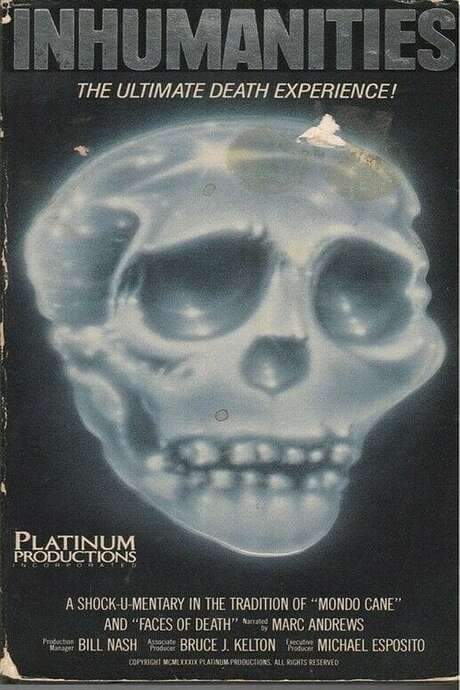
Faces of Death (1978) movie poster

Timeline

Faces of Death (1978) Timeline Explained – Every Event in Order

Release, runtime and language
1978 · 105 mins · English
JustWatch #3,424 1
Starring
Michael Carr, Adolf Hitler, John Alan Schwartz, Thomas Noguchi, Samuel Berkowitz, Mary Ellen Brighton

A stark, unflinching compilation that places viewers face‑to‑face with the graphic reality of death. It assembles a range of fatal footage—from polished television segments to amateur super‑8 home recordings—each depicting death by various means, offering a raw, close‑up look at mortality.

On this page (6)
  1. 1 Where to watch
  2. 2 Events in order (15)
  3. 3 Timeline questions answered
  4. 4 Movie threads
  5. 5 Movies like Faces of Death
  6. 6 Every angle

Where to watch

Where to Watch Faces of Death (1978)

Where can you watch Faces of Death? Stream, rent or buy it in the US, including on AMC+, Shudder and Fandango at Home Free: current JustWatch availability with up-to-date prices.

Streaming availability powered by JustWatch

15 events in order · contains spoilers

Faces of Death Timeline: Events in Chronological Order

Every key event of Faces of Death (1978) in order, scene by scene, with when and where it takes place. Use it to untangle flashbacks, time jumps and parallel storylines, to refresh your memory before the sequel or to find the exact scene you are thinking of.

  1. Unsuccessful heart surgery sparks existential quest

    After an unsuccessful open heart procedure, pathologist Francis B. Gröss reveals his fascination with the transitional moments between life and death. He explains that his surgical career has desensitized him to grotesque deaths, and he has compiled a reel of footage to map the many faces of death. This opening frame sets up the documentary style journey the film will follow.

  2. Animal deaths montage and human cruelty

    The film shows a montage of animal deaths, including a man killed by an alligator. Gröss calls this a violent retaliation from a creature that has suffered abuse from mankind. The sequence introduces the theme that death emerges from cruelty and imbalance in nature.

  3. Assassins and greed

    Gröss narrates over clips of assassinations and observes that humans are the only species to kill for greed. Assassin François Jordan is interviewed and says he kills only for payment, not for political or social value, and that he would decline such missions if given a choice. The segment highlights the moral ambiguity surrounding murder-for-hire.

  4. SWAT confrontation and family tragedy

    A gunfight erupts between a SWAT team and an armed murderer. Tear gas fills the house, and when the team enters they discover the killer's family stabbed to death. Gröss questions whether the killer's actions were shaped by society or by other unseen forces.

  5. Capital punishment dilemma

    Larry DeSilva is executed by electric chair. Gröss ponders whether two wrongs make a right and reflects on the ethical ambiguity of capital punishment. The sequence probes the moral cost of taking life as a form of justice.

  6. Coroner's office visit and embalming

    Gröss visits the Los Angeles County coroner's office where Dr. Thomas Noguchi is embalming multiple corpses after autopsies. The footage includes a bloated drowned woman and a decapitated man whose skin has been peeled from the skull. Noguchi tells him that life is a purely transitory state.

    Where
    Los Angeles County coroner's office
  7. Cryopreservation experiment

    One cadaver, Samuel Berkowitz, undergoes cryopreservation with bodily fluids replaced by a low freezing point liquid before being stored in a freezer for future revival. The sequence underscores attempts to cheat death through science. Gröss uses this to question the limits of medical intervention.

  8. Suicide and the face of death

    The theater of preservation leads to a discussion on suicide, punctuated by footage of a woman leaping from a building. Gröss admits this death is a face of death he wishes never to face again, underscoring the raw horror of self-inflicted death.

  9. War atrocities and Holocaust imagery

    The film shifts to the wars of history, including the Holocaust, with footage of German forces in battle. The sequence ends with Nazis being annihilated and symbols of Nazism destroyed, and Gröss remarks that Hitler lost control of his army and his mind.

    Where
    Europe
  10. Environmental and social decay

    Images of litter and pollution give way to scenes of sick children in impoverished villages. The segment broadens the study of the horrific face of death to include environmental and social decay. Gröss ties these images to a larger pattern of human suffering.

  11. Nature's danger and mortality in the wild

    Nature footage includes a search party finding a body in a cave, a drowned man on a beach, and a bear mauling campers. The scenes illustrate the precariousness and randomness of death in the natural world.

  12. Venomous cults and cannibalism

    A venomous snake cult in Louisville kills a handler, and a cannibalistic cult consumes a cadaver stolen from a morgue before taking part in an orgy. Gröss frames these acts as further manifestations of humanity's capacity for death and cruelty.

    Where
    Louisville, Kentucky
  13. Parachute tragedy

    Another string of tragic accidents culminates in a parachute jump that ends in death when the chute fails to open. Gröss disputes the notion that the death was quick and painless, arguing that the person would have remained conscious during the fall.

  14. PSA Flight 182 aftermath

    Footage and photographs from PSA Flight 182 depict the grisly aftermath: crash site wreckage, shattered houses, and witness accounts. Gröss notes the neighborhood smells of rot and jet fuel, calling the mutilated torso the worst face of death.

  15. Supernatural inquiry and final conclusion

    Gröss introduces the supernatural dimension by meeting Joseph Binder, whose wife and son died and now appear as ghosts in their home. Parapsychologists document footprints and apparitions, and Binder communicates with his family through a medium. Gröss concludes that the soul persists after death and remains a traveler, and the film closes with peaceful music and images of birth and family.

    Where
    Binder's house

Last updated: October 09, 2025 at 09:33

Was this helpful?

Timeline questions answered

Faces of Death Timeline Explained: Your Questions Answered

When does it happen, and why in that order? The questions people ask about the chronology of Faces of Death (1978): time jumps, flashbacks, cause and effect between scenes and the correct order of events, each answered with spoilers.

Q1

Why is Dr. Francis Gröss so fascinated with documenting death?

After an unsuccessful open heart surgery, Gröss reveals he has been drawn to the transitional moments between life and death. His experiences as a surgeon have numbed him to grotesque deaths, but also sharpened his philosophical interest in mortality. He compiled this footage to explore the many 'faces of death' from clinical, philosophical, and spiritual perspectives.

  • dr francis gröss
  • surgeon
  • fascination with death
  • documentary purpose
Q2

How does the cryopreservation process shown in the film work?

Samuel Berkowitz's body underwent a process where bodily fluids were replaced with a low-freezing-point liquid designed to prevent ice crystal damage. His body was then cooled and stored in a freezer with the hope of future revival. Gröss uses this segment to question whether medical technology can truly cheat death and at what ethical cost.

  • cryopreservation
  • samuel berkowitz
  • freezing
  • revival
  • afterlife technology
Q3

What happens in the supernatural segment with Joseph Binder?

Gröss meets Joseph Binder, who believes his deceased wife and son still appear as ghosts in their home. Parapsychologists document footprints and apparitions, and Binder communicates with his family through a medium. Gröss presents this as evidence that 'when we die, it isn't the end' and that the soul persists beyond the body.

  • joseph binder
  • ghosts
  • supernatural
  • parapsychology
  • medium
  • afterlife
Q4

What does the film show about PSA Flight 182?

The documentary presents footage and photographs from the 1978 PSA Flight 182 collision over San Diego, showing crash site wreckage, shattered houses, and witness accounts. Witnesses describe the neighborhood's stench of rot and jet fuel. Gröss highlights a mutilated torso as one of the most disturbing images of death in the entire film.

  • psa flight 182
  • plane crash
  • san diego
  • wreckage
  • accident footage
Q5

Why does the documentary end with hopeful imagery after showing such dark content?

After presenting numerous graphic deaths including suicide, war atrocities, and accidents, the film shifts to a calmer, more contemplative tone. It closes with peaceful imagery of a newborn baby and the bond between mother and child. This represents Gröss's philosophical conclusion that the soul 'remains a traveler forever' and that life continues in another form after death.

  • hopeful ending
  • afterlife
  • soul
  • rebirth
  • peaceful imagery
  • thematic conclusion
Q6

What is the significance of the snake cult and cannibalism segments?

The film shows a venomous snake cult in Louisville, Kentucky where a handler is killed, followed by a cannibalistic cult that steals a cadaver from a morgue and consumes it before engaging in an orgy. Gröss frames these extreme acts as further manifestations of humanity's capacity for violence and cruelty, reinforcing the documentary's theme that humans kill not out of necessity but out of darker impulses.

  • snake cult
  • louisville
  • cannibalism
  • morgue
  • human cruelty
  • cult violence
Q7

Why does Gröss dispute that the parachute death was quick and painless?

When showing footage of a fatal parachute jump where the chute fails to open, Gröss disputes the idea that the death was quick and painless. He insists the victim would have remained conscious throughout the entire fall, emphasizing the horrifying reality that some deaths involve prolonged terror rather than instant ends.

  • parachute accident
  • falling death
  • consciousness during fall
  • fatal accident
Q8

What happens in the SWAT confrontation and family tragedy sequence?

The film shows a high-tension gunfight between a SWAT team and an armed murderer. When the team searches the house, they discover the killer's family has been stabbed to death. Gröss uses this moment to question whether social structures can ever excuse or explain such violence, highlighting the double-edged nature of force and punishment.

  • swat team
  • family murder
  • gunfight
  • violence consequences
  • societal blame
Q9

What is the film's stance on capital punishment shown in the execution scene?

The documentary shows Larry DeSilva's execution by electric chair while Gröss ponders whether 'two wrongs make a right.' The sequence explores the moral ambiguity of capital punishment, questioning whether the state has the right to take a life as a form of justice, even for terrible crimes.

  • electric chair
  • execution
  • capital punishment
  • larry desilva
  • moral ambiguity
Q10

What does Dr. Thomas Noguchi explain about death in the coroner's office?

During a visit to the Los Angeles County coroner's office, Dr. Thomas Noguchi performs autopsies on multiple bodies including a bloated drowned woman and a decapitated man. When Gröss asks what happens to the self after death, Noguchi simply responds that 'life is a purely transitory state,' presenting a clinical perspective on mortality.

  • thomas noguchi
  • coroner
  • autopsy
  • los angeles county
  • transitory state

Movie threads

More Movies Like Faces of Death, by Mood & Story

Curated lists built around what makes Faces of Death tick: the same mood, the same kind of story or the same emotional payoff. Each list explains why these movies belong together.

Confrontational Documentaries like Faces of Death

Documentaries that strip away artifice to present stark, graphic reality. For viewers seeking movies like Faces of Death that challenge with stark reality. This list features similar unflinching documentaries and found footage films that explore mortality, violence, and human nature through a direct, often graphic lens.

  • graphic
  • clinical
  • unflinching
  • philosophical
  • somber
  • disturbing
  • Tone: dark, clinical, contemplative
  • Pacing: steady, methodical
Why these movies?

The story pattern: Films in this thread often follow a compilation or case-study structure, eschewing conventional plots for a thematic presentation of real or realistically depicted events. The narrative is driven by the cumulative impact of imagery and information, leading to a contemplative, rather than plot-driven, conclusion.

Why they belong together: These films are grouped by their shared commitment to presenting difficult truths head-on. They share a dark tone, heavy emotional weight, and a steady, methodical pacing that builds a powerful, philosophically charged experience centered on reflection rather than resolution.

Movies with a Heavy-to-Hopeful Arc like Faces of Death

Emotionally taxing journeys that arrive at a surprising sense of hope. If you liked the emotional journey of Faces of Death from graphic darkness to philosophical hope, explore these movies. They share a similar arc, beginning with intense, heavy themes and concluding with a surprising sense of contemplation or light.

  • disturbing
  • heavy
  • philosophical
  • contemplative
  • somber
  • hopeful
  • Tone: dark, heavy, ultimately hopeful
  • Pacing: steady, building to a calm
Why these movies?

The story pattern: The narrative pattern involves a deep immersion into disturbing or tragic events, building a profound sense of emotional weight. The climax or conclusion then pivots, offering a release through philosophical insight, spiritual questioning, or a broader perspective that recontextualizes the preceding darkness, resulting in a bittersweet or hopeful ending feel.

Why they belong together: These films are connected by their unique emotional trajectory. They are not purely bleak; instead, they use intense darkness as a catalyst for a final, resonant shift toward contemplation, making the heavy experience ultimately transcendent rather than crushing.

If you liked this

Movies Like Faces of Death

Similar movies to Faces of Death: the same genre, themes or kind of story. Each one comes with its own plot summary, timeline and ending explained.

Browse all movie summaries

Every angle

Faces of Death (1978) Explained: Plot, Timeline & Characters

Everything about Faces of Death in one place: what happens in the plot summary, the timeline in chronological order, the characters and meaning and a spoiler-free summary. What's After the Movie adds the cast, box office and post-credit scenes.

Coming soon on iOS and Android

The Plot Explained Movie Summary App

Plot summaries, endings explained and timelines on your phone. Catch up on any movie in minutes, save your favorites and never miss a twist again.

Be the first to know when we launch. Your email stays private, always.

Learn more about the app