Plot Explained Spoilers guaranteed!
Plot Explained

Browse by genre

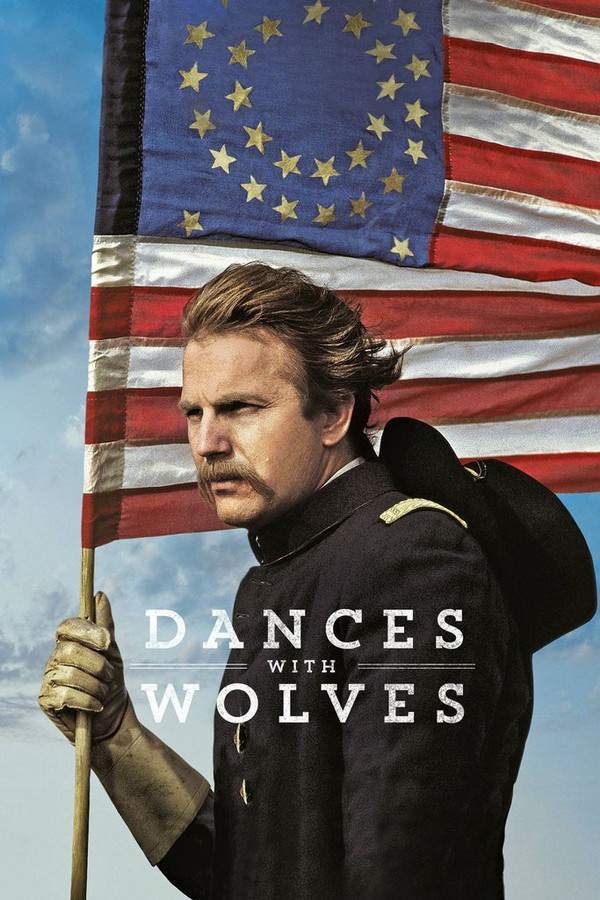
Dances with Wolves (1990) movie poster

Plot Summary

Dances with Wolves (1990) Plot Summary Explained

Release, runtime and language
1990 · 181 min · English
JustWatch #8,782 17
Starring
Kevin Costner, Mary McDonnell, Graham Greene
Budget
$22M

During the Civil War, Lieutenant John Dunbar ventures to the American frontier, hoping to establish a remote outpost. After encountering a Sioux tribe, he slowly earns their trust and begins to integrate into their way of life, learning their language and customs. As Dunbar experiences the richness of their culture, he grapples with the encroaching presence of the U.S. Army and the inevitable clash of civilizations.

On this page (7)
  1. 1 Where to watch
  2. 2 What happens: full plot
  3. 3 Plot questions answered
  4. 4 The book behind the movie
  5. 5 Movie threads
  6. 6 Movies like Dances with Wolves
  7. 7 Every angle

Where to watch

Where to Watch Dances with Wolves (1990)

Where can you watch Dances with Wolves? Stream, rent or buy it in the US, including on AMC+, BBC America and fuboTV: current JustWatch availability with up-to-date prices.

Streaming availability powered by JustWatch

Full plot summary · contains spoilers

What Happens in Dances with Wolves: Full Plot Summary

The whole story of Dances with Wolves (1990) explained, from the opening scene to the final frame: every key event, every twist and what it all adds up to. Read it as a quick recap before the sequel, to check a scene you missed, or to finally understand what really happened.

As the battle-worn 1st Lieutenant John J. Dunbar (Kevin Costner) limped away from the chaos at St. David's Field in Tennessee, his future hung by a thread. His leg, ravaged by a critical wound, faced the uncertain fate of a surgeon's scalpel, which threatened to sever not just flesh, but also his very spirit. In an act of defiance, Dunbar chose an extraordinary path, seizing a horse and charging bravely into the storm of Confederate gunfire. Remarkably, his courage ignited a spark that enabled the Union Army to turn the tide, snatching victory from impending defeat.

For his audacity, Dunbar didn't just receive the medical care that salvaged his leg, but also the steadfast companion "Cisco," the noble horse he rode into danger. Additionally, he was granted the rare opportunity to handpick his next assignment, setting him on an adventurous journey toward the uncharted territories of the American frontier.

Upon arriving at Fort Hays, Dunbar's new commander, Major Fambrough (played by), dispatched him to the remote outpost of Fort Sedgwick. However, before he could grasp his new surroundings, Fambrough succumbed to his own demons and took his life as Dunbar rode away. The heavy silence that ensued was broken only by the sound of Dunbar's horse as he ventured to meet Timmons, a seasoned mule-wagon provisioner.

The duo headed toward Fort Sedgwick, which loomed in haunting stillness. Once a bustling center of military life, the fort stood desolate, its walls echoing the passage of time and neglect. Yet, undeterred by this loneliness, Dunbar viewed the abandoned outpost as a chance for renewal—a place to foster a sense of community that had long been lost.

However, destiny had more trials ahead. Timmons met an untimely fate at the hands of a Pawnee war party, leaving the army oblivious to Dunbar's dire situation and ensuring no reinforcements would arrive. It seemed as though the universe was conspiring against him.

Then, one pivotal day, the Sioux came to Fort Sedgwick, their motives clouded with hostility. In a desperate attempt to steal his horse, they sought to intimidate the lone guard holding vigil over the vacant fort. But Dunbar, ever the pragmatist, interpreted this confrontation as a chance for reconciliation—a moment to build bridges that transcended the barriers of language and culture.

On his path to the Sioux camp, Dunbar met Stands with a Fist (played by), a white woman raised by the tribe's medicine man, Kicking Bird. Her anguish was evident, her self-harm reflecting the depth of her grief over her husband's death. Dunbar's kindness lifted her spirit, leading him to return her to her adoptive family.

Though initially met with suspicion, Dunbar's unwavering resolve won over the Sioux, especially Kicking Bird, Wind in His Hair, and Smiles a Lot, a brave young warrior. With Stands with a Fist's unique ability to communicate in both Lakota and English, she became a vital link between the two cultures that had historically clashed.

As Dunbar (Kevin Costner) immersed himself in the rich culture of the Sioux, he established a profound bond with their way of life. His respect for the Native Americans grew, leading to their acceptance of him into the tribe, where he earned the revered name Dances with Wolves. This transformation was sparked by his role as a skilled hunter, guiding the tribe in a successful buffalo hunt. Along the way, he formed a unique relationship with Two Socks, a wolf with striking white forepaws, symbolizing his connection to nature.

As Dunbar's grasp of the Lakota language deepened, he fell in love with Stands with a Fist. He also provided the tribe with essential firearms to protect against the Pawnee threat. This newfound belonging earned him Kicking Bird's blessing to marry her, leading him to abandon Fort Sedgwick for a life amid the Sioux.

With increasing tensions from white settlers, Chief Ten Bears made the decision to relocate the tribe to their winter camp. Dunbar opted to accompany them, but first, he needed to retrieve his treasured diary from Fort Sedgwick. Understanding that its contents could assist the U.S. Army in tracking the tribe, he knew reclaiming this document was vital. Yet, upon reaching the fort, he found it occupied by soldiers. His Sioux attire raised suspicion, and in the ensuing chaos, soldiers opened fire, killing Cisco before apprehending Dunbar.

Despite interrogation from two officers, Dunbar's attempts to tell his story fell flat, primarily due to a soldier who had stolen his diary. His refusal to assist the army in capturing Native tribes led to a charge of desertion, transporting him back east as a prisoner. Two Socks, undeterred, attempted to follow but tragically fell victim to the soldiers' gunfire.

Determined to rescue their friend, the Sioux tracked down Dunbar's convoy, dispatching the soldiers and orchestrating his escape. At the winter camp, Dunbar realized his presence could endanger the tribe, ultimately deciding to leave with Stands with a Fist. Their farewell was poignant, marked by parting gifts exchanged with Kicking Bird; Smiles a Lot returned the diary he had recovered, and Wind in His Hair loudly affirmed his unbreakable friendship with Dunbar.

As the U.S. military realized Dunbar had escaped, a search effort ensued but ultimately failed to locate him or the tribe. The epilogue, however, reveals the sad reality that the last remnants of the free Sioux would surrender to Fort Robinson, Nebraska, thirteen years later, a heartbreaking acknowledgment of their culture's downfall into history.
Last updated: November 22, 2024 at 16:05

Was this helpful?

Plot questions answered

Dances with Wolves Plot Explained: Your Questions Answered

The questions people ask most about Dances with Wolves (1990): what happens in the confusing scenes, why the characters do what they do, the twists, hidden details and what the ending means. Each answer contains spoilers.

Q1

Why did Lieutenant Dunbar charge into Confederate gunfire during the battle?

Dunbar charged into the Confederate gunfire primarily to avoid having his badly injured leg amputated by surgeons. After being wounded at St. David's Field, he faced the prospect of losing his leg, and rather than submitting to what he saw as a fate worse than death, he chose a brave if desperate act. His charge coincidentally inspired the Union troops to push forward and win the battle, making his reckless action strategically successful.

  • john dunbar
  • civil war
  • battle
  • charge
  • leg injury
  • amputation
Q2

What happened to Major Fambrough after assigning Dunbar to Fort Sedgwick?

Major Fambrough committed suicide shortly after giving Dunbar his orders to head to Fort Sedgwick. As Dunbar rode away from Fort Hays, Fambrough took his own life, leaving Dunbar to continue his journey to the remote outpost without any proper military oversight or support system.

Foreshadowing: Fambrough's unstable behavior and dark mood were visible during his briefing with Dunbar, hinting at his psychological decline.

  • major fambrough
  • fort hays
  • suicide
  • commander
  • orders
Q3

Why did the Sioux approach Fort Sedgwick when Dunbar was alone there?

The Sioux initially came to Fort Sedgwick intending to steal Dunbar's horse, Cisco. They saw an opportunity to take the horse from what they perceived as a lone, vulnerable guard at an abandoned fort. However, Dunbar interpreted their arrival as a chance for reconciliation rather than conflict, which led to his eventual integration into the tribe.

  • sioux
  • fort sedgwick
  • horse
  • cisco
  • steal
  • confrontation
Q4

Who was Stands with a Fist and why was she in distress?

Stands with a Fist was a white woman who had been raised by the Lakota Sioux tribe after being taken as a child. She was the adopted daughter of Kicking Bird, the medicine man. She was in deep distress and engaging in self-harm because of her grief over her husband's death, which left her emotionally broken and struggling to cope.

  • stands with a fist
  • white woman
  • sioux
  • kicking bird
  • grief
  • husband death
Q5

How did Dunbar earn the name Dances with Wolves?

Dunbar earned the name Dances with Wolves after being fully accepted into the tribe. His skills as a hunter were crucial to the Sioux, particularly when he guided them to a successful buffalo hunt. This demonstrated his value to the community and cemented his bond with them, leading the tribe to give him the name that reflected his connection to nature and the wolf companion Two Socks.

Foreshadowing: Dunbar's early interactions with the wolf Two Socks, who had white forepaws, showed his natural connection with animals, foreshadowing his new identity.

  • dances with wolves
  • sioux name
  • buffalo hunt
  • tribe acceptance
  • two socks
Q6

Why did Dunbar provide firearms to the Sioux tribe?

Dunbar provided the Sioux with firearms to help them defend themselves against the Pawnee threat. The Pawnee were hostile toward the Sioux, and having modern weapons significantly improved the tribe's chances of survival. This act of goodwill further endeared Dunbar to the tribal leaders and strengthened his place in the community.

  • firearms
  • guns
  • sioux
  • pawnee
  • defense
  • protection
Q7

Why was it important for Dunbar to retrieve his diary from Fort Sedgwick?

Dunbar needed his diary because it contained detailed observations about the Sioux tribe, including their location, customs, and way of life. He feared that if the U.S. Army obtained the diary, they could use it to locate and potentially attack the tribe. Retrieving it was essential for protecting the Sioux from military pursuit.

Foreshadowing: Earlier in the film, Dunbar's habit of writing in his diary was shown as he documented his experiences with the Sioux, recording information that could be dangerous if misused.

  • diary
  • fort sedgwick
  • sioux location
  • army
  • notebook
  • information
Q8

Why did the soldiers at Fort Sedgwick open fire on Dunbar?

When Dunbar returned to Fort Sedgwick wearing Sioux clothing, the soldiers stationed there viewed him with immediate suspicion. In the confusion of his arrival, the soldiers opened fire, killing his horse Cisco and capturing Dunbar before he could explain his true identity or mission.

  • soldiers
  • fort sedgwick
  • capture
  • firing
  • sioux clothes
  • cisco death
Q9

What happened to Two Socks during Dunbar's capture?

Two Socks, the wolf with white forepaws that had become Dunbar's companion, attempted to follow the soldiers as they transported Dunbar away. The soldiers shot and killed Two Socks during this pursuit, as the wolf tried to reach his owner.

Foreshadowing: Two Socks had demonstrated unwavering loyalty to Dunbar throughout the film, always running alongside him, which made his tragic death a poignant moment.

  • two socks
  • wolf
  • death
  • soldiers
  • capture
  • loyalty
Q10

How did the Sioux rescue Dunbar from the soldiers?

The Sioux tribe tracked down the convoy transporting Dunbar as a prisoner. They launched a daring ambush, attacking the soldiers and successfully freeing Dunbar from custody. This rescue demonstrated the deep bond Dunbar had formed with the tribe and their commitment to protecting him.

  • sioux rescue
  • convoy
  • soldiers
  • ambush
  • free
  • prisoner
Q11

Why did Dunbar decide to leave the tribe at the end?

Dunbar chose to leave the tribe because he realized his presence with them made them a target. After being captured and interrogated, the U.S. Army would be searching for him and could follow his trail to the tribe. To ensure their safety, he decided to depart with Stands with a Fist, understanding that his freedom meant the tribe could remain hidden and protected.

  • dunbar leaves
  • tribe
  • safety
  • protection
  • stands with a fist
  • departure
Q12

What does the epilogue reveal about the fate of the Sioux tribe?

The epilogue reveals that the last remnants of the free Sioux tribe surrendered at Fort Robinson, Nebraska, thirteen years after the events of the film. This tragic conclusion signifies the end of the free Sioux way of life and confirms the cultural destruction that loomed over the entire narrative.

  • epilogue
  • sioux surrender
  • fort robinson
  • history
  • native american
  • fate

Movie threads

More Movies Like Dances with Wolves, by Mood & Story

Curated lists built around what makes Dances with Wolves tick: the same mood, the same kind of story or the same emotional payoff. Each list explains why these movies belong together.

Bittersweet Historical Epics like Dances with Wolves

Sweeping stories of individuals who find belonging in a vanishing world. Find more movies like Dances with Wolves that explore deep cultural immersion against a backdrop of historical tragedy. If you were moved by the heartfelt connection to the Sioux way of life and the bittersweet ending, these sweeping epics offer similar journeys of belonging and loss.

  • epic
  • melancholic
  • heartfelt
  • somber
  • hopeful
  • contemplative
  • Tone: bittersweet, heartfelt, melancholic
  • Pacing: steady, epic, immersive
Why these movies?

The story pattern: The narrative typically centers on a protagonist who crosses a cultural boundary, often initially out of duty or circumstance. Through a steady, immersive process, they learn the language, customs, and values of their new community, forming deep bonds. The central conflict arises from the encroachment of an outside force (like an army or 'progress'), creating a tragic tension between the protagonist's personal salvation and the inescapable fate of the culture they have come to love.

Why they belong together: These films are grouped by their unique emotional blend: the heartfelt joy of finding a true home and family, contrasted with the profound sadness of witnessing its destruction. They share a steady, epic pacing that allows for deep world-building, a bittersweet tone, and a heavy emotional weight centered on themes of cultural clash and assimilation.

Frontier Self-Discovery Stories like Dances with Wolves

Characters who shed their old identity to find a new purpose on the frontier. Explore more movies similar to Dances with Wolves about finding a new identity and family on the frontier. If you liked John Dunbar's journey from soldier to tribe member, these stories feature protagonists who redefine themselves through connection to a new land and its people.

  • contemplative
  • adventurous
  • hopeful
  • heartfelt
  • somber
  • isolated
  • Tone: hopeful, bittersweet, contemplative
  • Pacing: steady, character-driven
Why these movies?

The story pattern: The plot follows a linear path of transformation. A disillusioned or lost individual ventures into a wild, sparsely populated setting. Through survival and interaction with the land's inhabitants, they confront their previous beliefs and values. A key narrative beat is the rejection of their old life in favor of the new one they have built, often symbolized by adopting a new name or defending their new family against their former world.

Why they belong together: This thread connects movies through a shared character arc—the profound journey of self-discovery—set against the backdrop of a frontier. They share a steady, contemplative pacing that allows for character growth, a mix of hopeful and bittersweet tones, and a focus on themes like honor, belonging, and the clash between civilization and nature.

If you liked this

Movies Like Dances with Wolves

Similar movies to Dances with Wolves: the same genre, themes or kind of story. Each one comes with its own plot summary, timeline and ending explained.
Browse all movie summaries

Every angle

Dances with Wolves (1990) Explained: Plot, Timeline & Characters

Everything about Dances with Wolves in one place: what happens in the plot summary, the timeline in chronological order, the characters and meaning and a spoiler-free summary. What's After the Movie adds the cast, box office and post-credit scenes.

Coming soon on iOS and Android

The Plot Explained Movie Summary App

Plot summaries, endings explained and timelines on your phone. Catch up on any movie in minutes, save your favorites and never miss a twist again.

Be the first to know when we launch. Your email stays private, always.

Learn more about the app