

Plot Explained Spoilers guaranteed!
Plot Explained

Browse by genre

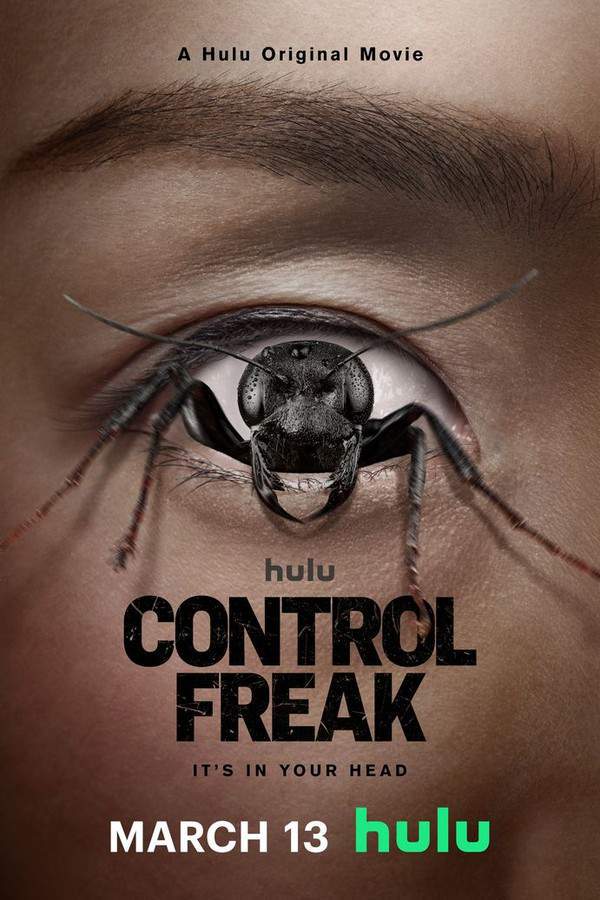
Control Freak (2025) movie poster

Ending Explained

Control Freak (2025) Ending Explained – Final Scene & Meaning

Release, runtime and language
2025 · 1 h 44 m · English
Echo score 61
JustWatch #13,067 6
Directed by
Shal Ngo
Starring
Kelly Marie Tran, Joshua Henry, Miles Robbins, Scott Takeda, Apollo Bacala, Zack Gold

A motivational speaker (Kelly Marie Tran) is tormented by an unrelenting itch on the back of her head.

On this page (7)
  1. 1 Where to watch
  2. 2 What happens at the end
  3. 3 Final events in order
  4. 4 Ending questions answered
  5. 5 Movie threads
  6. 6 Movies like Control Freak
  7. 7 Every angle

Where to watch

Where to Watch Control Freak (2025)

Where can you watch Control Freak? Stream, rent or buy it in the US, including on Hulu: current JustWatch availability with up-to-date prices.

Streaming availability powered by JustWatch

Ending explained · contains spoilers

What Happens at the End of Control Freak?

How Control Freak (2025) ends, what the final scene means, which earlier moments set it up and how to read the ending if the film leaves it open. The full ending explained, with every spoiler.

The ending of Control Freak leaves us questioning whether the hungry ghost, the supernatural entity haunting Val, was real or just a manifestation of her trauma and fears. Throughout the film, it's suggested that the demon is a literal presence to Val and her family, but it also symbolically represents their deep-seated pain rooted in the Vietnam war, family trauma, and inner insecurities. The ghost was summoned by Val’s father, Sang, during a wartime act of violence, which caused it to latch onto their family, impacting subsequent generations. For Val, the possessive power of this demon manifests as a constant itch on her head and a destructive internal struggle to confront her past.

As Val delves into her trauma, she attempts to confront the hungry ghost directly, trying various drastic methods like trapping it in mirrors or even severing her own hands to escape its influence. Her ultimate act of defiance is to drown the creature—symbolically washing away her emotional baggage in the water, which often signifies cleansing and rebirth. When she emerges from the pool, it seems as if she has managed to banish the demon, especially since Robbie and her family appear to be safe afterwards. She even holds her child, indicating a hopeful new chapter, free from the darkness of her past.

However, the ending leaves room for ambiguity. The small bug that appears on her child's face could be just an insect, but it also might symbolize that the hungry ghost’s influence persists, passed down to the next generation. This raises the question—did Val truly defeat the demon, or did she simply suppress or transfer it? The film suggests that trauma and fear are complex, often invisible enemies that can linger beneath the surface, even when seemingly eradicated. Whether the ghost was real or a mental construct, its presence underscores the ongoing struggle to confront and heal from deep-rooted pain. Ultimately, Control Freak offers a haunting reflection on the ways war, family history, and internal insecurities shape our lives and can remain just beneath the surface, ready to re-emerge when least expected.

Last updated: June 25, 2025 at 09:03

Was this helpful?

The last 4 events

How Control Freak Ends: The Final Events in Order

The last events of Control Freak (2025) in chronological order, the run-up to the ending explained above. The complete timeline has all 15 events, scene by scene.

Open the full timeline
  1. Symbolic Drowning

    Val tries to drown the Sanshi in a swimming pool, mirroring the traumatic events of her childhood. Ultimately, Robbie intervenes, saving Val and culminating in a poignant struggle between her and her inner demons.

    Where
    Swimming Pool
  2. Confrontation's Aftermath

    Val emerges from the pool holding a fetal-like version of the Sanshi, indicating her internal battle may not be over. This pivotal moment symbolizes her acknowledgment of her trauma and the ongoing fight against her compulsions.

  3. Revelation of Pregnancy

    In the film's closing moments, Val tells Robbie about her pregnancy, representing a new beginning for their relationship. However, a subtle hint of a bug crawling on their baby suggests that the influence of the Sanshi may still linger.

  4. Ambiguous Ending

    The film concludes on an ambiguous note, raising questions about whether Val has truly escaped the curse of the Sanshi. This leaves the audience pondering the lasting impacts of trauma and the complexities of healing.

Ending questions answered

Control Freak Ending: Your Questions Answered

The questions people ask most about the ending of Control Freak (2025): what the final scene means, how the twist works, what happens to each character and how to read the ending. Each answer contains spoilers.

Q1

Does Val actually defeat the hungry ghost at the end?

The ending leaves this deliberately unclear. Val drowns herself in the pool and emerges seemingly having banished the entity, Robbie and her family are safe, and she holds her child. However, the film suggests this could be suppression rather than true victory. The bug that appears on her baby's face implies the curse may have transferred to the next generation, making it ambiguous whether Val truly defeated the demon or simply delayed its influence.

Foreshadowing: Earlier scenes show Val attempting various methods to stop the entity, none of which fully work, setting up the question of whether her final act truly succeeds.

  • hungry ghost ending
  • val defeats demon
  • control frea
  • ambiguous ending
Q2

What does the bug on Val's baby's face mean?

The small insect landing on her newborn's face is the film's final unsettling image. While it could simply be an ordinary bug, it symbolically represents the hungry ghost's potential persistence through generations. The film explicitly frames trauma as something that passes down family lines, so this moment suggests the curse may have transferred to Val's child rather than being eliminated.

Foreshadowing: The hungry ghost was established as affecting multiple generations of Val's family, making the child's fate a logical continuation.

  • bug baby
  • curse passes to child
  • control frea ending
  • generational curse
Q3

Is the hungry ghost real or Val's mental breakdown?

The film deliberately blurs this line throughout. Objectively, the ghost appears to affect Val's family across generations, the entity was allegedly summoned by her father during wartime violence in Vietnam. Subjectively, many of Val's attempts to fight it involve psychological methods, and her extreme actions (like severing her hands) suggest mental instability. The ending refuses to confirm which interpretation is correct, presenting the ghost as both a literal supernatural force and a metaphor for trauma.

Foreshadowing: Scenes showing the ghost affecting multiple family members suggest external reality, while Val's increasingly erratic behavior suggests psychological fragmentation.

  • hungry ghost real
  • val mental breakdown
  • supernatural vs trauma
  • control frea meaning
Q4

Why does Val drown herself in the pool at the end?

Val's act of drowning in the pool is her final confrontation with the hungry ghost. She uses water, a traditional symbol of cleansing and rebirth, to symbolically wash away her emotional baggage. By submerging herself and the entity together, she attempts to purge the generational trauma that's haunted her family. Emerging from the water represents a potential rebirth or fresh start, though the film's ambiguity raises questions about whether this purification actually works.

Foreshadowing: Water imagery appears throughout the film as a cleansing element, building toward this deliberate act of submersion.

  • val drowns
  • water cleansing rebirth
  • pool scene ending
  • control frea symbolism
Q5

What did Val's father Sang do to summon the hungry ghost?

Val's father Sang summoned the hungry ghost during the Vietnam War through an act of violence. The exact nature of this act isn't fully detailed, but it was violent enough to attract the supernatural entity, which then latched onto their family bloodline. This original sin created a generational curse that affected Sang, then his daughter Val, and potentially now her own child, showing how wartime violence created lasting consequences across generations.

Foreshadowing: Family photos and dialogue hints at Sang's troubled past and wartime experiences throughout the film.

  • val father sang
  • vietnam war
  • hungry ghost origin
  • family curse
Q6

Does Robbie survive until the end of Control Freak?

Yes, Robbie, Val's partner, appears to survive the ending. After Val emerges from the pool having seemingly defeated or banished the hungry ghost, Robbie is shown alive and safe with the family. The film ends on a cautiously hopeful note with Val holding her newborn child, suggesting Robbie will be part of their lives moving forward, though the ominous bug on the baby's face casts doubt on whether their family is truly safe.

Foreshadowing: Robbie's presence throughout the film as a supportive figure suggests his survival matters to the narrative resolution.

  • robbie survives
  • val partner lives
  • control frea character ending
Q7

What does the itch on the back of Val's head represent?

The constant itch on the back of Val's head is the physical manifestation of the hungry ghost's possession. It represents her deep-seated trauma, anxiety, and the generational pain passed down from her father's wartime actions. The itch drives her to increasingly desperate measures throughout the film, symbolizing how trauma can feel physically unbearable and impossible to ignore. It's both a literal symptom of supernatural possession and a metaphor for psychological torment that won't stop scratching at your mind.

Foreshadowing: The itch appears from the very first scenes, establishing it as the central physical symptom of Val's condition.

  • itch head
  • val symptom
  • trauma manifestation
  • control frea meaning
Q8

Why does Val try to cut off her own hands?

Val's attempt to sever her hands is an extreme act driven by her desperate attempt to escape the hungry ghost's influence. Believing the entity might be attached to her physically, she thinks removing the body part that seems to be its access point might free her. This shocking moment demonstrates how the possession has pushed her to psychological breaking point, willing to mutilate herself rather than continue suffering. It also foreshadows her even more extreme final act of drowning.

Foreshadowing: The itch becomes increasingly unbearable, leading Val to more violent solutions as the film progresses.

  • val cuts hands
  • self mutilation
  • desperate act
  • control frea scene
Q9

Is the trauma or curse passed to Val's child?

The ending strongly implies the curse has passed to the next generation. The hungry ghost was established as affecting Sang, then Val, and now potentially her newborn. The bug appearing on the baby's face serves as the visual symbol of this transmission. Whether the ghost is supernatural or a metaphor for psychological trauma, the film suggests that generational pain doesn't simply disappear, it can be passed down, ready to emerge when the child faces their own challenges.

Foreshadowing: The film's explicit framing of the curse as generational makes the child's fate the logical conclusion of this theme.

  • curse passes to child
  • generational trauma
  • baby affected
  • control frea themes
Q10

Is the ending of Control Freak hopeful or pessimistic?

The ending is intentionally unsettling rather than clearly hopeful or pessimistic. On the surface, Val appears to break free from the demon, saves her family, and holds her child, seemingly a victory. However, the bug on the baby's face immediately undercuts this hope, suggesting the cycle continues. The film ultimately presents healing as complicated and uncertain: trauma can be confronted but may never fully disappear. This ambiguity leaves viewers with unease rather than comfort, which aligns with the horror genre's exploration of lasting psychological damage.

Foreshadowing: The film's dark tone and themes of addiction, attempted filicide, and grief establish that not all stories end with true resolution.

  • ending meaning
  • hopeful vs pessimistic
  • control frea themes
  • ambiguous resolution

Movie threads

More Movies Like Control Freak, by Mood & Story

Curated lists built around what makes Control Freak tick: the same mood, the same kind of story or the same emotional payoff. Each list explains why these movies belong together.

Mind unraveling horror movies like Control Freak

Stories where a character's mind unravels under supernatural or psychological pressure. If you liked the psychological breakdown in Control Freak, you'll find similar movies here. These stories feature characters grappling with inherited curses, mental illness, or supernatural forces that lead to a grueling descent into madness, blending psychological horror with deep emotional trauma.

  • psychological
  • disturbing
  • paranoid
  • anxious
  • oppressive
  • claustrophobic
  • Tone: dark, oppressive
  • Pacing: steady, escalating
Why these movies?

The story pattern: The narrative follows a character, often isolated or burdened by a hidden past, as they confront a force—internal or external—that systematically dismantles their sanity. The story structure is typically a downward spiral, with reality becoming increasingly blurred and the threat turning inward.

Why they belong together: These films are grouped by their intense focus on the psychological disintegration of the protagonist. They share a dark tone, heavy emotional weight, and a pacing that builds a sense of inevitable dread, creating a deeply unsettling and immersive viewing experience centered on mental fragility.
Folk horror with ambiguous endings like Control Freak

Supernatural curses and folklore with unsettling, unresolved conclusions. Fans of Control Freak's folk horror elements and its unsettling ending will appreciate these movies. This collection features stories rooted in folklore and generational curses that create a pervasive sense of dread and often conclude without clear resolution, leaving a lasting sense of unease.

  • folk horror
  • uneasy
  • melancholic
  • oppressive
  • disturbing
  • tense
  • Tone: dark, melancholic
  • Pacing: steady, atmospheric
Why these movies?

The story pattern: The narrative pattern involves a character discovering they are tied to a dark folkloric tradition or a generational curse. The conflict is often against an unseen, inevitable force rooted in place or bloodline. The endings typically subvert closure, suggesting the curse continues or the true nature of the horror remains unknown.

Why they belong together: These films are united by their use of folk horror motifs—ancient curses, rural settings, inherited evil—combined with a narrative structure that prioritizes atmospheric dread over clear-cut answers. They share a melancholic, tense mood and an ambiguous ending feel that leaves the viewer pondering the unresolved terror.

If you liked this

Movies Like Control Freak

Similar movies to Control Freak: the same genre, themes or kind of story. Each one comes with its own plot summary, timeline and ending explained.

Browse all movie summaries

Every angle

Control Freak (2025) Explained: Plot, Ending, Timeline & Characters

Everything about Control Freak in one place: what happens in the plot summary, the timeline in chronological order, the characters and meaning, the ending explained and a spoiler-free summary. What's After the Movie adds the cast, box office and post-credit scenes.

Coming soon on iOS and Android

The Plot Explained Movie Summary App

Plot summaries, endings explained and timelines on your phone. Catch up on any movie in minutes, save your favorites and never miss a twist again.

Be the first to know when we launch. Your email stays private, always.

Learn more about the app