Plot Explained Spoilers guaranteed!
Plot Explained

Browse by genre

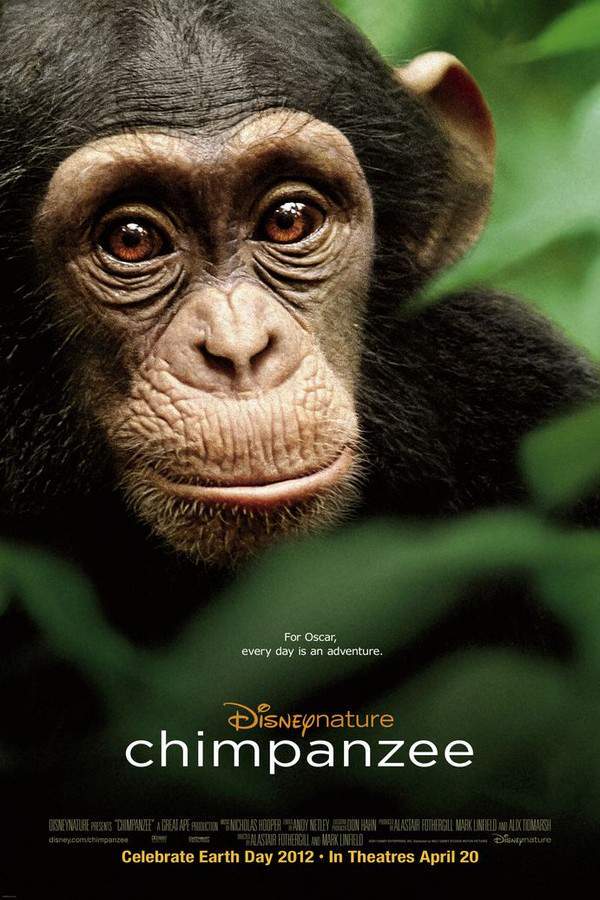
Chimpanzee (2012) movie poster

Plot Summary

Chimpanzee (2012) Plot Summary Explained

Release, runtime and language
2012 · 78 min · English
JustWatch #31,113 2
Directed by
Alastair Fothergill, Mark Linfield

Follow Oscar, a playful young chimpanzee, as he grows up in the forests of West Africa. This documentary captures his journey of discovery and the strong family bonds within his troop. Led by their wise matriarch, the chimpanzees navigate their lush environment, demonstrating remarkable intelligence and resourcefulness. Witness Oscar’s individual triumphs and the heartwarming connections that define their lives.

On this page (6)
  1. 1 Where to watch
  2. 2 What happens: full plot
  3. 3 Plot questions answered
  4. 4 Movie threads
  5. 5 Movies like Chimpanzee
  6. 6 Every angle

Where to watch

Where to Watch Chimpanzee (2012)

Where can you watch Chimpanzee? Stream, rent or buy it in the US, including on Disney Plus, Amazon Video and Apple TV Store: current JustWatch availability with up-to-date prices.

Streaming availability powered by JustWatch

Full plot summary · contains spoilers

What Happens in Chimpanzee: Full Plot Summary

The whole story of Chimpanzee (2012) explained, from the opening scene to the final frame: every key event, every twist and what it all adds up to. Read it as a quick recap before the sequel, to check a scene you missed, or to finally understand what really happened.

In Taï National Park in Ivory Coast, Oscar is a young chimpanzee in his toddler years, growing up within a tight-knit troop that navigates a forest teeming with native fruits, nuts, and figs. The group’s days are filled with practical lessons: they hunt small tree monkeys, forage termites with simple tools carved from sticks, and crack tough nuts using rocks as makeshift hammers. Under the careful guidance of his mother, Isha, Oscar begins picking up the essential skills that will help him survive this lush and sometimes dangerous jungle.

Tragedy strikes when a rival band of chimpanzees, led by Scar, attacks. In the chaos, Isha is injured and separated from the rest of the group, and the narrator suggests she likely falls prey to a nocturnal leopard. With her absence, Oscar is left to interpret and apply what she taught him, but the loss quickly weighs on him. He wanders in search of his mother, finds it increasingly hard to recall the lessons she imparted, and begins to lose weight. His heart aches for guidance, and he attempts to latch onto another mother figure, hoping for care, but the troop’s females are already occupied with their own young.

As days turn into weeks, Oscar faces rejection from most of the group. The only one who seems to notice him is the alpha male, Freddy, whose rough exterior masks a capacity for empathy. One by one, the other chimps keep their distance, but Freddy gradually draws near. Through imitation and patient observation, Oscar learns by watching Freddy, mirroring his movements and responses. The unlikely bond starts to take shape; at one point, Freddy allows Oscar to ride on his back—an act that mirrors the nurturing role usually played by a mother, signaling a shift in how the two creatures relate to each other.

When danger looms again as rivals prepare for another assault, Freddy must rally the troop and coordinate defense, a responsibility that pulls him away from Oscar at critical moments. This separation leaves the young chimp feeling mixed emotions—confusion, vulnerability, and a flicker of hope. The confrontation that follows is fierce: Scar leads a vicious attack, but the unity and discipline of Freddy’s group help them fend off the onslaught and drive the aggressors back into the jungle.

Months pass, and the relationship between Freddy and Oscar continues to deepen. The troop slowly returns to its former rhythm, but the dynamics have shifted in subtle, lasting ways. Oscar’s trust in Freddy grows, and the forest’s routines—finding food, avoiding threats, and navigating social hierarchies—rebuild around the resilient bond that formed in the wake of loss. The story closes on a note of quiet resilience, with life in the group resuming its cadence and the young chimp’s place within the troop becoming more secure than before.
Last updated: October 09, 2025 at 16:20

Was this helpful?

Plot questions answered

Chimpanzee Plot Explained: Your Questions Answered

The questions people ask most about Chimpanzee (2012): what happens in the confusing scenes, why the characters do what they do, the twists, hidden details and what the ending means. Each answer contains spoilers.

Q1

Does Oscar's mother Isha die in the movie?

Yes, Isha is killed. After the rival group led by Scar attacks the troop, Isha becomes separated from Oscar during the chaos. The narrator explains that she most likely fell victim to a nocturnal leopard that same night, which is a common predator in the Taï National Park forest.

Foreshadowing: The attack scene shows Isha getting separated from the group while Oscar watches, setting up the tragedy that follows.

  • isha
  • oscar's mother
  • death
  • leopard
  • killed
Q2

Why does alpha male Freddy take care of Oscar?

Freddy notices Oscar struggling alone after Isha's death and chooses to step into a nurturing role despite being an alpha male. Typically, male chimps do not care for orphans, but Freddy demonstrates unusual empathy. He allows Oscar to follow him, watch his movements, and eventually ride on his back, an act normally reserved for mothers. This bond forms gradually through imitation and proximity.

Foreshadowing: Early in the film, Freddy is shown observing Oscar more closely than any other adult chimp, hinting at his eventual decision to help.

  • freddy
  • alpha male
  • adoptive bond
  • orphan care
  • unusual behavior
Q3

Why don't the female chimpanzees help Oscar after his mother dies?

The female chimps in the troop already have their own young to care for and cannot take on an additional dependent. In chimpanzee societies, females are busy raising their own offspring and lack the resources to nurse or protect another mother's child. This is why Oscar's attempts to find a new caregiver lead to rejection.

Foreshadowing: Before Isha disappears, the film shows the females constantly attended to their own babies, illustrating why they are unavailable.

  • female chimps
  • rejection
  • orphan
  • maternal care
  • troop dynamics
Q4

How does Oscar survive after losing his mother?

Oscar survives by imitating Freddy and learning to forage and navigate the forest on his own. He watches how the alpha male finds food, uses tools to fish for termites, and cracks nuts with rocks. Though he initially struggles and loses weight because he cannot fully remember his mother's lessons, his observation of Freddy helps him gradually gain survival skills.

Foreshadowing: The film shows Oscar watching Isha use tools early on, establishing that he learns through imitation before he must apply it alone.

  • survival
  • foraging
  • tool use
  • learning
  • independence
Q5

Why do Scar's group attack the chimpanzee troop?

The rival group led by Scar attacks to claim territory and resources. Chimpanzee bands frequently wage territorial conflicts over food-rich areas in the forest. Scar's group targets the area where Oscar's troop lives, leading to two major assaults throughout the documentary.

Foreshadowing: Tension between the groups is introduced early when the rival chimps are first spotted at the forest's edge.

  • scar
  • rival group
  • territorial attack
  • chimpanzee warfare
  • conflict
Q6

What does it mean when Freddy lets Oscar ride on his back?

Allowing Oscar to ride on his back is a significant act that symbolizes their bond and marks a shift in their relationship. In chimpanzee behavior, riding on a caregiver's back is an intimate act typically reserved for mothers carrying their young. By permitting this, Freddy is publicly accepting a nurturing role, which is rare for an alpha male.

Foreshadowing: This moment follows a scene where Oscar cautiously approaches Freddy, showing the gradual building of trust.

  • back ride
  • bonding
  • nurturing
  • alpha male
  • caregiver role
Q7

Does Oscar find a permanent home with Freddy?

Yes, Oscar finds a permanent place within the troop. Months after the attacks, Oscar's bond with Freddy has grown stronger, and he settles into a secure position within the family structure. The story ends with Oscar remaining under Freddy's protection, indicating he has been fully accepted into the troop despite his tragic start.

Foreshadowing: The final scenes show Oscar moving confidently among the troop, no longer isolated or wandering in search of his mother.

  • future
  • home
  • troop integration
  • security
  • adoption
Q8

Is Chimpanzee based on a true story?

Yes, Chimpanzee is a Disney Nature documentary depicting real chimpanzees in Taï National Park, Ivory Coast. The characters, Oscar, Isha, Freddy, and Scar, are real chimps observed by filmmakers over an extended period. The narrative is edited from actual footage, though some events may be arranged for dramatic flow.

  • disney nature
  • documentary
  • true story
  • real chimpanzees
  • taï national park
Q9

Does Freddy's group win the second battle against Scar?

Yes, Freddy's group successfully defends their territory in the second confrontation. The unity and coordinated defense of Freddy's troop drive Scar's attackers back into the jungle. This victory reinforces the strength of the group bonds and showcases how cooperation helps them protect their territory.

Foreshadowing: Before the attack, the film shows Freddy organizing and rallying the troop, demonstrating leadership that pays off in the battle.

  • battle
  • victory
  • scar defeat
  • group unity
  • territory defense
Q10

How does Oscar learn from Freddy if he's not his real mother?

Oscar learns through careful observation and imitation, the primary way young chimpanzees acquire skills. He watches how Freddy locates food, uses tools, and interacts with other chimps, then mirrors these behaviors. This learning method is natural to chimps and allows Oscar to survive by adopting Freddy's techniques rather than being directly taught.

Foreshadowing: Earlier scenes show Oscar learning from Isha the same way, through watching and copying, so the technique is established early.

  • imitation
  • learning
  • observation
  • skill transfer
  • survival skills

Movie threads

More Movies Like Chimpanzee, by Mood & Story

Curated lists built around what makes Chimpanzee tick: the same mood, the same kind of story or the same emotional payoff. Each list explains why these movies belong together.

Wildlife survival stories like Chimpanzee

Stories of animals overcoming adversity to survive and thrive in their natural world. If you were moved by the story of Oscar in Chimpanzee, explore more movies like it. This thread features documentaries and dramas about animal protagonists, showcasing their coming-of-age journeys, social bonds, and remarkable resilience against the odds in the natural world.

  • observational
  • resilient
  • heartwarming
  • naturalistic
  • hopeful
  • tender
  • Tone: hopeful, observational, bittersweet
  • Pacing: steady, naturalistic
Why these movies?

The story pattern: These stories typically follow a non-human protagonist through a significant life challenge, often involving loss, learning essential survival skills, and finding a new place within a community. The narrative arc moves from hardship toward stability, emphasizing adaptation and the strength found in social bonds.

Why they belong together: Movies are grouped here for their shared focus on animal perspectives, their blend of observational realism with emotional storytelling, and their central theme of resilience. They offer an intimate, often heartwarming look at the intelligence and emotional depth of creatures in the wild.

Movies about found family and healing like Chimpanzee

Emotional journeys where unexpected connections help characters heal from loss. For viewers who loved the heartwarming bond between Oscar and Freddy in Chimpanzee, this thread collects movies with similar emotional arcs. Discover stories where characters, often young or vulnerable, recover from tragedy through the support of an unexpected guardian or community.

  • heartwarming
  • bittersweet
  • tender
  • hopeful
  • emotional
  • resilient
  • Tone: bittersweet, hopeful, tender
  • Pacing: steady, character-driven
Why these movies?

The story pattern: The narrative pattern begins with a pivotal loss that leaves a character isolated. The core of the story is their gradual, often hesitant, journey toward trusting a new figure or group. The climax is not about defeating a villain, but about achieving emotional security, resulting in a bittersweet but hopeful resolution.

Why they belong together: These films are united by their focus on the theme of loss and recovery through connection. They share a specific emotional mix: starting with sadness, moving through vulnerability, and culminating in a hopeful, secure ending built on a foundation of trust and care.

If you liked this

Movies Like Chimpanzee

Similar movies to Chimpanzee: the same genre, themes or kind of story. Each one comes with its own plot summary, timeline and ending explained.

Browse all movie summaries

Every angle

Chimpanzee (2012) Explained: Plot, Timeline & Characters

Everything about Chimpanzee in one place: what happens in the plot summary, the timeline in chronological order, the characters and meaning and a spoiler-free summary. What's After the Movie adds the cast, box office and post-credit scenes.

Coming soon on iOS and Android

The Plot Explained Movie Summary App

Plot summaries, endings explained and timelines on your phone. Catch up on any movie in minutes, save your favorites and never miss a twist again.

Be the first to know when we launch. Your email stays private, always.

Learn more about the app