Caterina in the Big City

Caterina in the Big City

Year: 2003

Runtime: 105 mins

Language: Italian

Director: Paolo Virzì

DramaComedy

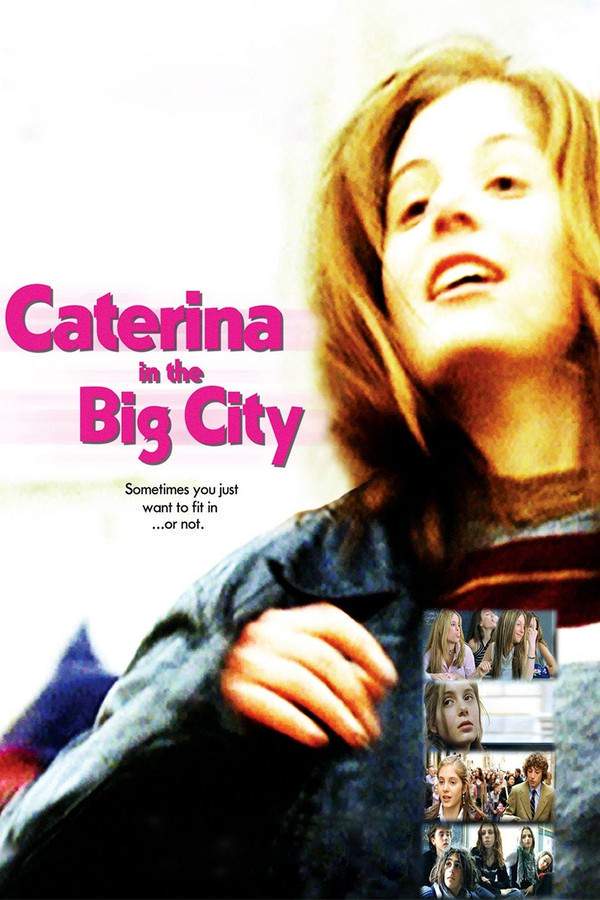
Caterina, a twelve‑year‑old, follows her ambitious father from a small northern town to his native Rome, where she is placed in his former school. She quickly discovers a rigid hierarchy where pupils group themselves by social status and their families’ political leanings, leaving her feeling adrift and questioning where she belongs.

Warning: spoilers below!

Haven’t seen Caterina in the Big City yet? This summary contains major spoilers. Bookmark the page, watch the movie, and come back for the full breakdown. If you're ready, scroll on and relive the story!

Caterina in the Big City (2003) – Full Plot Summary & Ending Explained

Read the complete plot breakdown of Caterina in the Big City (2003), including all key story events, major twists, and the ending explained in detail. Discover what really happened, and what it all means.

Caterina Iacovoni Giulia Elettra Gorietti is a 13-year-old girl who stands at the center of a family and a city beginning to fracture. Her father, Giancarlo Iacovoni Sergio Castellitto, is an aspiring novelist and an accounting teacher whose sharp, often corrosive view of modern society masks deeper frustrations. He lives with Caterina and his wife, Agata Iacovoni Margherita Buy, in a home that has grown tense under the weight of unspoken disappointments and broken promises. The family relocates from their hillbilly country north of Rome to Giancarlo’s birthplace, a move meant to secure him a long-sought teaching position but one that only amplifies his sense of displacement and resentment.

Once in Rome, Caterina enrolls in a fast-track high school where she is quickly pulled between two powerful student cliques. The left-leaning, bohemian group is led by Margherita Rossi-Chaillet Carolina Iaquaniello, a world-wanderer with an air of intellectual authority and a personal code that Cabot-like intensity; the right-leaning faction is fronted by Daniela Germano Federica Sbrenna, the daughter of a prominent, hardline conservative figure. Margherita embraces Caterina as a new best friend, and the two roam through rallies, graves of poets, and the echoing sounds of Nick Cave, cultivating a bond that feels both intimate and fraught with possibility. The relationship soon carries a complicated nuance, as a kiss between Margherita and Caterina hints at either emerging sexuality or a pact of loyalty—an ambiguity that lingers as the girl’s loyalties begin to tilt.

As Caterina’s social world expands, a rift forms. After a drunken incident and a recent tattoo acquired with Margherita’s help, Caterina clashes with her mentor-turned-peer, drawing a wedge between the two friends and pushing Caterina toward Daniela’s circle. Daniela’s world is fenced by wealth and power, with her father, a figure implied to be closely tied to fascist-era politics, watching from the wings. The wedding Caterina attends with Daniela becomes a stark tableau: neo-fascists pay homage to Daniela’s father, underscoring a climate where ideology and privilege intertwine with social performance. There is also a subtle suggestion of a private, uneasy dynamic between Daniela and her father’s bodyguard, adding another layer of complexity to Caterina’s social education.

Amid the personal maneuverings, Giancarlo tries to leverage Caterina’s social bridges for his own stalled ambitions. He secretly passes Margherita a copy of his manuscript to slip to her mother, a maneuver designed to leverage influence through an editor, even as he clings to the idea that Caterina’s friendships might rescue his career. After a public misstep on a talk show and a disciplinary firing for striking a student, he seeks influence at Daniela Germano’s father’s office but finds no easy harbor there either. The more Caterina learns about the world around her, the more she discovers that the world she hoped to inhabit—one built on sincerity—may be built on fragile, performative walls.

The realization that Daniela and her circle “do not like” Caterina lands hard. A failed romance with a wealthy boy from Daniela’s clique seals the feeling of betrayal, and Caterina’s sense of home and belonging begins to cave in. A pivotal moment arrives when she lashes out, and in the aftermath, she finds solace with a neighboring Australian boy who has been quietly watching over the family—a watcher who calls their life a soap opera and whose presence feels curiously comforting to Caterina. She returns home to a house still mired in misery, with her mother, Agata, and her father each wrestling their own unhappiness.

The tension within the family peaks when a conversation between Agata and Fabietto (a close neighbor) reveals the longing for a life apart—Agata confesses her wish to leave Giancarlo, but fears she cannot bear to leave him to face life alone. Unbeknownst to them, Giancarlo overhears enough to frighten himself into action, and he rides away on his motorcycle. The film cuts to him as a person who simply disappears from the frame, with the family choosing to reinterpret his absence as a form of happiness elsewhere: “he doesn’t bother our family more, we like to think he’s in a place that’s making him happy.”

As Caterina moves through the summer, she is urged by Margherita to consider the conservatory of music, a path that eventually becomes her future. Before a holiday break, her Australian friend explains he will return to his homeland as his parents repair their own bond, and Caterina quietly confesses a wish that, should they meet again, she would like to be his girlfriend. The summer folds into quiet moments—playing with a second cousin on the beach, spending time with her mother and Fabietto—and ends with Caterina giving a solo performance at the conservatory, her voice rising in a finale that embodies a tentative, hopeful maturity amid the chaos she has endured.

Throughout, the film embeds a portrait of social divisions, personal disillusionments, and the stubborn persistence of a young girl who learns to navigate an urban landscape where family, friendship, desire, and ideology collide. The final image of Caterina’s ascent—singing in a conservatory performance—functions as a quiet testament to resilience, growth, and the enduring question of where one’s true place in the world might finally be found.


Last updated: October 09, 2025 at 16:49

Was this helpful?

Caterina in the Big City (2003) Plot Questions Answered – Summary FAQ

Explore frequently asked questions about Caterina in the Big City (2003) with spoiler-rich answers covering the full plot summary, major story beats, character motivations, hidden details, and ending meaning. This movie summary FAQ helps explain confusing scenes, plot twists, and narrative decisions in clear, searchable detail.

Q1

Why does Caterina's family move to Rome?

A.

Caterina's father Giancarlo arranges the move from their hill-country home to his birthplace in Rome, hoping to secure a long-sought teaching position. The move is meant to stabilize the family financially and professionally, but it only amplifies Giancarlo's sense of displacement and resentment, as the promised opportunity fails to deliver the security he expected.

Earlier scenes establish Giancarlo as an aspiring novelist frustrated with his stagnant career, making his desperation for a teaching post clear from the start.

family relocationRomeGiancarlo teaching jobIacovoni family
Q2

Why does Caterina become friends with Margherita?

A.

Caterina is drawn to Margherita Rossi-Chaillet because she leads a bohemian, left-leaning circle that embraces intellectual depth and artistic exploration. Margherita offers Caterina a sense of belonging and introduces her to rallies, poetry, and music, experiences that expand her world beyond the rigid social hierarchy of the school.

The film establishes early that Caterina feels adrift in her new environment, making her natural gravitation toward a group that offers identity and purpose inevitable.

Margherita Rossi-Chailletfriendshipbohemian groupleft-leaning cliques
Q3

What does the kiss between Caterina and Margherita mean?

A.

The kiss blurs lines between emerging sexuality and a pact of loyalty. It intensifies the fragility of their friendship while also representing the pressure Caterina feels to belong to Margherita's powerful clique. The ambiguity lingers throughout the film, affecting Caterina's subsequent choices and loyalties.

The kiss occurs during a period of intense bonding through late nights and shared confidences, suggesting the moment carries emotional weight beyond simple friendship.

kissMargheritasexualityloyaltyambiguous relationship
Q4

Why does Caterina switch from Margherita's group to Daniela's circle?

A.

A drunken incident and a tattoo obtained with Margherita's help create a wedge between the two friends, pushing Caterina toward Daniela Germano's circle. This shift also reflects Caterina's growing disillusionment with the bohemian group's sincerity, as she becomes attracted to the wealth and power represented by Daniela's world.

The bond between Caterina and Margherita was already fraught with intensity and complexity, making the eventual break feel like a natural escalation of underlying tensions.

Daniela Germanosocial shifttattoodrunken incidentclique change
Q5

What happens at Daniela's wedding that disturbs Caterina?

A.

At Daniela's wedding, Caterina witnesses neo-fascists openly paying homage to Daniela's father, revealing the political undercurrents that underlie Daniela's circle of wealth and privilege. The event exposes how ideology intertwines with social performance and status, deepening Caterina's understanding of the world's complex power structures.

The film hints early at Daniela's father's political significance, with implications connecting to fascist-era politics.

Daniela weddingneo-fascistspolitical undercurrentspower structure
Q6

Why does Giancarlo try to use Caterina's friendships for his career?

A.

Giancarlo, frustrated with his stalled novel and professional ambitions, secretly passes his manuscript to Margherita to slip to her mother, an editor, hoping to leverage Caterina's social connections for publication. This reveals his willingness to manipulate his daughter's relationships for personal gain, showing how his desperation corrupts his role as a father.

Giancarlo's sharp, corrosive view of modern society masks deeper frustrations about his own failed ambitions, making his exploitation of Caterina's friendships consistent with his character.

Giancarlo manuscripteditorleveraging relationshipscareer desperation
Q7

Why does Giancarlo disappear at the end?

A.

Giancarlo overhears a conversation between his wife Agata and neighbor Fabietto in which Agata confesses she once wished to leave him. Frightened by this revelation, Giancarlo rides away on his motorcycle and simply vanishes from the frame. The family later chooses to reinterpret his absence as a form of happiness elsewhere, though the truth remains ambiguous.

Earlier scenes establish the growing tension in the household, with unspoken disappointments and broken promises creating an undercurrent of instability.

Giancarlo disappearanceAgata confessionmotorcyclefamily breakdown
Q8

Who is the Australian boy who befriends Caterina?

A.

The Australian boy is a neighboring teenager who has been quietly observing the Iacovoni family, likening their dynamic to a soap opera. After Caterina's betrayal by Daniela's circle, she finds solace in his quiet presence. He offers her a sense of stability and comfort amid the chaos, though he eventually returns home as his parents reconcile.

His presence as a watchful figure is established early, making his role as a source of comfort a natural development when Caterina needs someone understanding.

Australian boyneighborcomfortstabilitysoap opera
Q9

Why does Caterina decide to attend the music conservatory?

A.

Margherita encourages Caterina to consider the conservatory of music as a path forward, and this suggestion becomes Caterina's way toward a different future. The conservatory represents both artistic growth and a potential place where she might finally belong, offering hope amid the uncertainty of her family and social world.

The film hints at Caterina's artistic sensibilities through her engagement with music and poetry alongside Margherita, making the conservatory a natural continuation of her development.

conservatorymusicMargherita suggestionartistic futuregrowth
Q10

What does Caterina's final solo performance represent?

A.

Caterina's solo performance at the conservatory functions as a quiet testament to her resilience and growth amid family and social turmoil. Her voice rising with tentative, mature confidence symbolizes her emergence as an individual capable of finding her own place, even as the world around her remains unsettled. The moment balances hope with the bittersweet reality of her fractured family.

The entire film builds toward Caterina's journey of self-discovery, with her increasing engagement with music foreshadowing this climactic moment of artistic expression.

final performanceconservatoryresiliencegrowthhopeful maturity
Q11

Why does Caterina's romance with the wealthy boy fail?

A.

Caterina's romance with a wealthy boy from Daniela's circle ends in betrayal, confirming that she was never truly accepted by that world. The failed romance shatters her sense of belonging and deepens her realization that the performative walls of wealth and privilege offer no genuine connection.

Daniela's world is established as fenced by wealth and power, with genuine acceptance always conditional on ideological alignment.

wealthy boyromance failurebetrayalDaniela circle rejection
Mobile App Preview

Coming soon on iOS and Android

The Plot Explained Mobile App

From blockbusters to hidden gems - dive into movie stories anytime, anywhere. Save your favorites, discover plots faster, and never miss a twist again.

Sign up to be the first to know when we launch. Your email stays private, always.

Explore Movie Threads

Discover curated groups of movies connected by mood, themes, and story style. Browse collections built around emotion, atmosphere, and narrative focus to easily find films that match what you feel like watching right now.

Melancholic teen dramas about fractured social worlds like Caterina in the Big City

Stories of young outsiders navigating complex social structures and searching for identity.Discover movies like Caterina in the Big City that explore the anxious journey of young characters navigating complex social landscapes. These similar coming-of-age dramas capture the moody, introspective feeling of trying to find your place amid cliques and political divides.

introspectiveanxiousdisillusionedatmosphericnostalgichopefulresilient

Narrative Summary

The narrative follows a young character, typically in their early teens, who is thrust into a new social environment—a new school, city, or community. They must decipher the existing social order, often defined by class, politics, or family reputation, while wrestling with their own emerging sense of self. The journey is less about major plot events and more about internal growth and often disillusioning observations.

Why These Movies?

These films are grouped by their shared melancholic tone and their focus on the micro-politics of adolescent social life. They capture a specific, anxious mood of transition, blending personal identity struggles with a nuanced look at the wider social world through a young person's eyes.

Atmospheric dramas about family and politics like Caterina in the Big City

Where family dysfunction mirrors the ideological conflicts of the world outside.If you liked the way Caterina in the Big City wove family drama with political themes, explore these similar movies. They feature stories where a family's personal conflicts are set against a backdrop of social hierarchy and ideological division, creating a resonant, bittersweet mood.

atmosphericdisillusionednostalgicfamily conflictpoliticalurban lifeintrospective

Narrative Summary

The plot centers on a family unit, often strained by the ambitions or failures of a parent, whose dynamics are a microcosm of the society around them. The narrative explores how external pressures like political allegiance or class status directly impact family relationships and a child's coming-of-age, leading to a sense of fracture and a bittersweet resolution.

Why These Movies?

These films share a specific blend of intimate family drama and wider political commentary. They are connected by an atmospheric quality, a steady pacing that allows for reflection, and a focus on how macro-level social forces shape micro-level personal lives.

Unlock the Full Story of Caterina in the Big City

Don't stop at just watching - explore Caterina in the Big City in full detail. From the complete plot summary and scene-by-scene timeline to character breakdowns, thematic analysis, and a deep dive into the ending - every page helps you truly understand what Caterina in the Big City is all about. Plus, discover what's next after the movie.

Caterina in the Big City Timeline

Track the full timeline of Caterina in the Big City with every major event arranged chronologically. Perfect for decoding non-linear storytelling, flashbacks, or parallel narratives with a clear scene-by-scene breakdown.

Caterina in the Big City Timeline

Characters, Settings & Themes in Caterina in the Big City

Discover the characters, locations, and core themes that shape Caterina in the Big City. Get insights into symbolic elements, setting significance, and deeper narrative meaning - ideal for thematic analysis and movie breakdowns.

Characters, Settings & Themes in Caterina in the Big City

Caterina in the Big City Spoiler-Free Summary

Get a quick, spoiler-free overview of Caterina in the Big City that covers the main plot points and key details without revealing any major twists or spoilers. Perfect for those who want to know what to expect before diving in.

Caterina in the Big City Spoiler-Free Summary

More About Caterina in the Big City

Visit What's After the Movie to explore more about Caterina in the Big City: box office results, cast and crew info, production details, post-credit scenes, and external links - all in one place for movie fans and researchers.

More About Caterina in the Big City

Similar Movies to Caterina in the Big City

Discover movies like Caterina in the Big City that share similar genres, themes, and storytelling elements. Whether you’re drawn to the atmosphere, character arcs, or plot structure, these curated recommendations will help you explore more films you’ll love.