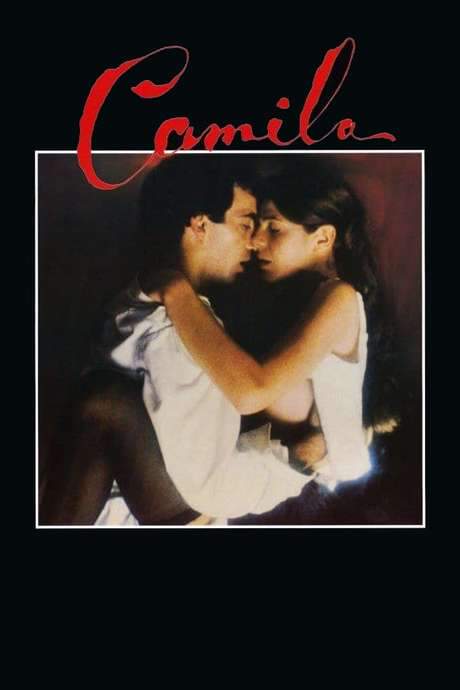
Camila

Camila

Year: 1984

Runtime: 109 mins

Language: Spanish

Director: María Luisa Bemberg

RomanceDrama

Love against all odds In 1847 Buenos Aires, a young noblewoman and a young Jesuit fall in love, much to the disapproval of her family and the Church.

Warning: spoilers below!

Haven’t seen Camila yet? This summary contains major spoilers. Bookmark the page, watch the movie, and come back for the full breakdown. If you're ready, scroll on and relive the story!

Timeline & Setting – Camila (1984)

Explore the full timeline and setting of Camila (1984). Follow every major event in chronological order and see how the environment shapes the story, characters, and dramatic tension.

Time period

1827-1848

The narrative spans late 1820s through the late 1840s in Argentina, a period of political upheaval under Rosas’ regime. It juxtaposes the genteel world of Buenos Aires society with a harsh, authoritarian state and its police. Religious authority and political power collide as exiled couples flee and face execution.

Location

Argentina, Buenos Aires, Corrientes Province, Brazil border region

The story unfolds across 19th-century Argentina, centering on the capital Buenos Aires and the rural outskirts of the O'Gorman hacienda. Key locations include Camila's socialite circles in the city, the family estate, and the village in Corrientes Province where Ladislao and Camila seek a life together. The border region with Brazil features in their attempted escape, highlighting the era's strict political and religious surveillance.

🇦🇷 Argentina 🗺️ 19th Century setting

Last Updated: October 04, 2025 at 13:04

Main Characters – Camila (1984)

Meet the key characters of Camila (1984), with detailed profiles, motivations, and roles in the plot. Understand their emotional journeys and what they reveal about the film’s deeper themes.

Camila O'Gorman (Susú Pecoraro)

A 19th-century Buenos Aires socialite who secretly longs for true love. She challenges the era’s constraints by pursuing a forbidden relationship with a priest, risking family honor and social standing. Her resilience is matched by a fierce longing for freedom and personal happiness, even as tragedy looms.

💔 Forbidden Love 🕊️ Repression 👑 Socialite

Ladislao Gutiérrez (Imanol Arias)

A Jesuit priest torn between his sacred vows and a consuming love. He seeks solace in a hidden relationship, then faces a crisis of faith as he confronts penance and duty. His inner conflict drives the drama and ultimately leads to a desperate attempt at a new life.

❤️ Moral Conflict 🕊️ Love vs Faith ⚖️ Duty vs Desire

Adolfo O'Gorman (Héctor Alterio)

Camila’s father, a powerful and pragmatic supporter of Rosas’ regime. He embodies patriarchal authority and political ambition, willing to sacrifice personal relationships for family honor and political expediency. His actions intensify the conflict between love and state power.

🔥 Authority 🛡️ Family Honor ⚖️ Power

Padre Gannon (Jorge Hacker)

A clergy figure who becomes entangled in the affair through his connections with the local authorities. He embodies religious influence and the moral complexities of guiding others while facing personal compromise. His actions influence the pursuit and fate of Camila and Ladislao.

🙏 Religious Authority 🧭 Moral Dilemma 🕊️ Clergy

Commandant Soto (Héctor Pellegrini)

The military commander enforcing Rosas’ rules, who navigates loyalty to the state and the practicalities of delivering justice. He oversees the capture and execution of Camila and Ladislao, and embodies the blunt force of state power.

⚔️ Military Rule 🗣️ Law & Order 🕷️ Coercion

Last Updated: October 04, 2025 at 13:04

Major Themes – Camila (1984)

Explore the central themes of Camila (1984), from psychological, social, and emotional dimensions to philosophical messages. Understand what the film is really saying beneath the surface.

❤️ Forbidden Love

Camila and Ladislao’s relationship defies social norms, religious vows, and political expectations. Their romance exposes the gap between personal longing and the constraints imposed by family, church, and state. The lovers’ pursuit of happiness leads to drastic consequences, including exile and a fatal public punishment. The film uses their bond to critique a society that sacrifices humanity for reputation.

⚖️ Power & Repression

Rosas’ regime and the state apparatus represent control over personal lives, enforcing obedience through law and coercion. The commandante and the church collude to silence dissent, culminating in a death sentence for Camila and Ladislao. The narrative highlights how political authority weaponizes morality to legitimize violence. Individual desires are crushed beneath the weight of state interests.

🕊️ Moral Conflict

Ladislao struggles between priestly vows and a personal desire that transgresses his calling. Camila confronts the hypocrisy of religious authority and social hypocrisy alike. The story explores guilt, penance, and the cost of choosing love over communal expectations. Ultimately, their choices force a reckoning with conscience in a rigid moral universe.

Last Updated: October 04, 2025 at 13:04

Mobile App Preview

Coming soon on iOS and Android

The Plot Explained Mobile App

From blockbusters to hidden gems — dive into movie stories anytime, anywhere. Save your favorites, discover plots faster, and never miss a twist again.

Sign up to be the first to know when we launch. Your email stays private — always.

Explore Movie Threads

Discover curated groups of movies connected by mood, themes, and story style. Browse collections built around emotion, atmosphere, and narrative focus to easily find films that match what you feel like watching right now.

Forbidden historical romance movies like Camila

Passionate love stories crushed by oppressive political and religious forces.Explore more films like Camila, featuring powerful but doomed love stories set against historical backdrops. If you were moved by the tragic passion and societal oppression in Camila, these movies offer similar emotional journeys of love fighting against impossible odds.

tragicpassionateoppressivedoomedmelancholicforbiddenhistoricalgrim

Narrative Summary

Stories in this thread follow a clear arc: an intense, forbidden love blooms, faces escalating opposition from authoritative institutions (family, religion, state), and culminates in a tragic conclusion. The narrative often uses the historical setting to heighten the stakes, emphasizing the rigidity of the era's social structures and the ultimate power they wield over individual happiness.

Why These Movies?

These movies are grouped together because they share a core experience of melancholic, passionate romance overshadowed by a sense of impending doom. They combine heavy emotional weight with a steady, character-driven pace, focusing on the slow, grim unraveling of love in the face of insurmountable societal pressure.


Bleak historical tragedies of political oppression like Camila

Grim stories where personal desires are crushed by merciless political systems.Find more grim and tragic historical dramas similar to Camila. These movies share the theme of individuals being destroyed by powerful, unyielding political or religious institutions, offering a somber look at the human cost of tyranny and the futility of rebellion.

oppressivegrimtragicpoliticalresignedmelancholictyrannydoomed

Narrative Summary

The narrative pattern involves an individual's peaceful existence or personal quest for happiness coming into direct conflict with an authoritarian state or institution. The system is portrayed as overwhelmingly powerful and indifferent, methodically dismantling the protagonist's life, leading to a conclusion that emphasizes the futility of resistance and the brutal reality of state violence.

Why These Movies?

These films are united by their consistently bleak tone, high emotional intensity, and heavy thematic focus on persecution and loss. They create a similar mood of oppression and hopelessness, where the pacing is steady and deliberate, building towards an inevitable, tragic end that highlights the power imbalance between the individual and the state.

Unlock the Full Story of Camila

Don't stop at just watching — explore Camila in full detail. From the complete plot summary and scene-by-scene timeline to character breakdowns, thematic analysis, and a deep dive into the ending — every page helps you truly understand what Camila is all about. Plus, discover what's next after the movie.

Camila Summary

Read a complete plot summary of Camila, including all key story points, character arcs, and turning points. This in-depth recap is ideal for understanding the narrative structure or reviewing what happened in the movie.

Camila Summary

Camila Timeline

Track the full timeline of Camila with every major event arranged chronologically. Perfect for decoding non-linear storytelling, flashbacks, or parallel narratives with a clear scene-by-scene breakdown.

Camila Timeline

Camila Spoiler-Free Summary

Get a quick, spoiler-free overview of Camila that covers the main plot points and key details without revealing any major twists or spoilers. Perfect for those who want to know what to expect before diving in.

Camila Spoiler-Free Summary

More About Camila

Visit What's After the Movie to explore more about Camila: box office results, cast and crew info, production details, post-credit scenes, and external links — all in one place for movie fans and researchers.

More About Camila

Similar Movies to Camila

Discover movies like Camila that share similar genres, themes, and storytelling elements. Whether you’re drawn to the atmosphere, character arcs, or plot structure, these curated recommendations will help you explore more films you’ll love.