Plot Explained Spoilers guaranteed!
Plot Explained

Browse by genre

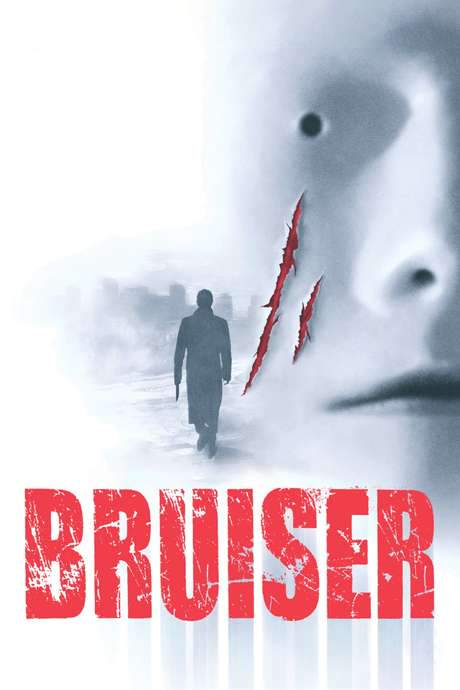
Bruiser (2000) movie poster

Plot Summary

Bruiser (2000) Plot Summary Explained

Release, runtime and language
2000 · 99 mins · English
Loading streaming availability…
Directed by
George A. Romero
Starring
Jason Flemyng, Peter Stormare, Yan Feldman, Jeff Monahan, Andrew Tarbet, Leslie Hope

Bruiser follows a man who has spent his life conforming—keeping quiet, obeying rules, doing what is expected. One morning he awakens to discover his face has vanished, leaving him a featureless, anonymous phantom. Stripped of his identity, he abandons his previous obedience and launches a violent quest for revenge, rejecting all the rules that once defined him.

On this page (5)
  1. 1 Where to watch
  2. 2 What happens: full plot
  3. 3 Plot questions answered
  4. 4 Movie threads
  5. 5 Every angle
Loading streaming availability…

Full plot summary · contains spoilers

What Happens in Bruiser: Full Plot Summary

The whole story of Bruiser (2000) explained, from the opening scene to the final frame: every key event, every twist and what it all adds up to. Read it as a quick recap before the sequel, to check a scene you missed, or to finally understand what really happened.

Henry Creedlow, Jason Flemyng, is a creative director for Bruiser, a successful magazine firm, who lives an unhappy life. His high-strung, contemptuous wife Janine Creedlow, Nina Garbiras, is indifferent to him, which fuels his isolation and pushes him toward distressing fantasies about suicide. On their way to work downtown, Henry meets with his best friend, Jimmy Larson, Andrew Tarbet. While trying to board a train, Henry envisions a woman who pushes him and imagines harming her, a glimpse of the pressure and danger that simmer beneath his outward calm.

During a conference at Bruiser headquarters where they decide which model should be on the magazine’s latest issue, Milo Styles, Peter Stormare, mocks Henry in front of colleagues, heightening the humiliation he already endures at work. That Saturday, there is a party for the workers at Milo and Rosie’s house. Henry has a plaster mask made by Rosie, who designs masks in her spare time. Rosie finishes the mask and adds it to her “garden of lost souls” in the backyard. She asks Henry to paint a design on the featureless mask, but Henry cannot think of anything to draw. Henry sees Milo and Janine across the pool in a very intimate moment, a betrayal that gnaws at him from multiple angles.

While driving home later that evening, Henry confronts Janine about what he saw. Janine hardly seems to care and she tells the distraught Henry that he is weak-willed and a pushover. When they arrive home, Henry has another fantasy about killing Janine, a repeated internal scream that underscores the fissures in his life. Henry wakes up the next morning, and is shocked when he sees that his entire face has transformed into a white, featureless mask. When Henry tries removing it he cuts himself. Henry hides when Katie, his once-a-week maid, arrives to clean the house. Henry watches the maid as she fills her bag with silver and other items from his house. Henry reveals himself and confronts her about stealing. Henry attacks and beats her to death with the bag filled with stolen silver items.

Henry follows his wife to the office and spots her and Milo having sex. Rosie bursts into the conference room and photographs them. When Milo chases his wife out of the building, Henry sneaks into the conference room where he reveals his new blank face to his wife. He wraps an extension cord around her neck and pushes her out a window, strangling her.

Milo gives a statement to Detective McCleary. Henry eludes the police and goes home. He hides from the cops again when they come to his front door to look for him to deliver the news of his wife’s murder, after making it appear that he possibly killed himself.

That afternoon, Henry visits Jimmy and, holding him at gunpoint, reveals the business account papers which show that Jimmy has been pilfering money out of Henry’s bank accounts and mutual funds for two years. Jimmy tells Henry that it was Janine’s idea to steal Henry’s money so she could squander it on herself. Jimmy reveals that Janine has been cheating on Henry with him too. Jimmy suddenly pulls out a gun from his briefcase and tries to kill Henry. Henry fires back, fatally wounding Jimmy in the chest.

Henry calls The Larry Case Show, a popular radio program, and tells the host that he is ‘Faceless’ and has murdered three people. After listening to some advice from Larry Case, Henry decides that he needs to eradicate all the people from his life who wronged and betrayed him if he is to get his face back.

Henry attends Milo’s Halloween costume party, dressed as Zorro wearing a black cape along with his white mask. Rosie is also there and is being tailed by Detective McCleary, who thinks that she either killed Janine or hired someone to kill her. Henry assembles a group of men from the office and lures Milo to a second floor balcony. There Henry tells his mean and ungrateful boss that he has set him up for a “grand finale.” Milo is raised overhead on wires and Henry aims a strong laser at Milo, which kills him. As Henry walks away, his face returns to normal. He is spotted by Detective McCleary who moves in to apprehend him. However, Rosie shows up in a Zorro costume with a white mask on and yells at McCleary that she is the killer. Henry bids Rosie farewell and escapes into the crowd.

Some years later, a long-haired Henry is now working as an office messenger in another city. Henry passes by an office where an angry and loathsome executive is yelling at several people. After the man screams at Henry, he turns around... and his blank, anonymous, faceless white mask has returned.

Last updated: October 09, 2025 at 15:31

Was this helpful?

Plot questions answered

Bruiser Plot Explained: Your Questions Answered

The questions people ask most about Bruiser (2000): what happens in the confusing scenes, why the characters do what they do, the twists, hidden details and what the ending means. Each answer contains spoilers.

Q1

Why does Henry lose his face?

Henry loses his face after his wife Janine publicly rejects him, calling him weak-willed and a pushover. The film presents this as a supernatural manifestation of his identity crisis, he has spent his life suppressing his true self to conform to others' expectations. The facelessness symbolizes how he has become invisible and anonymous in his own life, having no true identity or voice. Upon witnessing Janine's betrayal and enduring her contempt, his repressed anger triggers this physical transformation.

Foreshadowing: Throughout the early scenes, Henry has recurring fantasies about harming others, particularly Janine, suggesting his suppressed rage is building beneath his passive exterior.

  • henry creedlow
  • face
  • identity
  • transformation
  • supernatural
Q2

Why does Henry kill the maid Katie?

Henry kills Katie after discovering she has been stealing silver and other valuables from his house. When she arrives to clean, Henry watches her fill a bag with his belongings. He reveals himself and confronts her, then beats her to death with the bag filled with stolen items. This murder marks his first act of violence after losing his face and signals his complete break from his previous passive identity, he now acts on impulse rather than suppressing his anger.

Foreshadowing: Earlier, Henry fantasizes about harming a woman on the train who pushes him, demonstrating that violent impulses were already present even before his transformation.

  • katie
  • maid
  • murder
  • silver
  • theft
  • violence
Q3

Why does Rosie confess to killing Milo?

Rosie confesses to Detective McCleary that she is the killer to allow Henry to escape. She has been trailing Henry throughout the film and understands his pain. At the Halloween party, she sees Henry kill Milo and watches his face briefly return to normal, realizing his transformation is connected to eliminating those who betrayed him. Rosie sacrifices her own freedom to give Henry a chance at a new life, acting out of compassion for someone she sees as fundamentally good but pushed beyond endurance.

Foreshadowing: Rosie's creation of the mask and her 'garden of lost souls' suggests she understands identity and loss, she connects with Henry's vulnerability when he cannot think of anything to draw on the blank mask.

  • rosie
  • confession
  • milo
  • detective
  • escape
  • sacrifice
Q4

What causes Henry's face to return after killing Milo?

Henry's face returns momentarily after killing Milo. The film suggests that completing his revenge against all betrayers is the condition for reclaiming his identity. By eliminating Milo, his primary professional antagonist who mocked him publicly and slept with his wife, Henry has addressed the main sources of his humiliation. However, this restoration is temporary and incomplete, as the mask returns at the end when he encounters another angry, oppressed man.

Foreshadowing: When Henry calls The Larry Case Show, the host advises him that ridding his life of those who wronged him is the path to getting his face back, setting up the condition that must be fulfilled.

  • face return
  • milo
  • revenge
  • identity
  • transformation
Q5

What does the ending imply about the cycle of violence?

The ending shows that Henry's violent revenge did not truly free him. Years later, working as a messenger in another city, he witnesses an executive screaming at employees, the same dynamic of oppression that defined his former life. When this man turns around, he too wears the blank faceless mask. This implies that the cycle of suppressed rage and violent retaliation continues indefinitely, and that Henry's transformation is not unique to him but represents a broader commentary on how society creates oppressed people who eventually snap.

Foreshadowing: The film establishes early that Henry is not an isolated case, he fantasizes about harming strangers on the train, showing the problem extends beyond his personal betrayers.

  • ending
  • cycle
  • violence
  • executive
  • mask
  • repetition
Q6

Why does Henry kill his best friend Jimmy?

Henry kills Jimmy after discovering that Jimmy has been stealing money from his bank accounts and mutual funds for two years. When Henry confronts Jimmy with the financial evidence, Jimmy reveals that Janine orchestrated the theft so she could spend the money on herself. Jimmy then admits he has also been sleeping with Janine. When Jimmy pulls a gun from his briefcase to kill Henry, Henry shoots him in self-defense, fatally wounding him. This betrayal by his oldest friend represents the final collapse of any stability in Henry's life.

Foreshadowing: Earlier, Jimmy is introduced as Henry's best friend, making this betrayal particularly devastating and adding weight to Henry's decision to eliminate all betrayers.

  • jimmy
  • murder
  • betrayal
  • money
  • theft
  • best friend
Q7

How does Henry killing Janine fit into his revenge plan?

Henry kills Janine after following her to the office and witnessing her and Milo together. Rosie bursts in and photographs the affair, publicly exposing the betrayal. When Milo chases Rosie out, Henry reveals his faceless appearance to Janine and strangles her with an extension cord before pushing her out a window. This murder is personal, Janine was his primary intimate betrayer who mocked his weakness, stole his money, and committed adultery. Her death is the first major act in Henry's revenge spree, establishing the pattern of eliminating those who wronged him.

Foreshadowing: Henry has recurring fantasies about killing Janine throughout the early part of the film, showing this murder was a long-building desire tied to his deepest resentments.

  • janine
  • murder
  • strangulation
  • betrayal
  • wife
  • infidelity
Q8

What motivates Henry's killing spree after losing his face?

After losing his face, Henry's motivation shifts from passive resentment to active revenge. When he calls The Larry Case Show and announces himself as 'Faceless,' the host advises him to rid his life of everyone who betrayed him if he wants his face back. This gives Henry a clear mission: eliminate everyone who contributed to his humiliation. He systematically kills Katie (thief), Janine (wife/cheater), Jimmy (friend/thief), and finally Milo (boss/cheater), viewing each murder as a step toward reclaiming his identity.

Foreshadowing: The radio call provides explicit justification for the killings, transforming Henry's aimless rage into a focused killing spree with a clear objective.

  • revenge
  • killing spree
  • motivation
  • radio
  • faceless
  • betrayal
Q9

Why does Henry target Milo for the final killing?

Henry targets Milo because Milo represents the professional humiliation that defined his unhappy life. At the Bruiser conference, Milo publicly mocked Henry's decisions in front of colleagues, stripping away his remaining dignity. Additionally, Milo was sleeping with Janine, making him both a professional and personal betrayer. By killing Milo at the Halloween party using a theatrical laser device arranged as a 'grand finale,' Henry completes his revenge and briefly regains his face, confirming Milo was the final piece of his transformation.

Foreshadowing: Milo's mockery at the conference is one of the earliest and most public humiliations Henry endures, establishing him as a primary antagonist worth killing.

  • milo
  • killing
  • boss
  • revenge
  • conference
  • humiliation
Q10

What is the symbolism behind Henry's faceless mask?

The faceless mask represents Henry's complete loss of identity and autonomy. Throughout his life, he has suppressed his own needs, obeyed rules, and allowed others to define him, essentially becoming invisible in his own existence. When his physical face disappears, it externalizes his internal feeling of being featureless and anonymous. The mask also grants him freedom from social consequences, as he can now commit violence without being recognized. The mask's return at the end, appearing on another oppressed man, suggests this is a universal phenomenon rather than a unique curse.

Foreshadowing: At Rosie's house, she makes a plaster mask of Henry's face and asks him to paint something on it, but he cannot think of anything, he has no identity to express.

  • mask
  • symbolism
  • identity
  • anonymity
  • loss
  • oppression

Movie threads

More Movies Like Bruiser, by Mood & Story

Curated lists built around what makes Bruiser tick: the same mood, the same kind of story or the same emotional payoff. Each list explains why these movies belong together.

Movies About Identity Crisis and Madness Like Bruiser

Stories where the collapse of self unleashes a violent, vengeful new persona. If you liked Bruiser's exploration of a man losing his face and his mind, you'll find similar stories here. These movies feature protagonists undergoing a severe identity crisis that leads to a violent descent into madness, blending psychological horror with themes of revenge and alienation.

  • alienated
  • vengeful
  • unhinged
  • violent
  • psychological
  • oppressive
  • Tone: dark, vengeful, alienated
  • Pacing: variable, from slow-burn to fast spiral
Why these movies?

The story pattern: The narrative follows a character pushed to the brink by societal pressures or personal betrayals. A catalytic event—often symbolic of identity loss—shatters their reality, prompting a dramatic break from their former life. The story then charts their violent, often nihilistic, journey as they target the sources of their pain, culminating in a bleak confirmation of their new, monstrous self.

Why they belong together: These films are grouped by their shared focus on the terrifying psychological journey of losing one's identity. They combine heavy emotional weight with high-intensity violence, creating a dark, oppressive tone. The pacing often shifts from a slow-burn setup to a fast-paced spiral, mirroring the protagonist's mental collapse.

Claustrophobic and Paranoid Horror Movies Like Bruiser

Films that trap you in a tightening spiral of anxiety and mistrust. For viewers who appreciated the anxious, claustrophobic atmosphere of Bruiser, this section collects similar horror and thriller films. These movies create an intense feeling of paranoia and psychological unease, often trapping the protagonist in a nightmarish situation where trust erodes and violence erupts.

  • claustrophobic
  • paranoid
  • anxious
  • oppressive
  • psychological
  • tense
  • Tone: dark, tense, paranoid
  • Pacing: variable, building tension
Why these movies?

The story pattern: Narratives in this thread often trap the protagonist in a confined psychological or physical space, amplifying their sense of isolation and fear. The plot revolves around a growing suspicion that everyone is a threat, leading to a breakdown of trust and a violent confrontation with perceived enemies. The story structure heightens tension relentlessly, focusing on the character's internal unraveling.

Why they belong together: These movies are united by their ability to craft an intensely anxious and claustrophobic viewing experience. They share a dark tone, high intensity, and a focus on psychological torment. The mood is consistently oppressive and paranoid, making the violence feel both terrifying and inevitable.

Every angle

Bruiser (2000) Explained: Plot, Timeline & Characters

Everything about Bruiser in one place: what happens in the plot summary, the timeline in chronological order, the characters and meaning and a spoiler-free summary. What's After the Movie adds the cast, box office and post-credit scenes.

Coming soon on iOS and Android

The Plot Explained Movie Summary App

Plot summaries, endings explained and timelines on your phone. Catch up on any movie in minutes, save your favorites and never miss a twist again.

Be the first to know when we launch. Your email stays private, always.

Learn more about the app