Black Orpheus
Year: 2006
Runtime: 100 min
Language: Portuguese
Director: Marcel Camus
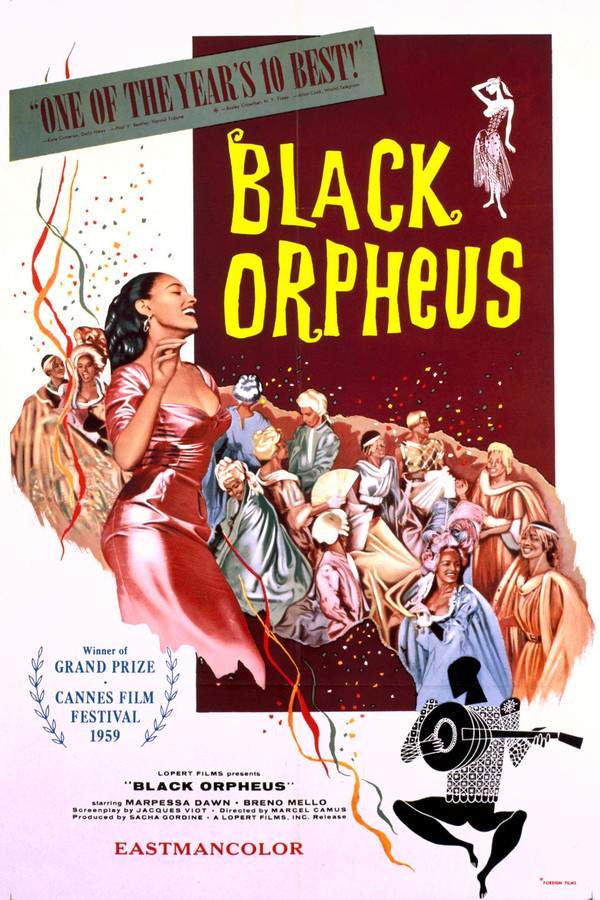
Set against the backdrop of a lively Carnival celebration in Rio de Janeiro, this film reimagines the classic Greek myth of Orpheus and Eurydice. A young musician falls for a spirited woman, but tragedy strikes, leading him on a desperate journey to the underworld to retrieve her. The story explores themes of love, loss, and the power of music, all set to the sounds of bossa nova and vibrant Brazilian culture.
Warning: spoilers below!
Haven’t seen Black Orpheus yet? This summary contains major spoilers. Bookmark the page, watch the movie, and come back for the full breakdown. If you're ready, scroll on and relive the story!
Black Orpheus (2006) – Full Plot Summary & Ending Explained
Read the complete plot breakdown of Black Orpheus (2006), including all key story events, major twists, and the ending explained in detail. Discover what really happened—and what it all means.
A stunning explosion of a marble Greek bas-relief unveils Afro-Brazilian men who are joyfully dancing the samba to the rhythmic beats of drums in a favela. Enter Eurydice, who arrives in the vibrant city of Rio de Janeiro and boards a trolley driven by Orfeu. As a newcomer, she travels to the end of the line, where Orfeu introduces her to Hermes, the station guard, who provides her with directions to her cousin, Serafina’s home.
Although engaged to Mira, Orfeu feels indifferent about their impending marriage. The couple visits the courthouse to obtain a marriage license. When the clerk whimsically remarks about Orfeu’s name, suggesting a mix-up with Eurydice, it irritates Mira. Following this incident, Mira insists on acquiring an engagement ring. Despite having just received his paycheck, Orfeu is more inclined to spend his money retrieving his guitar from the pawn shop for the upcoming Carnival. Ultimately, Mira offers to lend him the funds for the ring.
Upon returning home, Orfeu discovers that Eurydice is staying next door with Serafina. Eurydice has fled to Rio to escape a menacing stranger whom she fears may want to harm her. This figure, embodying Death in a stylized skeleton outfit, locates her, but Orfeu heroically chases him away. Love blossoms between Orfeu and Eurydice, yet their romance is fraught with peril, as they evade both Mira and Death. When Serafina’s sailor boyfriend, Chico, arrives, Orfeu kindly offers Eurydice the chance to sleep in his home while he opts for the hammock outside. Eurydice invites him in, and they share an intimate night together.
As members of a local samba school participating in Carnival, Orfeu, Mira, and Serafina are key players in the festivities. Serafina schemes to have Eurydice don her Queen of the Night costume, allowing her to spend more time with Chico. Under the disguise of a veil, only Orfeu knows of this ruse. During the parade, he dances with Eurydice instead of Mira, amplifying the tension.
However, Mira eventually spots Serafina in the crowd and tears away Eurydice’s veil. This act forces Eurydice into a frantic escape from both Mira and Death. In a climactic moment at Orfeu’s trolley station, she hangs perilously from a power line to evade him, but tragic fate strikes as Orfeu accidentally electrocutes her while activating the power. Death ominously declares, > “Now she’s mine,” before rendering Orfeu unconscious.
In despair, Orfeu seeks Eurydice at the Office of Missing Persons, despite Hermes confirming her death. The desolate building, shrouded in shadows, houses only a janitor tidying up. Understanding Orfeu’s anguish, the janitor leads him down a dark spiral staircase—an allusion to the mythical Orpheus’s journey into the underworld—towards a Macumba ritual, crucial to the Afro-Brazilian Candomblé faith.
At the gate, they encounter a guard dog named Cerberus. During the ritual, the janitor instructs Orfeu to sing to summon his beloved. Eurydice’s spirit possesses an old woman, conversing with Orfeu. He yearns to gaze upon her, but Eurydice warns him not to do so or he will lose her forever. Overcome with longing, he glances back, sees the old woman, and Eurydice’s spirit vanishes, echoing the fate as told in Greek mythology.
Grieving profoundly, Orfeu retrieves Eurydice’s body from the morgue, cradling her lifeless form as he traverses the city towards his home, where he finds his shack ablaze. Filled with vengeance, Mira hurls a stone that strikes his head, sending him tumbling off a cliff—still holding Eurydice close.
Two children, Benedito and Zeca, who have been closely following Orfeu’s journey, are captivated by his claim that his guitar playing brings forth the sun each day. After his tragic death, Benedito urges Zeca to pick up the guitar and play. Zeca complies, and from his strumming, the sun emerges. A little girl presents Zeca with a solitary flower, and the trio dances, embodying the hope and rebirth that follows loss.
Last Updated: November 16, 2024 at 16:16

Explore Movie Threads
Discover curated groups of movies connected by mood, themes, and story style. Browse collections built around emotion, atmosphere, and narrative focus to easily find films that match what you feel like watching right now.
Modern Myth Tragedies like Black Orpheus
Ancient tales of fate and hubris retold in vibrant, contemporary settings.Discover movies that reimagine ancient myths in modern contexts, similar to Black Orpheus. These stories share a sense of tragic destiny, powerful romantic bonds, and a vibrant cultural backdrop, often resulting in emotionally heavy, bittersweet conclusions.
Gods and Monsters
1998
Black Orpheus
2006
Pandora and the Flying Dutchman
1951

Undine
2021

Broken Embraces
2009
Legends of the Fall
1995
Knights of the Round Table
1954
Parthenope
2025

The Tragedy of Man
2011

Valley of Flowers
2007

When Nietzsche Wept
2007
Liliom
1934

The Egyptian
1954

The Phantom Lover
1995

The History of Sound
2025
Narrative Summary
These stories follow a classic tragic arc, often involving a fated romance or a quest doomed by character flaws. The narrative is propelled by a sense of inescapable destiny, where joyous beginnings give way to profound loss, sometimes followed by a desperate, mythic journey to undo the tragedy.
Why These Movies?
They are grouped by their core concept of adapting age-old myths into a fresh visual and cultural language, creating a powerful dissonance between the ancient story and the modern setting, all while exploring universal themes of love, fate, and loss.
Movies with Celebration and Tragedy like Black Orpheus
Stories where joyous, ecstatic highs are shattered by profound, sudden loss.If you liked the vibrant Carnival atmosphere and sudden heartbreak of Black Orpheus, explore these movies. They feature a similar pattern where a backdrop of cultural celebration or intense joy is shattered by a tragic event, leading to a heavy emotional journey.
Black Orpheus
2006
Broken Embraces
2009

Accidents Happen
2010

The Broken Circle Breakdown
2013

Midsommar
2019

Life Itself
2018

Wander Darkly
2020

Rockstar
2011
Windstruck
2004
Valley of Flowers
2007

The Rains of Ranchipur
1955

Funeral Parade of Roses
1969
Bombay
1995

Carnival of Souls
1998

Dasara
2023
Narrative Summary
The narrative often begins immersed in a period of high-energy celebration or cultural fervor, establishing a deep connection to life and community. This vibrant setting makes the subsequent intrusion of tragedy—be it death, violence, or irrevocable loss—feel even more shocking and poignant, forcing characters to navigate grief in the shadow of recent joy.
Why These Movies?
They are united by their specific emotional rhythm: building a powerful sense of elation and cultural richness only to dismantle it with a tragic turn. This creates a uniquely potent and bittersweet viewing experience centered on the fragility of happiness.
Unlock the Full Story of Black Orpheus
Don't stop at just watching — explore Black Orpheus in full detail. From the complete plot summary and scene-by-scene timeline to character breakdowns, thematic analysis, and a deep dive into the ending — every page helps you truly understand what Black Orpheus is all about. Plus, discover what's next after the movie.
Black Orpheus Timeline
Track the full timeline of Black Orpheus with every major event arranged chronologically. Perfect for decoding non-linear storytelling, flashbacks, or parallel narratives with a clear scene-by-scene breakdown.

Characters, Settings & Themes in Black Orpheus
Discover the characters, locations, and core themes that shape Black Orpheus. Get insights into symbolic elements, setting significance, and deeper narrative meaning — ideal for thematic analysis and movie breakdowns.