




Plot Explained Spoilers guaranteed!
Plot Explained

Browse by genre

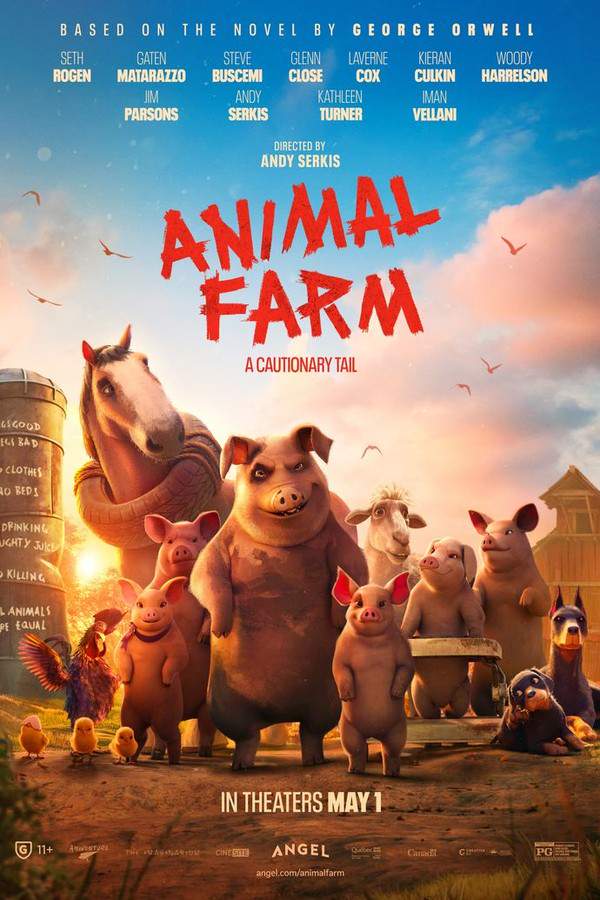
Animal Farm (2026) movie poster

Timeline

Animal Farm (2026) Timeline Explained – Every Event in Order

Release, runtime and language
2026 · 1 h 36 m · English
Echo score 6
JustWatch #4,874 12
Starring
Andy Serkis, Woody Harrelson, Steve Buscemi, Glenn Close, Seth Rogen, Laverne Cox
Budget
$35M

Directed by Andy Serkis and voiced by Seth Rogen, Gaten Matarazzo, Glenn Close and Woody Harrelson, this film is a satirical allegory of revolution and power. It follows a hopeful movement for equality that is progressively usurped as the pigs seize control, rewrite history, silence dissent and turn the farm into a brutal dictatorship, echoing Orwell’s warning about the perils of communism.

On this page (6)
  1. 1 Where to watch
  2. 2 Events in order (12)
  3. 3 Timeline questions answered
  4. 4 The book behind the movie
  5. 5 Movie threads
  6. 6 Every angle

Where to watch

Where to Watch Animal Farm (2026)

Where can you watch Animal Farm? Stream, rent or buy it in the US, including on Angel Studios, Amazon Video and Apple TV Store: current JustWatch availability with up-to-date prices.

Streaming availability powered by JustWatch

12 events in order · contains spoilers

Animal Farm Timeline: Events in Chronological Order

Every key event of Animal Farm (2026) in order, scene by scene, with when and where it takes place. Use it to untangle flashbacks, time jumps and parallel storylines, to refresh your memory before the sequel or to find the exact scene you are thinking of.

  1. Bank repossesses Manor Farm and sale to Pilkington Industries

    After failing to keep up mortgage payments, Manor Farm is repossessed by the bank and set to be sold to Pilkington Industries. Frieda Pilkington aims to slaughter the livestock. The animals are deceived into thinking they’re being taken on vacation to a 'laughterhouse'.

    When
    Right after mortgage default
    Where
    Manor Farm
  2. Snowball discovers humans' true plan and calls for rebellion

    Snowball realizes the sale is a cover for the animals' slaughter and decides they must resist. He argues for rebellion and plans to take back the farm. The revelation sets the stage for an outright uprising.

    When
    Soon after the sale
    Where
    Manor Farm
  3. The animals revolt and rename the farm

    The animals drive out the owners and seize control, renaming the property Animal Farm. Snowball leads the new autonomous government with a code of laws designed to keep them from becoming like humans. The initial self-rule is marked by a determined, though fragile, idealism.

    When
    Immediately after the uprising
    Where
    Animal Farm
  4. Snowball pushes the watermill; Napoleon opposes

    Snowball proposes building a watermill to improve efficiency and living conditions. Napoleon opposes the project, positioning himself to take charge and undermine Snowball. The disagreement triggers the early power struggle on the farm.

    When
    Early governance
    Where
    Animal Farm
  5. Napoleon exiles Snowball and consolidates control

    Napoleon uses his influence to push Snowball out of the leadership and into exile. With Snowball removed, Napoleon consolidates power and begins to control the farm more directly. The revolution's direction shifts under his growing authority.

    When
    After the power struggle
    Where
    Animal Farm
  6. Bank debt hits; farm funds via market

    The bank demands $1,000 per month from the farm, threatening foreclosure. To meet the obligation, the animals run a market to raise funds. They also start shopping at Pilkington's mall, using the extra money to buy goods for themselves.

    When
    As the mortgage debt comes due
    Where
    Animal Farm
  7. Pilkington banks alliance with Napoleon

    Pilkington Industries aligns with Napoleon, providing the pigs with free goods and political leverage. Squealer helps bend and rewrite the farm's rules to favor pigs and humans alike. The regime's rhetoric begins to blur the line between liberty and privilege.

    When
    During the alliance
    Where
    Animal Farm
  8. Life grows miserable for non-pig animals

    As the pigs enjoy comfort and luxury, the other animals endure worsening conditions. The ruling pigs increasingly behave like humans, adopting their habits and privileges. The dream of equality fades under the weight of privilege and hypocrisy.

    When
    Ongoing
    Where
    Animal Farm
  9. Lucky questions the regime as Puff leaves

    Lucky, Snowball's former protégé, grows skeptical of Napoleon's rule as fellow pig Puff leaves due to harsh conditions. He begins to question the regime and its direction. The elderly Benjamin hints at rebellion, encouraging resistance.

    When
    As discontent grows
    Where
    Animal Farm
  10. Plan to ridicule Napoleon during Pilkington's company address

    Lucky and the other animals devise a plan to ridicule Napoleon as he speaks at Pilkington's company event. The act aims to expose the regime's hypocrisy and rally others to dissent. The moment marks a bold challenge to Napoleon's authority.

    When
    Before the flood
    Where
    Near Pilkington's company venue
  11. Dam breaks; flood and water tower confrontation

    A dam breaks, flooding the farm and forcing animals to take shelter on the water tower. Napoleon confronts Lucky in a clash that ends with Napoleon drowning after being trapped by the tower. The collapse abruptly shifts the power balance on the farm.

    When
    During the flood
    Where
    Farm, near the water tower
  12. Napoleon's demise leaves the farm hopeful

    With Napoleon gone, Lucky and the remaining animals face an uncertain future but look to the stars with a cautious sense of hope. The regime's collapse frees the others from the immediate tyranny, allowing space for reconsideration and change.

    When
    After the flood
    Where
    Animal Farm

Last updated: May 19, 2026 at 05:53

Was this helpful?

Timeline questions answered

Animal Farm Timeline Explained: Your Questions Answered

When does it happen, and why in that order? The questions people ask about the chronology of Animal Farm (2026): time jumps, flashbacks, cause and effect between scenes and the correct order of events, each answered with spoilers.

Q1

Why do the animals decide to rebel against Farmer Jones?

The animals rebel after discovering that Farmer Jones has lost Manor Farm due to unpaid mortgage payments. The bank repossesses the property and sells it to Pilkington Industries, whose leader Frieda Pilkington intends to slaughter all the livestock. The animals were initially deceived into believing they were being taken on a vacation to a "laughterhouse," but Snowball uncovers the truth, that the sale is a cover for their mass slaughter, and convinces the other animals they must fight for their survival.

Foreshadowing: Earlier hints of the animals' mistreatment and Jones's neglect set the stage for their willingness to believe in a better future.

  • animal farm rebellion
  • snow ball
  • farmer jones
  • laughterhouse
  • pilkington industries
Q2

Why does Napoleon oppose Snowball's watermill plan?

Napoleon's opposition to the watermill has little to do with the project itself and everything to do with seizing power. When Snowball proposes building a watermill to improve efficiency and living conditions, Napoleon sees an opportunity to undermine Snowball's leadership and position himself as the alternative. He begins convincing the other animals that Snowball is secretly working against their freedom, using this opposition as a strategy to gain political support rather than genuine disagreement with the project's merit.

Foreshadowing: Napoleon's early objections to Snowball's ideas foreshadow his later consolidation of absolute control.

  • napoleon
  • snowball
  • watermill
  • power struggle
  • animal farm
Q3

How does Napoleon take control of Animal Farm after the rebellion?

Napoleon seizes control by systematically pushing Snowball out of leadership. After opposing Snowball's watermill proposal, Napoleon uses his growing influence to convince the other animals that Snowball is a threat to their freedom. Through persistent pressure, persuasion, and manipulation, assisted by Squealer who interprets and adjusts the messaging for the group, Napoleon eventually exiles Snowball from Animal Farm entirely. With Snowball removed, Napoleon becomes the sole leader and begins consolidating power.

Foreshadowing: The power struggle between Napoleon and Snowball mirrors Orwell's warning about revolutionary leaders becoming tyrants.

  • napoleon control
  • snowball exiled
  • squealer
  • animal farm dictatorship
Q4

Why must Animal Farm pay the bank $1,000 per month?

The debt originates from Farmer Jones's original mortgage on Manor Farm. When Jones fails to keep up with payments, the bank repossesses the property and sells it to Pilkington Industries. Rather than allowing the sale to proceed, the animals revolt and take over the farm. However, the financial obligation remains, the bank demands $1,000 monthly from Animal Farm to satisfy the outstanding debt, threatening foreclosure if they fail to pay.

Foreshadowing: The financial burden planted early in the story becomes a crucial tool for the pigs' corruption.

  • mortgage debt
  • bank payment
  • animal farm finances
  • pilkington
Q5

How do the animals raise money to meet the bank's payment demands?

To meet the $1,000 monthly obligation, the animals establish and operate a market where they sell goods. The profits from this market venture enable them to pay the bank and also afford to purchase goods at Pilkington's mall. This solution, while financially effective, creates a profound irony, the animals who revolted against human exploitation now participate in the very commercial system they overthrew, blurring the line between self-sufficiency and complicity with the humans they once fought.

Foreshadowing: The market represents the first major compromise of the animals' revolutionary ideals.

  • market
  • money
  • pilkington mall
  • animal farm economy
Q6

Why do the pigs start living like humans despite their revolution?

The pigs' transformation into human-like creatures represents the corruption of the revolution's ideals. After seizing power, Napoleon and the other pigs begin bending the farm's rules to serve their own interests. With Squealer's help, they convince the other animals that their memory of the original principles was flawed or exaggerated. The pigs enjoy increasingly comfortable, luxurious lifestyles while the other animals endure worsening conditions, adopting human habits, privileges, and comforts they once fought to escape.

Foreshadowing: The initial code of laws designed to prevent the animals from becoming like humans is progressively ignored and rewritten.

  • pig corruption
  • squealer
  • animal farm rules
  • inequality
Q7

Why does Lucky turn against Napoleon's regime?

Lucky, who was Snowball's former protégé, begins questioning Napoleon's rule as conditions on the farm deteriorate significantly. While the pigs enjoy comfort and luxury, the other animals face increasingly harsh living standards. When fellow pig Puff leaves the farm under pressure, it further shakes Lucky's faith in the leadership. Combined with Benjamin's quiet encouragement to remember the truth, Lucky's skepticism grows into active dissent against the regime's hypocrisy.

Foreshadowing: Lucky's early loyalty to Snowball plants the seeds for his later rebellion against Napoleon.

  • lucky
  • snowball protégé
  • napoleon dissent
  • benjamin
Q8

How does Napoleon end up drowning during the flood?

Napoleon drowners during the catastrophic dam break that floods Animal Farm. As the flood rages, Lucky and other rebels take shelter on the water tower. Napoleon confronts Lucky there, but the confrontation ends with Napoleon becoming trapped on the tower itself. Unable to escape the rising floodwaters, Napoleon drowns. His death marks an abrupt and violent end to the dictatorship, leaving the remaining animals to face an uncertain future without their tyrannical leader.

Foreshadowing: The flooding event represents the collapse of the oppressive system Napoleon built.

  • napoleon death
  • flood
  • water tower
  • lucky confrontation
Q9

What does the ending imply about Animal Farm's future?

The ending offers cautious hope rather than a clear resolution. With Napoleon dead, the animals are freed from immediate tyranny, but their future remains uncertain. Lucky and Benjamin emerge as survivors who look toward the sky and each other with hope, wondering what kind of life might now be possible. The ambiguity reflects Orwell's warning, the revolution may defeat one tyrant, but true freedom requires ongoing vigilance against the corruption of ideals.

Foreshadowing: The hopeful but uncertain ending mirrors the fragile idealism of the original rebellion.

  • animal farm ending
  • lucky
  • benjamin
  • hope
  • resolution
Q10

Why do the animals continue shopping at Pilkington's mall after the revolution?

After the animals start the market to raise money for their $1,000 monthly payment, they gain access to extra funds that allow them to purchase goods from Pilkington's mall. This represents a key moment where the revolution's ideals become compromised, rather than remaining self-sufficient and independent from humans, the animals become complicit in the very commercial system they overthrew. Pilkington uses these material favors to deepen the pigs' power and privilege, further blurring political boundaries.

Foreshadowing: The mall shopping represents the pigs' gradual alignment with their former oppressors.

  • pilkington mall
  • animal farm compromise
  • commerce
Q11

What happens to Snowball after being exiled from Animal Farm?

Snowball is forced into exile after Napoleon consolidates power and convinces the other animals that Snowball is a threat. Once removed from Animal Farm, Snowball does not return in this version of the story. His absence leaves Napoleon as the undisputed leader, allowing the pigs' corruption to proceed unchecked. Snowball's fate represents the silencing of alternative voices and the elimination of those who might challenge the emerging dictatorship.

Foreshadowing: The power struggle's resolution determines the farm's tragic trajectory.

  • snowball exile
  • snowball fate
  • animal farm leadership
Q12

Why do the other animals trust Squealer's explanations despite the changes?

Squealer serves as Napoleon's primary propagandist, constantly interpreting and adjusting messages to suit the pigs' interests. Through relentless persuasion and revision of history, Squealer convinces many animals that their memory of the original principles was flawed or exaggerated. The other animals, lacking education and organized resistance, find it easier to accept Squealer's explanations than to question the leadership. His ability to manipulate information becomes a crucial tool for maintaining the pigs' control.

Foreshadowing: Squealer's rhetorical power is established early as a key mechanism of pig rule.

  • squealer
  • propaganda
  • manipulation
  • animal farm

Movie threads

More Movies Like Animal Farm, by Mood & Story

Curated lists built around what makes Animal Farm tick: the same mood, the same kind of story or the same emotional payoff. Each list explains why these movies belong together.

Dark Political Allegories Like Animal Farm

Stories that use metaphor to critique power structures and political systems. Explore movies like Animal Farm that use satirical allegory to critique power structures and political systems. If you enjoyed the dark political commentary of Animal Farm, you'll find similar thought-provoking stories here.

  • thought-provoking
  • satirical
  • oppressive
  • uneasy
  • rebellious
  • tragic
  • Tone: dark, satirical, grim
  • Pacing: steady, methodical
Why these movies?

The story pattern: These narratives typically follow a hopeful movement or revolution that becomes corrupted by power. They show a gradual descent into tyranny, often through the rewriting of history, silencing of dissent, and manipulation of the masses. The journey is usually tragic, ending on an ambiguous or bleak note that serves as a warning.

Why they belong together: Movies are grouped here for their shared use of allegory to deliver dark political commentary. They combine heavy thematic weight with a satirical, often grim tone, creating a cohesive experience of thoughtful unease about systems of power.

Movies About Failed Revolutions Like Animal Farm

Stories where idealistic uprisings gradually descend into new forms of oppression. Discover films similar to Animal Farm that explore hopeful revolutions turning tragic. If you were captivated by the story of idealism corrupted by power, you'll find more movies with this compelling narrative pattern.

  • hopeful
  • tragic
  • oppressive
  • rebellious
  • betrayal
  • dread
  • Tone: dark, tragic, hopeful beginnings
  • Pacing: steady, building dread
Why these movies?

The story pattern: These stories follow a clear arc: starting with righteous anger and hope for change, then showing the gradual corruption of the revolution's ideals as new leaders seize power. The pacing is steady, building dread as conditions worsen and dissent is silenced. The ending typically offers no clear victory, leaving questions about whether cycles of oppression can ever be broken.

Why they belong together: These films share the specific narrative pattern of a revolution that becomes corrupted from within. They create a cohesive experience through their steady pacing, building sense of dread, heavy emotional weight, and ambiguous endings that challenge simplistic notions of good versus evil.

Every angle

Animal Farm (2026) Explained: Plot, Timeline & Characters

Everything about Animal Farm in one place: what happens in the plot summary, the timeline in chronological order, the characters and meaning and a spoiler-free summary. What's After the Movie adds the cast, box office and post-credit scenes.

Coming soon on iOS and Android

The Plot Explained Movie Summary App

Plot summaries, endings explained and timelines on your phone. Catch up on any movie in minutes, save your favorites and never miss a twist again.

Be the first to know when we launch. Your email stays private, always.

Learn more about the app