Plot Explained Spoilers guaranteed!
Plot Explained

Browse by genre

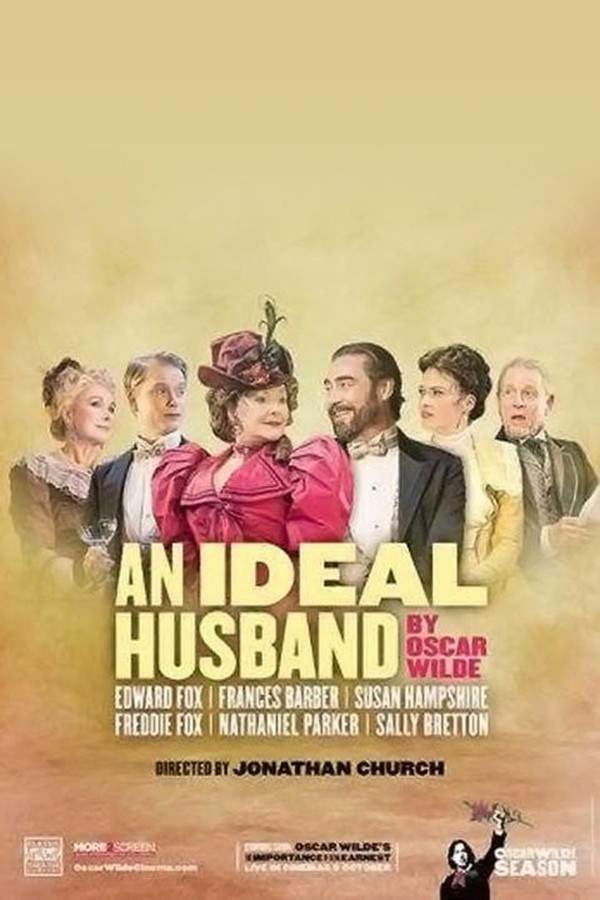
An Ideal Husband (1947) movie poster

Timeline

An Ideal Husband (1947) Timeline Explained – Every Event in Order

Release, runtime and language
1947 · 96 mins · English
Directed by
Alexander Korda
Starring
Paulette Goddard, C. Aubrey Smith, Constance Collier, Michael Anthony, Michael Wilding, Michael Medwin

“An Ideal Husband has to look to his future…a woman has to look to her past!” A powerful politician prepares to reveal a financial scandal, but a woman who invested heavily in the scheme threatens to expose a damaging secret from his past if he labels the venture a fraud. His dilemma deepens as his wife cannot tolerate any character flaw as stakes rise.

On this page (5)
  1. 1 Events in order (12)
  2. 2 Timeline questions answered
  3. 3 Movie threads
  4. 4 Movies like An Ideal Husband
  5. 5 Every angle

12 events in order · contains spoilers

An Ideal Husband Timeline: Events in Chronological Order

Every key event of An Ideal Husband (1947) in order, scene by scene, with when and where it takes place. Use it to untangle flashbacks, time jumps and parallel storylines, to refresh your memory before the sequel or to find the exact scene you are thinking of.

  1. Mrs. Cheveley returns to London with secrets

    Mrs. Laura Cheveley returns to Britain and arrives in London with a cache of incriminating letters. Those letters threaten to ruin Sir Robert Chiltern and could derail his career. She intends to use this leverage to push through a canal financing bill she favors.

    When
    Pre-party
    Where
    London
  2. The Chilterns' party and Cheveley's ultimatum

    A lavish party at the Chilterns' home becomes the scene of Cheveley's blackmail attempt. Sir Robert initially refuses but yields to protect his reputation and position. The atmosphere tenses as the power dynamics between truth and ambition come to the fore.

    When
    Evening
    Where
    Chilterns' home, London
  3. Cheveley exposes the canal pledge to Lady Chiltern

    Before the party ends, Cheveley tells Lady Chiltern that Sir Robert will back the canal scheme. She uses this to insinuate his moral complicity and to undermine his image. Lady Chiltern begins to sense that her husband may have a hidden past worth questioning.

    When
    Evening
    Where
    Chilterns' residence, London
  4. The lost brooch and Goring's secret

    At the close of the party, Arthur and Mabel notice a brooch that does not belong to anyone present. Goring reveals he once gave that brooch to someone and has kept it, hoping it will be retrieved. The brooch becomes a potential instrument in Cheveley's blackmail scheme.

    When
    Evening
    Where
    Chilterns' party, London
  5. Sir Robert pledges to oppose the canal bill

    Sir Robert writes a letter to Cheveley stating that he will speak against the canal bill. The decision marks a pledge to oppose the scheme publicly. He hopes to preserve his reputation, though he has not yet revealed the truth to his wife.

    When
    Following the party
    Where
    Chilterns' residence, London
  6. Morning confrontation and a plan to manipulate Cheveley

    The next morning, Sir Robert confesses the blackmail attempt to Arthur and seeks his counsel. Arthur urges telling Lady Chiltern the truth, even if it ruins her faith in him. Sir Robert refuses to reveal the past and decides to try to blackmail Cheveley instead.

    When
    Morning
    Where
    Chilterns' residence, London
  7. Arthur's doubts about the scheme

    Arthur, once Cheveley's fiancé, doubts that a blackmail plan can work against her. He worries the scheme may backfire and harm more people than it helps. Despite his doubts, he remains entangled in the ensuing drama.

    When
    Day
    Where
    Various, London
  8. Cheveley presses the brooch matter and Lady Chiltern's stance

    Cheveley returns to press about the brooch and to pressure further. Lady Chiltern declares that she has despised Cheveley's dishonesty since their school days. Sir Robert confirms he will speak against the canal bill that night in Parliament.

    When
    Evening
    Where
    Chilterns' residence and Parliament, London
  9. Sir Robert denounces the canal scheme in Parliament

    That night Cheveley watches from the women's gallery as Sir Robert denounces the canal scheme. His public stance reinforces his moral stance, while Cheveley's plan to destroy the marriage falters. The moment tests both the couple and Cheveley's control over events.

    When
    Night
    Where
    House of Commons, London
  10. The next day and a proposal

    The following day Lord Caversham urges Sir Robert to marry, and Arthur proposes to Mabel. The social pressure of London life frames the intersecting personal and political decisions. The romance provides a counterpoint to the political tension.

    When
    Next day
    Where
    London
  11. Unsigned note, brooch, and Cheveley's maneuvers

    Lady Chiltern writes an unsigned note to Arthur asking for help. Arthur reveals he has Cheveley's brooch and knows she stole it. Cheveley offers to trade the note for the letter she uses to blackmail Sir Robert, planning to manipulate him further; Arthur also retrieves the incriminating brooch when Cheveley hands over the note.

    When
    Evening
    Where
    London
  12. Resolution: forgiveness and public life

    In the end, Sir Robert forgives his wife's humanity and chooses public life. The unsigned note exposes Cheveley's scheme, and Arthur's interference helps preserve the marriage. Lord Caversham offers a cabinet position, and Cheveley leaves London defeated as the couple finds peace through forgiveness.

    When
    Finale
    Where
    London

Last updated: October 09, 2025 at 11:04

Was this helpful?

Timeline questions answered

An Ideal Husband Timeline Explained: Your Questions Answered

When does it happen, and why in that order? The questions people ask about the chronology of An Ideal Husband (1947): time jumps, flashbacks, cause and effect between scenes and the correct order of events, each answered with spoilers.

Q1

Why does Mrs. Cheveley blackmail Sir Robert?

Mrs. Cheveley blackmails Sir Robert because she possesses incriminating letters revealing how he amassed his fortune. Years earlier, he used insider knowledge about a government-financed canal scheme to build his wealth, and she threatens to expose this if he doesn't support the canal bill in Parliament.

Foreshadowing: The summary establishes Sir Robert's reputation for "unassailable integrity" early on, making his hidden financial secrets more damaging when revealed.

  • chebeley
  • blackmail
  • sir robert
  • canal scheme
  • incriminating letters
Q2

What past action does Sir Robert try to hide?

Sir Robert built his fortune and political career by using advance knowledge of a canal project's government funding. He profited from this insider information before entering politics, and Mrs. Cheveley's letters can prove he gained his wealth through this ethically questionable means.

  • sir robert
  • fortune
  • canal
  • insider information
  • politics
Q3

Why is Lady Chiltern so devastated by the blackmail revelation?

Lady Chiltern clings to strict moral codes and has built her entire perception of her husband around his spotless reputation. She cannot tolerate any character flaw in someone she idealized. When she learns Sir Robert compromised his integrity for personal gain, it shatters her faith in him and challenges everything she believed about their marriage.

Foreshadowing: The story establishes Lady Chiltern's rigid moral standards early, making her emotional collapse logically inevitable when faced with her husband's hidden past.

  • lady chiltern
  • gertrude
  • moral codes
  • disillusionment
  • marriage
Q4

How does Arthur Goring defeat Mrs. Cheveley's scheme?

Arthur Goring tricks Mrs. Cheveley by offering to trade the lost brooch (which he knows she stole) for the letter she used to blackmail Sir Robert. When she hands over the unsigned note Lady Chiltern wrote to Arthur, he retrieves both items, destroying her leverage while exposing her theft. This clever exchange disarms her blackmail attempt.

Foreshadowing: The brooch is introduced early in the party scene, with Arthur noting he kept it hoping it would be claimed, setting up its later importance.

  • arthur goring
  • brooch
  • chebeley
  • blackmail
  • letter exchange
Q5

Why does Sir Robert decide to oppose the canal bill?

Sir Robert initially considers supporting the canal scheme to avoid scandal, but his wife Gertrude confronts him about his sudden shift in stance. The pressure from Lady Chiltern, combined with his own conscience, leads him to write a letter declaring he will oppose the bill in Parliament, choosing his principles over his reputation.

  • sir robert
  • canal bill
  • parliament
  • moral stance
  • opposition
Q6

What is the significance of the brooch in the plot?

The brooch serves as evidence of Mrs. Cheveley's dishonesty. Arthur Goring once lent it to someone he trusted, and when it appears at the Chilterns' party, he realizes Cheveley must have stolen it from a society woman. This gives Arthur leverage to expose her character and trick her into giving up the blackmail letter.

Foreshadowing: Arthur and Mabel notice the "oddly out of place" brooch at the party, and Arthur keeps it "in case it is ever claimed" as a "quiet reminder of past indiscretions."

  • brooch
  • theft
  • chebeley
  • arthur
  • evidence
Q7

Why does Lady Chiltern write an unsigned note to Arthur?

After learning of the blackmail and her husband's deception, Lady Chiltern writes an unsigned note to Arthur seeking his help. She wants someone she trusts to assist in resolving the crisis, not realizing Mrs. Cheveley will intercept and try to use this note to further manipulate Sir Robert.

  • lady chiltern
  • unsigned note
  • arthur
  • help
  • manipulation
Q8

What leads to Sir Robert and Lady Chiltern's reconciliation?

Lady Chiltern gives Sir Robert the unsigned note along with Arthur's account of Mrs. Cheveley's plot. When Sir Robert reads the note, he sees it as proof of his wife's steadfast love and willingness to forgive despite his flaws. This act of mercy, combined with his public moral stand against the canal scheme, allows them to reconcile.

  • reconciliation
  • forgiveness
  • love
  • trust
  • marriage
Q9

Why does Arthur propose to Mabel Chiltern?

Arthur Goring, an unmarried and free-spirited bachelor throughout the story, ultimately proposes to Mabel Chiltern as the social pressure from Lord Caversham mounts and as he genuinely falls in love with her. Their romance offers a counterpoint to the main marital conflict and represents a traditional happy ending despite Arthur's earlier nonchalance about marriage.

Foreshadowing: Mabel is described as watching "the courtship of society with a mix of warmth and wry observation," suggesting she is attuned to romantic possibilities.

  • arthur
  • mabel
  • proposal
  • marriage
  • romance
Q10

What happens to Mrs. Cheveley by the film's end?

Mrs. Cheveley's schemes fail completely. She loses her blackmail leverage when Arthur exchanges the brooch for the letter, and her attempt to use the unsigned note to divide the Chilterns also fails. Defeated, she departs London having failed to disrupt the Chilterns' marriage or advance her political agenda.

  • chebeley
  • defeat
  • departure
  • london
  • schemes failed

Movie threads

More Movies Like An Ideal Husband, by Mood & Story

Curated lists built around what makes An Ideal Husband tick: the same mood, the same kind of story or the same emotional payoff. Each list explains why these movies belong together.

Victorian High Society Scandals like in An Ideal Husband

Stories of reputation, blackmail, and secrets within the rigid world of the upper class. Explore more movies like An Ideal Husband, featuring dramatic tales of blackmail and moral compromise within the strict social world of the upper class. These stories often involve tense confrontations, witty dialogue, and a focus on the conflict between public image and private failings.

  • sophisticated
  • anxious
  • high stakes
  • reflective
  • melancholic
  • restrained
  • Tone: tense, sophisticated
  • Pacing: steady
Why these movies?

The story pattern: The narrative typically centers on a protagonist whose hidden sin from the past is used against them, creating a high-stakes dilemma that tests their relationships and moral fiber. The story is driven by social maneuvering, tense conversations, and the threat of public ruin, often culminating in a confrontation that either redeems or condemns the character.

Why they belong together: Movies in this thread are grouped by their shared setting in a formal, historical upper-class society and their core plot mechanism of a secret being leveraged for blackmail, creating a specific kind of tense, dialogue-driven drama.
Moral Dilemmas and Marital Forgiveness like in An Ideal Husband

Character-driven stories where a spouse's hidden flaw tests a marriage to its limits. Find movies like An Ideal Husband that focus on a marital crisis triggered by a moral failing from the past. These character-driven stories explore themes of forgiveness, idealized love versus human imperfection, and the tense journey towards reconciliation.

  • anxious
  • reflective
  • relieved
  • melancholic
  • high stakes
  • emotional
  • Tone: tense, reflective, ultimately hopeful
  • Pacing: steady, character-driven
Why these movies?

The story pattern: The story follows a seemingly perfect relationship that is fractured when a spouse's long-buried secret is exposed. This creates an intense internal and interpersonal conflict, exploring themes of hypocrisy, unconditional love, and redemption. The emotional journey involves confrontation, despair, and ultimately a hopeful resolution centered on the hard-won grace of forgiveness.

Why they belong together: These films are united by their focus on a specific marital crisis narrative: the clash between an idealized perception of a partner and their human fallibility, leading to a tense but ultimately hopeful exploration of forgiveness.

If you liked this

Movies Like An Ideal Husband

Similar movies to An Ideal Husband: the same genre, themes or kind of story. Each one comes with its own plot summary, timeline and ending explained.

Browse all movie summaries

Every angle

An Ideal Husband (1947) Explained: Plot, Timeline & Characters

Everything about An Ideal Husband in one place: what happens in the plot summary, the timeline in chronological order, the characters and meaning and a spoiler-free summary. What's After the Movie adds the cast, box office and post-credit scenes.

Coming soon on iOS and Android

The Plot Explained Movie Summary App

Plot summaries, endings explained and timelines on your phone. Catch up on any movie in minutes, save your favorites and never miss a twist again.

Be the first to know when we launch. Your email stays private, always.

Learn more about the app