Plot Explained Spoilers guaranteed!
Plot Explained

Browse by genre

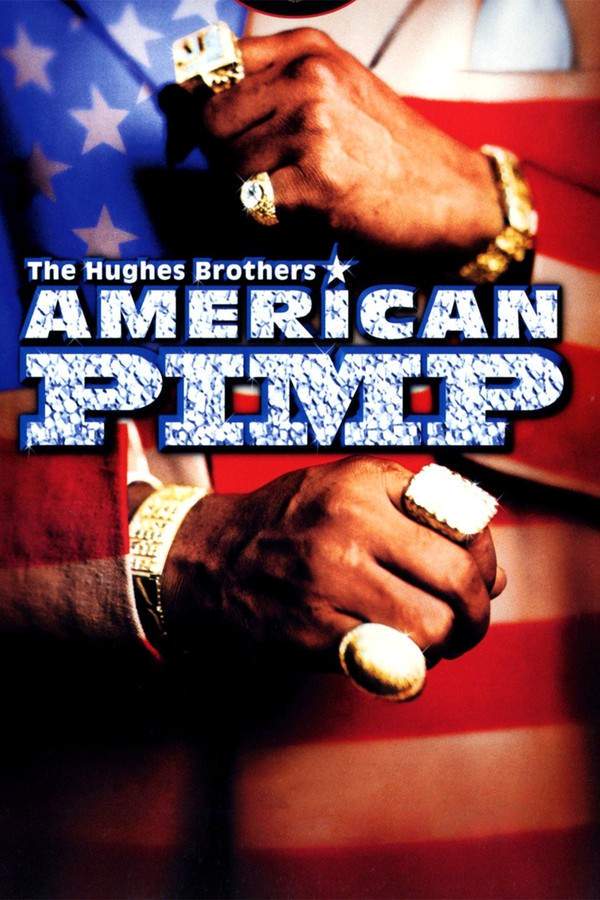
American Pimp (2000) movie poster

Timeline

American Pimp (2000) Timeline Explained – Every Event in Order

Release, runtime and language
2000 · 87 min · English
Directed by
Allen Hughes, Albert Hughes

This documentary delves into the controversial world of prostitution within American cities, examining the lives and perspectives of those involved. The film combines dramatic portrayals of fictional pimp characters with candid interviews from real individuals operating in the underground, such as Clarence "Fillmore Slim" Sims and Don "Magic" Juan. It explores the culture and realities of this often-hidden aspect of urban life.

On this page (5)
  1. 1 Events in order (15)
  2. 2 Timeline questions answered
  3. 3 Movie threads
  4. 4 Movies like American Pimp
  5. 5 Every angle

15 events in order · contains spoilers

American Pimp Timeline: Events in Chronological Order

Every key event of American Pimp (2000) in order, scene by scene, with when and where it takes place. Use it to untangle flashbacks, time jumps and parallel storylines, to refresh your memory before the sequel or to find the exact scene you are thinking of.

  1. Introduction to Patrick Bateman

    In 1987, we meet Patrick Bateman, a wealthy investment banker in New York City, portrayed by Christian Bale. His life is marked by luxury and a commitment to maintaining his affluent image while engaging in superficial social interactions.

    When
    1987
    Where
    New York City
  2. Bateman's Social Circle

    Bateman surrounds himself with affluent and vacuous acquaintances, including his fiancée Evelyn, played by Reese Witherspoon. Despite their status, he secretly harbors contempt for them, highlighting his deep-seated emptiness.

  3. Exotic Lifestyles and Rituals

    Bateman details his extravagant life, which includes exotic dining experiences and a meticulous personal regimen. His obsession with appearances is demonstrated through his morning workout routines and extensive music collection, featuring artists like Huey Lewis and the News.

  4. Web of Deception

    Bateman's personal life becomes increasingly complex as he engages in an affair with Evelyn's friend, Courtney, while Evelyn himself is entangled with co-worker Timothy. Their interconnected relationships reflect the superficiality and betrayal prevalent in Bateman's life.

  5. Narcissistic Display

    During a corporate meeting, Bateman and his colleagues engage in a vain display of their business cards, revealing their obsession with status. Bateman's rage is provoked when Paul Allen, portrayed by Jared Leto, presents a card he finds superior to his own.

  6. The First Murder

    Bateman's fury escalates into violence as he commits the first murder, killing a homeless man and his dog. This act signifies a tragic turning point in his psyche, showcasing the depth of his moral decay.

  7. The Murder of Paul Allen

    At a Christmas party, Bateman lures Paul into a deadly trap, impersonating a colleague to gain his trust. He brutally murders Paul with an axe while discussing the implications of 'Hip to Be Square', justifying his actions as a critique of corporate America.

    Where
    Bateman's apartment
  8. Cover-Up Plans

    After disposing of Paul's body, Bateman concocts a story to mislead his colleagues into believing that Paul has moved to London. This deception marks his descent further into lies and violence, compounding his internal chaos.

  9. Interrogation by Donald Kimball

    Bateman's unraveling continues as he is questioned by a private detective, Donald Kimball, about Paul's disappearance. The pressure intensifies, adding to Bateman's paranoia and fragmented psyche.

  10. Sadistic Encounters

    Bateman invites two prostitutes to his apartment, where his sadistic tendencies are unleashed. The encounter turns violent, further illustrating his detachment from humanity and deepening his psychological decline.

    Where
    Bateman's apartment
  11. Misunderstanding with Luis Carruthers

    A chance encounter with colleague Luis Carruthers leads to further complications when Luis interprets an attempted murder as a sexual advance. This misunderstanding adds layers to Bateman's already complex web of manipulation and deceit.

    Where
    Restaurant
  12. Killing Elizabeth

    Bateman’s violent tendencies culminate in a moment of passion as he kills his colleague Elizabeth during a brief encounter. This act symbolizes his complete descent into madness as he further isolates himself from reality.

  13. Psychological Break

    Bateman experiences a psychological break, leading to his decision to end his engagement with Evelyn. This crisis reflects his internal struggle and illustrates the ultimate breakdown of his façade.

  14. ATM Violence

    In a chilling moment, Bateman shoots a woman at an ATM after being provoked by a stray kitten. This senseless act of violence underscores his complete disconnection from morality and humanity.

    Where
    ATM
  15. Frantic Confession

    Bateman attempts to unburden himself by confessing to his lawyer via voicemail. However, when he seeks out Harold to divulge his atrocities, Harold's laughter and disbelief leave Bateman realizing he may never face justice for his crimes.

Last updated: November 03, 2024 at 11:59

Was this helpful?

Timeline questions answered

American Pimp Timeline Explained: Your Questions Answered

When does it happen, and why in that order? The questions people ask about the chronology of American Pimp (2000): time jumps, flashbacks, cause and effect between scenes and the correct order of events, each answered with spoilers.

Q1

Why does Patrick Bateman kill Paul Allen?

Bateman kills Paul Allen primarily because Paul presents a superior business card during a narcissistic display among colleagues. The slight to Bateman's ego triggers his psychopathic rage, leading him to lure Paul into his apartment under the pretense of discussing business. During the murder, Bateman obsessively justifies the killing by claiming the Huey Lewis song playing is a 'fundamental critique of corporate America,' demonstrating his ability to rationalize violence through superficial cultural references.

Foreshadowing: Earlier in the film, Bateman explicitly states he secretly despises his colleagues despite his polished exterior, establishing the deep-seated contempt that later manifests as murder.

  • patrick bateman
  • paul allen
  • business card murder
  • motivation
  • axe murder
Q2

Why does Bateman kill the homeless man and his dog first?

The homeless man and dog serve as Bateman's first violent act, functioning as a test run for the murder he will later commit on Paul Allen. Killing a homeless person represents an act with minimal social consequence, making it a low-risk experiment that allows Bateman to act on his impulses without attracting serious investigation.

Foreshadowing: This early act of violence foreshadows Bateman's complete disregard for human life and his escalating pattern of murder.

  • homeless man
  • dog
  • murder
  • escalation
  • first kill
Q3

Why is Bateman not caught for his crimes?

Bateman escapes consequences because his confession is completely dismissed as a joke. When he leaves a frantic voicemail confessing to his lawyer Harold and later tries to confess in person, Harold laughs and tells him his confession 'has meant nothing.' The lawyer believes Bateman is making a dark joke about his supposed murderous fantasies, not acknowledging any real crimes. Additionally, Paul Allen's apartment is mysteriously vacant when Bateman checks, removing potential evidence.

Foreshadowing: Throughout the film, Bateman operates in a world of superficial appearances where no one truly sees or understands him, making it believable that even a confession would be ignored.

  • confession
  • escape justice
  • not caught
  • lawyer
  • immunity
Q4

Why does Bateman kill Elizabeth during their encounter?

Bateman kills Elizabeth during a moment of passion as a direct manifestation of his complete psychological breakdown. By this point in the narrative, his violence has become completely disconnected from rational motive, he kills impulsively during moments of intimacy, representing his utter inability to form genuine human connection without violence.

Foreshadowing: This killing follows the pattern of Bateman's escalating violence, from the homeless man to Paul Allen to the prostitutes, each murder requiring less justification.

  • elizabeth
  • killing during sex
  • murder
  • psychological breakdown
Q5

What triggers the ATM shooting scene?

The ATM violence is triggered when a stray kitten prompts Bateman to associates the sound of an ATM with a cat's meow. This causes him to wildly shoot at a woman who tries to help him, representing his complete detachment from reality and his readiness to commit violence over completely nonsensical triggers.

Foreshadowing: Earlier scenes establish Bateman's fragile psychological state and his growing inability to distinguish between minor irritations and violent action.

  • atm
  • shooting
  • kitten
  • random violence
  • senseless
Q6

Why does Bateman confess to his crimes if he knows he won't face consequences?

Bateman confesses in a desperate attempt to find catharsis and meaning in his actions. Despite escaping legal consequences, he experiences existential torment and needs to unburden himself. However, the confession provides no relief, when Harold dismisses it as a joke, Bateman realizes he will live with the weight of his actions without any external validation or punishment, leading to his bleak realization that his confession 'has meant nothing.'

Foreshadowing: The confession mirrors earlier moments where Bateman tries to assert his identity and importance, but is consistently ignored or misunderstood.

  • confession
  • voicemail
  • catharsis
  • meaninglessness
  • lawyer harold
Q7

Why does Luis Carruthers think Bateman is hitting on him in the restaurant bathroom?

Luis Carruthers, who is struggling with his own sexuality and harbors romantic feelings for Bateman, misinterprets the violent encounter in the restaurant bathroom. When Bateman attacks him with a bottle, Luis interprets the aggressive physical contact as a sexual advance from a closeted man, demonstrating the film's exploration of misinterpreted signals and the chaotic nature of Bateman's relationships.

Foreshadowing: Earlier notes establish that Luis 'leans slightly gay,' making his misinterpretation consistent with his established character arc.

  • luis carruthers
  • bathroom
  • misunderstanding
  • sexual advance
  • confusion
Q8

Why does Patrick Bateman break off his engagement with Evelyn?

Bateman breaks off his engagement with Evelyn as part of his complete psychological breakdown. The engagement represents the final piece of his false public persona, the acceptable mask he wears in corporate society, and discarding it signals his total rejection of societal norms and his descent into unbridled violence and chaos.

Foreshadowing: Throughout the film, all of Bateman's relationships are shown to be superficial and transactional, making the breakdown of his engagement inevitable.

  • evelyn
  • engagement broken
  • psychological break
  • rejection society
Q9

Why does Bateman impersonate Marcus Halberstram to lure Paul Allen?

Bateman impersonates colleague Marcus Halberstram to gain Paul's trust and lure him into his apartment under the guise of a business discussion. This deception allows Paul to lower his guard, demonstrating Bateman's manipulation skills and his ability to weaponize his knowledge of corporate culture and social expectations.

Foreshadowing: This scene demonstrates how Bateman uses the superficiality of his social world, where everyone is interchangeable, to his advantage.

  • marcus halberstram
  • impersonation
  • lure
  • deception
  • trick
Q10

Why is Paul Allen's apartment vacant when Bateman checks?

When Bateman returns to Paul's apartment to check on potential evidence, he finds it already vacated and cleaned out. This mysterious clearing of the crime scene remains ambiguous, it's never explained who cleared it or why, adding to the film's unreliable narrative quality and suggesting either supernatural elements or that the murders may not have occurred exactly as depicted.

Foreshadowing: The ambiguous reality of Paul's apartment contributes to the ongoing question of whether Bateman's murders actually happened or were hallucinations.

  • paul allen apartment
  • vacant
  • cleaned
  • evidence
  • mystery
Q11

Why does Bateman bring Christie and Sabrina to his apartment?

Bateman invites the two prostitutes to his apartment not merely for sexual services but to unleash his sadistic tendencies on them. He uses them as victims to satisfy his violent impulses, illustrating the complete objectification of women in his worldview and his inability to engage in any human connection without violence.

Foreshadowing: This violent encounter follows the pattern of Bateman's escalating sadistic behavior established earlier in the film.

  • prostitutes
  • christie
  • sabrina
  • sadistic
  • violence
Q12

Why does Bateman face no consequences in the ending?

The bleak ending reflects the film's nihilistic message: Bateman lives in a world so superficial and self-absorbed that even explicit confessions of murder are dismissed as jokes. He will continue to escape justice not because he's clever, but because no one in his world is paying attention to anything beyond status and appearance. This reinforces the film's critique of 1980s corporate culture and the emptiness of materialistic society.

Foreshadowing: The entire film establishes a world where appearances matter more than reality, making the lack of consequences consistent with this theme.

  • ending
  • no consequences
  • bleak
  • nihilism
  • justice
  • escape

Movie threads

More Movies Like American Pimp, by Mood & Story

Curated lists built around what makes American Pimp tick: the same mood, the same kind of story or the same emotional payoff. Each list explains why these movies belong together.

Unreliable Narrator Movies Like American Psycho

Stories where the protagonist's grip on reality deteriorates into violence. If you were fascinated by the unraveling mind of Patrick Bateman in American Psycho, explore these movies with unreliable narrators. This collection features psychological thrillers and dark dramas where the protagonist's perception is distorted, leading to a tense and ambiguous viewing experience full of disturbing themes.

  • unreliable narrator
  • psychological
  • unsettling
  • nihilistic
  • satirical
  • anxious
  • Tone: dark, satirical, tense
  • Pacing: steady, methodical
Why these movies?

The story pattern: These narratives typically follow a superficially successful individual whose internal psychological breakdown drives the plot. The story is filtered through their distorted perspective, often using their confessions or diaries. Key events may or may not have happened, creating a central mystery around the character's sanity and the reality of the violence depicted, culminating in an inconclusive or nihilistic resolution.

Why they belong together: Movies in this thread share a specific character archetype and narrative structure. They are united by a dark, satirical tone, a steady pacing that builds unease, and a high-intensity exploration of psychopathy. The emotional journey is heavy, focusing on the disconnect between a polished exterior and a brutal, crumbling interior world.

Dark Satire Films Similar to American Psycho

Sharp social critiques wrapped in a high-intensity, violent narrative. For viewers who appreciated the biting social commentary on 1980s excess in American Psycho, this list features similar dark satire movies. These films combine high-intensity drama or thriller elements with a critical lens on society, often featuring violent and unsettling content to make their point.

  • satirical
  • violent
  • nihilistic
  • social critique
  • unsettling
  • cold
  • Tone: dark, satirical, bleak
  • Pacing: steady, deliberate
Why these movies?

The story pattern: The narrative pattern involves a character or group fully immersed in a corrupt system or ideology. The plot follows their actions, which exaggerate the worst aspects of this world, leading to chaos and violence. The story structure holds up a distorted mirror to society, using the protagonist's journey to expose deeper truths about greed, identity, and power, frequently ending without redemption.

Why they belong together: These films are grouped by their unique blend of a dark, critical tone with high-intensity drama. They share a steady, deliberate pacing that allows the satire to land, a moderate complexity in their themes, and a heavy emotional weight derived from both the visceral content and the bleakness of the critique.

If you liked this

Movies Like American Pimp

Similar movies to American Pimp: the same genre, themes or kind of story. Each one comes with its own plot summary, timeline and ending explained.

Browse all movie summaries

Every angle

American Pimp (2000) Explained: Plot, Timeline & Characters

Everything about American Pimp in one place: what happens in the plot summary, the timeline in chronological order, the characters and meaning and a spoiler-free summary. What's After the Movie adds the cast, box office and post-credit scenes.

Coming soon on iOS and Android

The Plot Explained Movie Summary App

Plot summaries, endings explained and timelines on your phone. Catch up on any movie in minutes, save your favorites and never miss a twist again.

Be the first to know when we launch. Your email stays private, always.

Learn more about the app