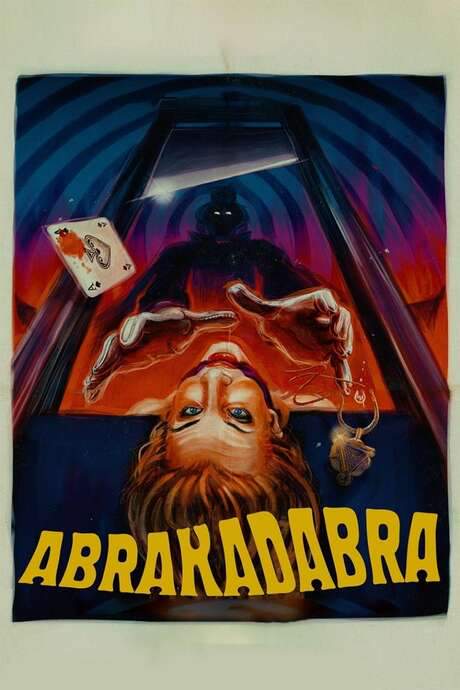
Carmen, Maribel Verdú, is married to Carlos, a rude, emotionally abusive construction worker who barely pays attention to his wife and their teenage daughter. One night, at a wedding, Carlos pretends to offer himself for the act of Carmen’s cousin Pepe, a supermarket security guard and amateur hypnotist, but instead sabotages Pepe’s performance as a prank. The joke backfires in a startling way when Carlos is unexpectedly touched by the hypnosis, briefly holding Pepe at knifepoint while everyone assumes it’s still part of the act.
From the following day, Carlos begins to slip between two personalities: one is the familiar, harsh husband, and the other is a charming, perceptive, almost magnetic version of himself. At first, Carmen is startled by the change, yet she can’t help feeling drawn to the kinder side. Her relief grows as the new persona appears more attentive and capable, but it’s tempered by a creeping suspicion that something sinister lies beneath this transformation when the second personality unleashes sudden, destabilizing bouts of psychosis.
To uncover the truth, Carmen seeks help from Pepe and his hypnotism mentor, Dr. Fumetti. Their investigation reveals a haunting explanation: Carlos possesses latent mediumistic abilities, and the failed hypnosis act opened a channel through which a dead man’s soul can temporarily inhabit him. As they dig deeper, they identify the restless spirit as Alberto “Tito” Cantero, a dancing prodigy who suffered from schizophrenia and murdered his mother before taking his own life in 1983.
The mystery intensifies in a club scene where Carlos, under Tito’s influence, performs with startling grace and energy beside Carmen, the moment underscored by Steve Miller Band’s song “Abracadabra.” Carmen, Pepe, and Dr. Fumetti attempt to lay Tito to rest with a séance conducted through the body of a dying old man, hoping to persuade the spirit to disengage from Carlos. But Tito’s ghost resists, insisting that it is in love with Carmen, and Carmen impulsively resists Dr. Fumetti’s plan to end the haunting by killing the old man, an act that would also destroy Carlos.
Time passes, and the Tito-possessed Carlos becomes increasingly unstable, haunted by disturbing visions of chimpanzees. At his new job as a steward, Tito threatens a wedding with a knife, and only Carmen and Pepe can prevent a catastrophe. To resolve the crisis, Pepe stages a hypnotism act for the guests, using it as a gateway into the depths of Carlos’s mind. Inside this shared mental space, Carmen encounters the separate personifications of Carlos and Tito, each pleading to take over the body, each promising to repair the life he ruined.
Carmen faces a harrowing choice: she navigates between the two, torn between a chance at a rebuilt life with Carlos and the possibility of leaving him behind. In a decisive moment, she chooses to sever Tito’s hold, using the mental knife as a metaphorical strike to send Tito’s presence away. When she awakens, she leaves the restaurant quietly, signaling her decision to abandon Carlos and seek a future free of the volatile cycle that bound them.
Throughout the tale, the film blends domestic tension with supernatural intrigue, painting a portrait of a marriage strained by control, fear, and longing for genuine connection. The storytelling balances moments of dark suspense with intimate character beats, inviting viewers to consider what a person owes to their partner, how memory and trauma shape identity, and whether love can endure or simply transform under pressure. In the end, Carmen’s resolve hints at a hard-won path toward autonomy and a life rebuilt away from the shadow of Carlos’s dual existence, leaving the door open to new beginnings even as the final image lingers on the consequences of the unseen forces that briefly visited their world.