Plot Explained Spoilers guaranteed!
Plot Explained

Browse by genre

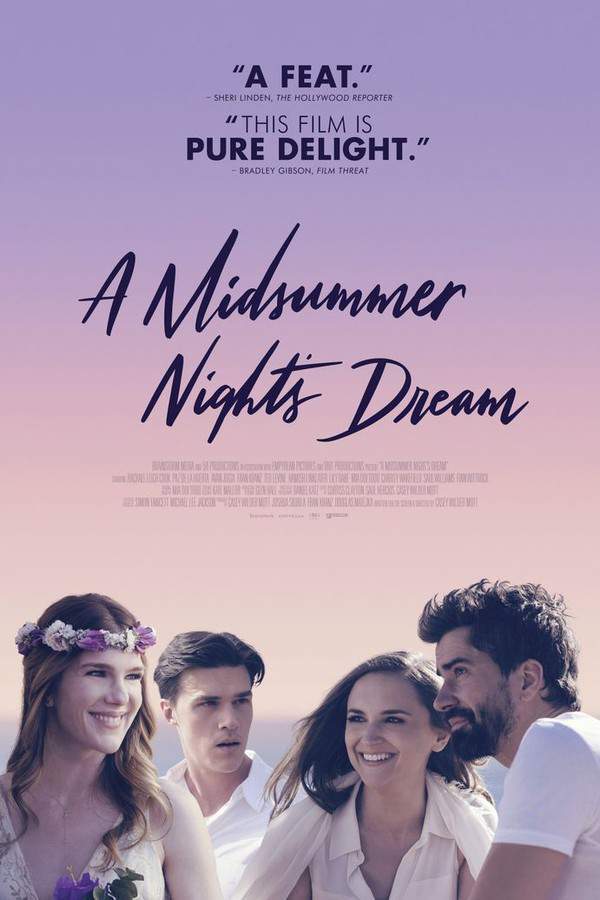
A Midsummer Night’s Dream (1935) movie poster

Timeline

A Midsummer Night’s Dream (1935) Timeline Explained – Every Event in Order

Release, runtime and language
1935 · 143 mins · English
Directed by
Max Reinhardt, William Dieterle
Starring
Mickey Rooney, Olivia de Havilland, Frank McHugh, Victor Jory, Hobart Cavanaugh, Ross Alexander

Based on Shakespeare’s immortal comedy, four Athenian youths flee to a moonlit forest where the fairy king and queen are at odds. In the same wood a group of amateur actors rehearses a play, and mischievous Puck applies a love‑inducing flower, causing tangled romances and comic confusion among mortals and sprites alike.

On this page (5)
  1. 1 Events in order (12)
  2. 2 Timeline questions answered
  3. 3 Movie threads
  4. 4 Movies like A Midsummer Night’s Dream
  5. 5 Every angle

12 events in order · contains spoilers

A Midsummer Night’s Dream Timeline: Events in Chronological Order

Every key event of A Midsummer Night’s Dream (1935) in order, scene by scene, with when and where it takes place. Use it to untangle flashbacks, time jumps and parallel storylines, to refresh your memory before the sequel or to find the exact scene you are thinking of.

  1. Hermia's Dilemma and Theseus's Decree

    At the court of Duke Theseus in Athens, Hermia declares she loves Lysander while her father Egeus demands she marry Demetrius. Theseus upholds the ancient law, offering Hermia the choice of death or a vow of chastity as a nun if she refuses. Hermia and Lysander decide to flee the city to be together.

    When
    Day
    Where
    Athens, Theseus's court
  2. Quince and the Guild of Players Form the Performance

    Peter Quince and his fellow players gather to stage a play about Pyramus and Thisbe to honor the Duke and Hippolyta's forthcoming wedding. Quince assigns roles and Bottom quickly volunteers for multiple characters, despite the others' skepticism. They plan to meet at the Duke's oak tree to rehearse.

    When
    Day
    Where
    Duke Theseus's court / Duke's oak tree
  3. Oberon and Titania's Feud and the Flower

    In the forest, Oberon and Titania are arguing over the custody of a changeling child. Titania refuses to surrender the child, prompting Oberon to enlist his mischievous servant Puck to fetch the love-in-idleness flower. The plan is to use the flower's magic to topple Titania's enchantment and gain leverage over her.

    When
    Night
    Where
    Forest
  4. Titania Enchanted: Falls for Bottom

    Oberon uses a magic flower on Titania's eyes as she sleeps, intending to make her fall in love with the first creature she sees upon waking. When Titania awakens, she is immediately smitten with the ass-headed Bottom. The enchanted pairing disrupts the fairy court's balance as Oberon watches.

    When
    Night
    Where
    Forest
  5. Hermia and Lysander Escape the City

    Hermia and Lysander slip away into the forest to elope, hoping to call off the law's constraints. Demetrius tracks them down, driven by his own love for Hermia, while Helena follows hoping to win back Demetrius's favor. The forest becomes a stage for their pursuit and romantic tensions.

    When
    Night
    Where
    Forest outside Athens
  6. Puck Applies Love Potion to Demetrius

    Oberon sends Puck to apply the love potion to Demetrius's eyes as he sleeps, planning for him to fall in love with Helena. When Demetrius wakes, he is instantly captivated by Helena, creating jealousy and confusion among the would-be lovers.

    When
    Night
    Where
    Forest
  7. Puck Mistakenly Falls Lysander in Love with Helena

    Puck, misreading the situation, anoints Lysander's eyes instead, causing Lysander to fall in love with Helena upon waking. Hermia's plan to be with Lysander collapses as both men pursue Helena, leaving Hermia desperate and confused.

    When
    Night
    Where
    Forest
  8. Helena Encounters the Lovers and the Quarrel

    Helena confronts Hermia and accuses her of stealing Lysander; the four lovers quarrel in the woods as feelings become tangled. The former jealousy escalates as Lysander and Demetrius vow to duel to prove their love for Helena. Puck and Oberon watch, guiding the chaos from the shadows.

    When
    Night
    Where
    Forest
  9. Puck Removes the Enchantment from Lysander

    Oberon instructs Puck to separate Lysander and Demetrius and to remove Lysander's enchantment after some time. When the potion is reversed, Lysander returns to loving Hermia, while Demetrius remains in love with Helena. Titania remains under the spell until Oberon frees her.

    When
    Night
    Where
    Forest
  10. Enchantment Ends and Fairy Mischief Reverses

    Oberon lifts Titania from her spell and the fairy court departs with a blessing on the day’s events. Puck then undoes the donkey enchantment on Bottom, restoring him to himself and ensuring the other lovers awaken believing it was all a dream. The forest settles as magic's mischief cools.

    When
    Night
    Where
    Forest
  11. Return to Athens for the Duke's Wedding

    The lovers awaken and return to Athens to attend Theseus's wedding to Hippolyta. Theseus overrules Egeus and arranges Hermia to Lysander and Helena to Demetrius, affirming the couples' future unions. The city prepares for a celebratory wedding.

    When
    Wedding day
    Where
    Athens
  12. Pyramus and Thisbe and the Epilogue

    The troupe performs Pyramus and Thisbe at the wedding, delivering a performance so imperfect it becomes comedic. After the play, Oberon, Titania, and the fairies bless the house, ensuring good fortune for the newly united couples. Puck closes by hinting that what the audience witnessed might have been only a dream.

    When
    Wedding night
    Where
    Theseus's court

Last updated: October 09, 2025 at 11:16

Was this helpful?

Timeline questions answered

A Midsummer Night’s Dream Timeline Explained: Your Questions Answered

When does it happen, and why in that order? The questions people ask about the chronology of A Midsummer Night’s Dream (1935): time jumps, flashbacks, cause and effect between scenes and the correct order of events, each answered with spoilers.

Q1

Why does Oberon want to enchant Titania?

Oberon is furious because Titania refuses to give him a changeling child from the Indian kingdom that she has been raising. He decides to punish her by making her fall in love with something grotesque, using the love-in-idleness flower to humiliate her into giving up the child.

Foreshadowing: The conflict is introduced early when Oberon and Titania argue in the forest, setting the magical feud in motion.

  • oberon
  • titania
  • changeling
  • magic
  • enchantment
Q2

Why does Puck mistake Lysander for Demetrius?

Puck is not careful in identifying the correct man in the dark forest. When Oberon describes Demetrius, Puck fails to properly distinguish him from Lysander, leading him to apply the love potion to the wrong person and causing the chain of romantic confusion.

Foreshadowing: This mistake stems from Puck's mischief and Oberon's vague instructions in the dimly lit forest.

  • puck
  • lysander
  • demetrius
  • mistake
  • love potion
Q3

Why does Titania fall in love with Bottom?

Oberon squeezes the juice from the love-in-idleness flower onto Titania's eyelids while she sleeps, intending for her to love the first living thing she sees upon waking. When Titania awakens, Bottom is the first creature she encounters, and the magic forces her to fall hopelessly in love with him despite his donkey head.

Foreshadowing: Oberon explicitly tells Puck he will make Titania love the first thing she sees.

  • titania
  • bottom
  • donkey
  • magic love spell
  • enchantment
Q4

Why do both Lysander and Demetrius end up loving Helena?

Puck first mistakenly applies the love potion to Lysander, making him abandon Hermia for Helena. Then, following Oberon's direct order, Puck applies the potion to Demetrius as well. The result is that both men are magically compelled to pursue Helena, leaving both women confused and angry.

Foreshadowing: Oberon orders Puck to also enchant Demetrius so he will love Helena, not knowing Lysander is already affected.

  • lysander
  • demetrius
  • helena
  • love potion
  • enchantment
Q5

Why does Theseus allow Hermia to marry Lysander?

When the lovers return to Athens, Theseus discovers that both Hermia and Lysander love each other, while Demetrius now loves Helena. Theseus exercises his duke's authority to override Egeus's demand that Hermia marry Demetrius, instead granting permission for Hermia to wed Lysander and pairing Helena with Demetrius.

Foreshadowing: Theseus's decree in Act 1 sets up the conflict, but his eventual mercy allows the resolution.

  • theseus
  • hermia
  • lysender
  • marriage
  • duke
  • egeus
Q6

Why is Lysander's enchantment removed but Demetrius remains under the spell?

Oberon only orders Puck to remove the enchantment from Lysander, believing that once Demetrius truly sees Helena, he will love her naturally without the magical aid. This leaves Demetrius still under the flower's influence while Lysander returns to his genuine love for Hermia.

Foreshadowing: Oberon instructs Puck to free Lysander after the lovers are separated and the confusion peaks.

  • lysander
  • demetrius
  • enchantment removed
  • love potion
Q7

Why is Bottom transformed into a donkey?

Puck transforms Bottom into a donkey as part of his mischievous pranks on the amateur actors wandering in the forest. This transformation serves both as comic relief and as the mechanism that allows Titania to fall in love with him when she awakens to see the donkey-headed figure.

Foreshadowing: Puck's playful nature is established early when he causes trouble for the actors.

  • bottom
  • donkey
  • puck
  • transformation
  • mechanical actor
Q8

What is the changeling child that Oberon wants?

The changeling is a human child from the kingdom of India who was stolen and placed in the fairy realm. Both Oberon and Titania want custody of the child, Oberon intends to make the child his attendant, while Titania has been raising the boy as her own. Their dispute over this child is the root of their marital conflict.

Foreshadowing: Titania's refusal to give up the child directly triggers Oberon's plan for revenge.

  • changeling
  • child
  • oberon
  • titania
  • fairy kingdom
Q9

Why do the lovers wake up thinking everything was a dream?

The magic has been fully reversed by morning, and the enchantments are lifted. When the lovers awaken in the forest, they have only vague, dreamlike memories of the night's events. Puck's epilogue confirms the magical nature of what occurred, leaving the humans to believe it was all a fevered dream.

Foreshadowing: Puck explicitly works to put everything back to rights before dawn.

  • dream
  • waking
  • enchantment
  • memory
  • morning
Q10

Why does Hermia accuse Helena of stealing Lysander?

When Lysander suddenly declares his love for Helena under the flower's spell, Hermia is devastated and cannot understand the sudden change. Believing Helena must have used some trick or potion to steal her lover, Hermia confronts her friend in anger, not realizing the magical cause of Lysander's behavior.

Foreshadowing: The sudden reversal of Lysander's affection directly leads to this conflict.

  • hermia
  • helena
  • lysander
  • accusation
  • quarrel
Q11

Why does the love potion work when applied to someone's eyes?

The love-in-idleness flower was cursed by Cupid, granting its pollen the magical power to make whoever smells it or has it touched to their eyes fall deeply in love with the first creature they see. When Puck anoints Lysander's eyes with the flower's juice, the magic takes effect as soon as Lysander awakens and sees Helena.

Foreshadowing: Oberon explains the flower's origin and powers when he instructs Puck to use it.

  • love potion
  • flower
  • magic
  • cupid
  • eyes
Q12

Why does Oberon bless the couples at the end?

After resolving the changeling dispute and correcting the magical chaos, Oberon and Titania reconcile their marriage. As a gesture of goodwill, Oberon blesses the newly married couples in Athens, ensuring their unions will be happy. This blessing represents the restoration of harmony in both the fairy and human worlds.

Foreshadowing: The reconciliation between Oberon and Titania directly precedes the blessing.

  • oberon
  • blessing
  • fairy
  • wedding
  • reconciliation

Movie threads

More Movies Like A Midsummer Night’s Dream, by Mood & Story

Curated lists built around what makes A Midsummer Night’s Dream tick: the same mood, the same kind of story or the same emotional payoff. Each list explains why these movies belong together.

Magical Mix-up Comedies like A Midsummer Night's Dream

Stories where enchantments cause delightful chaos in love and identity. Explore movies like A Midsummer Night's Dream where magical interference leads to whimsical chaos. If you enjoyed the playful romantic confusion caused by Puck's spells, you'll love these enchanting stories of mistaken identity and humorous transformations with happy resolutions.

  • whimsical
  • magical
  • comic
  • playful
  • enchanted
  • lighthearted
  • Tone: whimsical, light, playful
  • Pacing: variable, energetic
Why these movies?

The story pattern: The narrative pattern involves a magical catalyst—a spell, a potion, or a fantastical rule—that disrupts the normal social or romantic order. Characters find their affections magically altered or their identities confused, leading to a series of comic misunderstandings. The plot revolves around unraveling the enchantment, often culminating in a joyful restoration of order where true love prevails.

Why they belong together: Movies are grouped here based on their shared use of lighthearted magic as a central plot device for comedy. They feature a playful tone, medium intensity focused on romantic or social stakes, and a happy ending where the magical chaos is resolved for the better.
Fantasy Romance in Enchanted Worlds like A Midsummer Night's Dream

Romantic stories set within a magical, dreamlike world of fairies and spells. Discover films similar to A Midsummer Night's Dream that feature love stories within a magical fairy tale setting. If you liked the interplay between mortal lovers and the fairy court in an enchanted forest, you'll enjoy these romantic fantasies set in dreamlike, spellbound worlds.

  • dreamlike
  • magical
  • enchanted
  • romantic
  • whimsical
  • fairy tale
  • Tone: dreamlike, romantic, whimsical
  • Pacing: variable, immersive
Why these movies?

The story pattern: The narrative journey takes place primarily within a distinct magical world that operates by its own logic. This setting is not just a backdrop but an active participant in the story, often through the actions of its magical inhabitants. Romantic plots between human (or human-like) characters are directly influenced by the politics, magic, and whims of this realm, creating a unique blend of personal drama and fantasy.

Why they belong together: This thread groups movies based on the central role of an enchanted world in shaping a lighthearted romantic plot. They share a dreamlike and whimsical mood, a focus on romantic themes, and a tone that is more playful than dark, creating a captivating and escapist experience.

If you liked this

Movies Like A Midsummer Night’s Dream

Similar movies to A Midsummer Night’s Dream: the same genre, themes or kind of story. Each one comes with its own plot summary, timeline and ending explained.

Browse all movie summaries

Every angle

A Midsummer Night’s Dream (1935) Explained: Plot, Timeline & Characters

Everything about A Midsummer Night’s Dream in one place: what happens in the plot summary, the timeline in chronological order, the characters and meaning and a spoiler-free summary. What's After the Movie adds the cast, box office and post-credit scenes.

Coming soon on iOS and Android

The Plot Explained Movie Summary App

Plot summaries, endings explained and timelines on your phone. Catch up on any movie in minutes, save your favorites and never miss a twist again.

Be the first to know when we launch. Your email stays private, always.

Learn more about the app