Plot Explained Spoilers guaranteed!
Plot Explained

Browse by genre

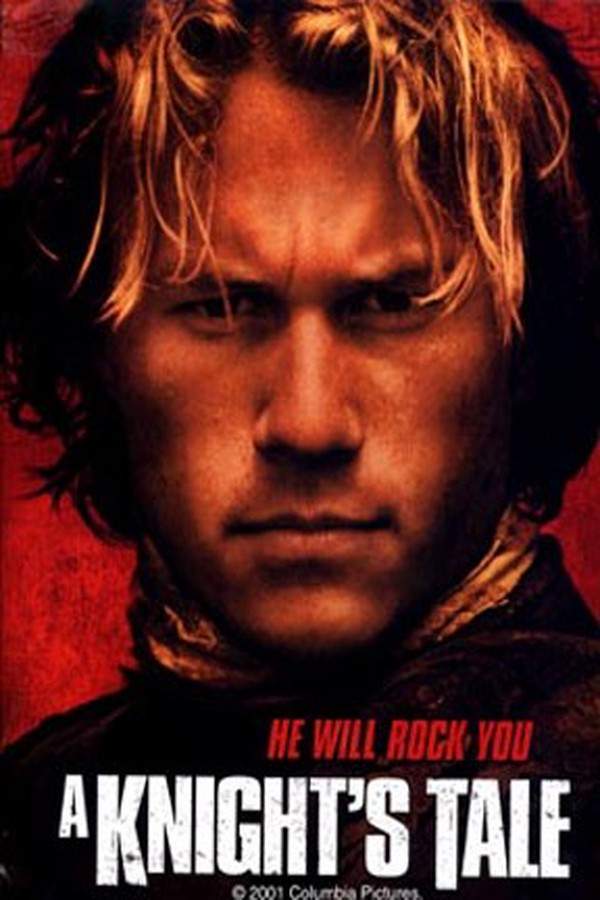
A Knight's Tale (2001) movie poster

Plot Summary

A Knight's Tale (2001) Plot Summary Explained

Release, runtime and language
2001 · 132 min · English
JustWatch #635 184
Directed by
Brian Helgeland
Starring
Heath Ledger, Mark Addy
Budget
$65M

In medieval Europe, a spirited young man assumes the identity of a knight to compete in jousting tournaments, hoping to rise above his humble beginnings. He achieves unexpected success, captivating audiences and earning the affection of a noblewoman. However, his deception is threatened with exposure, forcing him to face the repercussions of his actions and fight for the woman he loves, even if she questions his true identity.

On this page (6)
  1. 1 Where to watch
  2. 2 What happens: full plot
  3. 3 Plot questions answered
  4. 4 Movie threads
  5. 5 Movies like A Knight's Tale
  6. 6 Every angle

Where to watch

Where to Watch A Knight's Tale (2001)

Where can you watch A Knight's Tale? Stream, rent or buy it in the US, including on YouTube TV, YouTube Free and Amazon Video: current JustWatch availability with up-to-date prices.

Streaming availability powered by JustWatch

Full plot summary · contains spoilers

What Happens in A Knight's Tale: Full Plot Summary

The whole story of A Knight's Tale (2001) explained, from the opening scene to the final frame: every key event, every twist and what it all adds up to. Read it as a quick recap before the sequel, to check a scene you missed, or to finally understand what really happened.

In the backdrop of a 14th-century European jousting tournament, three impoverished squires—William Thatcher, Roland, and Wat—find themselves grappling with the unexpected death of their master, Sir Ector. Their fate shifts dramatically when William, driven by sheer determination and a hint of audacity, dons the armor of his deceased lord to achieve triumph in the tournament, thus securing a prize that had previously seemed unattainable.

As time progresses, William becomes infatuated with the idea of contending against nobility, despite the stringent regulations that bar commoners from such tournaments. In contrast, his companions focus on cashing in on their newfound fortune and leaving the scene. Undeterred, William persuades Roland and Wat to remain and assist in polishing his skills, motivated by an intense desire to affirm his place among the elite.

Their adventure takes a surprising turn when they meet the down-and-out Geoffrey Chaucer, who agrees to forge a patent of nobility for William, allowing him to masquerade as Sir Ulrich von Liechtenstein from Gelderland. However, this deal bears a heavy burden, as Chaucer owes debts to Simon the Summoner and Peter the Pardoner, and William pledges to clear these obligations.

As the tournament progresses, William's armor experiences considerable wear and tear; in a display of his resourcefulness, he convinces Kate, a talented blacksmith, to repair it free of charge, further enhancing his reputation as a crafty and capable competitor. His success in the sword event enables him to alleviate Chaucer's debts, while his impressive jousting skills earn him a place in the final round of the tournament.

The event draws the attention of Jocelyn, a noblewoman who has caught William's eye, along with Count Adhemar of Anjou, who similarly vies for her affections. Although Adhemar initially gains the upper hand, William pledges to avenge his defeat, only to be met with the scornful words: > "You have been weighed, you have been measured, and you have been found wanting."

As Kate joins William's entourage, she crafts him lightweight armor, setting the stage for future victories. In the subsequent tournament, both William and Adhemar find themselves matched against Sir Thomas Colville, only to realize that their opponent is none other than Prince Edward, the heir to the English throne. While Adhemar opts to withdraw to avoid harming the prince, William decides to joust, earning Edward's respect for his bravery.

With Adhemar called away to battle, William seizes the moment to establish his prowess, notching numerous victories during Adhemar's absence. In a testament to his loyalty, William initially agrees to Jocelyn's request to lose deliberately; however, he ultimately resolves to win in her name, solidifying his love for her.

Upon arriving in London for the World Championship, a reflective flashback reveals William's humble origins, showcasing his choice to leave his father in pursuit of training alongside Sir Ector to reshape his destiny. Meanwhile, Adhemar reveals his scheming nature by announcing that he has arranged to marry Jocelyn with her father's approval. Despite William's remarkable performance at the tournament, he finds himself facing internal turmoil as he clandestinely visits his now-blind father, reopening old wounds.

As jealousy and deceit fuel Adhemar's actions, he alerts authorities to William's true identity, resulting in his swift capture and public humiliation in the pillory. Yet, William’s friends rally to support him, defending their champion against the enraged mob. Just as the situation reaches a boiling point, Prince Edward intervenes, recognizing William's unyielding honor and commitment to the ideals of knighthood.

Edward then dismantles the misconceptions surrounding William's heritage, declaring him a descendant of an ancient noble line. With this upheld revelation, he knights William as "Sir William," asserting that his status is indisputable as the Prince-royal. Following this dramatic twist, William returns to the tournament to confront Adhemar in a climactic showdown.

In a distressing turn of events, Adhemar resorts to underhanded tactics, utilizing an illegally sharpened lance to severely injure William. As his strength wanes and injuries accumulate, William must dig deep for every ounce of resilience to unseat Adhemar in a desperate attempt for victory. He requests a moment to disrobe from his armor, which leads Chaucer to provide a long-awaited introduction, setting the stage for this final confrontation.

As William charges during the climactic pass, he envisions his father and Jocelyn anxiously watching from the stands. Drawing strength from their presence, he secures Wat's help to fasten the lance to his arm, preparing for one momentous clash against Adhemar. In a surge of fierce determination, William calls out his true name as he rides forward, delivering a punishing blow that sends Adhemar crashing to the ground.

In the aftermath of this glorious victory, William and Jocelyn share an emotional embrace, celebrating amidst a jubilant crowd. In the midst of this victory, Chaucer reflects on the prospect of documenting their saga, heralding the dawn of an unforgettable chapter in their lives.
Last updated: November 19, 2024 at 20:44

Was this helpful?

Plot questions answered

A Knight's Tale Plot Explained: Your Questions Answered

The questions people ask most about A Knight's Tale (2001): what happens in the confusing scenes, why the characters do what they do, the twists, hidden details and what the ending means. Each answer contains spoilers.

Q1

Why does William pretend to be a knight?

After his master Sir Ector dies, William sees an opportunity to change his fate. As a commoner, he is legally barred from competing in jousting tournaments, but by donning his deceased master's armor and identity, he can enter the competitions and potentially win the prize money that would lift him out of poverty.

Foreshadowing: Early scenes show William watching the tournaments with longing, establishing his dream of competing among nobility.

  • william thatcher
  • sir ector
  • knight identity
  • deception
  • commoner jousting
Q2

How does William get away with posing as a noble?

William meets Geoffrey Chaucer, who forges a patent of nobility that allows William to masquerade as Sir Ulrich von Liechtenstein from Gelderland. This fake lineage permits him to enter tournaments legally, though the deception carries the constant risk of exposure.

Foreshadowing: Chaucer's reputation as a writer suggests he's skilled at creating believable documents and stories.
  • geoffrey chaucer
  • patent of nobility
  • sir ulrich von liechtenstein
  • fake identity
  • forgery
Q3

What does the "weighed, measured, found wanting" scene mean?

This is a direct reference to the biblical story of Belshazzar's feast. After William is defeated by Count Adhemar, Jocelyn repeats this phrase to tell William he has been judged and found inferior. It functions as a taunt, suggesting he lacks the qualities of true nobility.

Foreshadowing: The phrase foreshadows the later revelation about William's noble bloodline, which ultimately reverses this judgment.

  • adhemar
  • jocelyn
  • weighed measured found wanting
  • biblical reference
  • taunt
Q4

Why does Prince Edward help William?

Prince Edward sees William joust honorably against him despite knowing his royal identity, choosing bravery over the prudent choice to withdraw. Edward respects this courage and later intervenes when William's true identity is exposed, declaring that William is descended from an ancient noble line and knighting him as "Sir William."

Foreshadowing: During their match, Edward notes William's unusual bravery, setting up his later intervention.

  • prince edward
  • sir thomas colville
  • knighted
  • royal intervention
  • honor
Q5

Why does Adhemar betray William?

Adhemar is motivated by jealousy, both for Jocelyn's affection and for his status as the top jouster. When William threatens his position and wins Jocelyn's heart, Adhemar reveals William's true identity to the authorities, hoping to destroy his rival completely.

Foreshadowing: Adhemar's early rivalry with William and his initial advantage in winning Jocelyn's attention establish his competitive nature.

  • count adhemar
  • jealousy
  • betrayal
  • jocelyn
  • rivalry
Q6

What happens when William's true identity is revealed?

William is captured and publicly humiliated in the pillory. A mob turns against him, but his friends Roland, Wat, and Kate defend him. The situation escalates until Prince Edward intervenes, revealing William's noble lineage and personally knighting him, which restores his honor and allows him to continue competing.

Foreshadowing: The pillory scene mirrors earlier moments of public scrutiny and tests the loyalty of William's companions.

  • pillory
  • public humiliation
  • capture
  • prince edward intervention
  • arrested
Q7

How does William win the final joust against Adhemar?

Despite being severely injured from Adhemar's illegal sharpened lance, William finds the strength to continue. With help from Wat fastening the lance to his arm, William calls out his true name as he charges and delivers a decisive blow that unseats Adhemar, winning the tournament.

Foreshadowing: Earlier training scenes and William's determination to win in Jocelyn's name build toward this moment of perseverance.

  • final joust
  • adhemar
  • sharpened lance
  • victory
  • wat helps
Q8

Why does William shout his real name during the final joust?

William deliberately reveals his true identity, William Thatcher, while charging at Adhemar. This act represents his acceptance of who he truly is rather than hiding behind a false noble identity. By declaring his humble origins at the climactic moment, he proves his honor comes from within, not from noble lineage.

Foreshadowing: William's earlier decision to win rather than deliberately lose for Jocelyn shows his commitment to authenticity.

  • william thatcher
  • true name
  • identity declaration
  • final charge
  • authenticity
Q9

Does Jocelyn find out William is actually a commoner?

The film does not explicitly show Jocelyn learning that William began as a commoner squire rather than a knight. However, she witnesses his public humiliation and subsequent knighting by Prince Edward, which confirms his noble lineage according to the prince's proclamation. Their reunion suggests she accepts him regardless of his origins.

Foreshadowing: Jocelyn's earlier affection for William seems based on his character rather than his title, setting up this ambiguity.

  • jocelyn
  • knows truth
  • acceptance
  • love
  • commoner
Q10

Why is William's father blind?

William's father appears blind when William secretly visits him in London. The film implies this is due to the passage of time and possibly hardship, though it is not explicitly explained. The blindness adds emotional weight to their relationship, as William's father cannot see his son compete but clearly recognizes his voice and voice of determination.

Foreshadowing: William's flashback to leaving his father to train with Sir Ector establishes the emotional sacrifice he made.

  • william father
  • blind
  • london visit
  • emotional scene
  • origins
Q11

What does Geoffrey Chaucer do for William?

Chaucer serves as William's ticket to legitimacy by forging the patent of nobility. In exchange, William agrees to help clear Chaucer's debts to dangerous figures Simon the Summoner and Peter the Pardoner. Chaucer also provides commentary and narration, and eventually writes about William's adventures.

Foreshadowing: Chaucer's initial desperation to earn money and his skills as a storyteller foreshadow his later literary legacy.

  • geoffrey chaucer
  • forger
  • debts
  • narrator
  • patent of nobility
Q12

Why does Prince Edward compete as Sir Thomas Colville?

Prince Edward disguises himself as Sir Thomas Colville to compete in tournaments anonymously, seeking the thrill of fair competition without the constraints of his royal status. When both Adhemar and William face him, Adhemar withdraws to avoid harming royalty, while William continues, earning Edward's respect.

Foreshadowing: This subplot establishes Edward's character as someone who values honor and bravery over political caution.

  • prince edward
  • sir thomas colville
  • disguise
  • anonymous competition
  • royal

Movie threads

More Movies Like A Knight's Tale, by Mood & Story

Curated lists built around what makes A Knight's Tale tick: the same mood, the same kind of story or the same emotional payoff. Each list explains why these movies belong together.

Celebratory Underdog Stories like A Knight's Tale

Spirited heroes rise from humble origins to achieve improbable victories. If you loved watching William's rise in A Knight's Tale, this section features movies with similar triumphant underdog arcs. Discover other stories where spirited heroes defy their station through talent and tenacity, leading to exhilarating victories and crowd-pleasing finales.

  • uplifting
  • triumphant
  • energetic
  • determined
  • crowd-pleasing
  • anxious
  • Tone: hopeful, triumphant
  • Pacing: fast, propulsive
Why these movies?

The story pattern: These narratives follow a classic hero's journey where a protagonist of low status dares to enter a world reserved for their betters. They face skepticism, rivalry, and the constant threat of exposure, but their genuine skill and heart win over allies and audiences, culminating in a definitive, triumphant victory that validates their merit over their birthright.

Why they belong together: Movies in this thread share a core emotional engine: the exhilarating joy of rooting for an underdog. They mix high-energy action with heartfelt character journeys, maintaining a hopeful tone even when the stakes are high, and ultimately deliver a satisfying, triumphant conclusion that feels earned.

Energetic Period Adventures like A Knight's Tale

Period settings energized with contemporary spirit, humor, and romance. For fans of the modern energy A Knight's Tale brought to the Middle Ages, this collection highlights similar movies. Find period adventures that feel fresh and contemporary, blending historical settings with fast pacing, an uplifting tone, and a focus on exciting action and romantic storylines.

  • energetic
  • romantic
  • adventurous
  • uplifting
  • anachronistic
  • lighthearted
  • Tone: hopeful, energetic
  • Pacing: fast, dynamic
Why these movies?

The story pattern: These stories are set in the past but prioritize entertainment and emotional engagement over historical accuracy. They often feature protagonists with modern attitudes, anachronistic soundtracks, and a fast-paced plot structure more common in today's cinema. The central conflict is typically personal—a romantic pursuit, a quest for glory, or a challenge to tradition—resolved in a broadly satisfying, uplifting way.

Why they belong together: These films are grouped by their unique vibe: they transport you to another time but make it feel thrillingly present. They share a high-energy, optimistic feel, mixing swashbuckling action with heartfelt romance and a soundtrack or sensibility that bridges the gap between then and now, creating a uniquely fun and accessible historical experience.

If you liked this

Movies Like A Knight's Tale

Similar movies to A Knight's Tale: the same genre, themes or kind of story. Each one comes with its own plot summary, timeline and ending explained.

Browse all movie summaries

Every angle

A Knight's Tale (2001) Explained: Plot, Timeline & Characters

Everything about A Knight's Tale in one place: what happens in the plot summary, the timeline in chronological order, the characters and meaning and a spoiler-free summary. What's After the Movie adds the cast, box office and post-credit scenes.

Coming soon on iOS and Android

The Plot Explained Movie Summary App

Plot summaries, endings explained and timelines on your phone. Catch up on any movie in minutes, save your favorites and never miss a twist again.

Be the first to know when we launch. Your email stays private, always.

Learn more about the app