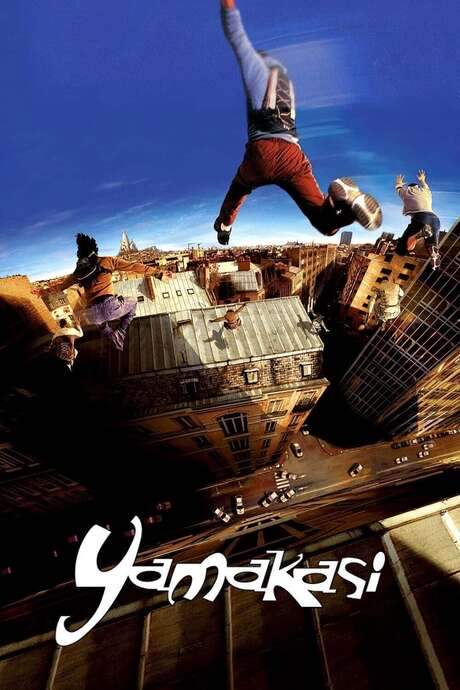
In a colorful, tight-knit corner of France’s banlieue, a diverse group of young thrill-seekers train hard in parkour, turning the city into their playground. They move with astonishing speed and precision, turning walls and rooftops into stages for expression. Their goal is clear: enjoy the sport, stay clean, and gain recognition through skill and grace rather than drugs or crime. Early on, the film introduces the group’s members by birth name and alias—the famous lineup includes Zicmu, Tango, Rocket, the Spider, Baseball, and Sitting Bull—a bold declaration of their identity and unity, and a reminder that each keeps a personal history as part of the crew’s story. The atmosphere is confident but aware, as they practice their gravity-defying routines with joy and discipline.
One morning, their playful ascent takes on a more public edge when they’re observed buildering on the east side of the Bleuets building, deftly eluding the police after the moment. This act, while exhilarating, puts them squarely under scrutiny from the local authorities. The chief of police views them as reckless and potentially criminal, a danger to themselves and to others who might imitate their stunts. Yet Inspector Vincent [maher-kamoun] is sympathetic to their plight, arguing that the real risk lies in young people hurting themselves if they imitate dangerous feats rather than in the youths themselves.
In the midst of this tension, a boy named Djamel enters the story—a little boy with an inborn cardiovascular disease who collapses after attempting to join a climb. His condition becomes an urgent crisis: he needs an immediate heart transplant to survive. The head physician bluntly states that the only way to save him is to obtain a heart from a broker, a grim option that insurance won’t cover and which would require a payment of 400,000 Francs within 24 hours.
Moved by Djamel’s plight, Djamel’s mother and elder sister, Aila, rally whatever they can from family and friends. The Yamakasi themselves visit Djamel in the hospital, offering training and companionship as a way to keep hope alive while they search for a way to save him. They press the head physician to question the board of directors and challenge the idea that poverty should condemn a child to die. When the physician refuses to escalate the issue, the Yamakasi decide to take matters into their own hands, borrowing from the Robin Hood playbook they admire and stealing the hospital board’s list to strike a deal that could save Djamel’s life.
Dividing into three groups, they begin raiding the board’s houses to gather the funds needed. The first two robberies succeed, but one group is forced to retreat when they’re chased by Dobermans and captured on camera. The police quickly realize the board is being targeted, but their attempts to catch the Yamakasi in subsequent robberies fail. The trio ultimately converges on the mansion of the board’s head. As the stakes rise, the police close in, but the group manages to haul all the loot into a single bag and toss it to Michelin, Michelin, who sells the loot to raise the money needed for Djamel’s heart transplant.
The Yamakasi are then brought in for questioning. The investigator doubts the audacity of their story, but Inspector Vincent’s cousin, Sitting Bull, lends credibility to their account and supports their version of events, leaving the investigator with little choice but to release them. They race to the hospital just as the head physician attempts to demand a higher price at gunpoint. Thanks to the intervention of Asmine—with his intimate connection to the crew—the hospital agrees to proceed with the surgery at the price the group can pay, rather than at the extortionist level.
Djamel’s operation is a success, and his recovery marks a turning point for everyone involved. The Yamakasi celebrate with Djamel and with Inspector Vincent Asmine, who has since stepped back from police work. As the credits begin to roll, the group speaks to the camera about the joy of Djamel’s recovery and their vow to train him, fully integrated, so that one day he can become part of their circle of parkour and brotherhood. The film closes on a hopeful note, emphasizing resilience, community, and the quiet power of doing good through sport.