






Plot Explained Spoilers guaranteed!
Plot Explained

Browse by genre

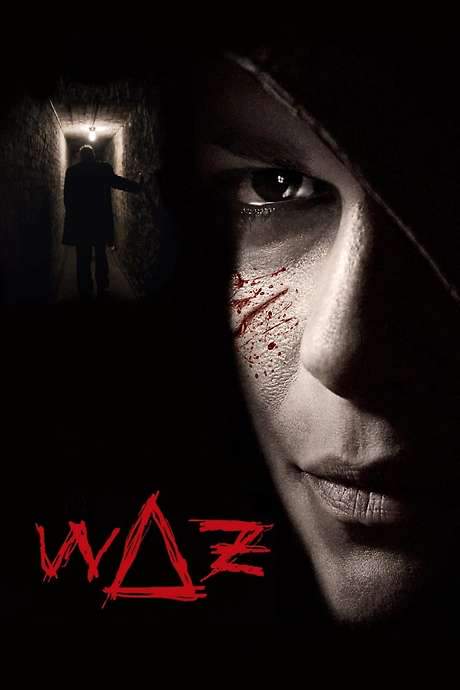
WΔZ (2007) movie poster

Timeline

WΔZ (2007) Timeline Explained – Every Event in Order

Release, runtime and language
2007 · 104 mins · English
Directed by
Tom Shankland
Starring
Stellan Skarsgård, Tom Hardy, Sally Hawkins, Selma Blair, Paul Kaye, Melissa George

A series of murders haunts the city: victims are found mutilated, some bearing the Price equation wΔz = Cov(w,z) = βwzVz carved into their flesh. Detectives Eddie Argo and his new partner Helen Westcott learn that each killer forces victims to choose between killing a loved one or being killed themselves. As the case unfolds, they realize the perpetrator, tormented by the same impossible choice, is seeking a way out of this philosophical nightmare.

On this page (6)
  1. 1 Where to watch
  2. 2 Events in order (12)
  3. 3 Timeline questions answered
  4. 4 Movie threads
  5. 5 Movies like WΔZ
  6. 6 Every angle

Where to watch

Where to Watch WΔZ (2007)

Where can you watch WΔZ? Stream, rent or buy it in the US, including on Amazon Video, Apple TV Store and Fandango At Home: current JustWatch availability with up-to-date prices.

Streaming availability powered by JustWatch

12 events in order · contains spoilers

WΔZ Timeline: Events in Chronological Order

Every key event of WΔZ (2007) in order, scene by scene, with when and where it takes place. Use it to untangle flashbacks, time jumps and parallel storylines, to refresh your memory before the sequel or to find the exact scene you are thinking of.

  1. Rain-soaked New York sets the stage for murder investigation

    On a rain-soaked night in New York, Detective Eddie Argo teams up with his new partner, Helen Westcott. They are drawn into a string of gruesome killings that grip the metropolis. The mood is tense as their uneasy partnership becomes the backbone of the investigation.

    Where
    New York City
  2. First victim bears the signature Price equation

    Officers discover the killer's signature: the Price equation carved into the chest of the first victim. The cryptic inscription functions as a cruel puzzle the detectives must solve. They sense the murders are methodically planned rather than random, signaling a larger design.

    Where
    New York City
  3. Decoding the cryptic equation

    Argo and Westcott dig into the equation wΔz = Cov (w,z) = βwzVz, treating it as more than a symbol. The math reveals a hidden moral test embedded in each crime. The investigation shifts from forensics to philosophy as numbers hint at ethical stakes.

    Where
    New York City
  4. Moral dilemma shadows the victims

    They learn that each victim faced a choice: kill their loved ones or die themselves. These deadly tests transform murders into existential trials. Fear and guilt spread through the city as the pattern becomes clear.

    Where
    New York City
  5. Personal tragedy fuels the killer's motive

    The investigation reveals a profound personal tragedy behind the killer's acts. Her philosophy centers on forcing others to confront their own suffering. The motive is framed as existential, challenging conventional notions of justice.

    Where
    New York City
  6. Killer's identity linked to Selma Blair's portrayal

    As evidence accumulates, the detectives connect the murders to a single perpetrator portrayed by Selma Blair. Her past trauma surfaces as the catalyst, reinforcing the moral tests she imposes. The pursuit intensifies as investigators trace her movements through the city.

    Where
    New York City
  7. Existential philosophy behind the crimes

    Investigators conclude the motive rests in questions of meaning, guilt, and choice under suffering. The Price equation becomes a metaphor for moral calculus used to manipulate others. By forcing ethical dilemmas, the killer seeks to reveal humanity's true nature.

    Where
    New York City
  8. Detectives confront their own ethics

    Argo and Westcott grapple with the implications of the killer's tests. They must decide where justice ends and cruelty begins. The case strains their partnership as time pressure mounts.

    Where
    New York City
  9. Connecting the victims' fates

    The detectives map relationships among victims and the killer's past. This network of links clarifies how each test was tailored to a specific person. The pattern intensifies the sense that a final, decisive act is imminent.

    Where
    New York City
  10. Climactic confrontation looms

    A tense confrontation with the killer escalates as authorities race to prevent another murder. The city braces for a moment of truth, where philosophical questions collide with real danger. All leads converge, heightening the suspense toward a possible arrest or showdown.

    Where
    New York City
  11. Aftermath and reflection

    With the immediate danger contained, Argo and Westcott reflect on the moral tests that haunted the case. The Price equation lingers as a haunting reminder of ethical choice and culpability. Justice, punishment, and the meaning of suffering linger in their minds.

    Where
    New York City
  12. Impact on New York's psyche

    News of the investigation echoes through the metropolis, leaving residents wary of moral claims. Rain-soaked streets and unanswered questions become symbols of the case's deeper questions. The detectives' work reshapes how crime, guilt, and accountability are perceived in the city.

    Where
    New York City

Last updated: February 20, 2026 at 12:14

Was this helpful?

Timeline questions answered

WΔZ Timeline Explained: Your Questions Answered

When does it happen, and why in that order? The questions people ask about the chronology of WΔZ (2007): time jumps, flashbacks, cause and effect between scenes and the correct order of events, each answered with spoilers.

Q1

What does the Price equation carved into victims represent?

The Price equation (wΔz = Cov(w,z) = βwzVz) is a mathematical formula from evolutionary biology that describes how traits change across generations. In the film, the killer uses it as a philosophical metaphor to frame her murders as a moral experiment, suggesting that human behavior and ethical choices can be reduced to a calculation of costs and benefits.

Foreshadowing: The cryptic equation appears on the first victim, signaling from the start that this is not a random serial killing but a calculated philosophical statement.

  • price equation
  • mathematical formula
  • killer signature
  • cryptic message
  • ethics calculation
Q2

What impossible choice does the killer force victims to make?

Each victim is presented with a deadly dilemma: they must either kill someone they love to save themselves, or be killed by the killer. This forces every victim to confront their own willingness to sacrifice a loved one for personal survival, testing the limits of moral commitment under extreme pressure.

Foreshadowing: The investigators learn of this pattern only after discovering multiple victims, realizing the murders are not random but specifically designed ethical traps.

  • forced choice
  • sacrifice
  • loved one
  • killing dilemma
  • moral test
Q3

Who is Jean Lerner and what drives her to kill?

Jean Lerner, portrayed by Selma Blair, is revealed to be the perpetrator. Her motive stems from profound personal tragedy that mirrors the very ethical dilemmas she imposes on her victims. She forces others to experience the same impossible choice she faced, seeking to expose what she sees as the hypocrisy of human moral claims under suffering.

Foreshadowing: The investigation reveals her past trauma surfaces as the investigation deepens, with each crime scene designed to reflect her inner torment.

  • selma blair
  • killer identity
  • personal tragedy
  • motive
  • trauma
Q4

How do the detectives unravel the murder pattern?

Eddie Argo and Helen Westcott begin as an uneasy partnership but gradually decode the pattern by treating the Price equation as more than a symbol. They realize the murders are methodically planned philosophical experiments rather than random violence, shifting their investigation from forensics to understanding the killer's ethical framework.

Foreshadowing: Their partnership evolves as they piece together clues, with each discovery revealing a more disturbing pattern of calculated ethical tests.

  • eddie argo
  • helen westcott
  • investigation
  • detectives
  • crime solving
Q5

How are the victims connected to each other and the killer?

The detectives map relationships among victims and discover each test was tailored to a specific person. The victims are not random strangers but individuals the killer has selected to face their particular moral dilemma, creating a network of connections that clarifies how the killer chose each target based on their personal relationships.

Foreshadowing: Early victims seem unrelated, but as the investigation progresses, the detectives uncover the deliberate pattern of selection.

  • victim connections
  • target selection
  • relationships
  • pattern
  • network
Q6

What is the killer ultimately seeking through her crimes?

The killer is searching for a way out of what the film describes as a philosophical nightmare, an existential trap of her own making. By forcing others to confront the same impossible choice she faced, she hopes to either find redemption, prove her worldview correct, or force society to acknowledge the futility of moral certainty under extreme circumstances.

Foreshadowing: Her crimes are framed not as random violence but as a desperate attempt to resolve an unsolvable personal dilemma.

  • escape
  • philosophical nightmare
  • redemption
  • impossible choice
  • existential motive
Q7

How do the detectives respond to the moral questions the case raises?

Argo and Westcott grapple with the implications of the killer's tests, forced to confront where justice ends and cruelty begins. The case strains their partnership as they debate the ethics of their own pursuit, with each detective questioning whether capturing the killer constitutes true justice or simply ends one form of suffering to begin another.

Foreshadowing: Their disagreements become more pronounced as the investigation reveals the deeper philosophical stakes of the case.

  • detectives ethics
  • justice vs cruelty
  • moral dilemma
  • partnership strain
  • philosophical questions
Q8

What happens in the final confrontation with the killer?

A tense confrontation escalates as authorities race to prevent another murder, with all leads converging toward a showdown. The climax forces a resolution where the philosophical questions collide with real danger, though the summary implies a bleak ending that offers no easy answers to the ethical dilemmas raised throughout the film.

Foreshadowing: The buildup suggests a decisive moment where the killer's philosophy will be either validated or destroyed.

  • final confrontation
  • climax
  • showdown
  • arrest
  • confrontation
Q9

How does the Price equation connect to the film's central theme?

The equation serves as a metaphor for moral calculus, suggesting human choices can be reduced to calculations of fitness and cost. The killer uses this framework to justify her experiments, arguing that under sufficient pressure, people's proclaimed moral values collapse into self-preservation. The film uses this to question whether ethics are meaningful or merely convenient pretensions that shatter under existential threat.

Foreshadowing: The film's title itself references this equation, indicating its central importance to understanding the narrative.

  • moral calculus
  • evolutionary biology
  • fitness cost
  • ethical framework
  • title meaning
Q10

What kind of ending does the film provide?

The ending is described as bleak, offering no escape from the philosophical nightmare at the film's core. Even after the immediate danger is contained, the detectives are left reflecting on the nature of moral choice and culpability. The Price equation lingers as a haunting reminder of the ethical questions raised, with justice and punishment remaining deeply ambiguous.

Foreshadowing: The final scenes suggest that while the killer may be stopped, the fundamental questions she raised about human nature remain unanswered.

  • ending
  • bleak conclusion
  • resolution
  • aftermath
  • philosophical resolution

Movie threads

More Movies Like WΔZ, by Mood & Story

Curated lists built around what makes WΔZ tick: the same mood, the same kind of story or the same emotional payoff. Each list explains why these movies belong together.

Moral Dilemma Thrillers like WΔZ

Investigations that force detectives to confront brutal philosophical choices. For viewers who appreciated the grim philosophy in WΔZ. These movies feature detectives unraveling crimes rooted in complex moral tests, asking 'what would you do?' in impossible situations. If you liked the intellectual horror of WΔZ, you'll find similar depth here.

  • philosophical
  • tense
  • ethical dilemma
  • investigative
  • dark
  • thought-provoking
  • Tone: dark, philosophical, bleak
  • Pacing: steady, investigative
Why these movies?

The story pattern: The narrative follows a linear investigation, but the procedural plot is secondary to the exploration of a central, agonizing moral question. The antagonist's motive is philosophical, forcing characters (and the audience) to weigh horrific choices, often leading to a grim realization about human nature.

Why they belong together: These films are grouped by their shared focus on a criminal investigation that serves as a vehicle for exploring deep ethical quandaries. The similarity comes from the blend of a crime thriller structure with a heavy, thought-provoking thematic core.

Existential Horror Movies like WΔZ

Stories where horror stems from facing unanswerable questions about existence. If the philosophical nightmare at the heart of WΔZ captivated you, explore these films. They share a focus on existential terror, using horror and thriller elements to explore deep psychological and philosophical fears. Movies like WΔZ that challenge your perceptions.

  • existential
  • psychological horror
  • oppressive
  • dark
  • anxious
  • philosophical
  • Tone: oppressive, dark, anxious
  • Pacing: steady, methodical
Why these movies?

The story pattern: The plot often centers on a character or group confronting an idea or situation that undermines their fundamental beliefs. The journey is one of psychological unraveling, leading to a climax that offers little comfort, instead reinforcing the bleakness of the central philosophical conflict.

Why they belong together: These films are united by their use of the horror or thriller genre to explore themes of existential crisis, trauma, and the fragility of the human psyche. The shared experience is one of intellectual and emotional unease rather than simple jump scares.

If you liked this

Movies Like WΔZ

Similar movies to WΔZ: the same genre, themes or kind of story. Each one comes with its own plot summary, timeline and ending explained.

Browse all movie summaries

Every angle

WΔZ (2007) Explained: Plot, Timeline & Characters

Everything about WΔZ in one place: what happens in the plot summary, the timeline in chronological order, the characters and meaning and a spoiler-free summary. What's After the Movie adds the cast, box office and post-credit scenes.

Coming soon on iOS and Android

The Plot Explained Movie Summary App

Plot summaries, endings explained and timelines on your phone. Catch up on any movie in minutes, save your favorites and never miss a twist again.

Be the first to know when we launch. Your email stays private, always.

Learn more about the app