






















Plot Explained Spoilers guaranteed!
Plot Explained

Browse by genre

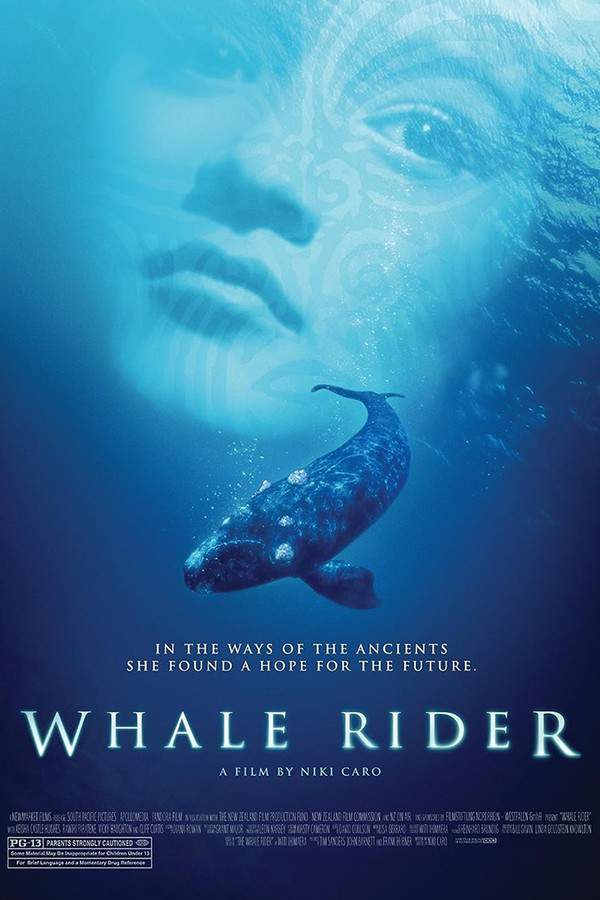
Whale Rider (2003) movie poster

Timeline

Whale Rider (2003) Timeline Explained – Every Event in Order

Release, runtime and language
2003 · 101 min · English
JustWatch #9,874 21
Directed by
Niki Caro
Starring
Cliff Curtis, Keisha Castle-Hughes, Rawiri Paratene, Vicky Haughton
Budget
$3.5M

Within a New Zealand Maori tribe, the mantle of chief traditionally passes to men. When the designated heir tragically dies, his twin sister Pai finds herself challenging centuries of tradition to claim her heritage. Guided by her grandmother and uncle, Pai undertakes a demanding journey to earn the respect of her skeptical grandfather and prove her ability to lead her people, ultimately striving to bridge the divide between generations and redefine her community’s future.

On this page (7)
  1. 1 Where to watch
  2. 2 Events in order (14)
  3. 3 Timeline questions answered
  4. 4 The book behind the movie
  5. 5 Movie threads
  6. 6 Movies like Whale Rider
  7. 7 Every angle

Where to watch

Where to Watch Whale Rider (2003)

Where can you watch Whale Rider? Stream, rent or buy it in the US, including on AMC+, fuboTV and Philo: current JustWatch availability with up-to-date prices.

Streaming availability powered by JustWatch

14 events in order · contains spoilers

Whale Rider Timeline: Events in Chronological Order

Every key event of Whale Rider (2003) in order, scene by scene, with when and where it takes place. Use it to untangle flashbacks, time jumps and parallel storylines, to refresh your memory before the sequel or to find the exact scene you are thinking of.

  1. Tragic Birth

    Pai's story begins with a tragic event as her mother dies during childbirth, leaving her as the sole surviving heir to her tribe's chieftaincy. This catastrophic loss also claims the life of her twin brother, forever altering the dynamics of her family and tribe.

  2. Koro's Grief

    Koro Apirana, Pai's grandfather and the tribe's leader, grapples with intense grief over the loss of his grandson. Struggling to accept Pai as his successor, Koro initially perceives her existence as a burden, referring to her as 'worthless' in the context of tribal customs.

  3. Bonding with Koro

    Despite their rocky start, Koro and Pai gradually build a bond as he begins to offer her rides to school on his bicycle. However, deep-seated resentment remains as Koro continues to blame her for the unresolved issues the tribe faces, complicating their relationship.

  4. Conflict with Tradition

    Faced with her grandfather's disdain, Pai contemplates leaving with her father, who has chosen an artistic lifestyle in Germany rather than leading their tribe. Ultimately, her connection to the sea and her ancestral roots pulls her back, emphasizing her determination to honor her heritage.

  5. Pursuing Ancestral Knowledge

    Motivated to embrace her right as a leader, Pai defies her family's expectations and seeks to learn the customs and traditions of her people. She immerses herself in the songs and dances that define her culture, revealing her passion and ambition, despite the absence of a female role model.

  6. Koro's Cultural School

    In his quest for a suitable successor, Koro establishes a cultural school solely for the boys in the village, focusing on teaching them the sacred taiaha. This decision underscores his commitment to maintaining traditional gender roles, further isolating Pai as she yearns for acceptance.

  7. Secret Training

    Nanny Flowers, Pai's grandmother, shares a hidden truth about Koro's late son, guiding Pai to train in secrecy with her uncle. Simultaneously, Pai attends Koro's sessions disguised as a boy, increasingly finding solace in her determination to prove herself.

  8. Success in Duel

    In a pivotal moment, Pai surprises everyone by winning a duel against Hemi, one of the boys, using the taiaha. This victory further solidifies her position as a contender for leadership, but it only serves to escalate Koro's anger and resentment towards her.

  9. The Quest for the Whale Tooth

    Koro challenges the boys to retrieve a *rei puta* (whale tooth) from the ocean, a task meant to establish their worthiness for leadership. When they all fail, the gap between Pai and the village boys widens, deepening Koro's frustration over the absence of a male heir.

  10. Pai's Concert Invitation

    In an effort to reconcile with her grandfather, Pai invites Koro to her school's M ori chants concert, where she has prepared a heartfelt tribute. This moment underscores her growing confidence and desire to bridge the gap between her ambitions and Koro's expectations.

  11. Stranded Whales

    As the concert approaches, a crisis erupts when multiple right whales become stranded on the beach near Pai's home. This dire situation unites the villagers in an attempt to save the whales, which ultimately culminates in a moment of lamentation for Koro, who feels he has failed his family and tribe.

  12. Pai's Brave Rescue

    In a dramatic turn of events, Pai bravely climbs onto the back of the largest whale, managing to coax it back into the ocean. This act of courage not only saves the whale but also leads the entire pod to follow her, showcasing her undeniable connection to the sea and her tribe's legacy.

  13. Recognition and Forgiveness

    Following the dramatic rescue, Nanny Flowers reveals to Koro that Pai had retrieved the whale tooth, an act that symbolizes her rightful claim to leadership. Recognizing her bravery and potential, Koro grants her forgiveness and formally acknowledges her status as a leader.

  14. Celebration of Leadership

    The climax of the film is marked by a grand celebration as the village honors Pai's new status as their leader. This communal event brings together Pai's family, friends, and community, culminating in a ceremonial launch of the completed *waka* into the ocean, symbolizing her journey ahead.

Last updated: November 04, 2024 at 01:40

Was this helpful?

Timeline questions answered

Whale Rider Timeline Explained: Your Questions Answered

When does it happen, and why in that order? The questions people ask about the chronology of Whale Rider (2003): time jumps, flashbacks, cause and effect between scenes and the correct order of events, each answered with spoilers.

Q1

Why does Koro resent Pai so much at the start of the movie?

Koro resents Pai because she is a girl, and according to tribal tradition, the chieftaincy must pass to a first-born son. When Pai's twin brother died during childbirth along with her mother, Koro lost his intended heir. He blames Pai for this loss and sees her as worthless since she cannot fulfill the traditional requirement for leadership. His grief over his grandson's death blinds him to Pai's potential.

Foreshadowing: Koro's initial rejection sets up the central conflict of the film, where Pai must prove herself worthy despite traditional gender barriers.

  • koro
  • pai
  • resentment
  • tradition
  • chief
  • grief
Q2

Why does Pai's father leave for Germany?

Pai's father, instead of stepping up to take his rightful place as the tribal leader after his brother's death, chooses to pursue an artistic lifestyle in Germany. This abandonment leaves Pai to navigate her ambitions alone and deepens her isolation within the family. His departure underscores the generational divide and the burden placed on Pai as the remaining heir.

Foreshadowing: His absence highlights that Pai cannot rely on traditional family structures and must find her own path to leadership.

  • father
  • germany
  • artist
  • abandonment
  • leadership
Q3

How does Pai manage to learn the taiaha despite Koro's prohibition?

Pai trains in secret through two main ways: first, her uncle teaches her the taiaha techniques privately at home, and second, she disguises herself as a boy to attend Koro's cultural school sessions. Nanny Flowers (her grandmother) supports this secret training by revealing that Koro's own son died in a similar situation when young, validating Pai's determination to learn despite the restrictions.

Foreshadowing: This secret training prepares Pai for her pivotal victory in the taiaha duel against Hemi.

  • taiaha
  • training
  • secret
  • uncle
  • nanny flowers
  • disguise
Q4

Why can't any of the village boys retrieve the whale tooth?

None of the boys succeed in retrieving the whale tooth (rei puta) from the ocean because they lack the spiritual connection to the sea that Koro's lineage traditionally holds. The task is designed to test worthiness for leadership, and their failure highlights the absence of a suitable male heir. It is later revealed that Pai had actually retrieved the tooth secretly, demonstrating her true worthiness.

Foreshadowing: The boys' failure sets up the revelation that Pai had already proven herself by retrieving the whale tooth.

  • whale tooth
  • rei puta
  • boys
  • failure
  • leadership test
Q5

How does Pai manage to save the stranded whales?

Pai saves the stranded whales by climbing onto the back of the largest whale and physically coaxing it back toward the ocean. Her deep spiritual connection to the sea, inherited from her ancestor Paikea (who rode a whale from Hawaiki), allows her to communicate with the whale in a way no one else can. Once the largest whale is guided back, the entire pod follows her lead.

Foreshadowing: This act mirrors the legendary journey of Paikea, the tribe's ancestor, directly connecting Pai to her heritage.

  • whales
  • rescue
  • ocean
  • connection
  • paikea
  • ancestor
Q6

What causes Koro to finally accept Pai as a leader?

Koro's acceptance of Pai comes after two key revelations: first, her brave act of saving the stranded whales demonstrates her courage and spiritual connection to their ancestors, and second, Nanny Flowers reveals that Pai had already retrieved the whale tooth from the ocean. These events prove her worthiness and worthiness for leadership, despite her gender. Koro recognizes that she possesses the qualities needed to lead the tribe.

Foreshadowing: The whale rescue and the revelation about the whale tooth directly fulfill the traditional requirements that Koro himself established.

  • koro
  • acceptance
  • leadership
  • whale tooth
  • courage
  • forgiveness
Q7

What does the reveal that Pai retrieved the whale tooth signify?

The revelation that Pai had secretly retrieved the whale tooth proves she had already passed the test of worthiness that Koro set for all potential leaders. This act, done in secret, demonstrates her determination, courage, and spiritual connection to the sea. It establishes her as the legitimate heir according to the tribe's own standards, not just by challenging tradition but by excelling within it.

Foreshadowing: This secret achievement parallels her secret training, showing her patience and strategic thinking.

  • whale tooth
  • rei puta
  • retrieval
  • worthiness
  • proof
Q8

Why does winning the taiaha duel against Hemi matter so much?

Pai's victory in the taiaha duel against Hemi matters because it proves her physical capability and mastery of warrior traditions that have been exclusive to men. By defeating a boy in combat using the sacred male weapon, she directly challenges the notion that women cannot be leaders. However, this victory also angers Koro because it exposes his secret sessions and threatens the gender boundaries he maintains.

Foreshadowing: This victory demonstrates her skill but also deepens the conflict with Koro, setting up the later resolution.

  • taiaha
  • duel
  • hemi
  • victory
  • tradition
  • combat
Q9

How is Pai connected to the ancestral whale rider Paikea?

Pai's connection to Paikea (also called Kahutia Te Rangi), the legendary ancestor who rode a whale from Hawaiki, is both spiritual and genealogical. As a descendant of Paikea's lineage, she inherits a special bond with the sea and whales. The climax of the film literally recreates this ancestral act when she rides the whale back to safety, demonstrating that she embodies the qualities of the tribe's legendary leader more fully than any male heir.

Foreshadowing: The entire narrative builds toward this moment, where Pai literally follows in her ancestor's footsteps.

  • paikea
  • ancestor
  • whale
  • hawaiki
  • spiritual connection
Q10

How does Nanny Flowers help Pai throughout her journey?

Nanny Flowers serves as Pai's primary supporter and secret ally. She reveals the truth about Koro's late son who died in similar circumstances, validating Pai's struggle. She secretly encourages Pai's training with her uncle and ultimately reveals to Koro that Pai retrieved the whale tooth. Her support provides the emotional backbone that allows Pai to persist despite facing rejection from her grandfather.

Foreshadowing: Nanny Flowers's guidance and revelations are essential to Pai's ultimate success and Koro's change of heart.

  • nanny flowers
  • grandmother
  • support
  • guidance
  • secret help
Q11

Why does Pai decide to stay with the tribe instead of leaving with her father?

Pai initially considers leaving with her father for Germany, but she ultimately chooses to stay because she feels a deep, irresistible connection to the sea and her ancestral roots. The call of the whales symbolizes her spiritual heritage and draws her back to her community. This choice demonstrates her commitment to her identity and her determination to claim her rightful place within the tribe, rather than abandoning her heritage.

Foreshadowing: This moment marks a turning point where Pai commits fully to her path as a leader.

  • choice
  • stay
  • heritage
  • sea
  • calling
  • identity
Q12

What does the ceremonial waka launch represent at the end of the movie?

The ceremonial waka (traditional canoe) launch at the film's climax represents Pai's formal induction as a leader and the tribe's acceptance of her as their chief. The completed waka symbolizes the continuation of tradition and the community's future under her guidance. The launch into the sea connects to the ancestral whale rider legend, showing that tradition is renewed and adapted through Pai's leadership.

Foreshadowing: The waka journey mirrors the whale journey, completing the thematic cycle of the film.

  • waka
  • canoe
  • ceremony
  • tradition
  • leadership
  • future

Movie threads

More Movies Like Whale Rider, by Mood & Story

Curated lists built around what makes Whale Rider tick: the same mood, the same kind of story or the same emotional payoff. Each list explains why these movies belong together.

Movies about indigenous female leaders like Whale Rider

Stories of girls challenging patriarchal customs to claim their cultural destiny. Explore films like Whale Rider that center on young women challenging tradition within their indigenous communities. If you enjoyed Pai's journey to claim her birthright, you'll find similar stories of spiritual awakening, cultural resilience, and groundbreaking female leadership in these powerful dramas.

  • determined
  • spiritual
  • cultural
  • reverent
  • heartfelt
  • inspiring
  • Tone: determined, reverent, hopeful
  • Pacing: steady, deliberate
Why these movies?

The story pattern: These stories typically follow a determined young female protagonist who feels a profound spiritual or ancestral calling that defies the male-dominated traditions of her community. She faces skepticism and rejection, often from a key elder, but through a series of trials and a display of innate wisdom or courage, she ultimately proves her worth and helps her people evolve.

Why they belong together: Movies are grouped here for their shared focus on a specific character arc: a young indigenous woman's quest for legitimacy against patriarchal structures. They share a reverence for cultural traditions while critically examining their limitations, creating a potent mix of personal determination and collective cultural reflection.


Movies about generational healing like Whale Rider

Quiet, steady stories where younger and older generations find common ground. Find films like Whale Rider that focus on healing the emotional distance between generations. These stories capture the quiet struggle and ultimate joy of reconciliation, often through a shared challenge or a display of unexpected strength that bridges traditional divides.

  • heartfelt
  • tender
  • hopeful
  • uplifting
  • emotional
  • family
  • Tone: heartfelt, tender, hopeful
  • Pacing: steady, character-driven
Why these movies?

The story pattern: The narrative pattern involves a stubborn elder, often burdened by loss or rigid beliefs, and a resilient younger character who seeks their approval or acceptance. The story avoids high-stakes drama, instead building tension through emotional distance and misunderstanding. A climax, often involving a symbolic act or shared ordeal, forces the elder to see the younger person's true value, culminating in a heartfelt reconciliation.

Why they belong together: These movies are grouped by their shared emotional core: the slow, tender process of healing a family or community split across generations. They prioritize emotional authenticity over complex plotting and deliver a deeply satisfying, hopeful conclusion centered on mutual understanding.

If you liked this

Movies Like Whale Rider

Similar movies to Whale Rider: the same genre, themes or kind of story. Each one comes with its own plot summary, timeline and ending explained.

Browse all movie summaries

Every angle

Whale Rider (2003) Explained: Plot, Timeline & Characters

Everything about Whale Rider in one place: what happens in the plot summary, the timeline in chronological order, the characters and meaning and a spoiler-free summary. What's After the Movie adds the cast, box office and post-credit scenes.

Coming soon on iOS and Android

The Plot Explained Movie Summary App

Plot summaries, endings explained and timelines on your phone. Catch up on any movie in minutes, save your favorites and never miss a twist again.

Be the first to know when we launch. Your email stays private, always.

Learn more about the app