Plot Explained Spoilers guaranteed!
Plot Explained

Browse by genre

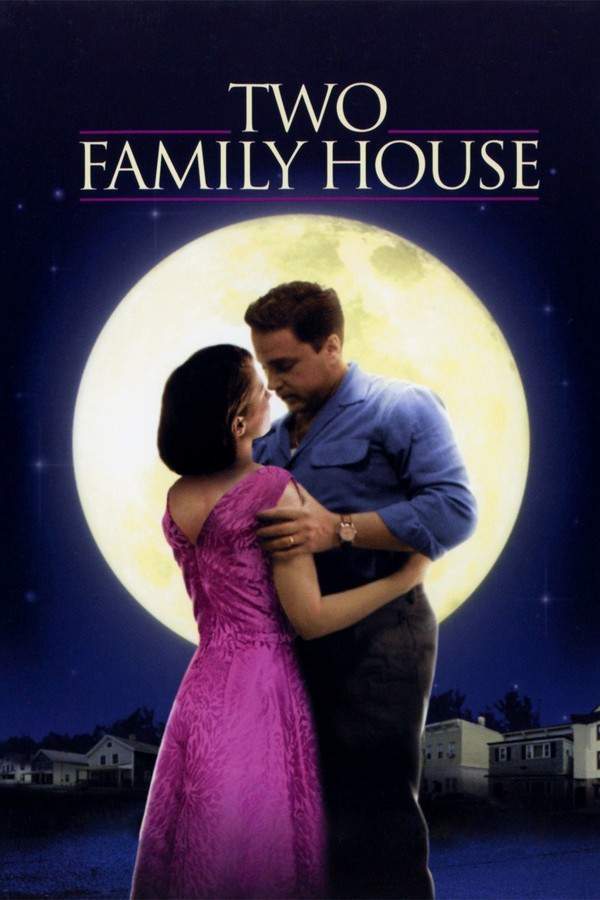
Two Family House (2000) movie poster

Timeline

Two Family House (2000) Timeline Explained – Every Event in Order

Release, runtime and language
2000 · 108 min · English
Loading streaming availability…
Directed by
Raymond De Felitta

A talented singer, Buddy, struggles with fading dreams and a pragmatic wife who has grounded his ambitions. He clings to get-rich-quick schemes, believing his latest plan will finally bring him success. Determined to revive his music career, Buddy invests in a two-family house, intending to convert the basement into a small, intimate performance space where he can share his songs and hopefully find his way back to the spotlight.

On this page (6)
  1. 1 Where to watch
  2. 2 Events in order (14)
  3. 3 Timeline questions answered
  4. 4 Movie threads
  5. 5 Movies like Two Family House
  6. 6 Every angle
Loading streaming availability…

14 events in order · contains spoilers

Two Family House Timeline: Events in Chronological Order

Every key event of Two Family House (2000) in order, scene by scene, with when and where it takes place. Use it to untangle flashbacks, time jumps and parallel storylines, to refresh your memory before the sequel or to find the exact scene you are thinking of.

  1. Buddy's Ambitions

    In 1956, Buddy Visalo, a dreamer from Staten Island, reflects on his aspirations to become a crooner. He is haunted by a choice he made years ago that set the course for his life.

    When
    1956
    Where
    Staten Island, New York
  2. A Missed Opportunity

    During his military service, Buddy almost achieved fame during a USO performance with Arthur Godfrey. Faced with an ultimatum from his fiancée, Estelle, he chose love over ambition, a decision he would regret.

    When
    A decade earlier
  3. Setting Up Home

    Buddy decides to purchase a dilapidated two-family house, envisioning a life where he can sing and manage a bar on the ground floor. His plan includes living upstairs with Estelle, but reality soon complicates his dreams.

    Where
    Elm Park, Staten Island
  4. Estelle's Doubts

    Estelle remains skeptical of Buddy's ambitions, preferring a stable, conventional life. She consistently undermines Buddy's self-belief with her doubts, adding to the tension in their relationship.

  5. Inhabited by Strangers

    Buddy discovers that the upstairs tenants, Jim O'Neary and his pregnant wife, Mary, have no intention of leaving. Their refusal to pay rent complicates Buddy's plans even further.

  6. A Shocking Revelation

    When Mary gives birth, it is revealed that the child is of African descent, leading to a shameful realization for Jim. This revelation adds tension to Buddy's already-strained situation with his tenants.

  7. Guilt and Responsibility

    Faced with guilt after evicting Mary and her newborn, Buddy decides to take action. He helps her locate a new apartment while she deals with the emotional turmoil of the adoption process.

  8. Navigating Racial Prejudice

    The story explores themes of racial prejudice and the societal limitations placed upon Buddy and his community. Such beliefs are woven into the fabric of the narrative, affecting relationships and aspirations.

  9. The Struggle for Identity

    Buddy’s journey is marked by his struggle to define himself and achieve his dreams amidst societal pressures. His mantra, 'I just wanna be somebody,' becomes a guiding force in his pursuit of identity.

  10. Lessons in Aspirations

    Through encounters with his peers and the complexities of his relationships, Buddy learns harsh truths about ambition and reality. The narrative encapsulates the essence of following one's bliss, echoing Joseph Campbell's teachings.

  11. A Turning Point

    Buddy confronts the various schemes he has devised over the years to achieve success and grapples with the consequences of his choices. His determination to pursue his dreams faces relentless obstacles.

  12. The Impact of Choices

    As Buddy navigates his tumultuous path, the weight of his past decisions weighs heavily on him. Each choice shapes his future, and he reflects on the sacrifices he has made in pursuit of his dreams.

  13. Emotional Bonds

    The relationships Buddy builds throughout the story combine to reveal his vulnerabilities and strengths. The enduring chemistry among the characters contributes to the richness of the narrative.

  14. Reflecting on Dreams

    In the end, Buddy reflects on his journey and the dreams that have shaped his life. He comes to understand that the pursuit of happiness can take many forms, and it is never too late to follow one's bliss.

Last updated: November 15, 2024 at 18:13

Was this helpful?

Timeline questions answered

Two Family House Timeline Explained: Your Questions Answered

When does it happen, and why in that order? The questions people ask about the chronology of Two Family House (2000): time jumps, flashbacks, cause and effect between scenes and the correct order of events, each answered with spoilers.

Q1

Why did Buddy choose Estelle over his music career with Arthur Godfrey?

Ten years before the story begins, Buddy performed for Arthur Godfrey during his military service and nearly got his big break as a crooner. However, his fiancée Estelle gave him an ultimatum: choose her or pursue the career opportunity. Buddy chose love over ambition, marrying Estelle instead of taking the chance to become a professional singer. This decision haunts him throughout the film as he regrets not following his musical dreams.

Foreshadowing: The film's opening establishes Buddy's regret by showing how this choice set the course for his life of failed schemes.

  • buddy visalo
  • arthur godfrey
  • estelle
  • music career
  • love vs ambition
Q2

Why does Estelle constantly oppose Buddy's ambitions?

Estelle represents the practical, conventional counterpart to Buddy's dreams. She wants a stable, blue-collar husband who won't draw attention to their family. Her skepticism stems from witnessing Buddy's decade of failed schemes rather than genuine musical success. Estelle believes her husband should prioritize financial stability over artistic aspirations, which is why she consistently undermines his plans and faith in himself.

  • estelle
  • buddy's wife
  • dreams vs reality
  • marriage tension
  • practicality
Q3

Why does Buddy evict Mary and her baby, then decide to help her?

Initially, Buddy evicts Mary and her newborn because Jim O'Neary, the biological father who abandoned them, left without paying rent, leaving Buddy as the landlord to deal with the situation. However, after the eviction, Buddy experiences overwhelming guilt, recognizing that Mary and her mixed-race child are vulnerable and have nowhere to go. His conscience compels him to take responsibility and help Mary find a new apartment while she navigates the adoption process.

Foreshadowing: Earlier tension about tenants refusing to pay rent sets up this moral dilemma for Buddy.

  • mary
  • baby
  • eviction
  • adoption
  • guilt
  • responsibility
Q4

Why does Jim O'Neary abandon Mary and her newborn baby?

When Mary gives birth, it is revealed that the baby is of African descent, which makes it clear to Jim that he is not the biological father. Ashamed and unable to accept the truth about his wife's infidelity, Jim slinks away in shame, abandoning both Mary and the newborn child rather than face the reality of the situation.

  • jim o'neary
  • mary
  • baby
  • abandonment
  • shame
  • infidelity
Q5

What is revealed about Mary's baby that shocks everyone?

When Mary gives birth, it becomes immediately apparent that the baby is of African descent. This revelation exposes that Jim O'Neary, despite being Mary's husband, is not the biological father. The baby's racial identity triggers Jim's departure and adds layers of complexity regarding racial prejudice and social acceptance in 1950s America.

  • mary's baby
  • racial identity
  • revelation
  • jim o'neary
  • biological father
Q6

What does Buddy's mantra "I just wanna be somebody" mean?

Buddy's core motivation stems from feeling invisible and unaccomplished. After giving up his musical career for love, he spent years chasing get-rich-quick schemes that never panned out. The phrase represents his deep desire for recognition, significance, and to prove himself as more than just another ordinary man. His dream of becoming a crooner embodies this aspiration to matter and achieve something meaningful with his life.

  • i just wanna be somebody
  • buddy's dream
  • recognition
  • identity
  • ambition
Q7

What is the film's message about "following your bliss"?

The film echoes Joseph Campbell's teaching about following one's bliss, but presents it with nuance through Buddy's journey. While Buddy's dreams of being a crooner represent his "bliss," the story acknowledges that following those dreams required difficult sacrifices. The bittersweet ending suggests that personal fulfillment often requires compromise, Buddy learns that happiness can take many forms, and it's never too late to pursue what truly matters, even if success looks different than originally imagined.

  • follow your bliss
  • joseph campbell
  • message
  • dreams
  • fulfillment
  • personal growth
Q8

Why is the Staten Island setting important to the story?

The film takes place in Elm Park, a neighborhood in Staten Island, New York, during 1956. The setting is significant because Buddy specifically purchases a house in the Irish area of town, which creates social and cultural tension. The neighborhood's homogeneous nature amplifies themes of prejudice and outsider status. Additionally, Staten Island's working-class environment contrasts with Buddy's dreams of showbiz success, grounding his struggles in a relatable, blue-collar American setting.

  • staten island
  • elm park
  • 1956
  • setting
  • irish neighborhood
  • working class
Q9

How does racial prejudice play into the story's events?

Racial prejudice weaves through multiple plot threads. Mary's mixed-race baby represents a scandal in 1950s America, particularly in a homogeneous Irish neighborhood. Jim's shame-filled departure reflects societal attitudes toward interracial relationships. Buddy's decision to help Mary despite community prejudice shows his moral growth. The prejudice encountered forces characters to confront their beliefs about acceptance, morality, and what truly matters in life.

  • racial prejudice
  • mary's baby
  • 1950s attitudes
  • discrimination
  • social limitations
Q10

Why does Buddy decide to invest in the two-family house?

Buddy purchases the dilapidated two-family house as his latest scheme to achieve success while pursuing his passion for music. His plan involves living upstairs with Estelle while operating a bar on the ground floor. The bar would feature a jukebox with "Music Minus One" tracks, allowing Buddy to sing along and potentially perform for customers, essentially creating an intimate venue to share his songs and revive his dreams of becoming a crooner.

  • two-family house
  • bar
  • music venue
  • buddy's scheme
  • crooner dreams
Q11

Why does Buddy regret choosing marriage over his music career?

Buddy's regret stems from seeing how his life turned out after sacrificing his career opportunity. Instead of finding success as a singer, he spent ten years chasing various get-rich-quick schemes, none of which panned out. Living through Estelle's constant skepticism and criticism has compounded his regret. The choice between love and ambition haunts him because he never got to discover if he could have achieved his dream of being a professional crooner.

  • regret
  • marriage choice
  • arthur godfrey
  • failed dreams
  • missed opportunity
Q12

What happens to Mary and her baby after Buddy evicts them?

After Buddy evicts Mary and her newborn, he feels guilty and takes responsibility for helping them. He assists Mary in finding a new apartment and supports her through the adoption process. The film explores the emotional turmoil Mary faces as she deals with the consequences of her husband's abandonment and the uncertainty of her child's future.

  • mary
  • baby
  • adoption
  • eviction
  • buddy's help
  • aftermath

Movie threads

More Movies Like Two Family House, by Mood & Story

Curated lists built around what makes Two Family House tick: the same mood, the same kind of story or the same emotional payoff. Each list explains why these movies belong together.

Movies about dreams clashing with reality like Two Family House

Stories where artistic aspirations clash with the demands of everyday life. If you enjoyed the emotional conflict in Two Family House, explore more movies like it about artistic ambition versus domestic duty. These similar drama films feature characters navigating unfulfilled dreams, marital strain, and bittersweet resolutions, capturing the same hopeful yet melancholic vibe.

  • nostalgic
  • melancholic
  • hopeful
  • frustrated
  • introspective
  • yearning
  • Tone: bittersweet, melancholic, hopeful
  • Pacing: steady, character driven
Why these movies?

The story pattern: These narratives typically follow a protagonist clinging to a creative or aspirational dream in the face of a pragmatic partner or life circumstances. The story unfolds methodically, building tension between hope and reality, often leading to a compromise rather than a clear victory, emphasizing personal growth over traditional success.

Why they belong together: Movies are grouped here for their shared exploration of the 'dreamer vs. realist' dynamic, a consistent bittersweet tone, medium emotional weight, and a steady, character-focused pacing that allows the audience to fully invest in the protagonist's internal and external struggles.

Small-town character dramas with secrets like Two Family House

Intimate dramas where personal secrets unravel against a tight-knit community backdrop. Find more films similar to Two Family House that capture the vibe of a small community drama. These movies like Two Family House are nostalgic character studies where personal lives intertwine with social tensions, creating a steady, bittersweet narrative with moderate complexity.

  • nostalgic
  • introspective
  • melancholic
  • dreamy
  • hopeful
  • claustrophobic
  • Tone: nostalgic, bittersweet, introspective
  • Pacing: steady, methodical
Why these movies?

The story pattern: The narrative pattern involves a central character whose life is disrupted by new arrivals or uncovered secrets within a confined community. Subplots involving tenants, neighbors, or outsiders often force the protagonist to confront their own prejudices and desires, leading to a reevaluation of their life choices.

Why they belong together: These films share a nostalgic, introspective mood, a steady pacing that allows for deep character exploration, and a structure where a main character's arc is interwoven with impactful subplots about other residents, all set against a richly detailed period or small-town world.

If you liked this

Movies Like Two Family House

Similar movies to Two Family House: the same genre, themes or kind of story. Each one comes with its own plot summary, timeline and ending explained.

Browse all movie summaries

Every angle

Two Family House (2000) Explained: Plot, Timeline & Characters

Everything about Two Family House in one place: what happens in the plot summary, the timeline in chronological order, the characters and meaning and a spoiler-free summary. What's After the Movie adds the cast, box office and post-credit scenes.

Coming soon on iOS and Android

The Plot Explained Movie Summary App

Plot summaries, endings explained and timelines on your phone. Catch up on any movie in minutes, save your favorites and never miss a twist again.

Be the first to know when we launch. Your email stays private, always.

Learn more about the app