Plot Explained Spoilers guaranteed!
Plot Explained

Browse by genre

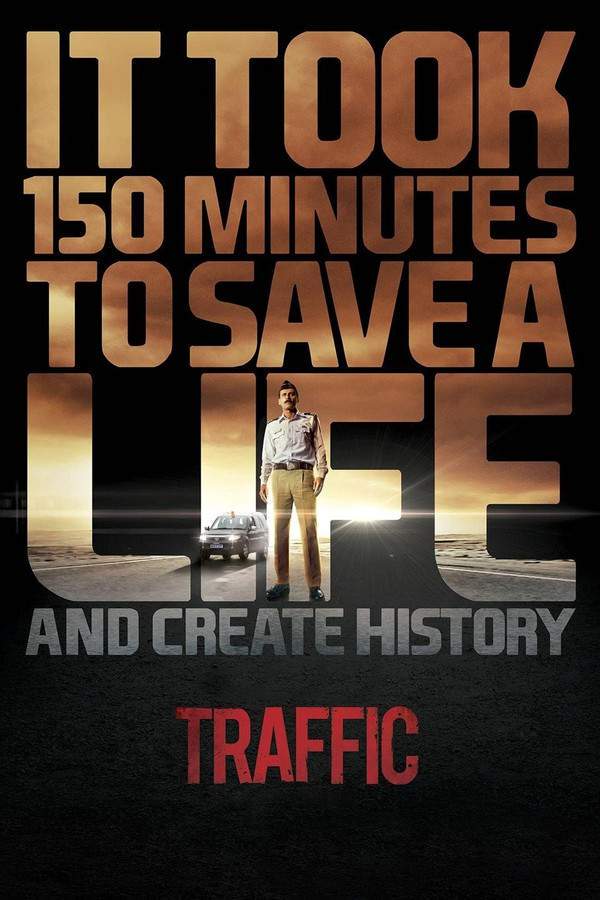
Traffic (2000) movie poster

Plot Summary

Traffic (2000) Plot Summary Explained

Release, runtime and language
2000 · 147 min · Hindi
Directed by
Steven Soderbergh
Starring
Benicio Del Toro, Michael Douglas

A celebrated actor, Dev Kapoor, is confronted with a devastating situation when his daughter desperately needs a heart transplant. With time slipping away, he finds himself immersed in a complex and challenging world of medical procedures and difficult decisions, struggling to secure the operation she needs and battling against the ticking clock.

On this page (6)
  1. 1 Where to watch
  2. 2 What happens: full plot
  3. 3 Plot questions answered
  4. 4 Movie threads
  5. 5 Movies like Traffic
  6. 6 Every angle

Where to watch

Where to Watch Traffic (2000)

Where can you watch Traffic? Stream, rent or buy it in the US, including on Amazon Video, Apple TV Store and Fandango At Home: current JustWatch availability with up-to-date prices.

Streaming availability powered by JustWatch

Full plot summary · contains spoilers

What Happens in Traffic: Full Plot Summary

The whole story of Traffic (2000) explained, from the opening scene to the final frame: every key event, every twist and what it all adds up to. Read it as a quick recap before the sequel, to check a scene you missed, or to finally understand what really happened.

In Mexico, police officer Javier Rodriguez and his partner Manolo Sanchez (Vargas) disrupt a drug transport and manage to apprehend the couriers involved. Their operation, however, is suddenly interrupted by General Salazar (Milian), a powerful Mexican official who decides to recruit Javier for a hidden agenda. Salazar's mission is to track down and capture Francisco Flores (Collins), a notorious hitman working for the Tijuana Cartel, which is run by the Obregon brothers.

As the investigation unfolds in Tijuana, Flores, under severe torture, reveals the names of key members within the Obregon cartel. This leads to a massive police and military effort, spearheaded by Javier and Salazar, which begins to dismantle the cocaine operation run by the Obregon brothers. However, Javier quickly realizes that Salazar is not a hero but a mere pawn for the Juárez Cartel, the rival of the Obregons. Essentially, this part of the Mexican anti-drug strategy turns out to be a facade, as Salazar aims to eliminate one cartel only to strengthen his own position with another for profit.

Meanwhile, Sanchez, intent on exposing Salazar's real motivations, attempts to relay this critical information to the DEA but tragically loses his life as a result of his betrayal. Disillusioned and unable to continue working under Salazar's corrupt regime, Javier makes a pivotal decision to collaborate with the DEA. In exchange for his cooperation—primarily his testimony against Salazar—Javier requests a simple but profound change: better electricity for his neighborhood, allowing local children to play baseball at night rather than be exposed to street gangs and criminal activities. Eventually, Salazar's illicit dealings are exposed, resulting in his arrest and subsequent death in prison.

In a press conference, Javier bravely takes a stand, shedding light on the deep-rooted corruption that permeates not only the police force but also the army. The narrative concludes with a hopeful image: Javier witnesses children playing baseball at night in their new stadium, a symbol of change and progress.

Meanwhile, in Ohio, Robert Wakefield, a conservative judge, is appointed as the head of the President's Office of National Drug Control, taking on the challenging title of drug czar. Warned by his predecessor and several influential politicians about the futility of the War on Drugs, Robert finds himself navigating a difficult path. His home life suffers as his daughter, Caroline (Christensen), a formerly dedicated honors student, spirals into drug addiction—introduced to cocaine and later free-basing heroin by her boyfriend, Seth (Grace). Caroline's struggles come to a head when she and Seth are arrested after a fellow student overdoses at a party.

As Robert and his wife Barbara (Irving) grapple with their daughter's issues, Robert uncovers that Barbara had known about Caroline's drug use for over six months. The weight of his dual responsibilities as a drug czar and a father becomes increasingly unbearable. During a visit to Mexico, Robert is momentarily reassured by Salazar's progress against the Obregon brothers; however, upon returning to Ohio, he learns his attempts to get Caroline into rehab have failed. She has disappeared, landing in Cincinnati, where she steals from her parents to fund her addiction and resorts to prostitution.

In a desperate search for Caroline, Robert reluctantly takes Seth with him as he scours Cincinnati. After a fruitless encounter with a drug dealer, he ultimately tracks Caroline down to a sleazy hotel room, where he finds her in a traumatic state. His emotional breakdown manifests as he realizes the depths of his daughter's despair while Seth quietly exits the scene.

Back in Washington, D.C., Robert prepares to publicly announce a "10-point plan" to combat the War on Drugs. However, during the press conference, he falters, understanding that the war he endorses impacts even families like his own. Unable to support this war any longer, he exits the conference and heads to the airport, leaving behind the charade. Ultimately, he and Barbara commit to attending Narcotics Anonymous meetings with Caroline, seeking to support her and others battling addiction.

In another crucial storyline set in San Diego, an undercover investigation led by Montel Gordon (Cheadle) and Ray Castro (Guzmán) targets high-stakes drug trafficking. They successfully arrest Eduardo Ruiz (Ferrer), a dealer posing as a fisherman, who decides to turn state's evidence against his boss, drug lord Carlos Ayala (Bauer), the principal distributor for the Obregons in the U.S. The FTC-indicted Ayala has a tough prosecutor specially appointed by Robert to send a message to the Mexican drug organizations, heightening the tension surrounding the trial.

As the trial progresses, Carlos's pregnant wife, Helena (Catherine Zeta-Jones), learns that her husband leads a perilous life in crime. Fearing for her husband's life and that of their unborn child, she hires Flores to kill Eduardo Ruiz, knowing that silencing him would effectively derail the trial. In a twist of fate, after Flores sets a car bomb intended for Ruiz, he himself is assassinated, leading to tragedy when the bomb kills Castro but leaves both Gordon and Ruiz unharmed.

Amid these developments, Helena, now desperate for her family's safety, collaborates with Juan Obregon (Bratt), promising to erase the debt the Ayala family owes in exchange for ensuring Ruiz doesn't testify against Carlos. This act of treachery leads to Carlos's release, angering Gordon, who is still reeling from the loss of his partner. Soon after, he infiltrates the Ayala residence and secretly places a microphone, setting the stage for further developments in this intricate tale of deception and corruption.

Last updated: November 16, 2024 at 12:24

Was this helpful?

Plot questions answered

Traffic Plot Explained: Your Questions Answered

The questions people ask most about Traffic (2000): what happens in the confusing scenes, why the characters do what they do, the twists, hidden details and what the ending means. Each answer contains spoilers.

Q1

Why does General Salazar recruit Javier Rodriguez for his operation?

General Salazar recruits Javier to help track down Francisco Flores, a hitman for the Tijuana Cartel run by the Obregon brothers. However, Salazar's true agenda is not to genuinely combat drug trafficking, he plans to eliminate the Obregons to strengthen his own position with their rival, the Juárez Cartel, for personal profit.

Foreshadowing: Earlier, Salazar interrupts Javier's legitimate drug bust and takes over the operation, revealing his ulterior motives.

  • salazar
  • javier rodriguez
  • recruitment
  • mexico
  • cartel
Q2

Why does General Salazar want to take down the Obregon brothers?

Salazar pretends to dismantle the Obregon cartel as part of an anti-drug operation, but his real reason is to eliminate a rival cartel so he can profit from strengthening the Juárez Cartel. He uses the police and military resources to do the work of organized crime while appearing to fight it.

  • salazar
  • obregon cartel
  • juarez cartel
  • corruption
Q3

Why does Manolo Sanchez die after trying to expose Salazar?

Manolo Sanchez attempts to contact the DEA to reveal that Salazar is working with the Juárez Cartel and using the anti-drug operation for personal gain. Salazar discovers Sanchez's betrayal and has him killed to silence him and maintain his cover.

Foreshadowing: Sanchez expresses suspicion about Salazar's orders early in the investigation.

  • manolo sanchez
  • salazar
  • dea
  • death
  • exposure
Q4

Why does Javier ask for better electricity for his neighborhood in exchange for testifying?

After deciding to cooperate with the DEA against Salazar, Javier demands better electricity for his neighborhood as his only request. He wants children to be able to play baseball at night in a safe, lit stadium rather than being exposed to street gangs and criminal activity that thrives in dark, neglected areas.

Foreshadowing: The film opens with children playing in dark streets, highlighting the lack of safe spaces.

  • javier
  • electricity
  • neighborhood
  • children
  • baseball
Q5

Why does Helena Ayala hire Francisco Flores to kill Eduardo Ruiz?

Helena learns that her husband Carlos Ayala is the principal U.S. distributor for the Obregons and faces prosecution with Ruiz as the key witness against him. Fearing for her husband's life and that of their unborn child, Helena hires Flores to assassinate Ruiz before he can testify, which would derail the trial and save Carlos.

Foreshadowing: Helena's concern for family safety increases as Carlos's trial approaches.

  • helena ayala
  • flores
  • eduardo ruiz
  • assassination
  • trial
Q6

Why does Robert Wakefield leave the press conference?

Robert prepares to announce his 10-point plan to continue the War on Drugs, but he falters when he realizes the policies he supports have devastating consequences, even for families like his own, as his daughter Caroline has become addicted to heroin. Unable to support a war that destroys families while his own crumbles, he walks away from the podium.

Foreshadowing: Robert's discovery of Caroline's prostitution and trauma in Cincinnati foreshadows his complete loss of faith in the drug war.

  • robert wakefield
  • press conference
  • drug czar
  • daughter
  • addiction
Q7

How does Caroline Wakefield become addicted to drugs?

Caroline, once a dedicated honors student, is introduced to cocaine by her boyfriend Seth, who later introduces her to free-basing heroin. Her addiction spirals rapidly, leading to arrest after a student overdoses at a party, theft from her parents to fund her habit, and eventually prostitution in Cincinnati.

Foreshadowing: Robert is warned about the personal cost of the drug war before any signs of Caroline's addiction appear.

  • caroline wakefield
  • seth
  • heroin
  • cocaine
  • addiction
Q8

Why does Helena Ayala help Juan Obregon erase the family debt?

After hiring Flores to kill Ruiz, Helena negotiates with Juan Obregon to erase the debt the Ayala family owes the Obregon cartel in exchange for ensuring Ruiz doesn't testify against Carlos. This betrayal helps secure Carlos's release from custody, though it angers the DEA agents pursuing the case.

Foreshadowing: Helena's desperation increases as Carlos's conviction becomes likely.

  • helena
  • juan obregon
  • debt
  • carlo ayala
  • trial
Q9

What happens to Francisco Flores after he plants the car bomb?

Flores plants a car bomb intended to kill Eduardo Ruiz, but the assassination fails, Ruiz survives. Flores is then killed himself, either by the cartel or as collateral damage. The bomb accidentally kills Castro, the DEA agent, while both Gordon and Ruiz escape unharmed.

Foreshadowing: Flores operates as a notorious hitman for the Obregons, making him a target for rival factions.

  • francisco flores
  • car bomb
  • castro
  • death
  • assassination
Q10

Why does Robert take Seth to find Caroline in Cincinnati?

Robert reluctantly brings Seth, Caroline's boyfriend who introduced her to drugs, on his search because Seth knows the drug dealers and underground networks Caroline would access. Robert's desperation overrides his moral objections, as Seth is the only person who might lead him to his missing daughter.

Foreshadowing: Seth's knowledge of the drug world becomes essential as Robert's search becomes increasingly desperate.

  • robert
  • seth
  • cincinnati
  • search
  • daughter
Q11

What happens to General Salazar after his arrest?

Salazar's operations are exposed through Javier's cooperation with the DEA, leading to his arrest. He dies in prison, either from natural causes or as a result of prison violence, eliminating any chance of a public trial that would reveal the full extent of his corruption.

Foreshadowing: Salazar's corrupt dealings with the Juárez Cartel make him enemies even within the criminal underworld.

  • salazar
  • arrest
  • death
  • prison
  • corruption
Q12

How do the three main storylines in Traffic connect?

The three storylines, in Mexico with Javier and Salazar, in Ohio/Washington with Robert Wakefield, and in San Diego with DEA agents, are thematically linked through the drug war's interconnected corruption. Salazar's anti-drug operation in Mexico is revealed to be a power grab, Robert's policies fail to save his own daughter, and the San Diego prosecution collapses when Helena corrupts the case. All three demonstrate that the War on Drugs destroys lives while failing to stop trafficking.

  • storylines
  • connection
  • DEA
  • cartel
  • drug war

Movie threads

More Movies Like Traffic, by Mood & Story

Curated lists built around what makes Traffic tick: the same mood, the same kind of story or the same emotional payoff. Each list explains why these movies belong together.

Movies about Corrupt Systems like Traffic

Stories where sprawling institutions expose deep moral compromises and personal tragedy. Explore other films like Traffic that use complex storytelling to critique sprawling, broken systems. If you enjoyed the interwoven narratives exposing the futility of the drug war, you'll find similar cynical and gripping dramas about political and institutional corruption here.

  • grim
  • cynical
  • gripping
  • harsh
  • anxious
  • hopeless
  • Tone: dark, cynical, unflinching
  • Pacing: variable, methodical
Why these movies?

The story pattern: Narratives in this thread typically unfold across multiple, seemingly disconnected storylines that gradually converge to reveal the scale of a systemic failure. Character journeys involve confronting the immense, impersonal power of the institution they are part of or fighting against, often leading to moral compromise, disillusionment, or tragic sacrifice.

Why they belong together: Movies are grouped here for their shared use of a complex narrative structure to explore a dark, cynical theme: the individual's powerless struggle against a vast, corrupt system. They deliver a heavy emotional weight through an unflinching, realistic tone and a variable pacing that balances methodical exposition with sudden, violent consequences.

Drama Thrillers about Moral Collapse like Traffic

Character-driven journeys where good intentions are shattered by harsh, unforgiving realities. Find more movies like Traffic that explore characters facing impossible choices in a brutal world. If you were gripped by the father's desperate measures and the drug czar's disillusionment, this thread features similar intense drama thrillers about personal sacrifice and moral decay.

  • anxious
  • grim
  • harsh
  • gripping
  • hopeless
  • unflinching
  • Tone: dark, tense, bleak
  • Pacing: steady, building tension
Why these movies?

The story pattern: The narrative pattern follows a central character—often initially principled—as they are plunged into a crisis that demands actions contrary to their morals. The plot is a downward spiral, where each 'necessary' decision leads to a worse ethical compromise, creating intense internal and external conflict, usually ending on a bleak or mixed note.

Why they belong together: These films share a core focus on a character's psychological and ethical unraveling under extreme pressure. They are united by a high-intensity, dark tone, heavy emotional weight, and a pacing that steadily builds tension towards a climax that offers little catharsis, reflecting the theme that some situations have no good solutions.

If you liked this

Movies Like Traffic

Similar movies to Traffic: the same genre, themes or kind of story. Each one comes with its own plot summary, timeline and ending explained.

Browse all movie summaries

Every angle

Traffic (2000) Explained: Plot, Timeline & Characters

Everything about Traffic in one place: what happens in the plot summary, the timeline in chronological order, the characters and meaning and a spoiler-free summary. What's After the Movie adds the cast, box office and post-credit scenes.

Coming soon on iOS and Android

The Plot Explained Movie Summary App

Plot summaries, endings explained and timelines on your phone. Catch up on any movie in minutes, save your favorites and never miss a twist again.

Be the first to know when we launch. Your email stays private, always.

Learn more about the app