Plot Explained Spoilers guaranteed!
Plot Explained

Browse by genre

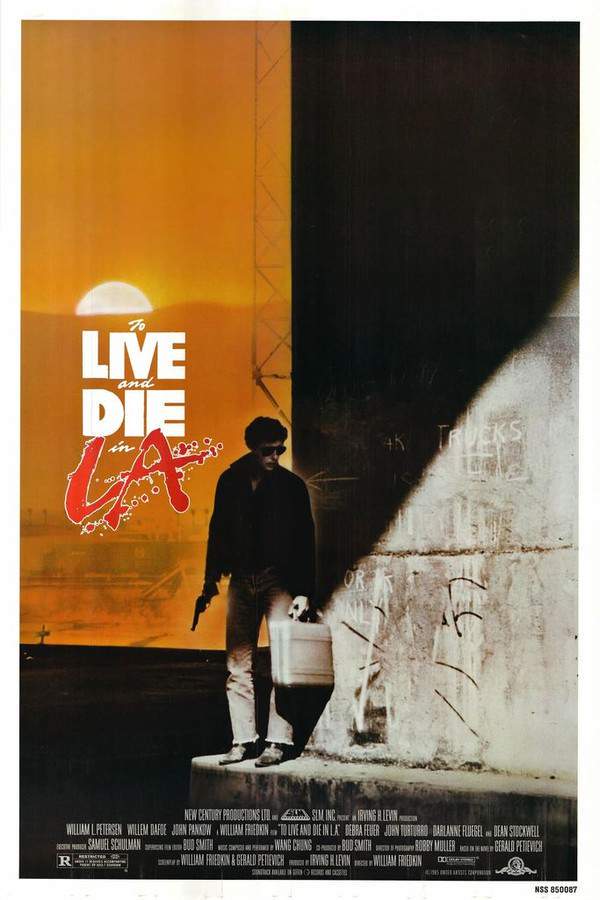
To Live and Die in L.A. (1985) movie poster

Plot Summary

To Live and Die in L.A. (1985) Plot Summary Explained

Release, runtime and language
1985 · 116 min · English
JustWatch #2,687 37
Directed by
William Friedkin
Starring
Willem Dafoe, John Turturro, Darlanne Fluegel, Dean Stockwell, Debra Feuer, John Pankow

U.S. Secret Service agent Richard Chance is driven by vengeance after his partner is murdered in Los Angeles. He relentlessly pursues Eric Masters, a skilled counterfeiter, but his increasingly reckless actions blur the lines of justice. As the investigation intensifies and casualties mount, Chance’s obsession puts his career and personal life in jeopardy, leading him down a dangerous path.

On this page (7)
  1. 1 Where to watch
  2. 2 What happens: full plot
  3. 3 Plot questions answered
  4. 4 The book behind the movie
  5. 5 Movie threads
  6. 6 Movies like To Live and Die in L.A.
  7. 7 Every angle

Where to watch

Where to Watch To Live and Die in L.A. (1985)

Where can you watch To Live and Die in L.A.? Stream, rent or buy it in the US, including on fuboTV, MGM Plus and Philo: current JustWatch availability with up-to-date prices.

Streaming availability powered by JustWatch

Full plot summary · contains spoilers

What Happens in To Live and Die in L.A.: Full Plot Summary

The whole story of To Live and Die in L.A. (1985) explained, from the opening scene to the final frame: every key event, every twist and what it all adds up to. Read it as a quick recap before the sequel, to check a scene you missed, or to finally understand what really happened.

After thwarting an assassination attempt against President Reagan by an Islamic jihadist, Secret Service agents Richard Chance and Jimmy Hart find themselves reassigned to investigate counterfeiting in Los Angeles. While Chance is known for his reckless and impulsive nature, he hides a corrupt side from his superiors. With just three days left before retirement, Hart undertakes a solitary mission to surveil a suspected counterfeiter, Eric "Rick" Masters, in a remote desert warehouse. Tragically, he meets his end at the hands of Masters and his bodyguard Jack.

Fueled by vengeance, Chance informs his new partner, John Vukovich, that he is determined to bring Masters to justice at any cost. The duo attempts to gather intel on Masters, placing one of his associates, Max Waxman, under observation. However, Vukovich's lapse in vigilance allows Masters to eliminate Waxman, who had become a liability. Although Vukovich seeks to operate within the law, Chance's desperation drives him to increasingly reckless and unethical tactics. He exploits his sexual relationship with parolee/informant Ruth for leads, while Vukovich tries to cultivate a relationship with Masters' legal advisor, Bob Grimes.

Grimes ultimately agrees to facilitate a meeting between the agents and Masters, under the guise of being prospective clients interested in counterfeit bills. Masters is hesitant but eventually consents to produce $1 million in fake currency. In return, he demands $30,000 in upfront payment—triple the legal limit. To finance this, Chance convinces Vukovich to rob Thomas Ling, an individual Ruth had identified as carrying cash for illicit diamond purchases. In a dramatic encounter at Union Station, they manage to seize Ling's money, but their cover is blown when Ling is accidentally killed during the chaos.

The following day brings shocking news: Ling was an undercover FBI agent conducting a sting operation, and the federal agents involved failed to identify Chance and Vukovich. Overwhelmed by guilt, Vukovich is torn while Chance remains focused on apprehending Masters. When Vukovich approaches Grimes for advice, he is encouraged to turn informant, but chooses loyalty over self-preservation.

Their final meeting with Masters for the exchange turns violent when Jack pulls a shotgun. Both Jack and Chance fatally wound each other as Masters escapes. Vukovich pursues him, eventually tracking him to a warehouse where all evidence is incinerated. In a confrontation, Masters reveals that Grimes had been collaborating with him, leaving Vukovich reeling. Masters attempts to eliminate Vukovich but is ultimately shot multiple times as he succumbs to the flames he ignited himself.

Later, Vukovich, now more informally dressed, meets with Ruth, who is preparing to leave Los Angeles. He insinuates that she had been aware of Ling's true identity and had been manipulating Chance all along. Despite her protests about needing the money for debts, Vukovich insists that Ruth is now under his command, mirroring the morally ambiguous tactics that Chance employed, fully entrenching her in the dangerous world she sought to escape.
Last updated: November 16, 2024 at 17:21

Was this helpful?

Plot questions answered

To Live and Die in L.A. Plot Explained: Your Questions Answered

The questions people ask most about To Live and Die in L.A. (1985): what happens in the confusing scenes, why the characters do what they do, the twists, hidden details and what the ending means. Each answer contains spoilers.

Q1

Why did Eric Masters kill Jimmy Hart?

Masters killed Hart because Hart was surveilling his remote desert warehouse, where Masters ran his counterfeiting operation. With only three days left before retirement, Hart went alone to investigate Masters and walked straight into an ambush. Masters and his bodyguard Jack eliminated Hart to prevent any information about his operation from reaching the Secret Service.

  • jimmy hart
  • eric masters
  • desert warehouse
  • killed
Q2

Why did Chance and Vukovich rob Thomas Ling at Union Station?

They robbed Ling to raise the $30,000 needed to pay Masters upfront for producing $1 million in counterfeit bills. Ruth had identified Ling as someone carrying cash for illegal diamond purchases, making him a target. However, the robbery went wrong when Ling was accidentally killed during the chaos, and they later discovered he was an undercover FBI agent.

  • thomas ling
  • union station
  • robbery
  • undercover fbi agent
Q3

What happened to Thomas Ling after he was killed?

Thomas Ling was revealed to be an undercover FBI agent conducting a sting operation. When Chance and Vukovich robbed and killed him at Union Station, they had no idea he was a federal agent. This catastrophic mistake left Vukovich overwhelmed with guilt, while Chance remained focused on his vendetta against Masters.

  • thomas ling
  • undercover
  • fbi
  • sting operation
Q4

Why did Bob Grimes agree to help Chance and Vukovich?

Grimes, Masters' legal advisor, initially agreed to facilitate a meeting between the agents and Masters by posing as a prospective client. However, it was later revealed that Grimes had been collaborating with Masters all along. His betrayal was designed to set up the agents and ensure Masters could escape.

  • bob grimes
  • masters legal advisor
  • betrayal
  • collaboration
Q5

Was Bob Grimes working with Masters the whole time?

Yes. During the warehouse confrontation, Masters revealed that Grimes had been complicit in his scheme from the beginning. Grimes deliberately set up the agents by feeding them information that benefited Masters, ultimately betraying their trust and contributing to the cycle of deception that defined the case.
  • bob grimes
  • eric masters
  • betrayal
  • conspiracy
Q6

What happened in the final confrontation at the warehouse?

During the currency exchange, Masters' bodyguard Jack pulled a shotgun, triggering a violent shootout. Both Jack and Chance inflicted fatal wounds on each other, while Masters escaped. Vukovich pursued Masters to the warehouse where all evidence was being incinerated, leading to the final confrontation where Masters was shot multiple times and succumbed to the flames he himself had ignited.
  • warehouse confrontation
  • jack
  • masters
  • exchange
  • shootout
Q7

How did Eric Masters die?

Masters died after being shot multiple times by Vukovich during their struggle in the warehouse. Interestingly, he succumbed to the very flames he had set to destroy all evidence of his crimes. His death represents a tragic irony, a life of crime ultimately consuming him through the fire he used to cover his tracks.

  • eric masters death
  • warehouse
  • flames
  • burned
Q8

Why did Vukovich take over Ruth at the end?

After Chance's death, Vukovich met Ruth as she prepared to leave Los Angeles. He implied she had manipulated Chance all along and was aware of Ling's FBI identity. By insisting she was now under his command, Vukovich demonstrated his own moral descent, he had adopted Chance's corrupt tactics, fully entrenching Ruth in the dangerous world she sought to escape and completing his transformation into a morally ambiguous figure.

  • vukovich
  • ruth
  • manipulation
  • control
  • moral corruption
Q9

Why did Chance let Jack kill him during the exchange?

Chance's reckless pursuit of vengeance had consumed him entirely. During the exchange, when Jack raised his shotgun, Chance did not back down, instead engaging in a deadly confrontation that resulted in both Jack and Chance fatally wounding each other. His obsession with avenging Hart had become a death wish, and his willingness to die reflected his complete surrender to vengeance over self-preservation.

  • chance
  • jack
  • 牺牲
  • vengeance
  • final confrontation
Q10

Why did Masters demand $30,000 upfront for the counterfeit money?

Masters demanded $30,000 in upfront payment, triple the legal limit for such transactions, because it guaranteed he would not be betrayed by the agents. This substantial upfront sum ensured their commitment to the deal while providing Masters with immediate profit before delivering the $1 million in fake currency. It also represented his distrust and calculated risk management.

  • 30000
  • payment
  • counterfeit
  • upfront
  • masters

Movie threads

More Movies Like To Live and Die in L.A., by Mood & Story

Curated lists built around what makes To Live and Die in L.A. tick: the same mood, the same kind of story or the same emotional payoff. Each list explains why these movies belong together.

Obsession and moral corruption thrillers like To Live and Die in L.A.

Stories where a protagonist's quest for justice destroys their own morality. If you liked the dark spiral of obsession in To Live and Die in L.A., explore more movies where protagonists are consumed by their mission. These films feature intense thrillers and crime dramas with morally ambiguous characters, bleak endings, and heavy emotional weight, perfect for fans of gritty, character-driven tension.

  • obsessive
  • tense
  • cynical
  • desperate
  • gritty
  • corrupt
  • Tone: dark, cynical, tense
  • Pacing: fast, relentless
Why these movies?

The story pattern: The narrative follows a protagonist who starts with a clear, often righteous, objective. However, their single-minded focus and willingness to bend or break the rules lead to a gradual moral decay. The story typically escalates in tension and stakes, culminating in a conclusion where the protagonist achieves their goal at a great personal cost or fails, having lost their moral compass in the process.

Why they belong together: Movies in this thread share a central theme of a character's self-destructive obsession. They are united by a dark tone, high intensity, and a pacing that accelerates as the protagonist's actions become more reckless. The emotional journey is heavy, focusing on the psychological cost of corruption and the bleak reality that vengeance often consumes the avenger.

Gritty 80s crime thrillers with the vibe of To Live and Die in L.A.

High-intensity urban crime stories with a palpable sense of dread. For viewers who enjoyed the fast pace and gritty atmosphere of To Live and Die in L.A., this section features similar high-intensity crime films from the 1980s. Discover movies with dark tones, tense action, morally complex characters, and a raw, unpolished aesthetic that defines this compelling subgenre.

  • gritty
  • tense
  • paranoid
  • cynical
  • relentless
  • anxious
  • Tone: dark, tense, cynical
  • Pacing: fast, relentless
Why these movies?

The story pattern: These narratives are typically linear but propelled by a series of high-stakes confrontations, chases, and investigations. The plot moves quickly from one tense set-piece to the next, with little downtime for reflection. The world is often portrayed as corrupt and unforgiving, where characters operate in shades of gray and survival depends on ruthless pragmatism.

Why they belong together: These films are grouped by their shared aesthetic and narrative drive. They possess a distinct 80s sensibility, combining a fast pace with high intensity and a dark, cynical tone. The mood is consistently tense, gritty, and anxious, capturing a specific feeling of urban decay and moral ambiguity that was prevalent in the genre during that decade.

If you liked this

Movies Like To Live and Die in L.A.

Similar movies to To Live and Die in L.A.: the same genre, themes or kind of story. Each one comes with its own plot summary, timeline and ending explained.

Browse all movie summaries

Every angle

To Live and Die in L.A. (1985) Explained: Plot, Timeline & Characters

Everything about To Live and Die in L.A. in one place: what happens in the plot summary, the timeline in chronological order, the characters and meaning and a spoiler-free summary. What's After the Movie adds the cast, box office and post-credit scenes.

Coming soon on iOS and Android

The Plot Explained Movie Summary App

Plot summaries, endings explained and timelines on your phone. Catch up on any movie in minutes, save your favorites and never miss a twist again.

Be the first to know when we launch. Your email stays private, always.

Learn more about the app