Plot Explained Spoilers guaranteed!
Plot Explained

Browse by genre

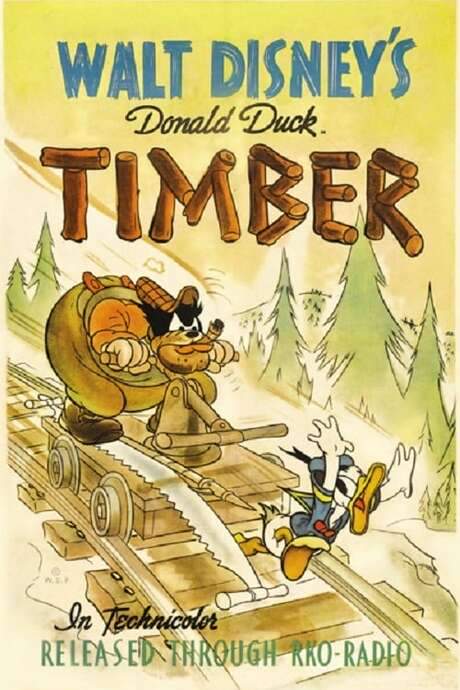
Timber (1941) movie poster

Timeline

Timber (1941) Timeline Explained – Every Event in Order

Release, runtime and language
1941 · 8 mins · English
Directed by
Jack King, Frank Tashlin
Starring
Billy Bletcher, Clarence Nash

Donald, a hobo, steals dinner from Pegleg Pete, who replies by giving him a stick of dynamite and forcing him to cut trees. Donald proves a hopeless lumberjack, leading to a series of blunders. After several mishaps, Pete (also called Pierre) pursues Donald aboard railroad handcars.

On this page (5)
  1. 1 Events in order (12)
  2. 2 Timeline questions answered
  3. 3 Movie threads
  4. 4 Movies like Timber
  5. 5 Every angle

12 events in order · contains spoilers

Timber Timeline: Events in Chronological Order

Every key event of Timber (1941) in order, scene by scene, with when and where it takes place. Use it to untangle flashbacks, time jumps and parallel storylines, to refresh your memory before the sequel or to find the exact scene you are thinking of.

  1. Donald traces a tasty scent to Peg-Leg Pete's log cabin

    Donald the hobo travels along the railroad tracks, whistling and sniffing out tasty aromas. He follows the smell to Peg-Leg Pete's log cabin, where the food seems to be coming from. This moment sets up the clash between hunger and Pete's gruff temperament.

    Where
    Along the railroad tracks to Peg-Leg Pete's log cabin
  2. Donald steals Pete's lunch

    Inside Pete's cabin yard, Donald grabs and pockets Pete's lunch while Pete is prepping to eat. Pete is furious at the theft and confronts the intruder, escalating their feud. The theft triggers immediate hostility.

    Where
    Outside Peg-Leg Pete's log cabin
  3. Pete offers dynamite, mistaking it for more food

    Pete hands Donald a stick of dynamite, speaking in a French-Canadian accent and asking if he wants more food. Donald naively accepts, thinking it's edible. The dynamite explodes, shattering the moment and drawing Pete's anger.

    Where
    Outside Pete's log cabin
  4. Pete hurls an axe and orders Donald to work

    Pete throws an axe at Donald and orders him to get to work, signaling the start of a brutal, slapstick labor dispute. The axe is so heavy that it knocks Donald into a tree trunk. The confrontation quickly spirals into a painful, comic brawl.

    Where
    Near Pete's cabin and yard
  5. Donald defeats the old axe and improvises a new tool

    Donald uses a stone to break the heavy axe and then shows it to Pete as proof of his invented method. Pete shapes a new handle from wood, upgrading his tool in response. The improvised weapon swap deepens the ridiculous clash.

    Where
    Around the tree by Pete's cabin
  6. Donald switches to a crosscut saw; ends up in Pete's shirt

    Donald switches to a crosscut saw, but it jams in the thick bark. After a tug, he ends up wedged inside Pete's shirt with part of the saw still inside Pete's belly, and he starts tickling Pete as he tries to free himself. Pete rises and gives chase, furious at the intrusion.

    Where
    Inside Pete's shirt
  7. The vibrating saw hammers Pete; Donald escapes

    Donald bounces on the ground with the vibrating saw and leaps over Pete as the tool's ends strike, pushing Pete's head into the dirt. Pete recovers and chases him again, intent on catching the intruder. The chaotic movement escalates the chase.

    Where
    In Pete's yard
  8. A massive tree falls on Pete; chase continues

    Donald chops down a huge tree to hinder Pete, and it crashes onto the lumberjack. Pete roars with anger and starts pursuing Donald through the yard and toward the tracks. The pursuit resumes with comic intensity.

    Where
    Near the yard and trees by the cabin
  9. The chase moves to the railroad; handcars and a tunnel

    The chase carries them onto the railroad, where they ride handcars and speed through a tunnel. Pete tries grabbing Donald by the tail but keeps missing, while the moving car bumps Donald along. The wild pursuit continues toward a new set of dangers.

    Where
    Railroad tracks and tunnel
  10. Pete sharpens and heats his peavey; it backfires

    Pete sharpens the peavey and heats the tip by placing it against a wheel, intending to burn Donald. The heat ends up driving Donald faster, turning the trap into a ridiculous boost for the fugitive. Donald uses the moment to stay ahead.

    Where
    On the handcar/rail yard
  11. Coal falls on Pete; flatcar is dismantled

    Donald triggers a coal-storage door, dumping coal onto Pete and blasting apart his flatcar. Pete staggers and ends up hopping along on one wheel. The pile of coal slows Pete down while Donald gains distance.

    Where
    Coal-storage area by the tracks
  12. Donald turns the track and sends Pete crashing; sunset departure

    Donald pulls a lever that reverses the track, sending Pete off course and crashing through a row of boxcars. Satisfied, Donald waves goodbye through a boxcar hole and walks off into the sunset, singing a jaunty tune. The feud ends with Donald's triumphant escape.

    Where
    Railroad yard near boxcars

Last updated: October 09, 2025 at 09:33

Was this helpful?

Timeline questions answered

Timber Timeline Explained: Your Questions Answered

When does it happen, and why in that order? The questions people ask about the chronology of Timber (1941): time jumps, flashbacks, cause and effect between scenes and the correct order of events, each answered with spoilers.

Q1

Why does Pete give Donald an axe instead of calling the police?

Pete is too frustrated and proud to simply call for help. After Donald steals his lunch and survives the dynamite explosion, Pete decides to make Donald work for his food as punishment. The cartoon portrays Pete as a hot-tempered lumberjack who prefers revenge over reason, which drives the slapstick escalation.

  • pete
  • donald
  • axe
  • lumberjack
  • payment
Q2

How does Donald end up inside Pete's shirt?

After switching from the broken axe to a crosscut saw, Donald tries to pull the jammed blade free from a tree trunk. His violent tugging launches him backward, and he lands directly inside Pete's shirt with the saw still wedged against Pete's stomach. The saw's positioning creates a ticklish situation that sends Pete into a fury.

  • donald
  • pete
  • shirt
  • saw
  • tickling
Q3

Why does the vibrating saw push Pete's head into the dirt?

When Donald bounces on the ground while holding the vibrating saw, the saw's handle ends thrust outward in opposite directions. One end strikes Pete's chin while the other hits his forehead, driving his head downward into the dirt with each bounce. The physical comedy relies on the saw acting like a lever that forces Pete's head down.

  • donald
  • pete
  • saw
  • vibration
  • physical comedy
Q4

How does Donald chop down the tree that falls on Pete?

While being chased, Donald grabs an axe and frantically chops at a large tree. The tree falls directly onto Pete, who had been pursuing him from behind. The moment is accidental rather than strategic, Donald's clumsy swinging simply works in his favor at the right moment.

  • donald
  • pete
  • tree
  • falling
  • chase
Q5

What happens to Pete at the end of the cartoon?

Donald pulls a lever that reverses the railroad track, causing Pete to lose control of his flatcar. Pete crashes through a row of boxcars and presumably gets tangled in the wreckage. Donald waves goodbye through a hole in one of the boxcars and walks off into the sunset, unharmed and victorious.

  • pete
  • crash
  • boxcars
  • donald
  • escape
Q6

Why does Pete's heated peavey backfire and help Donald?

Pete heats the tip of his peavey by pressing it against a wheel, intending to burn Donald with the hot metal. However, the heat only makes Donald pedal faster on the handcar, turning the trap into an unexpected boost. The hot metal apparently motivates Donald to outrun the threat rather than getting burned.

  • pete
  • peavey
  • heat
  • burn
  • backfire
Q7

How does Donald trigger the coal to fall on Pete?

Donald jumps to a station lever and pulls it, which opens a coal-storage door above the tracks. The coal pours down directly onto Pete's flatcar, destroying it and leaving Pete stumbling on a single wheel. Donald uses the environment to his advantage by exploiting the coal depot near the railroad.

  • donald
  • coal
  • pete
  • lever
  • flatcar
Q8

Why does Donald wave goodbye at the end?

After successfully escaping Pete's pursuit, Donald looks back through a boxcar hole and waves farewell. This gesture signifies his triumph over the lumberjack and his return to his carefree hobo lifestyle. The cartoon ends with Donald continuing his journey, humming his signature tune, satisfied with his chaotic victory.

  • donald
  • goodbye
  • sunset
  • escape
  • triumph

Movie threads

More Movies Like Timber, by Mood & Story

Curated lists built around what makes Timber tick: the same mood, the same kind of story or the same emotional payoff. Each list explains why these movies belong together.

Fast-Paced Slapstick Chases like Timber

Frenetic pursuits built on a foundation of escalating physical comedy and chaos. If you enjoyed the wild chase and comedic struggle in Timber, you'll love these movies. This list features high-energy animated shorts and comedies where characters are locked in a playful rivalry, leading to a cascade of hilarious physical gags and chaotic pursuits.

  • chaotic
  • slapstick
  • energetic
  • playful
  • chase
  • silly
  • Tone: whimsical, playful
  • Pacing: fast, chaotic
Why these movies?

The story pattern: The narrative is typically straightforward, built around a simple conflict—often a rivalry or a minor transgression—that immediately escalates into a relentless, fast-paced chase. The plot is a vehicle for a series of inventive, escalating physical gags, with the protagonist using wit (or sheer luck) to narrowly evade their pursuer.

Why they belong together: Movies are grouped here for their shared emphasis on energetic pacing, a whimsical tone, and a narrative structure driven by physical comedy and chase sequences. They deliver a consistent vibe of playful chaos and lighthearted, consequence-free fun.

Cartoons with Playful Chaos and Accidental Mayhem like Timber

Stories where well-intentioned or foolish actions spiral into delightful disaster. Fans of the hilarious lumberjack blunders in Timber will enjoy these films. Discover similar cartoons and comedies where characters accidentally create chaos, leading to a series of funny mishaps and slapstick disasters in a lighthearted, whimsical setting.

  • mischief
  • frustrated
  • accidental
  • playful
  • escalating
  • slapstick
  • Tone: whimsical, silly
  • Pacing: fast, escalating
Why these movies?

The story pattern: The narrative follows a character attempting a simple goal, but their incompetence, overconfidence, or plain bad luck causes every action to backfire spectacularly. The story unfolds as a series of connected blunders, each more disastrous than the last, building to a climax of total mayhem before a peaceful resolution.

Why they belong together: These movies are unified by their core comedic mechanism: the snowballing of accidental chaos. They share a light emotional weight, a fast pace to keep the gags coming, and a tone that finds joy in harmless disaster and cartoonish frustration.

If you liked this

Movies Like Timber

Similar movies to Timber: the same genre, themes or kind of story. Each one comes with its own plot summary, timeline and ending explained.

Browse all movie summaries

Every angle

Timber (1941) Explained: Plot, Timeline & Characters

Everything about Timber in one place: what happens in the plot summary, the timeline in chronological order, the characters and meaning and a spoiler-free summary. What's After the Movie adds the cast, box office and post-credit scenes.

Coming soon on iOS and Android

The Plot Explained Movie Summary App

Plot summaries, endings explained and timelines on your phone. Catch up on any movie in minutes, save your favorites and never miss a twist again.

Be the first to know when we launch. Your email stays private, always.

Learn more about the app