Plot Explained Spoilers guaranteed!
Plot Explained

Browse by genre

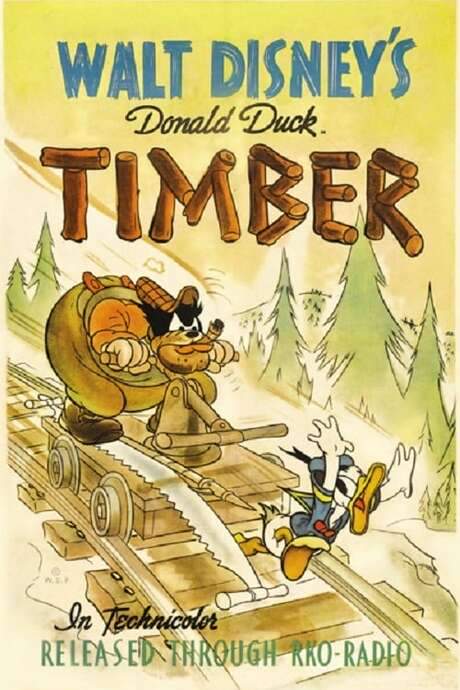
Timber (1941) movie poster

Plot Summary

Timber (1941) Plot Summary Explained

Release, runtime and language
1941 · 8 mins · English
Directed by
Jack King, Frank Tashlin
Starring
Billy Bletcher, Clarence Nash

Donald, a hobo, steals dinner from Pegleg Pete, who replies by giving him a stick of dynamite and forcing him to cut trees. Donald proves a hopeless lumberjack, leading to a series of blunders. After several mishaps, Pete (also called Pierre) pursues Donald aboard railroad handcars.

On this page (5)
  1. 1 What happens: full plot
  2. 2 Plot questions answered
  3. 3 Movie threads
  4. 4 Movies like Timber
  5. 5 Every angle

Full plot summary · contains spoilers

What Happens in Timber: Full Plot Summary

The whole story of Timber (1941) explained, from the opening scene to the final frame: every key event, every twist and what it all adds up to. Read it as a quick recap before the sequel, to check a scene you missed, or to finally understand what really happened.

A hungry, wandering Donald Duck drifts along the railroad tracks, whistling and singing the tune that will become his call of the day. His nose catches the scent of something tasty and leads him to a log cabin that is also the home of the lumberjack Peg-Leg Pete. The moment he steps in, chaos begins to simmer.

> She'll Be Coming 'Round the Mountain

Pete, trying to enjoy a quiet lunch, finds his meal snatched away by the feisty visitor. In a flash of frustration, he hands [Donald Duck] a stick of dynamite, a weapon the duck mistakes for food. The resulting explosion rattles the cabin, and Pete (speaking in a French Canadian accent) asks if Donald wants more food. When the duck again says yes, Pete hurls an axe in response, telling him to get to work. The axe is so heavy that it drives Donald straight into the trunk of a tree.

A stubborn exchange of improvisation follows: Donald breaks the axe with a stone and shows it to Pete, who in turn hot-woodes a blade onto a wooden handle to keep the tool going. Donald swings with reckless abandon, and the blade snaps off, flying past Pete and leaving a patch of ripped pants in its wake. Not discouraged, the duck searches the lumberjack’s tree for a more modern method and finds a crosscut saw, which he begins to use instead.

The saw soon jams deep in the thick bark, and Donald’s attempt to yank it free blasts him backward, tossing him into Pete and taking them both to the ground. The chaos escalates as Donald ends up inside Pete’s shirt, with the saw wedged against Pete’s midsection. He begins to pull the saw free, and the tickling sensation only fuels the comic mayhem. Pete rises, furious, and chases Donald, warning him of dire consequences.

As the chase continues, the saw vibrates with wild speed, and Donald bounces on the ground, the saw’s ends striking Pete and driving his head into the dirt. Pete spots his foe and retaliates by snapping off a tree branch, which promptly falls onto Pete himself, who rises again only to be kicked by Donald. The impact leaves Pete’s head wedged between the saw’s ends, a precarious moment that Donald uses to his advantage. In a further burst of accidental invention, Donald chops down a huge tree, and it collapses onto Pete, enraging him even more.

With a roar that fills the woods, Pete gives chase once more, now down a railroad line. The pursuit becomes a chaotic sprint on handcars, with Pete eagerly trying to grab Donald by the tail but repeatedly missing. Pete uses the flatcar’s momentum to try and bump Donald’s rear, increasing the danger with a sharpened peavey. He wires his plan with heat by pressing the weapon against a wheel, intending to burn Donald, but the scorching heat only seems to push the duck to speed.

Donald jumps clear and slams a lever at a station, triggering a coal-storage door that showers Pete with coal. The heavy clumps crash onto Pete’s flatcar, dismantling it and leaving him to ride on one wheel. Now on foot, Donald darts away, but not before he pulls another lever that reverses the track. Pete, unable to steer in time, careens off course and crashes through a line of boxcars.

With the danger behind him, Donald looks back briefly and waves farewell through a boxcar hole, then strides into the sunset, continuing to sing the tune that began this wild encounter.

This short is a brisk, slapstick showcase of physical humor and clever, escalating gags, built around the classic rivalry between a hungry mischief-maker and a determined lumberworker. The action moves rapidly from a clever lunchroom theft to improvised weapons, improvised repairs, and a high-stakes chase that ends with a dramatic, comic crash and a peaceful, ending song as the sun sets.
Last updated: October 09, 2025 at 09:33

Was this helpful?

Plot questions answered

Timber Plot Explained: Your Questions Answered

The questions people ask most about Timber (1941): what happens in the confusing scenes, why the characters do what they do, the twists, hidden details and what the ending means. Each answer contains spoilers.

Q1

Why does Pete give Donald an axe instead of calling the police?

Pete is too frustrated and proud to simply call for help. After Donald steals his lunch and survives the dynamite explosion, Pete decides to make Donald work for his food as punishment. The cartoon portrays Pete as a hot-tempered lumberjack who prefers revenge over reason, which drives the slapstick escalation.

  • pete
  • donald
  • axe
  • lumberjack
  • payment
Q2

How does Donald end up inside Pete's shirt?

After switching from the broken axe to a crosscut saw, Donald tries to pull the jammed blade free from a tree trunk. His violent tugging launches him backward, and he lands directly inside Pete's shirt with the saw still wedged against Pete's stomach. The saw's positioning creates a ticklish situation that sends Pete into a fury.

  • donald
  • pete
  • shirt
  • saw
  • tickling
Q3

Why does the vibrating saw push Pete's head into the dirt?

When Donald bounces on the ground while holding the vibrating saw, the saw's handle ends thrust outward in opposite directions. One end strikes Pete's chin while the other hits his forehead, driving his head downward into the dirt with each bounce. The physical comedy relies on the saw acting like a lever that forces Pete's head down.

  • donald
  • pete
  • saw
  • vibration
  • physical comedy
Q4

How does Donald chop down the tree that falls on Pete?

While being chased, Donald grabs an axe and frantically chops at a large tree. The tree falls directly onto Pete, who had been pursuing him from behind. The moment is accidental rather than strategic, Donald's clumsy swinging simply works in his favor at the right moment.

  • donald
  • pete
  • tree
  • falling
  • chase
Q5

What happens to Pete at the end of the cartoon?

Donald pulls a lever that reverses the railroad track, causing Pete to lose control of his flatcar. Pete crashes through a row of boxcars and presumably gets tangled in the wreckage. Donald waves goodbye through a hole in one of the boxcars and walks off into the sunset, unharmed and victorious.

  • pete
  • crash
  • boxcars
  • donald
  • escape
Q6

Why does Pete's heated peavey backfire and help Donald?

Pete heats the tip of his peavey by pressing it against a wheel, intending to burn Donald with the hot metal. However, the heat only makes Donald pedal faster on the handcar, turning the trap into an unexpected boost. The hot metal apparently motivates Donald to outrun the threat rather than getting burned.

  • pete
  • peavey
  • heat
  • burn
  • backfire
Q7

How does Donald trigger the coal to fall on Pete?

Donald jumps to a station lever and pulls it, which opens a coal-storage door above the tracks. The coal pours down directly onto Pete's flatcar, destroying it and leaving Pete stumbling on a single wheel. Donald uses the environment to his advantage by exploiting the coal depot near the railroad.

  • donald
  • coal
  • pete
  • lever
  • flatcar
Q8

Why does Donald wave goodbye at the end?

After successfully escaping Pete's pursuit, Donald looks back through a boxcar hole and waves farewell. This gesture signifies his triumph over the lumberjack and his return to his carefree hobo lifestyle. The cartoon ends with Donald continuing his journey, humming his signature tune, satisfied with his chaotic victory.

  • donald
  • goodbye
  • sunset
  • escape
  • triumph

Movie threads

More Movies Like Timber, by Mood & Story

Curated lists built around what makes Timber tick: the same mood, the same kind of story or the same emotional payoff. Each list explains why these movies belong together.

Fast-Paced Slapstick Chases like Timber

Frenetic pursuits built on a foundation of escalating physical comedy and chaos. If you enjoyed the wild chase and comedic struggle in Timber, you'll love these movies. This list features high-energy animated shorts and comedies where characters are locked in a playful rivalry, leading to a cascade of hilarious physical gags and chaotic pursuits.

  • chaotic
  • slapstick
  • energetic
  • playful
  • chase
  • silly
  • Tone: whimsical, playful
  • Pacing: fast, chaotic
Why these movies?

The story pattern: The narrative is typically straightforward, built around a simple conflict—often a rivalry or a minor transgression—that immediately escalates into a relentless, fast-paced chase. The plot is a vehicle for a series of inventive, escalating physical gags, with the protagonist using wit (or sheer luck) to narrowly evade their pursuer.

Why they belong together: Movies are grouped here for their shared emphasis on energetic pacing, a whimsical tone, and a narrative structure driven by physical comedy and chase sequences. They deliver a consistent vibe of playful chaos and lighthearted, consequence-free fun.

Cartoons with Playful Chaos and Accidental Mayhem like Timber

Stories where well-intentioned or foolish actions spiral into delightful disaster. Fans of the hilarious lumberjack blunders in Timber will enjoy these films. Discover similar cartoons and comedies where characters accidentally create chaos, leading to a series of funny mishaps and slapstick disasters in a lighthearted, whimsical setting.

  • mischief
  • frustrated
  • accidental
  • playful
  • escalating
  • slapstick
  • Tone: whimsical, silly
  • Pacing: fast, escalating
Why these movies?

The story pattern: The narrative follows a character attempting a simple goal, but their incompetence, overconfidence, or plain bad luck causes every action to backfire spectacularly. The story unfolds as a series of connected blunders, each more disastrous than the last, building to a climax of total mayhem before a peaceful resolution.

Why they belong together: These movies are unified by their core comedic mechanism: the snowballing of accidental chaos. They share a light emotional weight, a fast pace to keep the gags coming, and a tone that finds joy in harmless disaster and cartoonish frustration.

If you liked this

Movies Like Timber

Similar movies to Timber: the same genre, themes or kind of story. Each one comes with its own plot summary, timeline and ending explained.

Browse all movie summaries

Every angle

Timber (1941) Explained: Plot, Timeline & Characters

Everything about Timber in one place: what happens in the plot summary, the timeline in chronological order, the characters and meaning and a spoiler-free summary. What's After the Movie adds the cast, box office and post-credit scenes.

Coming soon on iOS and Android

The Plot Explained Movie Summary App

Plot summaries, endings explained and timelines on your phone. Catch up on any movie in minutes, save your favorites and never miss a twist again.

Be the first to know when we launch. Your email stays private, always.

Learn more about the app