







Plot Explained Spoilers guaranteed!
Plot Explained

Browse by genre

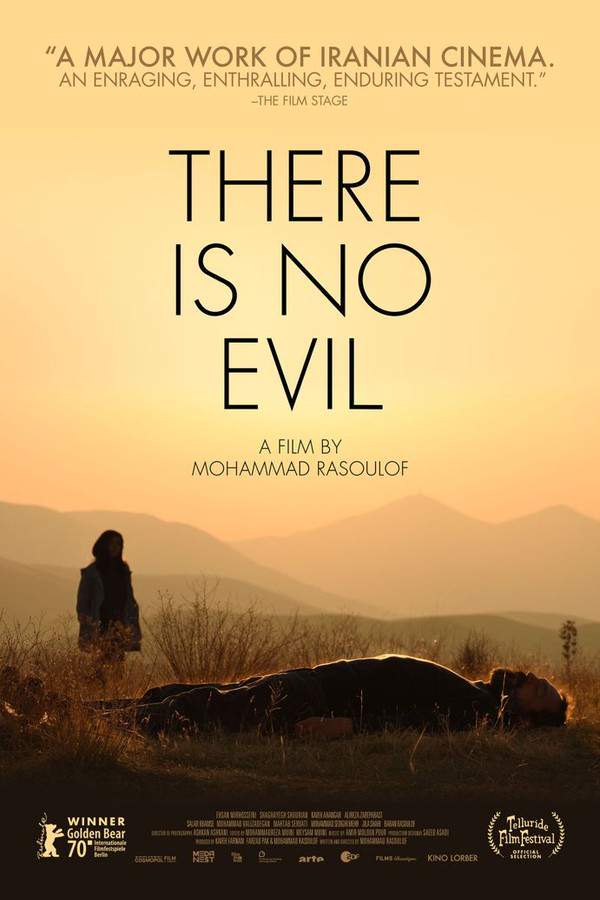
There Is No Evil (2021) movie poster

Timeline

There Is No Evil (2021) Timeline Explained – Every Event in Order

Release, runtime and language
2021 · 150 min · Persian
Echo score 78
JustWatch #15,413 11
Directed by
Mohammad Rasoulof
Starring
Alireza Zareparast, Baran Rasoulof, Darya Moghbeli, Ehsan Mirhosseini, Kaveh Ahangar, Mahtab Servati

This Iranian anthology presents four interconnected stories centered on men grappling with a profound moral crisis. They are compelled to participate in the execution of prisoners, forcing them to choose between following the state's orders and risking everything to uphold their personal values. Each character's decision carries significant repercussions, impacting their relationships, careers, and sense of self as they navigate a complex system.

On this page (6)
  1. 1 Where to watch
  2. 2 Events in order (14)
  3. 3 Timeline questions answered
  4. 4 Movie threads
  5. 5 Movies like There Is No Evil
  6. 6 Every angle

Where to watch

Where to Watch There Is No Evil (2021)

Where can you watch There Is No Evil? Stream, rent or buy it in the US, including on Kino Film Collection, Kanopy and Amazon Video: current JustWatch availability with up-to-date prices.

Streaming availability powered by JustWatch

14 events in order · contains spoilers

There Is No Evil Timeline: Events in Chronological Order

Every key event of There Is No Evil (2021) in order, scene by scene, with when and where it takes place. Use it to untangle flashbacks, time jumps and parallel storylines, to refresh your memory before the sequel or to find the exact scene you are thinking of.

  1. Heshmat's Daily Routine

    Heshmat begins his day by helping his neighbors save a cat stuck in a tree. This seemingly simple act reflects the kindness and normalcy in his life before the heavy burdens he faces become apparent.

  2. Family Interactions

    Heshmat picks up his wife and daughter from their respective workplaces and school, showcasing the warmth and love they share as a family. They visit his mother-in-law, where the familial bond is strengthened through their interactions.

  3. Preparing for the Wedding

    The night before a wedding, Heshmat assists his wife in putting highlights in her hair. This intimate moment deepens their connection, contrasting sharply with the dark reality that awaits him the following day.

  4. Dreadful Responsibilities

    The following day, Heshmat drives to work, grappling with a deep sense of dread. He is confronted with the grim reality of his job: executing several condemned prisoners, which weighs heavily on him.

    Where
    Prison
  5. Pouya's Moral Dilemma

    In the second episode, soldier Pouya receives an order to execute a man, prompting a profound internal struggle. He reaches out to his brother for help, feeling trapped by the mandatory conscription that inhibits his freedom.

  6. Discussion Among Soldiers

    As Pouya confides in his bunkmates, they discuss the moral implications of carrying out the execution. The pressure mounts as another soldier offers to take Pouya's place for a price, intensifying the ethical considerations at play.

  7. Desperate Escape

    In a bold move, Pouya decides to escape from the situation, overpowering several soldiers. He discards the execution rifle and momentarily reunites with his girlfriend Tahmineh, savoring a fleeting moment of happiness amid the turmoil.

  8. Javad's Proposal Plan

    The focus shifts to Javad, who plans to propose to his girlfriend Na'na during her birthday celebration. However, the atmosphere is thick with tension due to the recent death of a political activist, Keyvan.

    When
    Na'na's Birthday
  9. Guilt and Realization

    As the family mourns, Javad comes to a grave realization. He discovers that he was complicit in Keyvan's execution during his service, which weighs heavily on his conscience and disrupts his relationship with Na'na.

  10. Heartbreak and Departure

    The culmination of Javad's guilt leads to a heartbreaking argument with Na'na, resulting in her swift exit from their relationship. The pain of his actions creates a chasm between them that seems insurmountable.

  11. Darya's Family Visit

    In the final episode, university student Darya visits her relatives, Bahram and Zaman, at their countryside home. During this visit, the conversation touches upon life choices and ethical dilemmas, particularly involving wildlife.

    Where
    Countryside Home
  12. The Reveal of Truth

    Darya learns that Bahram is her biological father, a revelation that stirs complex emotions within her. As he recounts the sacrifices he made, including separating from his family, their conversation takes a heavy turn.

  13. Bahram's Declining Health

    As Bahram's health deteriorates, Darya faces the reality of loss and the painful history behind her existence. Their discussions reflect deep emotional struggles, exposing layers of familial tension and morality.

  14. Emotional Farewell

    Darya's departure is filled with poignant emotions as she bids farewell to Bahram. This moment is symbolized by a fleeting glimpse of a fox in the brush, mirroring the difficult choices that haunt her family.

Last updated: November 16, 2024 at 16:27

Was this helpful?

Timeline questions answered

There Is No Evil Timeline Explained: Your Questions Answered

When does it happen, and why in that order? The questions people ask about the chronology of There Is No Evil (2021): time jumps, flashbacks, cause and effect between scenes and the correct order of events, each answered with spoilers.

Q1

Why does Heshmat participate in executions despite having a normal family life?

Heshmat is compelled to participate in executions as part of his job within Iran's justice system. The film suggests he is trapped by the system, dissent or refusal would likely result in severe consequences for himself and his family. His seemingly normal family life coexists with the dark reality of his work, highlighting how the regime maintains control through forcing ordinary citizens into morally compromising positions.

Foreshadowing: Earlier scenes show Heshmat helping neighbors and bonding with his family, creating a stark contrast that makes his grim task more disturbing.

  • heshmat
  • executioner
  • moral dilemma
  • iran
  • conscription system
Q2

How does Pouya escape from carrying out his execution order?

Pouya escapes by overpowering several soldiers at his barracks, discarding his rifle, and fleeing the premises. He then reunites briefly with his girlfriend Tahmineh, experiencing a moment of joy before the authorities pursue him. The escape represents his refusal to comply with the system, though the film leaves his ultimate fate ambiguous.

Foreshadowing: Throughout the episode, Pouya discusses his desire to leave the country with Tahmineh, showing his desperation to escape his circumstances.

  • pouya
  • escape
  • soldier
  • tahmineh
  • desertion
Q3

Why does Na'na leave Javad after learning about Keyvan's execution?

Na'na leaves Javad because she discovers he was complicit in executing Keyvan, a political activist whose ideals opposed the regime. Keyvan's death had deeply affected her family, who were mourning him during her birthday. Learning that her boyfriend participated in killing someone she considered a martyr creates an irreconcilable breach of trust, leading her to end the relationship immediately.

Foreshadowing: The tension at Na'na's birthday gathering, where the family mourns Keyvan, establishes the emotional weight of his death before Javad's revelation.

  • javad
  • na'na
  • keyvan
  • execution
  • breakup
  • activist
Q4

Why did Bahram leave his family and abandon Darya?

Bahram left his family after refusing to execute a prisoner. In Iran's system, refusing such orders would have serious consequences, so he chose to separate from his wife and young daughter Darya to protect them from retaliation. He sent them away and lived in exile in the countryside, sacrificing his relationship with Darya to avoid being forced into execution and to keep his family safe.

Foreshadowing: The ethical discussions about killing wildlife to protect livestock mirror Bahram's broader refusal to kill, establishing his moral stance.

  • bahram
  • darya
  • father
  • refusal
  • execution
  • family separation
Q5

How are the four stories connected to each other?

The four stories are connected thematically through the central moral crisis of execution within Iran's justice system. Each episode features a different man facing the choice to execute or refuse, exploring how the system affects ordinary people. While the characters don't directly interact, they represent various positions within the same oppressive structure, those who carry out executions, those who refuse, and those who suffer the consequences.

Foreshadowing: The anthology structure deliberately repeats the same ethical dilemma across different perspectives, reinforcing the systemic nature of the violence.

  • anthology
  • interconnected stories
  • execution system
  • iran
  • moral dilemma
Q6

What happens to Pouya after he escapes from the military?

After overpowering the soldiers and discarding his rifle, Pouya manages to reunite briefly with his girlfriend Tahmineh. The film shows them sharing a moment of happiness together. However, his ultimate fate remains unclear, the escape represents his resistance, but the authorities likely pursue him, suggesting he will face significant consequences.

Foreshadowing: Pouya's earlier conversations about wanting to leave Iran with Tahmineh establish his desperation to escape the system.

  • pouya
  • escape
  • aftermath
  • military
  • consequences
Q7

Why is Bahram dying in the final episode?

Bahram is dying from a serious illness during the final episode. His declining health becomes apparent during Darya's visit, and he eventually passes away. His illness adds to the emotional weight of the reunion, as Darya learns the truth about her paternity just as she is about to lose her father permanently.

Foreshadowing: The earlier scenes with Bahram discussing life and death foreshadow his imminent death.

  • bahram
  • death
  • illness
  • darya
  • farewell
Q8

What does the fox symbolize at the end of the film?

The fox Darya glimpses in the brush serves as a metaphor for freedom and the difficult choices her family has faced. Just as Bahram discussed earlier about killing wildlife to protect livestock, the fox represents the moral compromises and sacrifices the family has made. The fleeting sight contrasts with the weight of their history, symbolizing both escape and the persistent presence of their past choices.

Foreshadowing: The earlier conversation about killing foxes to protect sheep establishes this wildlife imagery as a theme.

  • fox
  • symbolism
  • freedom
  • metaphor
  • darya
  • bahram
Q9

Why does Javad plan to propose to Na'na while knowing about his involvement in Keyvan's execution?

Javad appears to have compartmentalized his actions during military service from his civilian life. When he plans the proposal during Na'na's birthday, he has not yet fully processed or come to terms with his complicity in Keyvan's execution. It is only during the birthday gathering, surrounded by the mourning family, that the weight of his actions fully hits him, leading to his confession and the breakdown of the relationship.

Foreshadowing: The tension and awkwardness during the birthday celebration hints at Javad's internal struggle before his realization.

  • javad
  • proposal
  • na'na
  • guilt
  • confession
  • keyvan
Q10

Why does Zaman finally reveal that Bahram is Darya's father?

Zaman reveals the truth about Bahram being Darya's biological father because Bahram is dying and she wants Darya to know her paternal history before it's too late. The revelation also allows Bahram to finally confront his past choices and explain why he abandoned his family. This moment represents a final act of honesty and closure for both Darya and her father.

Foreshadowing: The growing emotional conversations throughout Darya's visit build toward this revelation.

  • zaman
  • bahram
  • darya
  • paternity reveal
  • truth
  • family secrets

Movie threads

More Movies Like There Is No Evil, by Mood & Story

Curated lists built around what makes There Is No Evil tick: the same mood, the same kind of story or the same emotional payoff. Each list explains why these movies belong together.

Moral Dilemmas Under Oppressive Systems like in There Is No Evil

Stories where personal integrity is tested by cruel institutional demands. Find movies like 'There Is No Evil' that center on characters making devastating ethical choices. These films feature tense, emotionally heavy stories set within authoritarian societies, where personal integrity is pitted directly against the demands of the state.

  • morally conflicted
  • oppressive
  • claustrophobic
  • anxious
  • gut-wrenching
  • desperate
  • Tone: tense, bleak, morally conflicted
  • Pacing: steady, deliberate
Why these movies?

The story pattern: Narratives in this thread typically follow a protagonist, often an ordinary citizen, who is compelled by a repressive government or institution to participate in an act that violates their deepest moral principles. The core tension comes from their struggle to navigate a system that offers no good outcomes, leading to a crisis of conscience with profound personal consequences.

Why they belong together: These films are grouped together because they share a high-intensity, tense tone focused on heavy ethical quandaries. They create a claustrophobic, oppressive mood where the central conflict is not against a person but against an unyielding and unjust system, forcing viewers to grapple with the same impossible choices.

Anthology Films with Interconnected Stories like There Is No Evil

Film cycles exploring a single theme through multiple character perspectives. If you liked the episodic structure of 'There Is No Evil', explore other anthology movies. These films use multiple short stories, often linked by a common theme, to build a complex and layered narrative about human nature, society, and ethical challenges.

  • thought-provoking
  • episodic
  • complex
  • somber
  • interconnected
  • philosophical
  • Tone: somber, thoughtful, intense
  • Pacing: variable, episodic
Why these movies?

The story pattern: The narrative pattern involves a collection of distinct short films bound by a unifying concept—be it a theme, a location, or an event. Each segment presents a self-contained story with its own characters and climax, but together they create a cumulative, multifaceted argument or emotional impact that resonates across the entire film.

Why they belong together: Movies in this thread are united by their unconventional anthology structure, which inherently creates variable pacing and complex storytelling. They share a focus on exploring a core idea through a prism of different experiences, resulting in a more nuanced and thought-provoking viewing experience than traditional single-plot films.

If you liked this

Movies Like There Is No Evil

Similar movies to There Is No Evil: the same genre, themes or kind of story. Each one comes with its own plot summary, timeline and ending explained.

Browse all movie summaries

Every angle

There Is No Evil (2021) Explained: Plot, Timeline & Characters

Everything about There Is No Evil in one place: what happens in the plot summary, the timeline in chronological order, the characters and meaning and a spoiler-free summary. What's After the Movie adds the cast, box office and post-credit scenes.

Coming soon on iOS and Android

The Plot Explained Movie Summary App

Plot summaries, endings explained and timelines on your phone. Catch up on any movie in minutes, save your favorites and never miss a twist again.

Be the first to know when we launch. Your email stays private, always.

Learn more about the app