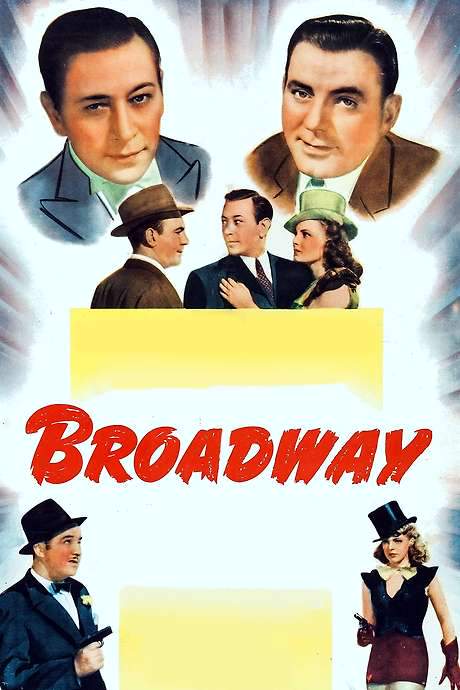
In the Gay Nineties, on New York's Bowery, saloon owner Chuck Connors, Wallace Beery, clashes with his rival Steve Brodie, George Raft, over a tossed melon that lands on Connors’ window. Brodie, lighthearted and unconcerned, explains the dare behind the provocation, and the two men’ s bravado quickly escalates from a boastful confrontation into a contest of courage and reputation. When a nearby fire erupts in Chinatown, both men rush to mobilize their volunteer brigades, each betting a hundred dollars on who can reach the blaze first and douse it, turning neighborhood pride into a spectacle of courage under pressure.
Brodie takes an early lead, only to be thwarted by a clever obstacle: Connors’ young friend Swipes McGurk, Jackie Cooper, sits on a barrel that covers a hydrant, blocking Brodie’s access. The two rivals collide in a chaotic, energetic melee as flames threaten to reduce a building to ashes and trap a crowd of locals inside. The inferno rages, and the chaos around the fire becomes a symbol of the Bowery’s rough-and-ready spirit. When the smoke clears, the blaze has left behind a hollow victory and a scar on Brodie’s pride, fueling a burning resolve to get back at Connors.
Brodie vows revenge, and a high-stakes bet is laid: he believes a boxer he calls “The Masked Marvel” can beat Connors’ fighter, “Bloody Butch.” Connors accepts the challenge, and the spectacle of the bout unfolds as the “Marvel” is revealed to be John L. Sullivan, George Walsh. The crowd roars as Sullivan’s prowess is displayed, casting a new shadow over the Bowery’s boxing world and the personal feud at its heart.
Meanwhile, Connors is drawn to a homeless young woman named Lucy Calhoun, Fay Wray. He brings Lucy back to his apartment, where Swipes already lives, offering her shelter and hospitality for the night. The next morning, Lucy’s presence brings an unexpected warmth to Connors’ life: she cleans the place, cooks breakfast, and briefly softens the rough edges of the Bowery ethic. Yet the delicate balance is fragile; Swipes, feeling the strain of Lucy’s intrusion, locks her in a closet, prompting Connors to intervene. The incident leaves Connors feeling humiliated and pushes Swipes to depart, temporarily severing the household.
Brodie’s return includes an invitation for Swipes to move in with him, expanding the makeshift family and deepening the ties that connect these rival men. In time, Brodie grows fond of Lucy, mistaking her for Connors’ lover, and attempts to woo her. Lucy’s sharp bite to his hand makes it clear she’s no easy conquest, and after learning her true identity, Brodie apologizes and asks if he may call on her. A genuine affection blooms between them, and Brodie lays bare his ambition: to build a saloon that would outshine Connors’ establishment, a dream that sits at the core of the entire conflict.
When two brewers propose sponsorship if Brodie can rise to prominence, he decides to stage a dramatic stunt: leaping from the Brooklyn Bridge to prove his nerve. Connors, wagering his own livelihood on the spectacle, bets his saloon against a “free burial” policy should Brodie fail to survive. To avoid the jump, Brodie orders a life-sized dummy to stand in for him, and Swipes is tasked with dropping it from the span at the agreed moment. A crowd of about 100,000 gathers to witness the event, the scale of the spectacle turning this dare into a city-wide event. But as the time approaches, the dummy disappears, and Swipes cries out, “They were hip to us so they copped it.” The plan teeters on collapse.
With little choice left, Brodie insists on fulfilling the dare, determined that no one can claim he didn’t take the dare. At the same time, temperance activists led by Carrie Nation, Lillian Harmer, arrive at Connors’ saloon intent on tearing the place apart with axes and hatchets. The dramatic tension swirls around the bridge jump, the activists’ arrival, and the crowd’s reactions, until Brodie’s staged leap is celebrated publicly, and Connors watches as his own community appears to turn against him in a different way.
War erupts later as Spain is declared, and Connors, seeking to escape the Bowery’s gravitational pull, enlists to fight in the war effort. He returns to his apartment only to discover Swipes has come back, and the two reconcile after the tumult. Yet the brewing conflict with Brodie intensifies when Connors’ rivals find him and claim that Brodie did not actually jump from the bridge, showing him the dummy they found. Connors demands the return of his saloon, and Brodie denies the accusation, triggering a brutal barge duel on the East River that tests nerve, loyalty, and pride.
Connors emerges victorious from the fight, but the victory comes at a price: an arrest for assault and battery with intent to kill. Brodie refuses to implicate him, and as Connors recovers in the hospital, a further confrontation surfaces. Swipes steps in to prevent further violence, and the two old enemies begin to reframe their relationship as a cautious, wary friendship. The two men, now bound by shared history, consider a bold future: a joint expedition to Cuba. A parade for departing soldiers becomes a moment of bittersweet farewell, with Lucy kissing Brodie goodbye and then sharing a kiss with Connors as well. The one who had watched them all along, Swipes, is revealed to be hiding in an artillery box on a supply wagon, a reminder that loyalty and mischief can survive even the fiercest rivalries.
In the end, the story remains a portrait of a neighborhood where pride, hardship, and affection collide. It is a tale of two men who measure their worth by how bravely they face danger, sacrifice, and change, and of the young woman who binds two warring spirits with quiet compassion. The Bowery’s grit is never simply about brawls and bets; it is about the chance for friendship to outlast feud, and for a life lived in the glow of hard-won loyalty to be remembered long after the last bottle is drained.