Year: 1961
Runtime: 103 mins
Language: English
Director: José Quintero
Karen Stone, an American actress near 50, is judged too old for the Broadway part she’s about to play. During a Rome trip meant to aid her older husband’s health, he dies on the flight. She stays in Rome, renting a terrace apartment with a view of the seven hills. The Contessa introduces her to a young Italian, Paolo, linking her with local society.
Find where to stream, rent, or buy The Roman Spring of Mrs. Stone (1961) in the US with current JustWatch availability, up-to-date pricing, and platform listings for subscription, rental, and digital purchase options.
Warning: spoilers below!
Haven’t seen The Roman Spring of Mrs. Stone yet? This summary contains major spoilers. Bookmark the page, watch the movie, and come back for the full breakdown. If you're ready, scroll on and relive the story!
Trace every key event in The Roman Spring of Mrs. Stone (1961) with our detailed, chronological timeline. Perfect for unpacking nonlinear stories, spotting hidden connections, and understanding how each scene builds toward the film’s climax. Whether you're revisiting or decoding for the first time, this timeline gives you the full picture.
Last updated: December 03, 2025 at 23:58
Find frequently asked questions about the The Roman Spring of Mrs. Stone (1961) timeline, including chronological order, nonlinear jumps, cause-and-effect links, and scene sequence clarifications. This timeline FAQ helps explain when key events happen, how moments connect, and why the story unfolds in that specific order.
Karen decides to stay in Rome because she has no compelling reason to return home. Her husband was the only tie to her previous life in America, and with him gone, she chooses to remain in the city where they were meant to begin a new chapter together. The decision represents a quiet retreat from the world she knew, her career, her stage, her identity as a celebrated actress.
Karen cancels her production of As You Like It because she realizes she is too old to convincingly play Rosalind, a young romantic lead. This decision marks her retreat from the theater that defined her career and signals her acceptance that her best years as an actress are behind her.
The cancellation foreshadows the themes of aging and loss of relevance that will consume her throughout her time in Rome.
Karen does not pay Paolo directly with cash. Instead, she showers him with expensive gifts, clothes, a movie camera, and lavish purchases charged to her account. This arrangement allows her to maintain the illusion that their relationship is genuine rather than transactional, while Paolo readily accepts the gifts despite his lack of real affection.
Karen believes she is different from Paolo's other lovers because she convinces herself that their connection is genuine and that she offers him something more than money, emotional depth, cultural sophistication, and authentic love. This belief sustains her delusion even as the relationship becomes increasingly one-sided and exploitative.
Paolo wants what any gigolo wants from an older, wealthy patron: financial support and gifts. He pretends to reciprocate Karen's love but is only playing along to receive expensive presents. His interest is entirely self-centered, he cares about status, gifts, and maintaining his lifestyle, not about Karen as a person.
Paolo abandons Karen because he grows bored with her possessiveness and the relationship has become routine. When a younger, more glamorous American starlet appears, Paolo pivots to her, seeking fresh excitement and potentially better prospects. His abandonment exposes the hollow core of their relationship, he was never genuinely invested.
The mysterious young man is a shadowy figure who has been trailing Karen since she moved into her Rome apartment. His exact identity remains ambiguous, he appears ragged and menacing, and seems to represent the danger Karen once warned Paolo about. On the flight home, she sees him again, and he ultimately enters her apartment as the film reaches its chilling conclusion.
Karen earlier tells Paolo a cautionary tale about a middle-aged woman who invited danger into her space by letting in a strange young man.
In the final scene, Karen returns to her Rome apartment after abandoning her flight home. The mysterious young man who has shadowed her throughout enters as his shadow fills the screen. Karen recalls her own warning about inviting danger. She lights a cigarette and sits in resigned acceptance as the unseen threat closes in, the film ending on an ominous note of impending violence.
Earlier in the film, Karen tells Paolo about a woman who needed 'three or four years' before 'a cut throat would be a convenience', a quote that resonates with the final scene's mood of resignation.
Karen tosses her apartment keys to the young man as an act of resigned acceptance, she seems to invite whatever fate awaits her. This moment reflects her existential exhaustion and willingness to confront the threat she has sensed following her, rather than continue fleeing from it.
Karen walks back into her apartment rather than continuing to New York because she cannot escape the psychological hold Rome has on her, and the mysterious man who has shadowed her there. Her friend Meg represents her only lifeline to normalcy, but Karen chooses to return to the place where her delusion and downfall occurred, confronting her fate rather than running from it.
Discover curated groups of movies connected by mood, themes, and story style. Browse collections built around emotion, atmosphere, and narrative focus to easily find films that match what you feel like watching right now.
Stories of emotional decline set against a backdrop of opulent beauty.If you appreciated the lonely, opulent atmosphere of The Roman Spring of Mrs. Stone, you'll find similar movies here. These films explore themes of grief, aging, and social alienation within beautiful, yet emotionally cold, settings, often featuring a slow, melancholic pace.
Narratives in this thread typically follow a character, often an outsider or someone in grief, who seeks solace or distraction in a beautiful but unfamiliar environment. Their attempts at connection are often exploitative or illusory, leading to a gradual, sometimes deliberate, emotional or moral decline.
These movies are grouped by their shared mood of elegant melancholy and their thematic focus on the disconnect between external beauty and internal turmoil. They feature a similar pacing that allows the atmosphere of isolation to fully immerse the viewer.

Intimate portraits of characters whose delusions lead to inevitable ruin.For viewers who connected with the psychological depth and tragic arc of Karen Stone, this list features movies like The Roman Spring of Mrs. Stone. These are straightforward, emotionally heavy dramas centered on a protagonist's fatal flaws and their bleak consequences.
The narrative pattern is a straightforward, linear character arc where the protagonist actively participates in their own downfall. They often enter into knowingly destructive relationships or situations, using them as a substitute for genuine healing, leading to an unambiguous and somber conclusion.
These films share a heavy emotional weight driven by a central character's psychological journey. They are united by a melancholic tone, a slow, deliberate pacing that emphasizes interiority, and a commitment to a bleak, unforgiving ending that feels both tragic and inevitable.
Don't stop at just watching - explore The Roman Spring of Mrs. Stone in full detail. From the complete plot summary and scene-by-scene timeline to character breakdowns, thematic analysis, and a deep dive into the ending - every page helps you truly understand what The Roman Spring of Mrs. Stone is all about. Plus, discover what's next after the movie.
Read a complete plot summary of The Roman Spring of Mrs. Stone, including all key story points, character arcs, and turning points. This in-depth recap is ideal for understanding the narrative structure or reviewing what happened in the movie.
Discover the characters, locations, and core themes that shape The Roman Spring of Mrs. Stone. Get insights into symbolic elements, setting significance, and deeper narrative meaning - ideal for thematic analysis and movie breakdowns.
Discover movies like The Roman Spring of Mrs. Stone that share similar genres, themes, and storytelling elements. Whether you’re drawn to the atmosphere, character arcs, or plot structure, these curated recommendations will help you explore more films you’ll love.
The Roman Spring of Mrs. Stone (1961) Plot Summary & Movie Recap
The Roman Spring of Mrs. Stone (1961) Scene-by-Scene Movie Timeline
The Roman Spring of Mrs. Stone (1961) Spoiler-Free Summary & Key Flow
Movies Like The Roman Spring of Mrs. Stone – Similar Titles You’ll Enjoy
When in Rome (2010) Spoiler-Packed Plot Recap
Roman Holiday (1953) Plot Summary & Ending Explained
Rome in Love (2019) Film Overview & Timeline
The Roman Spring of Mrs. Stone (2003) Full Summary & Key Details
Rome and Juliet (2006) Plot Summary & Ending Explained
Roman Holiday (1987) Full Summary & Key Details
Indiscretion of an American Wife (1953) Spoiler-Packed Plot Recap
Street of Women (1932) Film Overview & Timeline
The Sparrow’s Fluttering (1988) Full Summary & Key Details
It Happens in Roma (1955) Movie Recap & Themes
Woman of Rome (1954) Spoiler-Packed Plot Recap
Journey to Italy (1954) Complete Plot Breakdown
End of Summer (1997) Story Summary & Characters
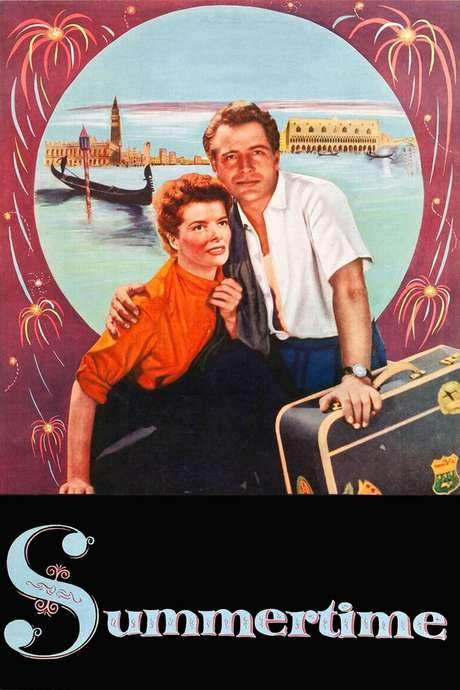
Summertime (1955) Story Summary & Characters
Two Weeks in Another Town (1962) Full Movie Breakdown