










Plot Explained Spoilers guaranteed!
Plot Explained

Browse by genre

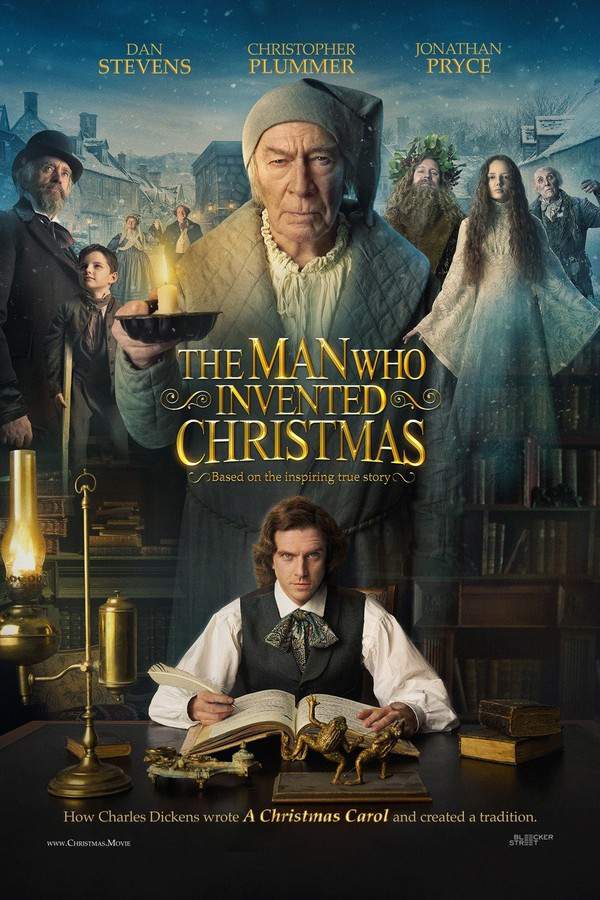
The Man Who Invented Christmas (2017) movie poster

Timeline

The Man Who Invented Christmas (2017) Timeline Explained – Every Event in Order

Release, runtime and language
2017 · 104 min · English
Echo score 68
JustWatch #9,016 3
Directed by
Bharat Nalluri
Starring
Morfydd Clark, Dan Stevens, Miriam Margolyes, Simon Callow, Bill Paterson, Jonathan Pryce
Budget
$17M

This biographical drama explores the inspiring story of Charles Dickens as he struggles to write A Christmas Carol. Facing financial hardship and seeking to recapture the joy of the holidays, Dickens draws upon his own life experiences and observations of London’s poverty to create the beloved characters of Ebenezer Scrooge and Tiny Tim. The resulting novella becomes an instant success, forever shaping how the holiday season is celebrated.

On this page (6)
  1. 1 Where to watch
  2. 2 Events in order (15)
  3. 3 Timeline questions answered
  4. 4 Movie threads
  5. 5 Movies like The Man Who Invented Christmas
  6. 6 Every angle

Where to watch

Where to Watch The Man Who Invented Christmas (2017)

Where can you watch The Man Who Invented Christmas? Stream, rent or buy it in the US, including on Hoopla, Kanopy and Amazon Video: current JustWatch availability with up-to-date prices.

Streaming availability powered by JustWatch

15 events in order · contains spoilers

The Man Who Invented Christmas Timeline: Events in Chronological Order

Every key event of The Man Who Invented Christmas (2017) in order, scene by scene, with when and where it takes place. Use it to untangle flashbacks, time jumps and parallel storylines, to refresh your memory before the sequel or to find the exact scene you are thinking of.

  1. Charles Dickens' Struggles

    As 1843 begins, Charles Dickens faces the aftermath of three literary failures. His desperation to restore his reputation pushes him to embark on writing a new book with an ambitious six-week deadline.

    When
    1843
    Where
    London
  2. The Inspiration for A Christmas Carol

    Amidst a grim London backdrop, Charles Dickens finds inspiration from a lavish funeral attended by few and an elderly man's disdainful words. This encounter sparks the idea for *A Christmas Carol*, despite the skepticism from his peers.

    Where
    London
  3. Creation of Ebenezer Scrooge

    As Charles delves into his storytelling, Ebenezer Scrooge, the grumpy protagonist, begins to seem real to him. This character embodies the moral urgency of the narrative and pushes Dickens to confront his own feelings.

  4. Tara's Influence

    Tara, the astute Irish nursemaid, plays a significant role in Charles' creative process. Her observant nature and literary insights add depth to the narrative, helping him navigate the complexities of Scrooge's character.

  5. The Arrival of John Dickens

    Charles' father, John Dickens, arrives, hindering Charles' creative flow. His father's unorthodox behavior serves as a painful reminder of their financial struggles, complicating Charles' writing experience.

    Where
    London
  6. Writer's Block and Doubt

    As the deadline approaches, Charles faces writer's block and profound doubts regarding humanity's potential for change. Tara suggests a pivotal idea: that Scrooge might save Tiny Tim, which further complicates his creative process.

  7. Relationships Disintegrate

    Under immense stress, Charles' personal relationships begin to unravel. A moment of rage drives away both his parents and Tara, leaving him isolated to confront the consequences of his actions.

  8. Regret and Loss

    Consumed by regret the next morning, Charles realizes the cost of his earlier fury. Tara has disappeared, a symbol of the emotional fog he created, leaving him to grapple with the fallout of his decisions.

  9. Catherine's Concern

    Catherine Dickens, Charles' wife, expresses her worries about his mental state. She believes his fixation on art overshadows his responsibilities, highlighting the strain his creative process has put on their marriage.

  10. Facing Childhood Trauma

    Through introspection, Charles confronts the bitterness he holds against his father. Memories of a harsh childhood in a blacking factory resurface, revealing how these experiences have shaped his insecurities.

  11. A Journey of Self-Discovery

    Guided by Scrooge, Charles begins a transformative journey of self-discovery. He learns that his story holds elements of hope and renewal rather than just bitterness, reigniting his passion for writing.

  12. Tara's Return

    In a surprising twist, Tara returns to return a book. This unforeseen encounter allows Charles to apologize and invites her back into his life, marking a moment of potential reconciliation.

  13. Reconciliation with His Father

    Taking his wife's advice, Charles reaches out to his father just before he departs London. This moment of reconciliation marks a significant step in healing their strained relationship.

    Where
    London
  14. Submission of the Manuscript

    With the deadline looming, Charles completes his manuscript just in time for publication. His efforts to intertwine personal struggles with Scrooge's tale culminate in the submission of *A Christmas Carol*.

  15. The Legacy of A Christmas Carol

    As the Dickens family celebrates Christmas, the world outside begins to shift. The success of *A Christmas Carol* leaves a lasting impact on Christmas traditions, showcasing the enduring power of storytelling.

Last updated: November 22, 2024 at 14:50

Was this helpful?

Timeline questions answered

The Man Who Invented Christmas Timeline Explained: Your Questions Answered

When does it happen, and why in that order? The questions people ask about the chronology of The Man Who Invented Christmas (2017): time jumps, flashbacks, cause and effect between scenes and the correct order of events, each answered with spoilers.

Q1

Why was Charles Dickens desperate to write a new book in 1843?

Dickens faced three consecutive literary failures and needed to restore his reputation. His publishers had rejected his latest works, leaving him financially strained. He decided to self-publish a new book with an ambitious six-week deadline to ensure release before Christmas, making it both a creative and commercial gamble.

  • charles dickens
  • 1843
  • literary failures
  • financial struggles
  • a christmas carol
Q2

What inspired Dickens to create Ebenezer Scrooge?

Dickens found inspiration after witnessing a lavish funeral attended by very few people, followed by an elderly man who dismissed him with the word "Humbug." This encounter, combined with his observations of London's poverty and the grim atmosphere of the city, sparked the character of Scrooge.

  • ebenezer scrooge
  • inspiration
  • humbug
  • london
  • character creation
Q3

Why did Charles Dickens have deep resentment toward his father?

Dickens' resentment stemmed from his traumatic childhood. His father John's financial mismanagement led to the family being imprisoned for debt. Young Charles was forced to work in a harsh blacking factory at age 12 to support the family, an experience that left lasting psychological wounds and deep bitterness toward his father.

Foreshadowing: The film earlier shows Dickens recalling the blacking factory, establishing the source of his pain.

  • john dickens
  • father
  • resentment
  • childhood trauma
  • blacking factory
  • debt
Q4

What was the blacking factory incident in Dickens' childhood?

When Dickens was 12, his family was sent to a debtors' prison for failing to pay debts. To survive, he was forced to work in a blacking factory, a facility that produced shoe polish, under harsh conditions. This traumatic experience of abandonment and child labor deeply scarred him and influenced much of his writing about poverty and social injustice.

  • blacking factory
  • childhood
  • trauma
  • poverty
  • debtors prison
Q5

Why did Tara leave Charles Dickens' house?

Under the mounting pressure of his deadline and creative struggles, Charles exploded in a moment of rage and yelled at both his parents and Tara, driving them away. The next morning, consumed by regret, he discovered Tara had already left, disappearing into the fog, symbolizing the emotional chaos he had created.

  • tara
  • nursemaid
  • rage
  • departure
  • writer's block
Q6

How did Dickens overcome his writer's block?

Dickens overcame his block through a journey of self-discovery. Confronted with his bitterness toward his father and the traumatic memories of his childhood, he realized his story could be about hope and renewal rather than just resentment. This emotional breakthrough, combined with Scrooge's guidance in his imagination, allowed him to complete the manuscript.

  • writer's block
  • self-discovery
  • hope
  • redemption
  • manuscript
Q7

Why was the six-week deadline so important for A Christmas Carol?

Dickens needed the book published before Christmas to capitalize on the holiday sales season. Self-publishing meant he bore all the financial risk, making the tight deadline crucial for the book's commercial success. Missing Christmas would have meant financial disaster for Dickens and his family.

  • deadline
  • christmas
  • self-publishing
  • financial risk
  • 1843
Q8

What caused Charles Dickens to reconcile with his father?

After his wife Catherine pointed out that he placed art above family, Charles realized his anger had cost him meaningful relationships. Upon learning his father was about to leave London on a train, Charles rushed to meet him. The reconciliation, influenced by his own emotional growth while writing Scrooge's redemption, healed their strained relationship.

  • john dickens
  • reconciliation
  • father
  • catherine
  • train
  • healing
Q9

How did A Christmas Carol become so successful?

A Christmas Carol was an immediate phenomenon. The novella sold out its first printing rapidly and spawned multiple reprintings. Its powerful themes of redemption, generosity, and family resonated deeply with Victorian readers, transforming Christmas from a neglected holiday into a celebrated occasion. The story's universal message ensured its lasting cultural impact.

  • success
  • popularity
  • victorian era
  • christmas traditions
  • cultural impact
Q10

Why did Scrooge seem to guide Dickens during the writing process?

Dickens became so immersed in his creation that Scrooge took on a life of his own. The character represented moral urgency and forced Dickens to confront his own bitterness toward his father. Through imagining Scrooge's redemption, Dickens was able to process his own childhood trauma and ultimately write a story of hope rather than pure resentment.

  • scrooge
  • imagination
  • character
  • guidance
  • moral
  • redemption

Movie threads

More Movies Like The Man Who Invented Christmas, by Mood & Story

Curated lists built around what makes The Man Who Invented Christmas tick: the same mood, the same kind of story or the same emotional payoff. Each list explains why these movies belong together.

Movies about Artistic Struggle and Triumph like The Man Who Invented Christmas

Stories of artists battling internal blocks and past trauma to achieve greatness. If you enjoyed The Man Who Invented Christmas, you'll appreciate these other films about the creative process. Discover movies that explore similar themes of overcoming writer's block, drawing inspiration from personal hardship, and achieving a heartwarming creative breakthrough.

  • inspiring
  • creative
  • reflective
  • melancholic
  • hopeful
  • triumphant
  • Tone: hopeful, reflective, melancholic
  • Pacing: steady, character-driven
Why these movies?

The story pattern: These stories typically follow a linear, character-driven arc where a creator faces a significant deadline or crisis. The central conflict is internal, pitting their talent against self-doubt, financial woes, or unresolved trauma. The narrative builds steadily through this struggle, often using flashbacks or imaginative sequences, and resolves with the successful completion of the work, which frequently mends personal relationships.

Why they belong together: Movies are grouped here based on their shared focus on the creative psyche, a mix of melancholic struggle with a ultimately hopeful and uplifting tone, and a steady, reflective pacing that prioritizes character development over high-stakes action.

Meaningful Holiday Movies with Emotional Depth like The Man Who Invented Christmas

Festive tales that explore serious themes like redemption and family reconciliation. Looking for more thoughtful Christmas films like The Man Who Invented Christmas? This list features holiday stories that balance festive charm with explorations of serious themes such as financial hardship, creative struggle, and the power of reconciliation.

  • festive
  • uplifting
  • hopeful
  • redemptive
  • reflective
  • heartwarming
  • Tone: hopeful, uplifting, bittersweet
  • Pacing: steady
Why these movies?

The story pattern: The narrative pattern involves a protagonist, often cynical or struggling, whose journey through the holiday season forces a confrontation with past mistakes or present hardships. The festive atmosphere contrasts with serious underlying issues, creating a bittersweet yet ultimately uplifting arc. The story leads to a moment of clarity and redemption, reinforcing the true, transformative meaning of the holiday.

Why they belong together: These films share a specific vibe: a festive setting used as a backdrop for stories with medium emotional weight. They balance uplifting, hopeful outcomes with a steady pace and a focus on themes like redemption and personal growth, creating a more substantive holiday experience.

If you liked this

Movies Like The Man Who Invented Christmas

Similar movies to The Man Who Invented Christmas: the same genre, themes or kind of story. Each one comes with its own plot summary, timeline and ending explained.

Browse all movie summaries

Every angle

The Man Who Invented Christmas (2017) Explained: Plot, Timeline & Characters

Everything about The Man Who Invented Christmas in one place: what happens in the plot summary, the timeline in chronological order, the characters and meaning and a spoiler-free summary. What's After the Movie adds the cast, box office and post-credit scenes.

Coming soon on iOS and Android

The Plot Explained Movie Summary App

Plot summaries, endings explained and timelines on your phone. Catch up on any movie in minutes, save your favorites and never miss a twist again.

Be the first to know when we launch. Your email stays private, always.

Learn more about the app