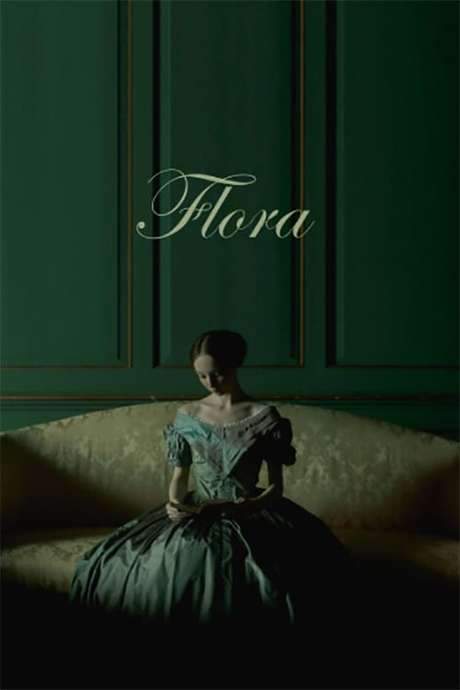
Daisy, the original Florodora girl and a beloved member of the show's female sextet, finds herself at the center of a lively and bustling Broadway scene set in 1899. As the hottest show of the season, Florodora draws crowds that stretch around the block, with many patrons eager to catch a glimpse of the talented chorus girls, especially the beautiful and charming Daisy. While the musical performances and dramatic elements entertain the audience, it is the allure of the chorus girls that truly captivates the male viewers, some of whom have attended the same show multiple times just to see Daisy perform.
Daisy is characterized by her hopefulness and willingness to find love, but her friends, Ilka Chase and Vivien Oakland, offer her advice on how to attract a wealthy suitor—by playing hard to get and being a little difficult. This advice proves both prescient and problematic, as she develops an interest in Jack Vibart, a charming young man portrayed by Lawrence Gray. At first, Daisy's affection for Jack seems promising when she receives a grand bouquet of flowers from him and is invited to join him in his carriage, sparking her excitement. However, influenced by her friends' warnings that Jack is not serious and merely indulges in flirtations with chorus girls, she hesitates to accept his advances, ultimately rejecting his invitation and choosing instead to ride on a bicycle with George Smith, a kind but less fortunate cigar shop worker played by George Chandler.
While her friendship with George is genuine, Daisy does not share the same romantic feelings for him, and her heart remains slightly torn between her aspirations for love and her modest world. She accompanies George to her modest home in a poor neighborhood, where her father, Jed Prouty, offers lighthearted wisdom and admiration for Jack’s racing talents—his horse Firebird, which once won him a significant bet at the Kentucky Derby. Daisy’s fascination with Jack grows as she spends time observing him at various events, including the beach, where her playful antics—such as pretending to struggle in the water—lead Jack to believe he has rescued her, sparking an awkward but charming flirtation.
A major event during this period is the Yale versus Columbia football game on January 2, 1900. The crowd is lively, and the game features the early, rough style of American football, with players forming formations that resemble a flock of birds, and dramatically hoisting the ball carrier over defenders. Jack Vibart, among the spectators, eagerly watches Daisy and his other acquaintances. When Daisy’s flirtation with George takes her away from Jack, he faces disappointment. His mood worsens when he observes Daisy arriving with George on his tandem bike and later finds her engrossed in conversation with Harry Fontaine, a shady gambler who had a past disagreement with Jack over a Kentucky Derby bet. Harry’s influence soon leads George to become intoxicated, and Jack ends up rescuing Daisy again from Harry’s unwelcome advances.
Despite the social differences and awkward misunderstandings, Jack and Daisy’s connection deepens, and they share tender moments, such as riding a horseless carriage—a novel invention of the era—and exchanging heartfelt songs. Jack’s romantic gestures, including offering Daisy a jeweled bracelet and suggesting they live together, create moments of tension, especially when Daisy feels suspect of his intentions and the disparity in their social standings. Her worries about being kept as a mistress lead to a quarrel, and she withdraws from Jack, feeling confused and heartbroken.
Meanwhile, Jack’s family expectations cast a shadow over their relationship. His mother, Nance O'Neil, disapproves of Jack’s affairs with chorus girls and pressures him to marry Constance, a girl from a wealthy family. Jack, caught between duty and love, promises his mother to wed Constance in June, though he confesses to Daisy that his heart truly belongs to her. He reveals plans to bet his entire family fortune on his racehorse in hopes of starting his own business. Unfortunately, the race ends in disappointment when Firebird finishes second, costing Jack his inheritance. Undeterred, Jack attempts to shield Daisy from his financial troubles, but his struggles become evident when he loses his family’s money.
As their romance faces these upheavals, Daisy learns that Jack is engaged to Constance. Heartbroken but determined, she tries to move on, and her friends [Ilka Chase] and [Vivien Oakland] comfort her amid gossip and jealous rivalries. Daisy retaliates by attending a slumming party at the Bowery with Harry Fontaine, which leads her into melancholy, despite Jack’s later pleas for reconciliation. She confesses that her love was chiefly driven by his wealth, revealing her vulnerability and insecurity.
Time passes, and the Florodora women prepare for another show. Daisy, now more cautious, hears from her friends about their relationships and notices Jack’s success in becoming a businessman. During a performance of Florodora, Daisy’s emotions mount as she spots Jack in the audience, sparking hope and uncertainty. Her performance is interrupted when Jack unexpectedly joins her on stage, singing “Tell Me Pretty Maiden” as part of their confrontation. He then publicly proclaims his love and asks her to marry him, leaving her torn between her rehearsed desire to stay away and her still-hopeful heart.
As the show continues, Daisy’s stubbornness clashes with Jack’s persistence until he is finally able to persuade her. With her initial protests overruled, Jack’s mother appears in a horse-drawn sleigh, smiling warmly, and calls Daisy to her side, signifying her acceptance of Daisy as part of their family. The film concludes with the happy trio departing, symbolizing Daisy’s ultimate acceptance and the beginning of a new chapter filled with love and hope.