In the mid-19th century Karabakh, a renowned French botanist named Monsieur Jordan, Sergei Yursky, travels to study the region’s diverse plant life and cultural landscape. His arrival stirs curiosity among locals and the prominent household of Hatamkhan agha, a wealthy landowner whose mansion becomes a focal point for scientific debating, social maneuvering, and secret desires. The atmosphere blends scientific curiosity with old-world mystique, where knowledge and tradition coexist and occasionally clash.
As the days pass, the invitation to stay at Hatamkhan agha’s estate leads to plans that intertwine personal ambition with family obligations. The nephew Shahbaz, Anvar Hasanov, is groomed for an arranged match with Hatamkhan’s daughter Sharafnisa, Momunat Gurbanova, while Shahrabanu, Leyla Badirbayli, watches the evolving dynamic from a position of quiet influence within the household. The conversations with the family and with locals reveal a mix of affection, duty, and a desire to secure futures in a world where opportunity often travels with risk. Against this backdrop, Jordan contemplates a path that could extend beyond Karabakh into the bustling, cosmopolitan life of Paris.
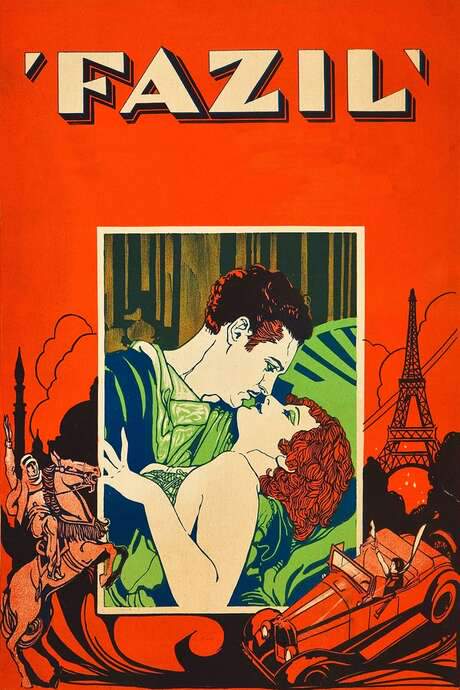
A dramatic turn arises when Sharafnisa and her mother decide to seek help from a sorcerer, Darvish Mastali Shah, Mirza Babayev, to influence the fate of Shahbaz and the families involved. Darvish presents a mesmerizing spectacle for the women of the house: with carved wood, he constructs a miniature town that he claims is Paris, assembling a fragile illusion of a far-off world. He then burns the tiny Paris to ash and commands devils and ifrits to assail the real Paris, a demonstration that blurs the lines between illusion and fear, science and superstition.
In the midst of this uncanny performance, Jordan himself appears at the door, distraught and urgent, calling for horses as he announces that Paris has been destroyed. The moment is charged with a blend of theatrics and alarming news, leaving everyone to wonder whether the catastrophe is a brush with fate or a manufactured rumor. When asked to name the destroyer, Jordan responds with a cryptic phrase that hints at a larger, almost mythic power at work: > Devils, ifrits, demons...
He adds another layer of intrigue by suggesting that Louis Philippe fled to England, a clue that ties the localized drama to the wider currents of European history and the revolutionary undercurrents of 1848. The tale therefore sits at the crossroads of science and superstition, personal ambition and social obligation, in a setting where every character weighs how best to steer their own future.
After delivering his alarming report, Monsieur Jordan makes the decision to head back to Paris, but he does not take Shahbaz with him. The urgency of his return to the city, and the uncertainty surrounding Shahbaz’s future, shapes the emotional core of the narrative and leaves open the question of what lies ahead for the family, Sharafnisa, Shahrabanu, and the young man whose prospects hang in the balance.
The story deftly and calmly weaves together quiet, intimate moments with larger, almost fable-like tableaux. It examines how ambition, tradition, and superstition can coexist within a single household, and how a simple scientific visitor can become a catalyst for deep personal and cultural shifts. Throughout, the relationships between the central characters—between Shahbaz and his aunt and mother, between the scholar and the hosts, and between the sorcerer’s tremulous theater and the real world—are drawn with restraint and care, allowing the viewer to reflect on the thin line between belief and reality and the ways communities navigate change when faced with the lure of a distant, imagined metropolis.