










Plot Explained Spoilers guaranteed!
Plot Explained

Browse by genre

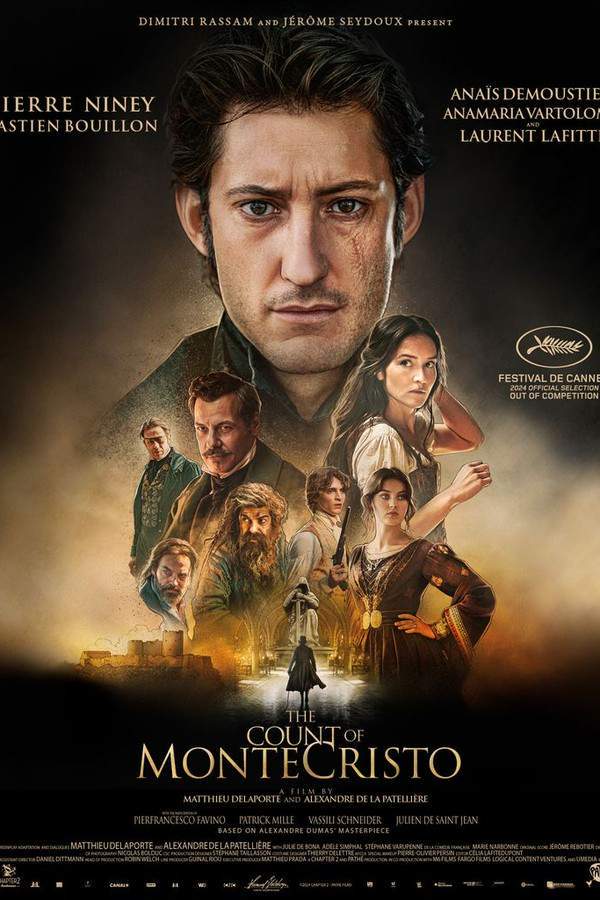
The Count of Monte-Cristo (2024) movie poster

Ending Explained

The Count of Monte-Cristo (2024) Ending Explained – Final Scene & Meaning

Release, runtime and language
2024 · 2 h 53 m · French
Echo score 85
JustWatch #28,068 1
Directed by
Alexandre de La Patellière
Starring
Stéphane Varupenne, Anamaria Vartolomei, Anaïs Demoustier, Laurent Lafitte, Marie Narbonne, Oscar Lesage
Budget
$46M

In 1815, Edmond Dantès is wrongly imprisoned in the Château d’If. After enduring fourteen years of captivity, he devises a daring escape and begins a carefully planned quest for revenge. He assumes various identities as he seeks retribution against those who betrayed him.

On this page (7)
  1. 1 Where to watch
  2. 2 What happens at the end
  3. 3 Final events in order
  4. 4 Ending questions answered
  5. 5 The book behind the movie
  6. 6 Movie threads
  7. 7 Every angle

Where to watch

Where to Watch The Count of Monte-Cristo (2024)

Where can you watch The Count of Monte-Cristo? Stream, rent or buy it in the US, including on Amazon Prime Video, Amazon MX Player and Amazon Prime Video Free: current JustWatch availability with up-to-date prices.

Streaming availability powered by JustWatch

Ending explained · contains spoilers

What Happens at the End of The Count of Monte-Cristo?

How The Count of Monte-Cristo (2024) ends, what the final scene means, which earlier moments set it up and how to read the ending if the film leaves it open. The full ending explained, with every spoiler.

At the end of the story, Edmond Dantès, having enacted his elaborate plan of revenge against those who wronged him—particularly Danglars, de Villefort, and Fernand—finds himself at a moral crossroads. Throughout his quest, he has become consumed by a desire for retribution, which begins to blur the line between justice and obsession. When he finally confronts the consequences of his actions, he realizes that the collateral damage—innocent people caught in his vengeance—cannot be ignored. Despite recognizing the evil of his enemies, Dantès refuses to abandon his pursuit, viewing it as the only way to stay alive and retain his purpose. However, this relentless pursuit of revenge causes him to lose touch with his own humanity, turning him into an antihero rather than the innocent man he once was.

In the film’s emotional climax, Dantès faces his long-lost love, Mercédès, and shares a moment of vulnerability that reveals his inner conflict—he is no longer merely seeking justice but is driven by a need to punish. The story closes with Dantès embracing his new identity as the Count of Monte Cristo, symbolizing both his transformation and the ongoing toll that revenge has taken on him. The ending leaves viewers contemplating whether justice has truly been served or if Dantès has only fallen deeper into the darkness of his own obsession, raising questions about the moral costs of vengeance and whether redemption is possible after such a tumultuous journey.

Last updated: June 25, 2025 at 09:03

Was this helpful?

The last 4 events

How The Count of Monte-Cristo Ends: The Final Events in Order

The last events of The Count of Monte-Cristo (2024) in chronological order, the run-up to the ending explained above. The complete timeline has all 13 events, scene by scene.

Open the full timeline
  1. Haydée's turn and Albert's truth

    Haydée, devastated by André's death, turns against the Count and demands the truth about Albert's father's betrayal be revealed. Edmond presses for the truth, testing loyalties within his circle as he maneuvers Albert into his plans. The truth unsettles the delicate balance of power around the Count.

    When
    After André's death
    Where
    France
  2. Mercédès' plea and Albert's duel

    Albert challenges the Count to a duel, hoping to settle old scores. Mercédès pleads for Albert's life, and Edmond chooses mercy, ending the confrontation without bloodshed. The moment signals a shift toward restraint in his otherwise ruthless pursuit of revenge.

    When
    Late stage
    Where
    France
  3. Fernand's final duel and mercy

    Mercédès leaves Fernand after the unraveling of Edmond's plan. Fernand confronts Edmond in a final duel, but Edmond defeats him and refuses to kill him, leaving Fernand to live with disgrace and losses. The vendetta formalizes its moral ambiguity as mercy supersedes vengeance.

    When
    Endgame
    Where
    France
  4. Departure and the final message

    Edmond abandons his estate to travel the world, seeking new horizons. In a final letter to Mercédès, he writes: ‘All human wisdom is contained in these two words: Wait and Hope.’ The Count closes one chapter and begins another, carrying the weight of his choices.

    When
    Final
    Where
    Count's estate; travels

Ending questions answered

The Count of Monte-Cristo Ending: Your Questions Answered

The questions people ask most about the ending of The Count of Monte-Cristo (2024): what the final scene means, how the twist works, what happens to each character and how to read the ending. Each answer contains spoilers.

Q1

Why does Edmond Dantès continue his revenge even after realizing it has consumed him?

Dantès continues pursuing revenge because he views it as the only way to stay alive and retain his purpose. After fourteen years of imprisonment, revenge has become his identity and driving force. Even when he recognizes the collateral damage and loss of his humanity, he cannot let go, he believes abandoning his quest would mean all his suffering was for nothing, so he presses forward despite the moral cost.

  • edmond dantes
  • revenge
  • obsession
  • motivation
  • justification
Q2

What happens to Mercédès at the end of the film?

Mercédès and Dantès share an emotional confrontation where she sees the transformation in him. While their love is rekindled briefly, Dantès cannot abandon his path. The ending leaves their relationship unresolved but implies Mercédès represents what he has lost, his innocence and humanity. She remains in the past while he embraces his new identity as the Count.

  • mercedes
  • love
  • ending
  • relationship
  • dantes
Q3

Does Edmond Dantès find redemption at the end?

The film leaves redemption ambiguous. While Dantès achieves his goal of punishing his enemies, he loses his humanity in the process. He becomes an antihero rather than a hero, someone who has done terrible things for understandable reasons. The ending suggests he may never fully return to the innocent man he was before imprisonment.

  • redemption
  • morality
  • character arc
  • transformation
  • justice
Q4

What does Dantès becoming the Count of Monte Cristo symbolize?

The Count of Monte Cristo represents both Dantès's transformation and the ongoing toll of revenge. By accepting this identity, he embraces a new persona separate from his old self, a figure of calculated power and vengeance. It symbolizes his complete metamorphosis from the naive sailor Edmond into someone who operates in shadows, wielding wealth and manipulation as weapons.

  • count of monte cristo
  • identity
  • transformation
  • symbol
  • power
Q5

Is Dantès's revenge justified by the end of the movie?

The film presents a morally complex view, Dantès's enemies were genuinely guilty of betraying him, yet his methods cause innocent people to suffer. By the end, the story questions whether revenge can ever truly be justice. Dantès achieves his goal but at such personal cost that viewers are left wondering if the outcome qualifies as victory.

  • justice
  • revenge
  • morality
  • justification
  • consequences
Q6

Why does Dantès spare his enemies at the end?

The ending shows Dantès confronting his enemies but the text indicates he chooses not to abandon his pursuit, which he views as necessary for survival. While the exact fate of Danglars, de Villefort, and Fernand isn't fully detailed, Dantès's continued engagement suggests he maintains his vendetta rather than showing mercy. His realization about collateral damage doesn't stop him; it haunts him.

  • danglars
  • villefort
  • fernand
  • enemies
  • mercy
  • fate
Q7

What does the ending phrase 'Wait and Hope' mean in context of Dantès's journey?

'Wait and Hope' represents the weary wisdom Dantès gains after his long ordeal. It reflects the philosophical balance the film strikes, while revenge consumed him, the phrase suggests patience and optimism can guide one's fate. However, by the end, Dantès has already chosen vengeance, so the phrase carries bittersweet irony: he understands hope but has strayed from the path it represents.

  • wait and hope
  • philosophy
  • meaning
  • wisdom
  • theme
Q8

Has Dantès become a villain by the end of the film?

Dantès becomes an antihero rather than a clear villain. He started as an innocent man seeking justice against genuine wrongdoers, but his methods grew ruthless. By the end, he has crossed moral lines, causing collateral damage and losing touch with his humanity, but his core motivation remains rooted in past injustice rather than pure malice. The audience is left to judge whether his transformation is tragic or earned.

  • villain
  • antihero
  • morality
  • transformation
  • character
Q9

What happens to Danglars, de Villefort, and Fernand in the end?

Dantès systematically destroys each of his three main enemies as part of his revenge plan. While the exact outcomes vary, all three face ruin, financial, social, or personal, as a result of Dantès's elaborate schemes. However, rather than killing them outright, Dantès appears to prefer destroying their lives and reputations, leaving them to suffer the consequences of their actions.

  • danglars
  • villefort
  • fernand
  • enemies
  • fate
  • punishment
Q10

Why does revenge cause Dantès to lose his humanity?

Revenge consumes Dantès because it becomes his sole purpose after fourteen years of imprisonment. The film shows that when a person dedicates everything to vengeance, they sacrifice empathy, mercy, and original identity. Dantès's transformation illustrates how obsession with punishing others erodes one's own moral center, becoming the Count means adopting cold calculation and strategic cruelty, qualities that override his earlier kindness.

  • revenge
  • corruption
  • humanity
  • obsession
  • transformation
Q11

Is the ending of The Count of Monte-Cristo happy or sad?

The ending is bittersweet. Dantès succeeds in his revenge, achieving what he spent years planning, but loses everything that made life meaningful, his innocence, his love with Mercédès, and his connection to humanity. He wins his campaign but pays the highest personal price. The tone balances satisfaction of justice served against the tragedy of what Dantès became in pursuing it.

  • ending
  • tone
  • bittersweet
  • outcome
  • resolution
Q12

What is the thematic message about vengeance in the ending?

The ending delivers a cautionary message: vengeance comes at an enormous personal cost that can never truly be repaid. While Dantès had legitimate grievances, his obsessive pursuit destroyed him from within. The film suggests that justice and revenge are not the same, seeking retribution may win battles but lose the war for one's soul. The lingering question is whether Dantès's hollow victory was worth the man he ceased to be.

  • vengeance
  • theme
  • moral
  • message
  • cautionary
  • cost

Movie threads

More Movies Like The Count of Monte-Cristo, by Mood & Story

Curated lists built around what makes The Count of Monte-Cristo tick: the same mood, the same kind of story or the same emotional payoff. Each list explains why these movies belong together.

Methodical Revenge Sagas like The Count of Monte-Cristo

Stories of long-planned retribution, where patience is the ultimate weapon. If you liked the calculated, long-term vengeance in The Count of Monte-Cristo, explore more movies where protagonists patiently execute elaborate plans for justice. These stories feature betrayal, transformation, and a steady, tense build-up to a climactic confrontation.

  • vengeful
  • methodical
  • tense
  • cathartic
  • brooding
  • dramatic
  • Tone: dark, vengeful, tense
  • Pacing: steady, methodical
Why these movies?

The story pattern: This narrative pattern typically begins with a profound betrayal or injustice that catalyzes the protagonist's downfall. After a period of suffering or imprisonment, they re-emerge with a new identity and a meticulously crafted, long-term plan to systematically dismantle the lives of those who wronged them, often leading to a bittersweet victory.

Why they belong together: Movies in this thread are grouped by their shared focus on intellectual, patient revenge. They share a dark, tense tone, a steady pacing that builds methodically, and a heavy emotional weight driven by the central theme of injustice and the psychological cost of vengeance.

Historical Dramas of Personal Transformation like The Count of Monte-Cristo

Epic journeys where characters forge new identities from the ashes of their old lives. Fans of Edmond Dantès's journey from prisoner to avenger in The Count of Monte-Cristo will enjoy these movies about radical personal reinvention. Discover stories of identity, social climbing, and justice set in detailed historical periods with high drama and emotional depth.

  • dramatic
  • melancholic
  • brooding
  • cathartic
  • epic
  • tense
  • Tone: dramatic, melancholic, brooding
  • Pacing: steady, epic
Why these movies?

The story pattern: The journey follows a character who is stripped of their original identity through trauma, such as imprisonment or betrayal. The core of the story is their arduous process of self-reinvention, often involving acquiring new knowledge, wealth, and social status, which they then use to achieve a deeply personal goal, forever changed by the experience.

Why they belong together: These movies share a focus on the theme of transformation set within a specific historical context. They combine dramatic personal arcs with the spectacle and social commentary of a period piece, resulting in a immersive experience that is both intellectually and emotionally engaging.

Every angle

The Count of Monte-Cristo (2024) Explained: Plot, Ending, Timeline & Characters

Everything about The Count of Monte-Cristo in one place: what happens in the plot summary, the timeline in chronological order, the characters and meaning, the ending explained and a spoiler-free summary. What's After the Movie adds the cast, box office and post-credit scenes.

Coming soon on iOS and Android

The Plot Explained Movie Summary App

Plot summaries, endings explained and timelines on your phone. Catch up on any movie in minutes, save your favorites and never miss a twist again.

Be the first to know when we launch. Your email stays private, always.

Learn more about the app