







Plot Explained Spoilers guaranteed!
Plot Explained

Browse by genre

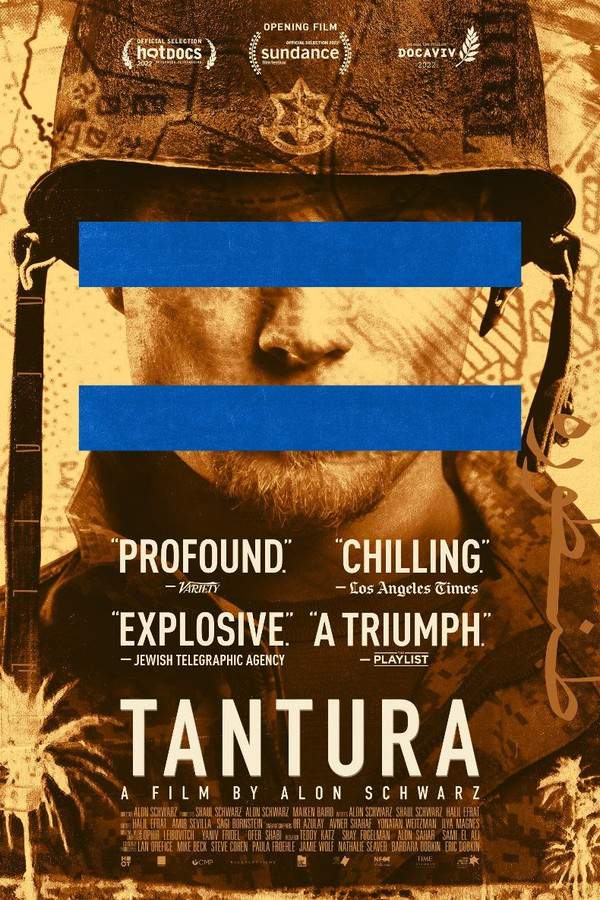
Tantura (2022) movie poster

Timeline

Tantura (2022) Timeline Explained – Every Event in Order

Release, runtime and language
2022 · 85 min · Hebrew
Echo score 75
JustWatch #7,306 170
Directed by
Alon Schwarz
Starring
Teddy Katz

During the 1948 Arab-Israeli War, many Palestinian villages were abandoned. This documentary examines the events surrounding the village of Tantura, exploring a massacre that occurred amidst the conflict. The film revisits accounts from both former Israeli soldiers and Palestinian residents, seeking to uncover the truth behind the incident and challenge established historical narratives. It investigates why this painful chapter in Israeli history remains largely unspoken and controversial within Israeli society.

On this page (6)
  1. 1 Where to watch
  2. 2 Events in order (14)
  3. 3 Timeline questions answered
  4. 4 Movie threads
  5. 5 Movies like Tantura
  6. 6 Every angle

Where to watch

Where to Watch Tantura (2022)

Where can you watch Tantura? Stream, rent or buy it in the US, including on Shahid VIP, Kanopy and Tubi TV: current JustWatch availability with up-to-date prices.

Streaming availability powered by JustWatch

14 events in order · contains spoilers

Tantura Timeline: Events in Chronological Order

Every key event of Tantura (2022) in order, scene by scene, with when and where it takes place. Use it to untangle flashbacks, time jumps and parallel storylines, to refresh your memory before the sequel or to find the exact scene you are thinking of.

  1. U.N. Decision on Palestine

    In 1947, the United Nations proposed a plan to partition Palestine into separate Jewish and Arab states. This decision led to increased tensions and conflict in the region, setting the stage for future hostilities.

    When
    1947
  2. Establishment of Israel

    In 1948, the state of Israel was officially established, which marked the beginning of escalating violence and conflict. This event is celebrated by Israelis as the War of Independence but is referred to as 'The Nakba' or 'The Catastrophe' by Palestinians.

    When
    1948
    Where
    Israel
  3. Escalation of Hostilities

    Following the establishment of Israel, hostilities escalated into regional warfare. Numerous Palestinian villages were depopulated during this tumultuous time, resulting in significant loss and suffering among the Palestinian population.

    When
    1948
  4. The Nakba

    The period of 1948 is commemorated by Palestinians as 'The Nakba,' symbolizing their tragedy and loss. This narrative contrasts sharply with the Israeli perspective of pride and independence, highlighting a deep-rooted conflict in collective memory.

    When
    1948
  5. Teddy Katz's Investigation

    In the late 1990s, graduate student Teddy Katz began investigating a massacre that allegedly occurred in the village of Tantura during 1948. His extensive research uncovered significant testimonies but also led to backlash and controversy within academic circles.

    When
    Late 1990s
    Where
    Tantura
  6. Gathering Audio Testimonies

    Throughout his research, Teddy Katz recorded over 140 hours of audio testimonies from various individuals regarding the events in Tantura. These recordings became a crucial part of his investigation, despite the professional risks he faced.

  7. Backlash Against Katz

    Teddy Katz's findings faced significant pushback, leading to a tarnished reputation and disputes over the accuracy of his claims. Despite this, the audio testimonies he gathered remain an important record of the events in Tantura.

  8. Alon Schwarz's Documentary

    Director Alon Schwarz revisits the events in Tantura by interviewing former Israeli soldiers from the Alexandroni Brigade. His approach seeks to confront these individuals with the testimony recordings made by Katz, promoting reflection on the past.

  9. Engaging with Palestinian Residents

    In his documentary, Alon Schwarz also engages with surviving Palestinian residents of Tantura. These conversations aim to reassess the events of the Nakba and explore the implications of collective memory in Israeli-Palestinian discourse.

    Where
    Tantura
  10. Reflections of Ex-Soldiers

    The elderly ex-soldiers reflect on their experiences during the war, revealing unsettling memories while avoiding challenging topics. This highlights the complexity of their narratives and the difficulty of confronting painful historical truths.

  11. The Silence of Memory

    Katz's long-standing interviews provide insight into the often-suppressed narratives surrounding the Nakba. The documentary emphasizes how power dynamics and constructed histories affect collective memory and societal understanding.

  12. Archival Footage and Interviews

    The film features archival footage from the conflict of 1948, woven together with candid interviews from ex-soldiers, Palestinian residents, and historians. This multifaceted approach enriches the narrative, offering varied perspectives on the historical events.

  13. Debates on Historical Narrative

    The documentary sparks discussion about the differing perspectives on the events of 1948, revealing the contentious nature of historical narrative in both Israeli and Palestinian communities. This debate over memory and history continues to resonate today.

  14. Impact of Collective Memory

    The film illustrates how the foundational myths of Israel have molded the experiences of subsequent generations. It invites viewers to reconsider how narratives are formed and whose voices are heard in the telling of history.

Last updated: November 08, 2024 at 00:38

Was this helpful?

Timeline questions answered

Tantura Timeline Explained: Your Questions Answered

When does it happen, and why in that order? The questions people ask about the chronology of Tantura (2022): time jumps, flashbacks, cause and effect between scenes and the correct order of events, each answered with spoilers.

Q1

What happened in the Palestinian village of Tantura in 1948?

During the 1948 Arab-Israeli War, the village of Tantura was captured by Israeli forces from the Alexandroni Brigade. The village was depopulated during the conflict, and allegations emerged of a massacre occurring during the takeover. The precise events have been subject to decades of debate and dispute, with the documentary exploring these events through testimonies from both former Israeli soldiers and Palestinian residents.

Foreshadowing: Earlier context about the U.N. partition plan and escalating hostilities in 1948 sets the stage for understanding why such events occurred.

  • tantura 1948
  • palestinian village
  • massacre allegations
  • 1948 war
  • alexandroni brigade
Q2

Who was Teddy Katz and what did his investigation uncover?

Teddy Katz was a graduate student who, in the late 1990s, conducted extensive research into the alleged massacre at Tantura. He gathered over 140 hours of audio testimonies from former Israeli soldiers and Palestinian residents. His research suggested that a massacre had occurred during the 1948 capture of Tantura, but he faced significant professional backlash that tarnished his reputation, though the audio recordings remain intact as a historical record.

Foreshadowing: The timeline shows Katz's investigation began decades after the events themselves, making the testimonies even more critical.

  • teddy katz
  • investigator
  • tantura massacre
  • audio testimonies
  • researcher
Q3

What is "The Nakba" and why does it matter in the film?

The Nakba is Arabic for "catastrophe" and refers to the displacement and loss experienced by Palestinians during the 1948 war, when hundreds of villages were depopulated. The film explores how this period, commemorated as the War of Independence by Israelis, remains a deeply contentious and largely unspoken chapter in Israeli society, with competing narratives shaping collective memory.

Foreshadowing: The documentary's title and central theme directly engage with this contrasting perspective on the same historical events.

  • nakba
  • catastrophe
  • palestinian displacement
  • 1948
  • collective memory
Q4

Why did Teddy Katz face backlash for his research on Tantura?

Katz faced severe backlash because his research challenged the established Israeli narrative about the 1948 war. His findings threatened the foundational myths of Israeli society, which views the 1948 establishment of Israel as a heroic War of Independence. The controversy led to disputes over the accuracy of his claims and damaged his academic reputation, despite the preserved audio evidence.

Foreshadowing: The director's choice to confront elderly soldiers suggests their testimonies contained information that powerful institutions wanted suppressed.

  • controversy
  • backlash
  • historical narrative
  • academic pushback
  • israeli society
Q5

What does the phrase "erase it" mean in the documentary?

The phrase "erase it" appears in the recorded testimonies and refers to attempts to eliminate or suppress evidence and narratives about what occurred in Tantura. The documentary uses this phrase to illustrate how power dynamics and constructed histories work to shape collective memory, revealing efforts to remove certain stories from public consciousness.

Foreshadowing: This phrase appears early in the film, signaling the central theme of suppression and memory.

  • erase it
  • suppression
  • testimony
  • historical evidence
  • memory
Q6

How does the director confront former soldiers with their testimonies?

Director Alon Schwarz uses Katz's decades-old audio interviews to confront elderly former soldiers from the Alexandroni Brigade directly. These soldiers reflect on their wartime experiences, revealing unsettling memories while hesitating or avoiding topics they are unwilling to discuss. The confrontational approach forces them to confront their past statements recorded years earlier.

Foreshadowing: The film's intensity builds as these aging soldiers struggle with memories they would rather leave unspoken.

  • alon schwarz
  • confrontation
  • ex-soldiers
  • alexandroni brigade
  • testimonies
Q7

Why does the Tantura massacre remain unspoken in Israeli society?

The massacre remains unspoken because acknowledging such events would contradict the foundational narrative of Israel's War of Independence, which emphasizes victory and justified action rather than atrocities. The film illustrates how power dynamics have suppressed Palestinian voices and constructed a historical narrative that omits or denies such incidents, making them socially and politically sensitive to discuss.

Foreshadowing: The documentary shows how constructed histories affect what society chooses to remember or forget.

  • historical silence
  • israeli narrative
  • collective memory
  • historical suppression
  • society
Q8

What archival evidence does the documentary present about 1948?

The film features previously unseen archival footage from the 1948 conflict, interwoven with candid interviews from former Israeli soldiers, surviving Palestinian residents, and historians. This multifaceted approach provides visual evidence alongside oral testimonies, creating a comprehensive attempt to reconstruct the events and their historical context.

Foreshadowing: The combination of visual and audio evidence creates a more powerful challenge to existing narratives.

  • archival footage
  • 1948 conflict
  • historical evidence
  • documentary evidence
  • footage

Movie threads

More Movies Like Tantura, by Mood & Story

Curated lists built around what makes Tantura tick: the same mood, the same kind of story or the same emotional payoff. Each list explains why these movies belong together.

Documentaries that uncover buried histories like Tantura

Documentaries that challenge official narratives by uncovering hidden atrocities. Explore movies like Tantura that delve into controversial and suppressed historical events. These films often challenge official narratives through investigative journalism, personal testimonies, and archival evidence, creating a tense and reflective viewing experience for those interested in historical truth and reconciliation.

  • investigative
  • unsettling
  • confrontational
  • somber
  • reflective
  • tense
  • Tone: confrontational, somber, reflective
  • Pacing: steady, investigative
Why these movies?

The story pattern: Stories in this thread follow an investigative structure, beginning with a question or a contested event. The narrative progresses through the gathering of evidence, interviews with witnesses or participants, and the gradual confrontation with a difficult and often disturbing truth that has been intentionally obscured.

Why they belong together: These films are grouped by their shared purpose: to investigate and expose historical truths that have been denied or forgotten. They create a similar mood of sober revelation through methodological rigor and a focus on the tension between personal memory and official history.


Movies about collective memory and trauma like Tantura

Stories grappling with the unresolved trauma and conflicting memories of a community. If you liked Tantura's exploration of unresolved historical trauma, discover similar films that examine the heavy burden of collective memory. These stories often depict communities grappling with a painful past, featuring conflicting testimonies and a somber, reflective atmosphere about war crimes and intergenerational pain.

  • somber
  • uncomfortable
  • reflective
  • heavy
  • historical trauma
  • collective memory
  • Tone: somber, reflective, uncomfortable
  • Pacing: steady, deliberate
Why these movies?

The story pattern: Narratives in this thread are less about solving a mystery and more about exploring the multifaceted nature of memory itself. They present competing perspectives on a traumatic event, examining how it is remembered, denied, or mythologized by different groups, and highlighting the ongoing social and psychological consequences.

Why they belong together: These films are united by their central theme of collective trauma and memory. They share a heavy emotional weight, a dark tone, and an interest in how painful history shapes identity and fuels present-day conflict, creating a consistently somber and thought-provoking vibe.

If you liked this

Movies Like Tantura

Similar movies to Tantura: the same genre, themes or kind of story. Each one comes with its own plot summary, timeline and ending explained.

Browse all movie summaries

Every angle

Tantura (2022) Explained: Plot, Timeline & Characters

Everything about Tantura in one place: what happens in the plot summary, the timeline in chronological order, the characters and meaning and a spoiler-free summary. What's After the Movie adds the cast, box office and post-credit scenes.

Coming soon on iOS and Android

The Plot Explained Movie Summary App

Plot summaries, endings explained and timelines on your phone. Catch up on any movie in minutes, save your favorites and never miss a twist again.

Be the first to know when we launch. Your email stays private, always.

Learn more about the app